

How Auckland can learn from Sydney’s tech boom
Aurecon draws insights from Committee for Sydney’s Jeremy Gill on how we grow Auckland's tech economy through placed-based, connected innovation precincts.



Change your location to view content tailored for you.
There’s no shortage of proposed data centre projects across Asia Pacific. The challenge is creating enough certainty for those projects to move from paper to operational infrastructure.
From power infrastructure taking several years or longer to develop, permitting and government approvals becoming more stringent, and the increasing need for construction and operational talent – the earlier these challenges can be resolved, the greater the confidence that projects can move forward.
Artificial Intelligence (AI) adds another dimension. It’s changing not just how much capacity the world needs, but what that capacity physically looks like. For developers and operators, the challenge is not simply to build more or build faster, but to make confident decisions while the requirements continue to change.
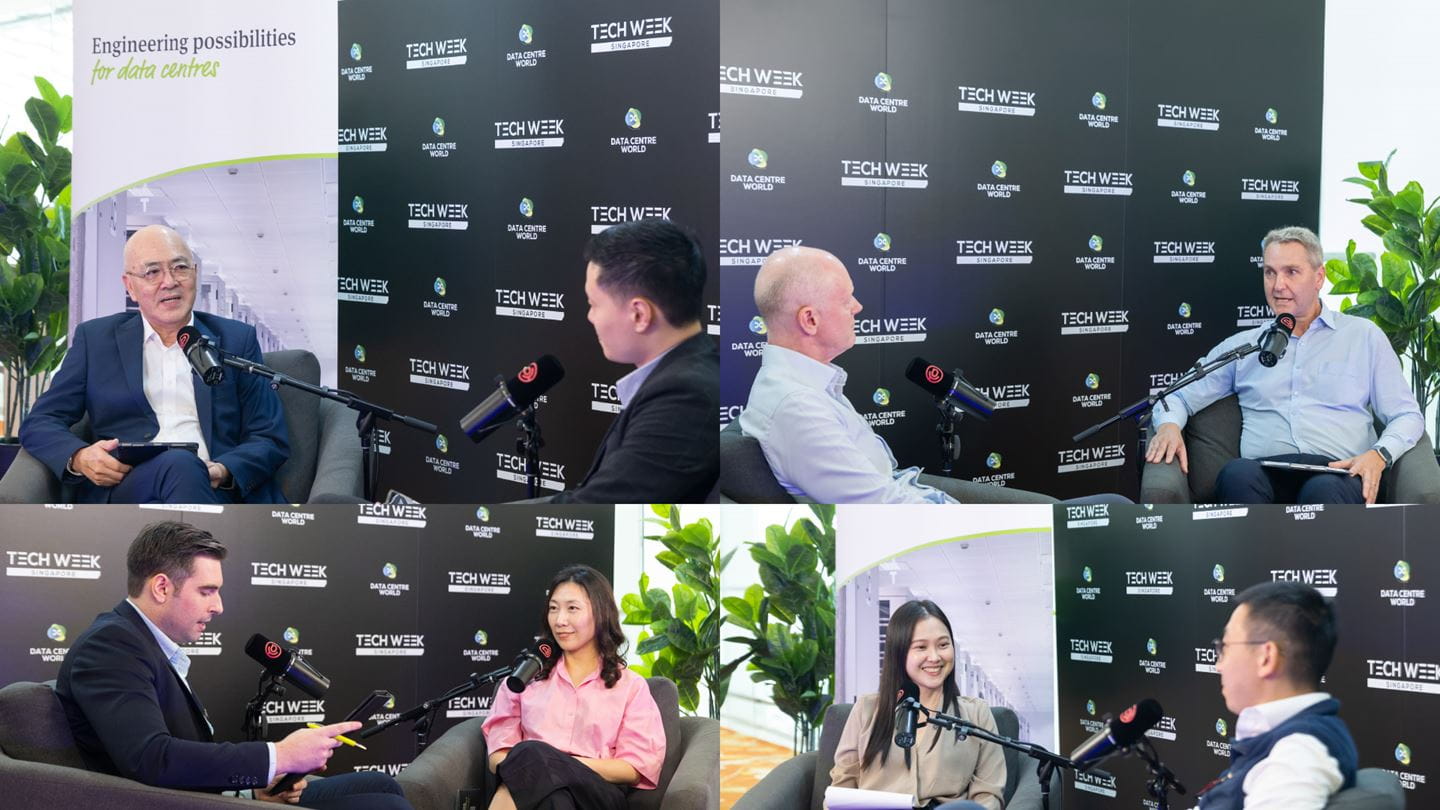
Across four conversations with experts from NTT Global Data Centers, NEXTDC, Keppel and K2 Strategic, this article explores real world approaches to power, planning, design, construction and technology that are helping make data centre projects happen.
Experts from NTT Global Data Centers, NEXTDC, Keppel and K2 Strategic share what it takes to turn data centre ambitions into operational infrastructure across Asia Pacific.
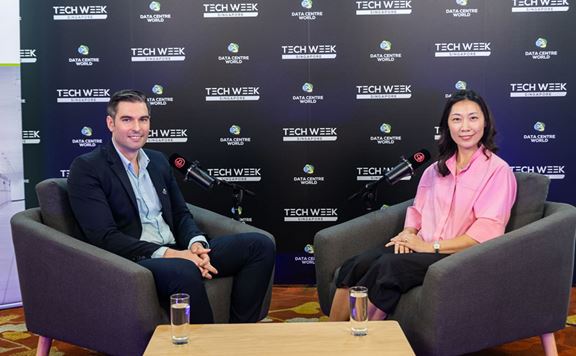 2:10
From renewable energy and grid modernisation to AI-enabled power management, discover how industry leaders are rethinking the energy systems needed to support future data centre growth.
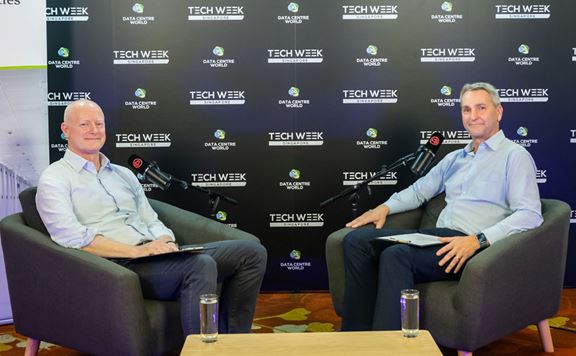 12:49
As data centre projects grow from tens to hundreds of megawatts, learn how standardisation, supply chain resilience and engineering innovation are helping developers and operators keep pace with rapid growth.
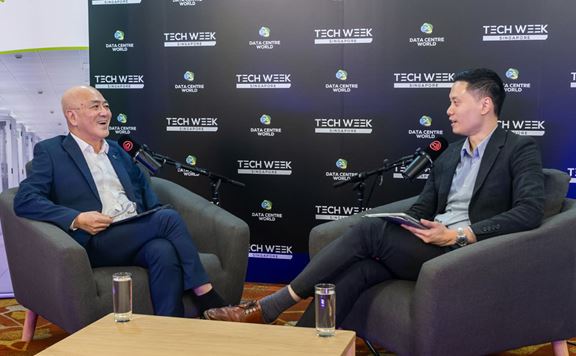 24:08
This episode looks at how Keppel is rethinking what’s possible for data centres, from new approaches to design, cooling and power to the potential of floating data centres.
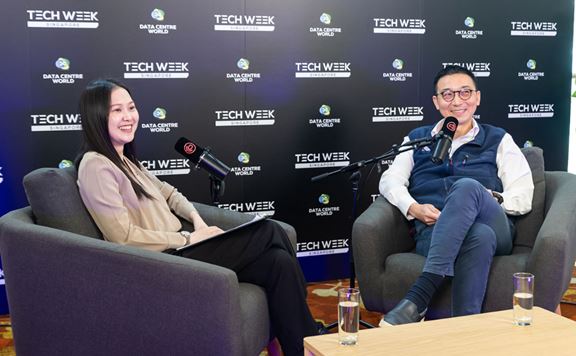 18:00
Drawing on K2 Strategic’s experience in Southeast Asia, hear what it takes to accelerate hyperscale data centre delivery as the region’s ambitions grow.
AI is changing how much data centre capacity is needed as well as what that capacity looks like.
Twenty years ago, data centre design focused on redundancy and resilience but as the industry has evolved, efficiency has become increasingly important. Now AI is adding further considerations, including speed to market and ‘cost per token’. This shifts attention beyond the cost of building the facility to how much computing output the data centre can produce, together with its IT design, infrastructure and efficiency.
This shift is visible in rack densities. Where around 8 kW per rack was once typical, densities have quickly moved through 20 kW and into the hundreds of kilowatts for high-density AI infrastructure.
That has a knock-on effect across the facility, changing cooling requirements, power distribution, space planning and the way IT equipment interfaces with building infrastructure.
The result is that IT equipment, cooling and power should no longer be considered in isolation. They need to be designed as an interconnected system from the start.
Power has moved onto the critical path for data centre development. The old logic of securing land first and figuring out power later no longer works. Developers need a credible power strategy at the beginning of the investment process.
At the same time, securing power is becoming more complex. Grids are getting more constrained while capacity demand continues to grow, and the infrastructure required to supply power can take years to develop.
This makes collaboration between developers, governments and utilities increasingly important.
In some countries, stricter approval requirements are helping test whether proposed demand is realistic. Developers therefore need to demonstrate credible requirements and well considered load ramps. Building confidence in that demand is becoming an important part of securing power.
Governments need to understand how developments align with national plans and benefit economies and communities. Meanwhile, utilities need realistic load ramps and confidence that new infrastructure will not become a stranded asset.
NTT’s Bangkok 4 Data Center expansion provides an example of what collaboration looks like in practice. Its power agreement moved from initiation to execution in three months, which NTT described as the fastest and largest transaction in its utility partner’s history.
Data centres have increased dramatically in scale. Projects that were once measured in tens of megawatts are now reaching hundreds of megawatts, with gigawatt-scale campuses also being discussed.
Greater scale creates opportunities for standardisation, but standardisation cannot come at the expense of flexibility.
Modular solutions can help bridge that gap. More equipment can be built within controlled factory environments, helping improve quality and reduce construction time onsite.
The success of modular solutions depends on early planning, engineering and supply chain capacity. Not every market has the supply chain capability needed to support modularisation.
There are also limits to what can be standardised. Data centre designs must respond to their local environment, including land and site conditions, climate, geography and environmental requirements.
As data centres continue to scale and technology evolves, the advantage will lie in knowing what to standardise and where to retain flexibility.
Speed to market matters as demand for computing capacity grows, but delivering faster cannot come at the expense of project quality and worker safety.
Successful delivery starts long before construction. It requires careful planning, strong engineering, local knowledge and the ability to deliver consistently at scale. Teams need to understand challenges and constraints, communicate them clearly and make the right decisions onsite at the right time.
An example of delivering at pace while ensuring quality and safety is K2 Strategic's JHR01-03 facility in Johor, Malaysia. The K2 Strategic data centre was delivered in half the industry standard timeframe and with zero major incidents. The project also won the RICS Southeast Asia Project of the Year Award 2025, which recognises outstanding achievement, teamwork and innovation.
One of the biggest challenges created by rapid data centre industry growth is bringing in enough skilled people and building the capability needed to design, build and operate it.
Creating greater awareness of the industry can help. Showing students and professionals the different careers available and creating more structured internship opportunities, potentially through industry associations, helps expose people to different roles.
Attraction is only part of the equation. Navigating a competitive recruitment market also requires creating a culture where people feel valued, supporting their careers and creating teams where people can develop strong, long-term working relationships.
The rapid expansion of the data centre industry is encouraging developers and operators to find new ways to work within land, power and water constraints.
In Singapore, Keppel is constructing a floating data centre designed to address some of these constraints. Its floating design reduces the land needed for the infrastructure, while the use of seawater for cooling is intended to reduce reliance on treated water.
In Australia, NEXTDC is working on another resource-efficiency initiative with Aurecon, using an underutilised water recycling plant to treat wastewater that would otherwise flow to the ocean and use it for data centre cooling. NEXTDC expects the initiative to reduce peak power demand and carbon associated with their data centres by 10% or more.
With the right engineering and collaboration constraints do not simply have to limit development, they can become catalysts for new solutions.
The next generation of data centres will require credible energy strategies, deeper industry collaboration, AI-ready design, a balance between standardisation and localisation, innovative thinking and enough skilled people to deliver at scale.
But success should not be measured on capacity or speed alone. The bigger challenge is delivering that capacity reliably and responsibly, while responding to the needs of the markets and communities in which data centres operate.
That requires investors, developers, operators, government, utilities, contractors and communities to work together earlier and more closely, resolving challenges before they become barriers and turning constraints into opportunities.
Listen to Engineering Reimagined podcast’s Data Centre series to hear practical perspectives on what it takes to meet Asia Pacific’s growing digital infrastructure needs. Reach out to our experts below to learn more about Aurecon’s data centre advisory, planning, design, delivery and construction expertise.

Industry Director, Digital Infrastructure – APAC

Director of Operations, Built Environment – Thailand
Director of Operations, Built Environment – Singapore

Lead Mechanical Engineer, Singapore
Aurecon draws insights from Committee for Sydney’s Jeremy Gill on how we grow Auckland's tech economy through placed-based, connected innovation precincts.
Hyperscale data centres are reshaping grid design, stability and security. Grid-forming energy storage can restore local strength for digital infrastructure growth.
Australia’s battery boom is reshaping the energy market, with storage outpacing wind and solar to become the backbone of the nation’s power system.