Our site uses cookies. But don’t worry, they’re low carb – baked perfectly to give you the best Aurecon website experience and to collect statistics without all the calories. To learn more, please read our cookie policy.
{"ID":{"Guid":"f3ad732a-f740-4456-af90-ef6d1f06bf53","IsGlobalNullId":false,"IsNull":false},"Name":"Podcast","DisplayName":"Podcast","Url":"/podcast","AboutMenuText":"About the podcast","AboutRichText":"\u003cp\u003eThroughout history, engineers have been leaders in inventing and creating some of society\u0026rsquo;s most ground-breaking developments. Egyptian pyramids, Roman viaducts, the aeroplane, skyscrapers \u0026ndash; the list is endless! But what role do engineers play today, and what does the future hold?\u003c/p\u003e\n\u003cp\u003eTechnology is disrupting our world at a faster rate than any other change in our history. Humanity still depends on engineering to help solve the wicked problems our world faces. Not only can engineers make things \u0026lsquo;work\u0026rsquo;; they can use smart thinking, combined with digital technologies, and a focus on human-centred outcomes to co-create a future in which communities and individuals can thrive.\u003c/p\u003e\n\u003cp\u003eWelcome to Engineering Reimagined. In this podcast we will explore how, like engineers, people from all walks of life are reimagining the future and their leadership roles in it.\u003c/p\u003e\n\u003cp\u003eEach episode we will speak to a different guest. What can we learn from their compelling and inspiring stories to help us reimagine engineering, to lead the world to a better future? Subscribe through our website, or listen on Apple or Spotify, to find out.\u003c/p\u003e","CategoriesMenuText":"Categories","SearchBarText":"Search podcast","ScrollUpText":"Podcast home","SubscribeMenuText":"Subscribe","SubscribeFormText":"Never miss a beat!","SubscribeForm":"Podcast","AboutImage":{"Alt":"Engineering Reimagined Podcast logo","Src":"/-/media/images/aurecon/content/podcast/01_landing-page/podcast_2024_logo.svg","Height":"","Width":"","Rendered":{},"MimeType":"image/svg+xml","Size":"13930"},"ContactUsEmailLabel":"Email us","ContactUsEmail":"engineeringreimagined@aurecongroup.com","NavigationBrowseCategoriesSubheading":"","NavigationFeaturedCategories":[{"Name":"Society-culture","DisplayName":"Society-culture","ID":{"Guid":"48c597ae-6994-4dbf-9e91-a49132776c8d","IsGlobalNullId":false,"IsNull":false},"Url":"/podcast/categories/society-culture","BackgroundColour":{"Code":"#E9EDEC","CodeForR":null,"CodeForG":null,"CodeForB":null,"CodeForA":null,"Value":"#E9EDEC"},"CategoryName":"Society \u0026amp; Culture","Description":"Recognising the shifts in our societies around issues such as diversity and inclusion, future workforce and the impacts of pandemics, to name a few, we discuss the leadership and diversified ideas needed to take us into the future.","FilterBarHeading":"","Image":{"Alt":"Young boy holding parent\u0027s hand","Src":"/-/media/videos/podcast/categories/png/masthead_category-525x525_culture_png.png","Height":"525","Width":"525","Rendered":{},"MimeType":"image/png","Size":"225465"},"MorePostsHeading":"","TextColour":{"Code":"#373a36","CodeForR":null,"CodeForG":null,"CodeForB":null,"CodeForA":null,"Value":"#373a36"},"FilteredPostsHeading":"","HeroVideo":{"ID":{"Guid":"00a68e6e-c936-4c74-98c2-ba35fe3cd081","IsGlobalNullId":false,"IsNull":false},"Name":"Pod_Category_Culture-Masthead","DisplayName":"Pod_Category_Culture-Masthead","Url":"/podcast/videos/pod_category_culture-masthead","VideoSourceList":[{"MediaUrl":"/-/media/videos/podcast/categories/mov/masthead_category-525x525_culture_mov.mov","MimeType":"video/quicktime","ThumbnailImage":{"Alt":"Young boy holding parent\u0027s hand","Src":"/-/media/videos/podcast/categories/png/masthead_category-525x525_culture_png.png","Height":"525","Width":"525","Rendered":{},"MimeType":"image/png","Size":"225465"},"Extension":"mov","Title":"Young boy holding parent\u0026#39;s hand","Description":""},{"Description":"","Extension":"webm","MimeType":"video/webm","ThumbnailImage":{"Alt":"Young boy holding parent\u0027s hand","Src":"/-/media/videos/podcast/categories/png/masthead_category-525x525_culture_png.png","Height":"525","Width":"525","Rendered":{},"MimeType":"image/png","Size":"225465"},"Title":"Young boy holding parent\u0026#39;s hand","MediaUrl":"/-/media/videos/podcast/categories/webm/masthead_category-525x525_culture_webm.webm"}]},"RecentPostsHeading":"","TileVideo":{"Name":"Pod_Category_Culture-Tile","DisplayName":"Pod_Category_Culture-Tile","ID":{"Guid":"e1e6393b-6ed2-4036-9b02-dd77160b4d8a","IsGlobalNullId":false,"IsNull":false},"Url":"/podcast/videos/pod_category_culture-tile","VideoSourceList":[{"Description":"","Extension":"mov","MimeType":"video/quicktime","ThumbnailImage":{"Alt":"","Src":"/-/media/videos/podcast/categories/png/tile_category-216x170_culture_png.png","Height":"170","Width":"216","Rendered":{},"MimeType":"image/png","Size":"38509"},"Title":"Young boy holding parent\u0026#39;s hand","MediaUrl":"/-/media/videos/podcast/categories/mov/tile_category-216x170_culture_mov.mov"},{"Description":"","Extension":"webm","MimeType":"video/webm","ThumbnailImage":{"Alt":"","Src":"/-/media/videos/podcast/categories/png/tile_category-216x170_culture_png.png","Height":"170","Width":"216","Rendered":{},"MimeType":"image/png","Size":"38509"},"Title":"Young boy holding parent\u0026#39;s hand","MediaUrl":"/-/media/videos/podcast/categories/webm/tile_category-216x170_culture_webm.webm"}]},"Stylesheets":[{"Description":"","Extension":"css","MimeType":"text/css","ThumbnailImage":{"Alt":"","Src":"","Height":"","Width":"","Rendered":{},"MimeType":"","Size":"0"},"Title":"","MediaUrl":"/-/media/files/stylesheets/podcast/bmc_podcast.css"}],"FullDisplayName":"Society \u0026amp; Culture","GroupingName":"Society \u0026amp; Culture","CollectionNameInternal":"Categories","CollectionNameSingular":"Category","CollectionNamePlural":"Categories","ContentPath":"/sitecore/content/Homepage/Blog/Categories","ContentTemplateId":"{DA9E9651-0481-4BA4-86D3-6F1E1782CACC}"},{"Name":"Design-innovation","DisplayName":"Design-innovation","ID":{"Guid":"f321a355-8f76-49c4-a720-ff38edfc1645","IsGlobalNullId":false,"IsNull":false},"Url":"/podcast/categories/design-innovation","BackgroundColour":{"Code":"#E9EDEC","CodeForR":null,"CodeForG":null,"CodeForB":null,"CodeForA":null,"Value":"#E9EDEC"},"CategoryName":"Design \u0026amp; Innovation","Description":"Unpacking new and innovative ideas keeps us reimagining the future of engineering and design to help solve the world\u0026#39;s most wicked problems. It all begins with the courage to explore.","FilterBarHeading":"","Image":{"Alt":"Young adult using VR goggles","Src":"/-/media/videos/podcast/categories/png/masthead_category-525x525_innovation_png.png","Height":"525","Width":"525","Rendered":{},"MimeType":"image/png","Size":"228831"},"MorePostsHeading":"","TextColour":{"Code":"#373a36","CodeForR":null,"CodeForG":null,"CodeForB":null,"CodeForA":null,"Value":"#373a36"},"FilteredPostsHeading":"","HeroVideo":{"Name":"Pod_Category_Innovation-Masthead","DisplayName":"Pod_Category_Innovation-Masthead","ID":{"Guid":"19e08765-08b1-4875-98b0-d752f3006e64","IsGlobalNullId":false,"IsNull":false},"Url":"/podcast/videos/pod_category_innovation-masthead","VideoSourceList":[{"Description":"","Extension":"mov","MimeType":"video/quicktime","ThumbnailImage":{"Alt":"Young adult using VR goggles","Src":"/-/media/videos/podcast/categories/png/masthead_category-525x525_innovation_png.png","Height":"525","Width":"525","Rendered":{},"MimeType":"image/png","Size":"228831"},"Title":"Young adult using VR goggles","MediaUrl":"/-/media/videos/podcast/categories/mov/masthead_category-525x525_innovation_mov.mov"},{"Description":"","Extension":"webm","MimeType":"video/webm","ThumbnailImage":{"Alt":"Young adult using VR goggles","Src":"/-/media/videos/podcast/categories/png/masthead_category-525x525_innovation_png.png","Height":"525","Width":"525","Rendered":{},"MimeType":"image/png","Size":"228831"},"Title":"Young adult using VR goggles","MediaUrl":"/-/media/videos/podcast/categories/webm/masthead_category-525x525_innovation_webm.webm"}]},"RecentPostsHeading":"","TileVideo":{"Name":"Pod_Category_Innovation-Tile","DisplayName":"Pod_Category_Innovation-Tile","ID":{"Guid":"8c933936-d96e-49c9-8854-1091c9473e0f","IsGlobalNullId":false,"IsNull":false},"Url":"/podcast/videos/pod_category_innovation-tile","VideoSourceList":[{"Description":"","Extension":"mov","MimeType":"video/quicktime","ThumbnailImage":{"Alt":"","Src":"/-/media/videos/podcast/categories/png/tile_category-216x170_innovation_png.png","Height":"170","Width":"216","Rendered":{},"MimeType":"image/png","Size":"38830"},"Title":"Young adult using VR goggles","MediaUrl":"/-/media/videos/podcast/categories/mov/tile_category-216x170_innovation_mov.mov"},{"Description":"","Extension":"webm","MimeType":"video/webm","ThumbnailImage":{"Alt":"","Src":"/-/media/videos/podcast/categories/png/tile_category-216x170_innovation_png.png","Height":"170","Width":"216","Rendered":{},"MimeType":"image/png","Size":"38830"},"Title":"Young adult using VR goggles","MediaUrl":"/-/media/videos/podcast/categories/webm/tile_category-216x170_innovation_webm.webm"}]},"Stylesheets":[{"Description":"","Extension":"css","MimeType":"text/css","ThumbnailImage":{"Alt":"","Src":"","Height":"","Width":"","Rendered":{},"MimeType":"","Size":"0"},"Title":"","MediaUrl":"/-/media/files/stylesheets/podcast/bmc_podcast.css"}],"FullDisplayName":"Design \u0026amp; Innovation","GroupingName":"Design \u0026amp; Innovation","CollectionNameInternal":"Categories","CollectionNameSingular":"Category","CollectionNamePlural":"Categories","ContentPath":"/sitecore/content/Homepage/Blog/Categories","ContentTemplateId":"{DA9E9651-0481-4BA4-86D3-6F1E1782CACC}"},{"Name":"Sustainability","DisplayName":"Sustainability","ID":{"Guid":"464dae18-c326-4785-b898-a0114c2230a1","IsGlobalNullId":false,"IsNull":false},"Url":"/podcast/categories/sustainability","BackgroundColour":{"Code":"#E9EDEC","CodeForR":null,"CodeForG":null,"CodeForB":null,"CodeForA":null,"Value":"#E9EDEC"},"CategoryName":"Sustainability","Description":"Developing strategies to address social, economic and environmental challenges, we explore how to mitigate the risks of climate change and create a more sustainable world for future generations.","FilterBarHeading":"","Image":{"Alt":"Young woman feeling dappled light through tree canopy","Src":"/-/media/videos/podcast/categories/png/masthead_category-525x525_sustainability_png.png","Height":"525","Width":"525","Rendered":{},"MimeType":"image/png","Size":"366830"},"MorePostsHeading":"","TextColour":{"Code":"#373a36","CodeForR":null,"CodeForG":null,"CodeForB":null,"CodeForA":null,"Value":"#373a36"},"FilteredPostsHeading":"","HeroVideo":{"Name":"Pod_Category_Sustainability-Masthead","DisplayName":"Pod_Category_Sustainability-Masthead","ID":{"Guid":"21aa24e7-d426-4df0-a4d2-270fe33dee3a","IsGlobalNullId":false,"IsNull":false},"Url":"/podcast/videos/pod_category_sustainability-masthead","VideoSourceList":[{"Description":"","Extension":"mov","MimeType":"video/quicktime","ThumbnailImage":{"Alt":"Young woman feeling dappled light through tree canopy","Src":"/-/media/videos/podcast/categories/png/masthead_category-525x525_sustainability_png.png","Height":"525","Width":"525","Rendered":{},"MimeType":"image/png","Size":"366830"},"Title":"Young woman feeling dappled light through tree canopy","MediaUrl":"/-/media/videos/podcast/categories/mov/masthead_category-525x525_sustainability_mov.mov"},{"Description":"","Extension":"webm","MimeType":"video/webm","ThumbnailImage":{"Alt":"Young woman feeling dappled light through tree canopy","Src":"/-/media/videos/podcast/categories/png/masthead_category-525x525_sustainability_png.png","Height":"525","Width":"525","Rendered":{},"MimeType":"image/png","Size":"366830"},"Title":"Young woman feeling dappled light through tree canopy","MediaUrl":"/-/media/videos/podcast/categories/webm/masthead_category-525x525_sustainability_webm.webm"}]},"RecentPostsHeading":"","TileVideo":{"Name":"Pod_Category_Sustainability-Tile","DisplayName":"Pod_Category_Sustainability-Tile","ID":{"Guid":"8f463e03-9713-45ae-b951-a2997ad2043b","IsGlobalNullId":false,"IsNull":false},"Url":"/podcast/videos/pod_category_sustainability-tile","VideoSourceList":[{"Description":"","Extension":"mov","MimeType":"video/quicktime","ThumbnailImage":{"Alt":"Young woman feeling dappled light through tree canopy","Src":"/-/media/videos/podcast/categories/png/tile_category-216x170_sustainability_png.png","Height":"170","Width":"216","Rendered":{},"MimeType":"image/png","Size":"51011"},"Title":"Young woman feeling dappled light through tree canopy","MediaUrl":"/-/media/videos/podcast/categories/mov/tile_category-216x170_sustainability_mov.mov"},{"Description":"","Extension":"webm","MimeType":"video/webm","ThumbnailImage":{"Alt":"Young woman feeling dappled light through tree canopy","Src":"/-/media/videos/podcast/categories/png/tile_category-216x170_sustainability_png.png","Height":"170","Width":"216","Rendered":{},"MimeType":"image/png","Size":"51011"},"Title":"Young woman feeling dappled light through tree canopy","MediaUrl":"/-/media/videos/podcast/categories/webm/tile_category-216x170_sustainability_webm.webm"}]},"Stylesheets":[{"Description":"","Extension":"css","MimeType":"text/css","ThumbnailImage":{"Alt":"","Src":"","Height":"","Width":"","Rendered":{},"MimeType":"","Size":"0"},"Title":"","MediaUrl":"/-/media/files/stylesheets/podcast/bmc_podcast.css"}],"FullDisplayName":"Sustainability","GroupingName":"Sustainability","CollectionNameInternal":"Categories","CollectionNameSingular":"Category","CollectionNamePlural":"Categories","ContentPath":"/sitecore/content/Homepage/Blog/Categories","ContentTemplateId":"{DA9E9651-0481-4BA4-86D3-6F1E1782CACC}"},{"Name":"Leadership","DisplayName":"Leadership","ID":{"Guid":"cd0d4591-3454-4c50-b14d-0982e2c176b1","IsGlobalNullId":false,"IsNull":false},"Url":"/podcast/categories/leadership","BackgroundColour":{"Code":"#E9EDEC","CodeForR":null,"CodeForG":null,"CodeForB":null,"CodeForA":null,"Value":"#E9EDEC"},"CategoryName":"Leadership \u0026amp; Careers","Description":"Navigating uncertainty and disruption in a world that is becoming more complex than ever, leaders need new skills and approaches. What can we learn from each other to help us become the leaders of the future?","FilterBarHeading":"","Image":{"Alt":"Young woman leading discussion in meeting room","Src":"/-/media/videos/podcast/categories/png/masthead_category-525x525_leadership_png.png","Height":"525","Width":"525","Rendered":{},"MimeType":"image/png","Size":"252556"},"MorePostsHeading":"","TextColour":{"Code":"#373a36","CodeForR":null,"CodeForG":null,"CodeForB":null,"CodeForA":null,"Value":"#373a36"},"FilteredPostsHeading":"","HeroVideo":{"Name":"Pod_Category_Leadership-Masthead","DisplayName":"Pod_Category_Leadership-Masthead","ID":{"Guid":"11910f0f-05c2-406a-9797-702a729fc8ab","IsGlobalNullId":false,"IsNull":false},"Url":"/podcast/videos/pod_category_leadership-masthead","VideoSourceList":[{"Description":"","Extension":"mov","MimeType":"video/quicktime","ThumbnailImage":{"Alt":"Young woman leading discussion in meeting room","Src":"/-/media/videos/podcast/categories/png/masthead_category-525x525_leadership_png.png","Height":"525","Width":"525","Rendered":{},"MimeType":"image/png","Size":"252556"},"Title":"Young woman leading discussion in meeting room","MediaUrl":"/-/media/videos/podcast/categories/mov/masthead_category-525x525_leadership_mov.mov"},{"Description":"","Extension":"webm","MimeType":"video/webm","ThumbnailImage":{"Alt":"Young woman leading discussion in meeting room","Src":"/-/media/videos/podcast/categories/png/masthead_category-525x525_leadership_png.png","Height":"525","Width":"525","Rendered":{},"MimeType":"image/png","Size":"252556"},"Title":"Young woman leading discussion in meeting room","MediaUrl":"/-/media/videos/podcast/categories/webm/masthead_category-525x525_leadership_webm.webm"}]},"RecentPostsHeading":"","TileVideo":{"Name":"Pod_Category_Leadership-Tile","DisplayName":"Pod_Category_Leadership-Tile","ID":{"Guid":"66094621-6f4e-480e-a3b3-7bd23c72d3ba","IsGlobalNullId":false,"IsNull":false},"Url":"/podcast/videos/pod_category_leadership-tile","VideoSourceList":[{"Description":"","Extension":"mov","MimeType":"video/quicktime","ThumbnailImage":{"Alt":"","Src":"/-/media/videos/podcast/categories/png/tile_category-216x170_leadership_png.png","Height":"170","Width":"216","Rendered":{},"MimeType":"image/png","Size":"41208"},"Title":"Young woman leading discussion in meeting room","MediaUrl":"/-/media/videos/podcast/categories/mov/tile_category-216x170_leadership_mov.mov"},{"Description":"","Extension":"webm","MimeType":"video/webm","ThumbnailImage":{"Alt":"","Src":"/-/media/videos/podcast/categories/png/tile_category-216x170_leadership_png.png","Height":"170","Width":"216","Rendered":{},"MimeType":"image/png","Size":"41208"},"Title":"Young woman leading discussion in meeting room","MediaUrl":"/-/media/videos/podcast/categories/webm/tile_category-216x170_leadership_webm.webm"}]},"Stylesheets":[{"Description":"","Extension":"css","MimeType":"text/css","ThumbnailImage":{"Alt":"","Src":"","Height":"","Width":"","Rendered":{},"MimeType":"","Size":"0"},"Title":"","MediaUrl":"/-/media/files/stylesheets/podcast/bmc_podcast.css"}],"FullDisplayName":"Leadership \u0026amp; Careers","GroupingName":"Leadership \u0026amp; Careers","CollectionNameInternal":"Categories","CollectionNameSingular":"Category","CollectionNamePlural":"Categories","ContentPath":"/sitecore/content/Homepage/Blog/Categories","ContentTemplateId":"{DA9E9651-0481-4BA4-86D3-6F1E1782CACC}"},{"Name":"Technology","DisplayName":"Technology","ID":{"Guid":"1aaa5f1f-b53c-40b4-8f6c-e454a8353001","IsGlobalNullId":false,"IsNull":false},"Url":"/podcast/categories/technology","BackgroundColour":{"Code":"#E9EDEC","CodeForR":null,"CodeForG":null,"CodeForB":null,"CodeForA":null,"Value":"#E9EDEC"},"CategoryName":"AI \u0026amp; Technology","Description":"From the power of artificial intelligence to the next frontiers in space, reimagine the future as we dive into the emerging technological advancements and digital solutions that are transforming the way we live and work.","FilterBarHeading":"","Image":{"Alt":"Young woman analysing digital dashboard","Src":"/-/media/videos/podcast/categories/png/masthead_category-525x525_technology_png.png","Height":"525","Width":"525","Rendered":{},"MimeType":"image/png","Size":"245256"},"MorePostsHeading":"","TextColour":{"Code":"#373a36","CodeForR":null,"CodeForG":null,"CodeForB":null,"CodeForA":null,"Value":"#373a36"},"FilteredPostsHeading":"","HeroVideo":{"Name":"Pod_Category_Technology-Masthead","DisplayName":"Pod_Category_Technology-Masthead","ID":{"Guid":"d99763b9-e971-48be-9815-93829bf9fb53","IsGlobalNullId":false,"IsNull":false},"Url":"/podcast/videos/pod_category_technology-masthead","VideoSourceList":[{"Description":"","Extension":"mov","MimeType":"video/quicktime","ThumbnailImage":{"Alt":"Young woman analysing digital dashboard","Src":"/-/media/videos/podcast/categories/png/masthead_category-525x525_technology_png.png","Height":"525","Width":"525","Rendered":{},"MimeType":"image/png","Size":"245256"},"Title":"Young woman analysing digital dashboard","MediaUrl":"/-/media/videos/podcast/categories/mov/masthead_category-525x525_technology_mov.mov"},{"Description":"","Extension":"webm","MimeType":"video/webm","ThumbnailImage":{"Alt":"Young woman analysing digital dashboard","Src":"/-/media/videos/podcast/categories/png/masthead_category-525x525_technology_png.png","Height":"525","Width":"525","Rendered":{},"MimeType":"image/png","Size":"245256"},"Title":"Young woman analysing digital dashboard","MediaUrl":"/-/media/videos/podcast/categories/webm/masthead_category-525x525_technology_webm.webm"}]},"RecentPostsHeading":"","TileVideo":{"Name":"Pod_Category_Technology-Tile","DisplayName":"Pod_Category_Technology-Tile","ID":{"Guid":"19ec3cd0-1d19-4ba6-9ced-9a8f02d8a058","IsGlobalNullId":false,"IsNull":false},"Url":"/podcast/videos/pod_category_technology-tile","VideoSourceList":[{"Description":"","Extension":"mov","MimeType":"video/quicktime","ThumbnailImage":{"Alt":"Young woman analysing digital dashboard","Src":"/-/media/videos/podcast/categories/png/tile_category-216x170_technology_png.png","Height":"170","Width":"216","Rendered":{},"MimeType":"image/png","Size":"39840"},"Title":"Young woman analysing digital dashboard","MediaUrl":"/-/media/videos/podcast/categories/mov/tile_category-216x170_technology_mov.mov"},{"Description":"","Extension":"webm","MimeType":"video/webm","ThumbnailImage":{"Alt":"Young woman analysing digital dashboard","Src":"/-/media/videos/podcast/categories/png/tile_category-216x170_technology_png.png","Height":"170","Width":"216","Rendered":{},"MimeType":"image/png","Size":"39840"},"Title":"Young woman analysing digital dashboard","MediaUrl":"/-/media/videos/podcast/categories/webm/tile_category-216x170_technology_webm.webm"}]},"Stylesheets":[{"Description":"","Extension":"css","MimeType":"text/css","ThumbnailImage":{"Alt":"","Src":"","Height":"","Width":"","Rendered":{},"MimeType":"","Size":"0"},"Title":"","MediaUrl":"/-/media/files/stylesheets/podcast/bmc_podcast.css"}],"FullDisplayName":"AI \u0026amp; Technology","GroupingName":"AI \u0026amp; Technology","CollectionNameInternal":"Categories","CollectionNameSingular":"Category","CollectionNamePlural":"Categories","ContentPath":"/sitecore/content/Homepage/Blog/Categories","ContentTemplateId":"{DA9E9651-0481-4BA4-86D3-6F1E1782CACC}"}]}
Change your location to view content tailored for you.
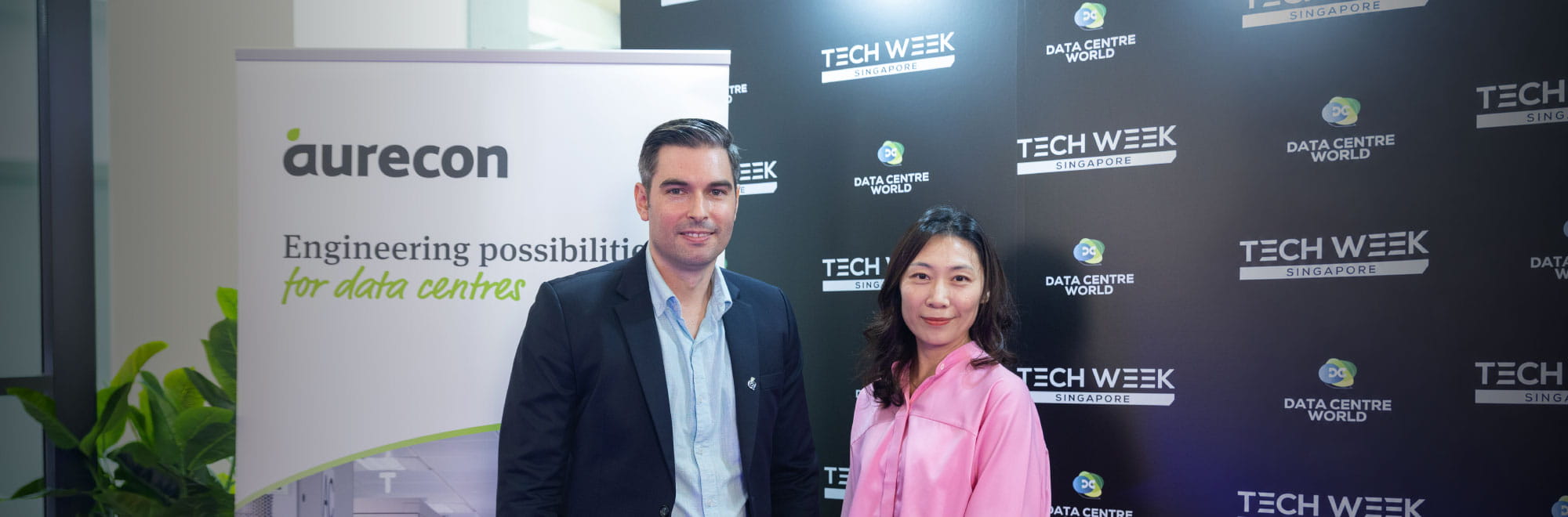
Courtney Lock: Hello, I’m Courtney Lock, and welcome to the first episode of our Engineering Reimagined podcast series that we recorded live at Data Centre World Asia in Singapore – one of the largest events of its kind globally.
Over two days crowds of up to 29,000 people came together to discuss the latest developments in the data centre world and we were lucky enough to speak with some of the industries’ leading voices.
Across four conversations, we explore real world examples of what’s possible. From power infrastructure taking several years or longer to develop, permitting and government approvals becoming more stringent and developers needing construction and operational talent, the series examines what’s possible to make projects happen.
We also explore how AI is changing not just how much data centre capacity the world needs, but what that capacity physically looks like.
Let’s get into the first episode.
+++++
Adam Peacock: Hello, and welcome to Engineering Reimagined, recorded live at Data Centre World Asia here in Singapore. I'm Adam Peacock, Aurecon's Data Centre Leader in Thailand. Today I'm joined by Celine Xiao, Regional Power Lead for NTT Global Data Centres across Japan and Asia Pacific, and one of the region's leading voices in digital infrastructure. As digital infrastructure continues to grow, so does the challenge of balancing energy demand and energy security goals. Celine brings extensive experience in developing and executing power strategies for data centres. And today we'll be sharing insights on how industry, utilities and governments can work together to support sustainable growth. Welcome Celine.
Celine Xiao: Thank you, Adam, for having me here.
Adam Peacock: It's great to have you. Power availability now influences project timelines more than land or capital. We're starting to see energy considerations move to the very beginning of investment decisions. What does this shift mean for developers?
Celine Xiao: There are three things stand out to me. First, power has clearly jumped on the critical path, and the business won't simply move forward without a strong power story. And it's no longer a work stream, it's a decision gate. So the old logic like securing land first and figure out power later, that doesn't work anymore. And second, as the grid getting more constrained, but the capacity demand still continue to grow, and the solution is getting more and more complicated. It's not just connect and go, it could be hybrid solutions that makes the system integration very critical. And that's also something that the data centre operators have not come across before. So there is a capability gap, I would say. And third, the cost structure changes quite a bit. It's no longer just a connection cost to the utility. It's a higher capex, and energy becomes a capital asset on the balance sheet. So the question is then, how do we share the risk between developers, customers, and utility partners? And what's the best business model for it?
Adam Peacock: How much certainty do data centre developers need regarding power supply timing and gigawatt availability to make investment decisions?
Celine Xiao: I think gigawatt is ambition, not the starting point. If you can secure that from day one, fantastic. But it's very rare in today's market. There is no 100% certainty on supply timeline, but what data centre operator is trying to secure is the day one power availability, with a clear staging plan for the ultimate load. Second, we need a reliable power strategy that is scalable to gigawatt whether it's a great power or behind the meter, investors and customers want to see the strategy that demonstrate success. So the question is not how much certainty we need, it's how we demonstrate a power strategy that protect the timeline and reliability. Once we get that right, gigawatt is just a matter of scaling.
Adam Peacock: And ideally from renewable energy sources.
Celine Xiao: Yes.
Adam Peacock: Transmission is a key constraint across Asia. What can be done to secure power and dual connections for reliability?
Celine Xiao: First of all, I want to highlight that the power reliability is becoming just as important as availability. AI load characteristics are very different from the base load we're seeing today. There are millisecond flat level fluctuations, very different from the stable base load, faster ramp rate and may cost significant impact to the grid. And this raises a question: is grid the only reliable power solution? So every site is different, it's unique. It comes with its own set of constraints and the power strategy has to be site specific. If a site sits nearby a gas pipeline and the onsite generation probably is an option but that comes with another set of challenges, permitting issues, gas availability, et cetera, and there is trade-off for that. So I'm also watching an emerging business model that a data centre operator is forming JV with power generation companies and acting as a single off-taker is faster potentially, but the cost is also a lot higher and it introduced another set of risk profile to the business. But I would say that regardless of which power solution we're going with, power quality and reliability need to be confirmed to accommodate the anticipated AI load profile.
Adam Peacock: Many countries are introducing stricter project approval processes, energy efficiency requirements and energy utilisation requirements. How are developers navigating the evolving regulatory environment?
Celine Xiao: First, I'd ask, why is government tightening approvals? Throughout my engagement with the utility partners across the market, the common feedback from them is how real is your demand from the data centre operators. Thailand is a good example. As of now, they received 35 gigawatts of power application from data centres. And that's very close to national peak demand. But the Power Development Plan draft only plans for 8.8 gigawatt. The energy ministry literally calls it a phantom demand. Over-declared, underutilised, and creating a bubble. So in my view, stricter approval is a filtering market mechanism that filters out the non-serious players. And as developers, what I'd encourage and advocate to do is to prove to the government and utility partners that your demand is realistic and your load ramp is well thought out. So I say transparency is the starting point once the trust is built, the power follows.
Adam Peacock: We've seen that the security bonds have been implemented in countries like Malaysia and Thailand, and there's some sort of financial penalty if these data centre developers don't use the power. Does that affect NTT at all?
Celine Xiao: Definitely but there is a reason behind it and the reason is typically data centre over-declare and still, now in Thailand, all the data centre applications paused so it didn't really help if they increased the security bond.
Adam Peacock: The new legislation in Thailand they're working through at the moment, they're taking a pause to assess the adverse effects of data centres and making sure that it slows down the growth to something that's more sustainable. Do you think that there may be legislation in the future that requires renewable energy generation potentially as part of the overall data centre development?
Celine Xiao: Yeah, that's already coming, because in Malaysia, the DCTF, Data Centre Task Force approval already clearly indicated that's a hard requirement to participate their CRESS scheme, which is renewable energy scheme. In Thailand there's a DPPA coming up as well. It started last year, but it seems that it's still being formed up, the policy.
Adam Peacock: What do strategic partnerships between utilities, government and developers look like in practice? How can they work together to ensure energy is delivered, managed and protected throughout the life cycle of data centres while maintaining broader energy security for industries and communities?
Celine Xiao: I think strategic partnerships are not declared but earned and they start with one solid project. The sequence matters. First the developer needs to bring a developer mindset, a clear vision of the growth strategy in that particular market and what benefit it brings to that country. Government need to see jobs, GDP alignment with national plans, what benefit it brings to the communities, utility needs to see realistic load ramps, and no stranded assets. And most importantly, we should talk about business risks openly to each other, and not just our risks, and find opportunities to achieve win-win outcome. Our Bangkok portfolio is a very good example. For our Bangkok BKK4 expansion, the power agreement went from initiation to execution in just three months. It is the fastest and largest transaction in our utility partner's history. And I would say that's what earned trust looks like in practice.
Adam Peacock: I'm glad to say that we're your partner for BKK4 as your consultant over there on that project and it's interesting that you mentioned about the community and we're certainly starting to see the community voicing their opinions more on data centres and they're seeing all the adverse effects, the power being used up, the water being used up, but they're not necessarily seeing a lot of positives coming out of it, not necessarily a lot of jobs that are being created in the local community so is there any way that data centre development could impact in a more positive way to the local community?
Celine Xiao: I think this goes back to the developer's mindset. The data centre need to have a clear vision of the group strategy in terms of why not instead of just creating power blocks that consume huge amount of energy, we can actually put school in the campus as a data centre industrial park, put hospital in the campus. Something like that is like a living community, very liveable community. That's something that I think every data centre should actively looking into.
Adam Peacock: Hopefully something comes out in the legislation that sort of promotes that to drive it from the top down as well. Some data centres are developing behind the meter generation capacity to mitigate the energy availability challenges. Can this approach help address the growing energy availability issue? What are the challenges in developing the solution?
Celine Xiao: In a constrained market with high-capacity demand, customers are actually very open to behind-the-meter solutions. While it potentially improves the power timeline, it also comes with trade-offs. And the solution gets much more complicated. There are so many work streams involved, permitting, EIA, equipment procurement, gas supply agreement, gas infrastructure, system integration. And most importantly, there is no single vendor that can deliver an end-to-end solution. That means someone has to act as an integrator, and that's a challenge our developers are facing now.
Adam Peacock: And potentially an opportunity there to be an integrator in the local market.
Celine Xiao: Yeah, of course. We need industrial experts to collaborate. We're not alone. The solution is we're not trying to figure out the solution alone.
Adam Peacock: That's a collaboration partnership. Celine, thank you so much for your time and for sharing your insights. It's been a pleasure exploring this topic with you and learning from your perspective. I'm sure our audience will find this conversation as insightful as I have. Thank you.
Celine Xiao: Thank you.
Courtney Lock: I hope you enjoyed this episode of Engineering Reimagined, recorded live at Data Centre World Asia in Singapore.
And as we’ve heard today, there’s no single solution. And just one of many challenges is finding the right approach for each market and bringing the right people together to make it work.
Please do check out the other three episodes that we have recorded at Data Centre World – we are interviewing leaders from NEXTDC, Keppel and K2 about how they have kept pace with rapid growth, turned constraints into opportunities for new thinking, and how local conditions can impact delivery. The other Data Centre World podcasts are available wherever you get your podcasts and if you have enjoyed this episode please share with a friend.
Until next time, I’m Courtney Lock. And thanks for listening.
Rethinking energy strategies for a new era of data centre growth
As data centre demand continues to grow across Asia Pacific, energy availability is becoming just as important as land availability in determining where digital infrastructure is built and investment flows.
In this episode, recorded live at Data Centre World Asia in Singapore, Aurecon’s Data Centre Leader, Thailand Adam Peacock speaks with Celine Xiao, Regional Power Lead for NTT Global Data Centres across Japan and Asia Pacific, about powering the next generation of digital infrastructure, including the integration of digital infrastructure growth with reliable and low-cost power, renewable energy, grid modernisation, storage and AI-enabled power management.
Celine also shares her perspective on the evolving regulatory environment and why building trust between developers, utilities and governments is critical to supporting the industry’s sustainable growth.
The views and opinions expressed in this podcast are those of the individual speakers and do not necessarily reflect the views of the host, the organisation, or any affiliated entities.