Decarbonising mission critical data centres in Asia-Pacific
Aurecon’s sustainability experts explore the key design considerations for reducing operational and embodied carbon in data centres across the Asia Pacific.



Change your location to view content tailored for you.
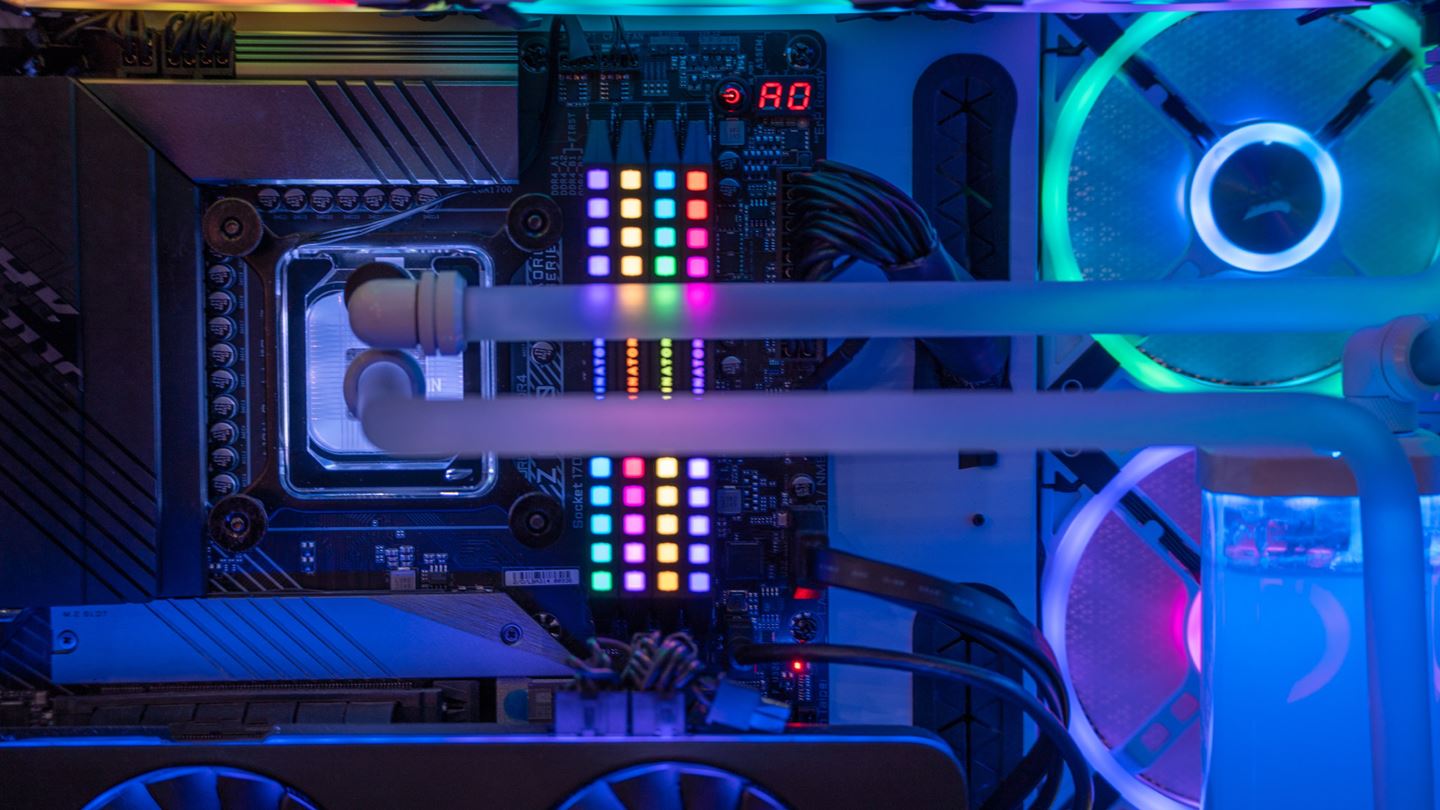
The need for increased computational power alongside reduced carbon emissions is leading data centre operators to explore innovative technologies to meet both their operational needs and their clients’ carbon reduction targets. One of these technologies is liquid cooling.
Aurecon’s Philip Motteram, Ross McCarthy and David Wong describe how liquid cooling for data centres is gaining significant attention across Asia Pacific.
Liquid cooling technology in data centres represents a leap forward in addressing the escalating demands for power density, from advancements like artificial intelligence, while navigating the imperatives of sustainability and energy efficiency. As the industry grapples with these challenges, successful adoption of liquid cooling requires careful consideration of numerous factors including performance optimisation and cost-effectiveness.
With constant access to information, and increasing computational demands, server and GPU (general processing unit) technologies are raising power densities. Traditional data centres typically have a power density of 8 to 15 kW per rack, but GPU-based servers for AI model training require 45 to 55 kW per rack or more[1].
Efforts to decrease energy usage and carbon emissions have seen an increase in the use of renewable energy and also necessitates investigating new cooling technologies.
'Traditional air cooling' is reaching its limits for two reasons:
'Liquid cooling' offers a promising solution with high density cooling and energy efficiency benefits. Liquid cooling uses fluid, rather than air, to cool the data centre servers. This allows the cooling medium to be brought closer to the heat source, thus requiring less power for fans.
Moreover, liquid cooling solutions can enable increased PUE (Power Usage Effectiveness). What this also does is provide data centre owners with the option to potentially fit more racks into the same size halls as traditional air-cooled facilities, or build more condensed data centres.
Liquid cooling offers a promising solution with high density cooling and energy efficiency benefits.
The adoption of liquid cooling in data centres across Asia Pacific will vary due to infrastructure readiness, regulations, and economic factors). In land constrained areas like Singapore and Hong Kong, the appeal lies in building more compact data centres. In Australia, where energy is costly, liquid cooling’s potential to reduce PUE and create more energy-efficient data centres aligns with new government funding programmes for green data centres[2].
Choosing between direct and integrated liquid cooling systems impacts the effectiveness and efficiency of data centre cooling. It’s crucial to understand each system’s advantages and limitations, especially given the rapid evolution of GPU servers. For instance, while companies are awaiting the delivery and installation of Nvidia’s H100 GPUs, its B200 version with double the memory is already available.
Below we compare different liquid cooling technologies:


When evaluating different liquid cooling technologies, data centre operators must consider specific needs and constraints, such as whether the facility is new or refurbished, available land space, and optimum layout. Compatibility with existing infrastructure, future scalability, and flexibility considerations are also important.
Additionally, operators should evaluate the impact on maintenance, as liquid cooling systems require specialised resources to maintain their efficiency and these skills can be difficult to source in some remote or regional locations.
The fleets of 'hot and always-on servers' within a data centre produce significant waste heat, and with pressure to decarbonise, the industry must make better use of this heat.
'Air-cooled data centres' generate waste heat but it isn’t hot enough for direct reuse and needs additional heating to be useful.
'Liquid cooling' produces slightly hotter waste heat, which still has limited uses but may be utilised for heating nearby swimming pools or district heating systems (common in Europe). For instance, Germany’s new climate protection act mandates data centres donate 10 per cent of their surplus heat to district heating systems by 2025, and 20 per cent by 2028[3].
To reuse waste heat effectively, partnerships between data centre operators, energy retailers and wholesalers, local governments, and communities, are essential. The feasibility of reusing waste heat depends on the specific liquid cooling system and its operating constraints. Existing cooling towers can sometimes be repurposed but require modifications.
There are three main pathways for adopting liquid cooling:
New data centres are often built with provisions for liquid cooling (2), meeting initial demands and allowing for future transitions. Existing data centres need to consider retrofitting for liquid cooling (3) to meet sustainability demands.
Changing existing facilities requires significant adjustments to rack and cabling infrastructure. A key challenge is balancing capacity: determining how much heat load each system will handle and how liquid cooling affects air-cooling systems.
Liquid cooling technology is a viable and effective solution for data centre operators to improve efficiency, lower energy consumption, and reduce environmental impact. The benefit for data centre clients is in the reduction of their Scope 3 emissions to meet sustainability targets.
[1] Coulston, W., 15 May 2023, The environmental challenges of AI-driven data centres, GovTech Review, accessed 3 April 2024.
[2] Australian Trade and Investment Commission, 8 March 2024, Australia: APAC’s rising regional hub for green data centres, accessed 3 April 2024.
[3] Uwer, D., and Rademacher, M., 1 March 2024, Year in review: real environment and climate change law Germany, Lexology, accessed 3 April 2024.

Client Director – Australia

Technical Director, Buildings – VIC & SA, Australia

Industry Director, Infrastructure & Data Centres – Southeast Asia

Industry Director, Digital Infrastructure – APAC

Technical Director, Project Management – New Zealand

Director of Operations, Built Environment – Singapore

Director of Growth & Delivery, Indonesia & Key Client Director, Data Centre – Southeast Asia
Aurecon’s sustainability experts explore the key design considerations for reducing operational and embodied carbon in data centres across the Asia Pacific.
How engineering and construction projects are evolving to champion biodiversity, through early planning, advanced technologies, and ecosystem stewardship.
Aurecon shares insights on how the 2032 Brisbane Games can deliver legacy infrastructure and lasting economic, environmental and community value.