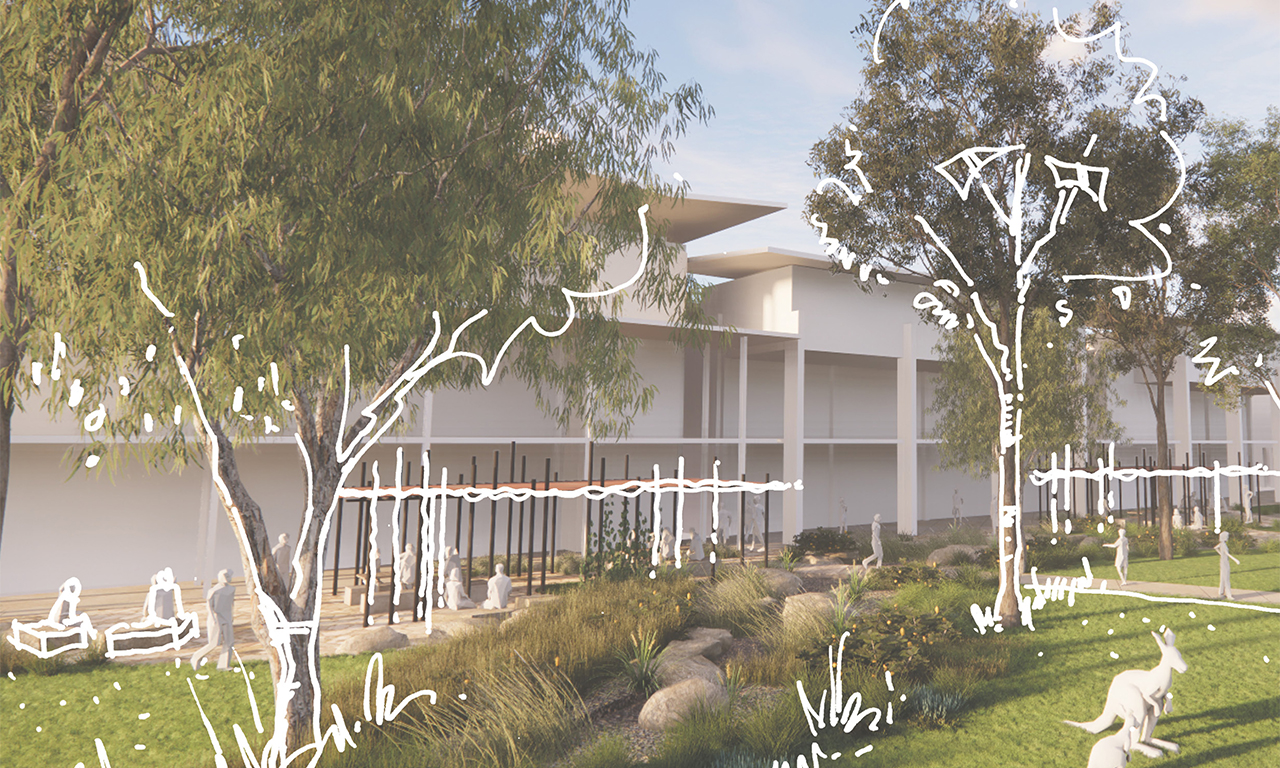
Aboriginal and Torres Strait Islander engagement strategy
A critical aspect of the masterplan development was preparing an Aboriginal and Torres Strait Islander engagement strategy in association with project partner, Blaklash.
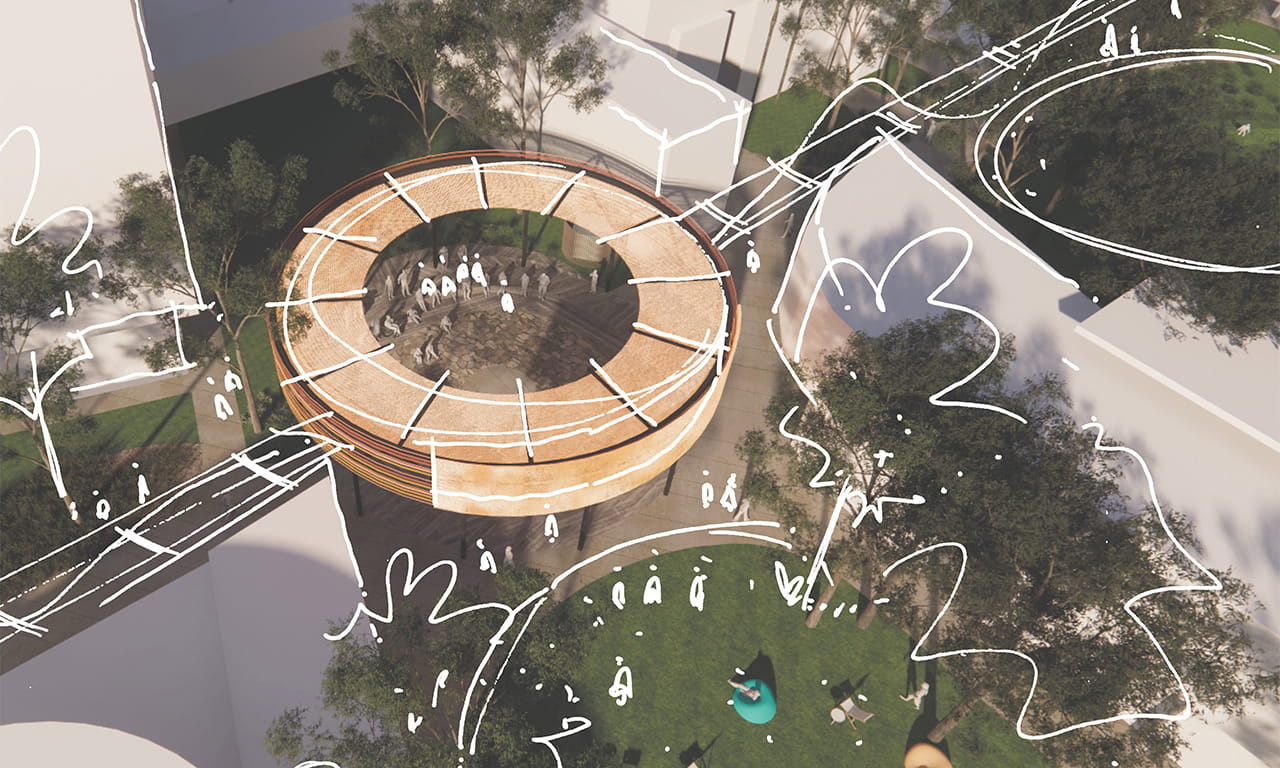
Together with representatives of local Kabi Kabi (Gubbi Gubbi) groups, the masterplan was formed to guide how future project plans would integrate Design with Country principles – not solely around physical aspects (such as buildings), but also projects that provide education and environment outcomes (such as incorporating traditional cultural teachings).
Effective engagement helped inform how future project plans would integrate Design with Country principles.
The ability to be commercial and operationally productive and connect with community by enabling locals and tourists to experience the rich and diverse traditional lands that the university is located on was important to all stakeholders.
Integrated water management planning
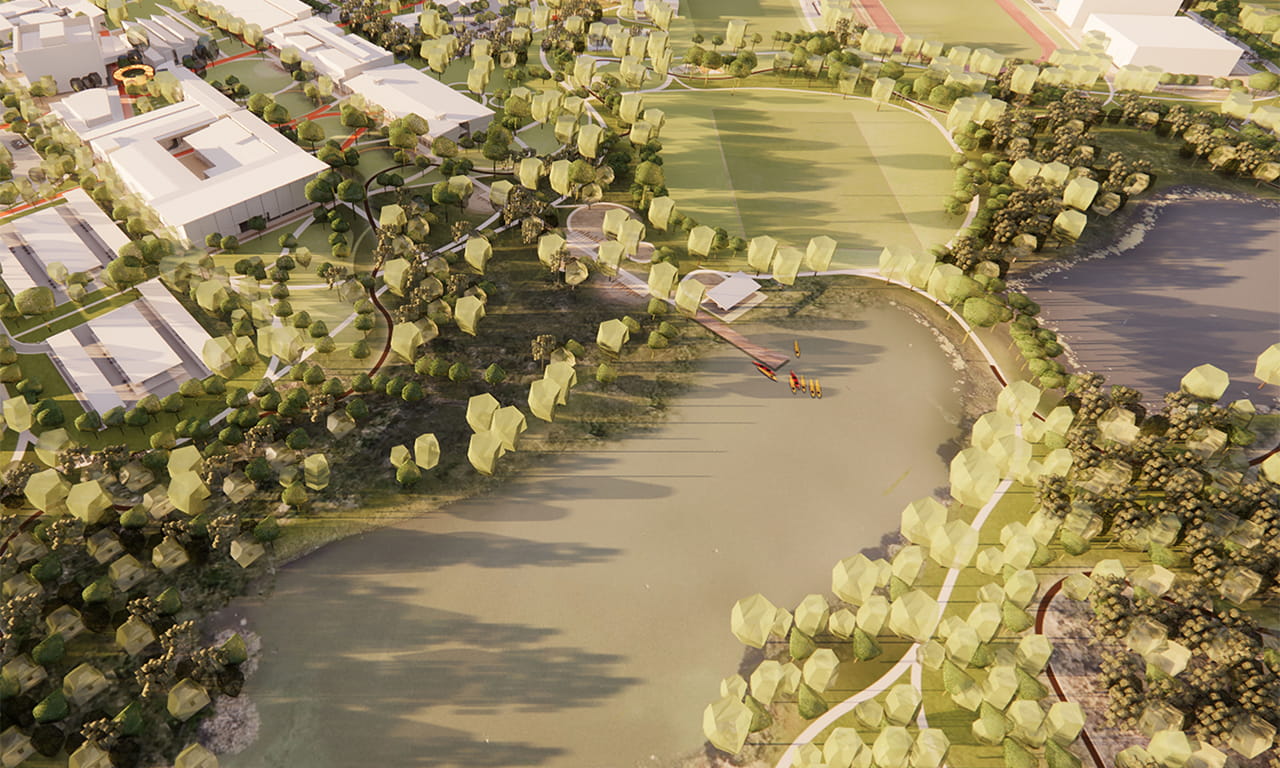
Integrated water management considers all elements of the water cycle – rainwater, stormwater, potable water, and wastewater. As part of the masterplan, it was identified that water use should be fit-for-purpose. In essence, water demand management and alternative water sources should be used to reduce potable water demand.
Adopting these principles will ensure the water cycle is managed for environmental, social and economic outcomes, while contributing to learning activities. The university already has long-established practises in substantial water efficiency and effective management of natural assets though initiatives such as establishing a water battery to reduce energy demand. The masterplan will assist in advancing a number of water-focused projects to continue a strong commitment to integrated water management. Importantly, it recognises the social value of water and how it contributes to healthy ecosystems, education, and a sense of place.
The university’s effort on integrated water management has contributed to its leading rating under the Times Higher Education Impact Rankings, used to assess a university's performance in aligning with UN Sustainable Development Goals (SDGs). In the most recent ratings, UniSC ranked first in Queensland for its contributions to clean water and sanitation, and life below water.
The university’s overall impact ranking improved 2 places in the latest assessment, from 31st to 29th globally.