Milner Bay Port Facility Wharf Recovery, NT, Australia
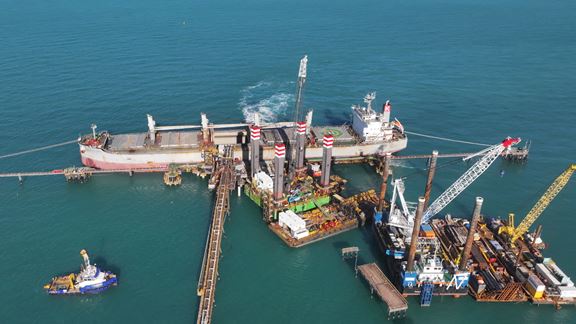
Aurecon expedited wharf recovery post-damage, restoring global manganese exports in record time with innovative maritime infrastructure solutions.


Change your location to view content tailored for you.
A linchpin of BHP’s Port Hedland iron ore export operations, Car Dumper 3 (CD3) was nearing the end of its design life after more than two decades in service. Responsible for 20 per cent of BHP’s port capacity in Port Hedland, CD3’s failure would have posed a significant risk to throughput and revenue.
BHP sought a long-life replacement solution that could tip faster, operate more reliably, meet stringent environmental and safety standards, and be installed within a fixed 50-day shutdown window.
Aurecon was appointed as lead designer, engaged from the project’s inception to bring the new car dumper to life. At the heart of this transformative project is the first-of-its-kind 450-tonne car dumper cell, designed to rotate two 160-tonne iron ore wagons 30 per cent faster and with a 50 per cent longer lifespan compared to the previous design. The cell, measuring 20 metres in length and 10.5 metres in diameter, was subject to comprehensive finite element analysis and fatigue assessment to endure 6.5 million tip cycles over 30 years.
Our approach balances innovation, sustainability, and resilience and has now become the blueprint for future upgrades. Following the performance of CD3, BHP has expanded the renewal program to include Car Dumper 4 and is replicating this design for their new asset, Car Dumper 6.


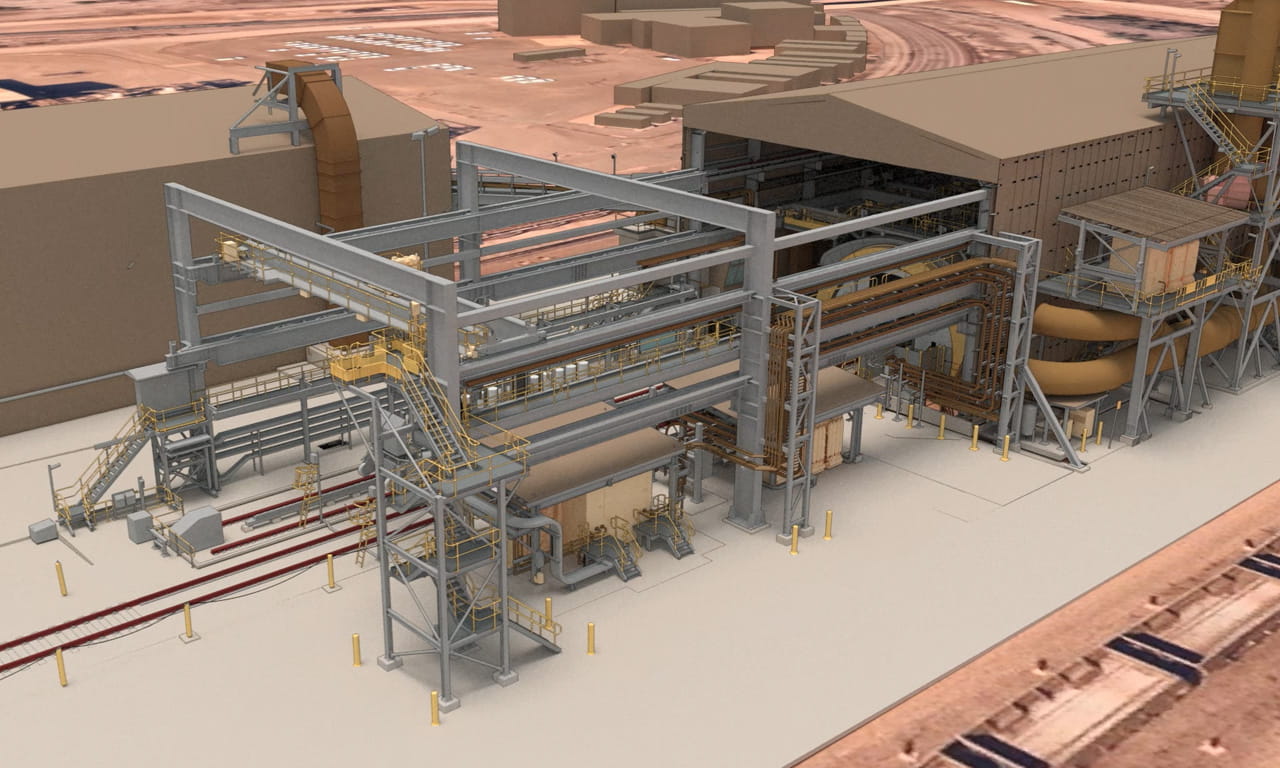
At the centre of the successful delivery of CD3 is bringing the best people to the project and working with BHP and other parties within the ecosystem as ‘one team’. First, understanding the outcomes and second, thinking differently on all technical aspects of the project, including technical reliability, logistics, fabrication, constructability and shutdown requirements.
Aurecon led the entire engineering lifecycle from early identification and optioneering through to design, shop detailing, and support through fabrication, construction, and commissioning. We brought together specialists spanning mechanical, structural, civil, electrical, controls and instrumentation engineering, and functional safety. We also provided advanced analytical modelling, risk and resilience services, digital engineering, and project management.
Our scope included the mechanical and structural design of the cell, ring rail, trunnion assemblies, hydraulic clamp systems, and relocatable dust enclosure. We also delivered supporting infrastructure, including a new substation, building extension, transport frames, maintenance platforms, and comprehensive O&M documentation.
Aurecon leveraged global collaboration through our design centres in South Africa and Vietnam, enabling near round-the-clock delivery. We partnered with BHP and collaborated closely with Civmec, Hydac, Hofmann Engineering, and Monadelphous, ensuring seamless integration across suppliers and contractors to co-design a high-performance solution that could be scaled to meet BHP’s specific, high-performance car dumping requirements.
The project’s complexity was met with high-level technical rigour and innovation. A bespoke design methodology was developed in the absence of formal codes for car dumpers, informed by site-specific data and validated through extensive finite element analysis.
Advanced digital tools, such as ANSYS, Strand7 and Altair EDEM, were used to assess mechanical behaviour and ore flow during tipping. To mitigate execution risks, Aurecon’s Risk & Resilience team conducted quantitative schedule risk assessments, giving BHP the confidence to proceed with an intensive 50-day shutdown window.
Our design represents a breakthrough for the industry, enabling the elimination of the central trunnions within the constraints of an existing concrete vault. Key innovations underpinning this achievement are:
Central to the project’s success is the ‘go faster’ philosophy applied to the car clamp design. Legacy gravity-applied clamps were incompatible with the new system’s speed. Aurecon developed a hydraulically actuated clamp system, delivering higher load capacity enabling the cell to be rotated 30 per cent faster than the existing cell.
Designed for future scalability (from 15 tonnes to 22 tonnes per clamp), these clamps integrate advanced instrumentation – proximity sensors, rotary encoders, and dual-axis inclinometers – for real-time monitoring and operational interlocks, ensuring seamless safety and control.
Due to the extended span of the tandem cell, trunnion wheel loads reach 120 tonnes, more than twice the load experienced by the existing twin single cells. As no commercially available heavy-duty rail could accommodate these forces, a bespoke solution was engineered from first principles.
Aurecon designed a custom heavy-duty rail profile from rolled, quench-and-tempered high-strength plate. Using precision machining and a tailored scarf joint design, the rail meets tight manufacturing tolerances, ensures effective load transfer across joints, and delivers extended fatigue life and simplified maintenance.
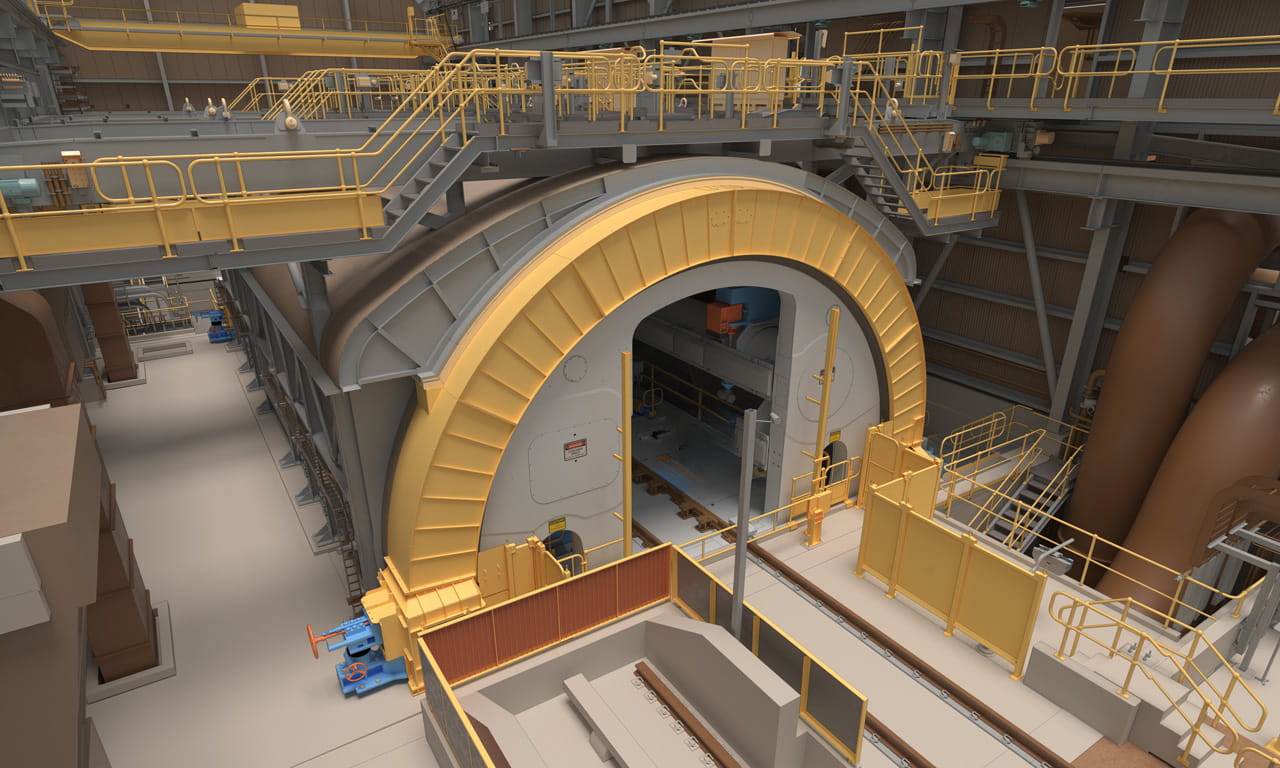
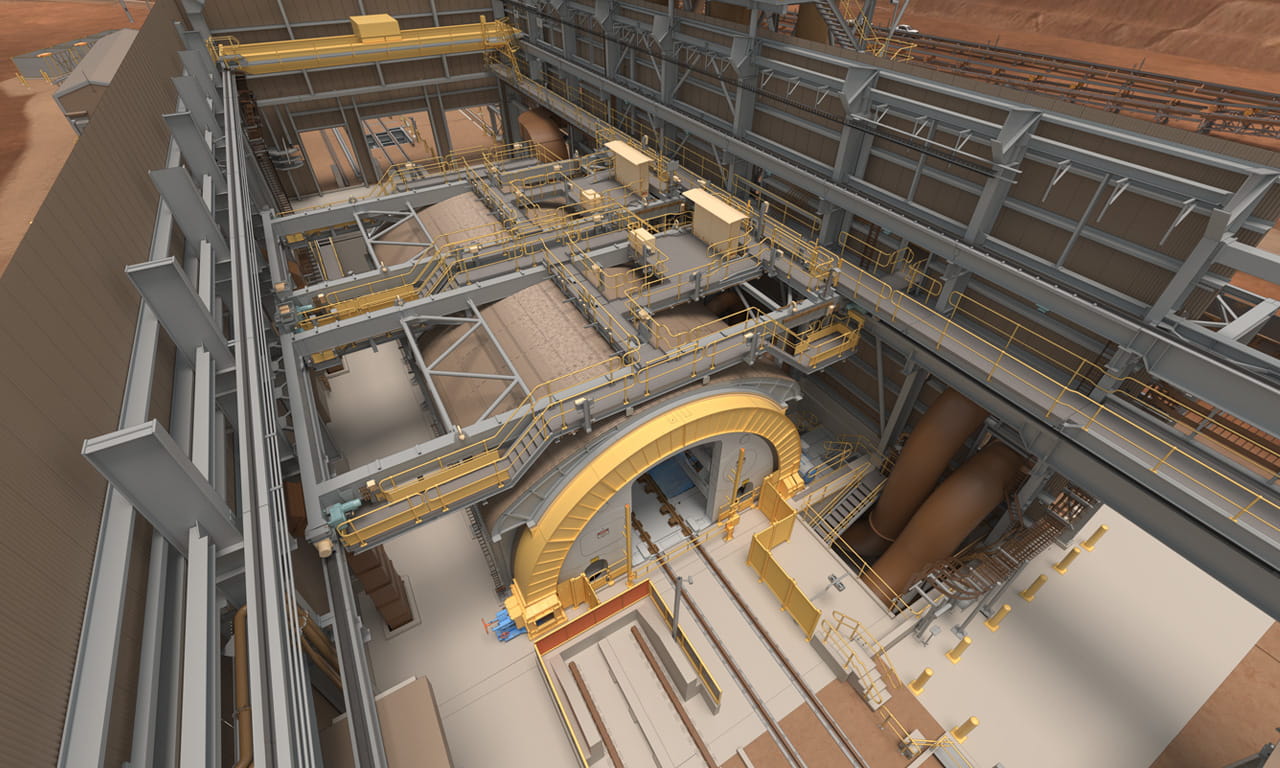
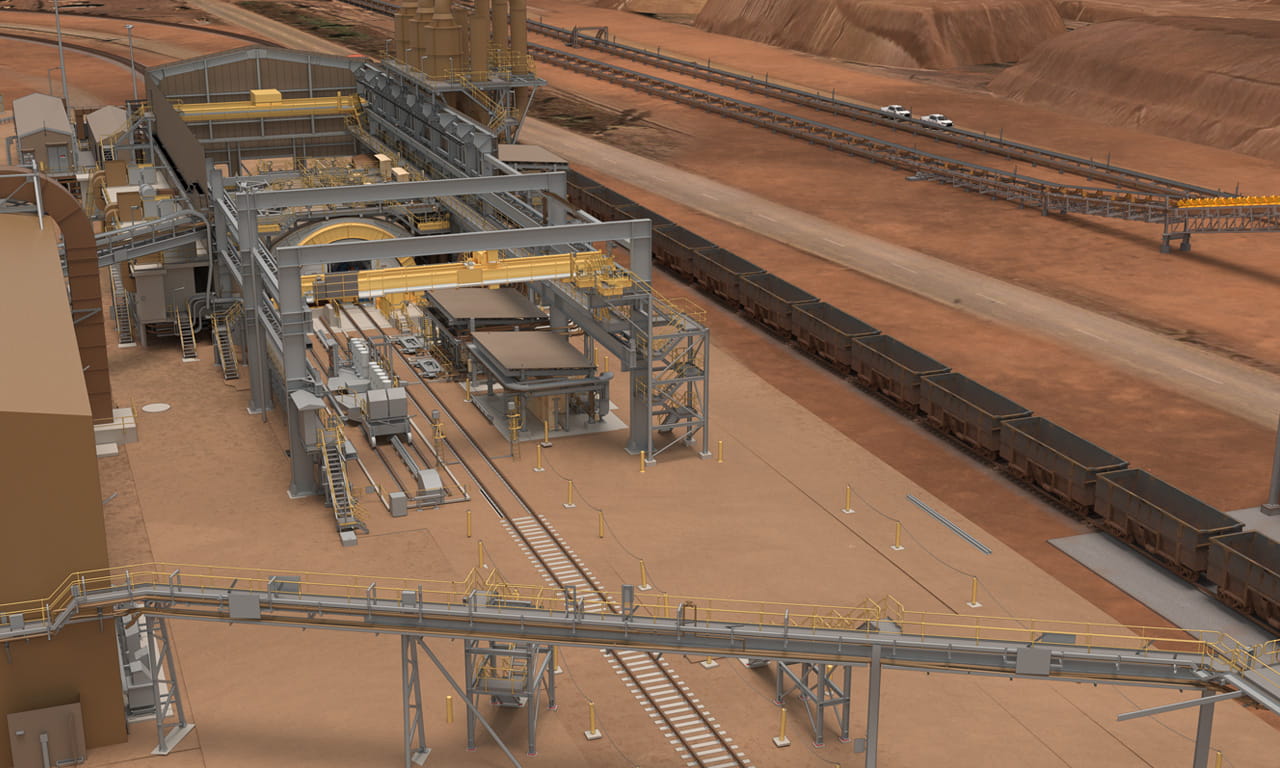
Fine dust sometimes generated during iron ore tipping operations may pose environmental and air quality challenges in enclosed spaces. Aurecon’s design, incorporating a specialised wheeled dust enclosure that closely fits around the dumper cell, reduces particulate matter emissions within the building.
This sharp reduction in dust contributes to improved onsite air quality, reducing potential harmful airborne particles such as PM10, PM2.5, and larger dust fractions. It also lessens environmental impact beyond the facility boundary. By containing dust emissions, the project acts to protect the surrounding community and the fragile Port Hedland environment from contamination.
Additionally, by extending the asset’s lifespan and reducing maintenance intervals, the design contributes to lower lifecycle costs, reduces emissions and increases resilience against equipment failure.
Aurecon expedited wharf recovery post-damage, restoring global manganese exports in record time with innovative maritime infrastructure solutions.
Aurecon is transforming Sydney Harbour, replacing dredging with TBM tunnel engineering to deliver a faster, safer and more sustainable second harbour crossing.
Aurecon's active transport design expertise supports TfNSW to create a seamless, unobtrusive, step-free ramp and cycleway across Sydney Harbour Bridge.