Change your location to view content tailored for you.
In order to support renewable energy we obviously need a mechanism for storing – for when the sun is in shining, when the wind isn't blowing – and batteries can only do so much. Batteries have an advantage, but we need something that's long duration, and that's where pumped hydro comes in.
The technology has been around for 100 plus years, so it's very proven and used globally. We've had a bit of a break in Australia, seeing these pumped hydro projects, but obviously now with Kidston and Snowy 2.0 it's reemerging.
Collaborative delivery models are particularly important for pumped hydro because the development times are longer than other technologies. Anywhere where we can find ways to optimise a schedule and de-risk is beneficial.
A collaborative delivery model allows us to work together with our contractors and our equipment suppliers. To deliver pumped hydro in general is very multi-disciplinary. It doesn't just take a couple of mechanical or civil engineers, it really does take a diverse skill set.
We need everything from our power generation and transmission engineers. Dams are critical, for the water storage component. There's usually a lot of underground works, so that's where our tunnelling capabilities shine, as well as our geologists and geotechnical engineers, but also having access to water engineers who specialise in water security, the approvals environment team as well, to keep us on track, and to help us tell the client what they don't know, which is critical. I think taking a multidisciplinary approach is crucial for successful delivery.

Associate, Power Generation, QLD – Australia
Aurecon shares insights on how the 2032 Brisbane Games can deliver legacy infrastructure and lasting economic, environmental and community value.
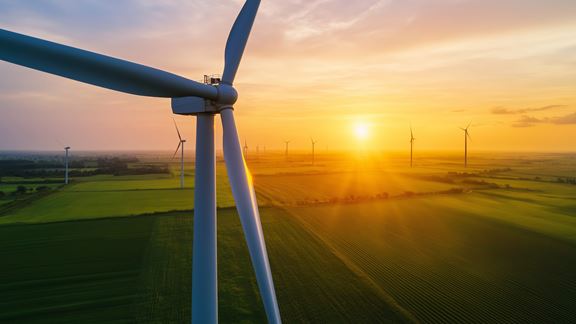
This fact sheet compares the community and environmental impacts of wind farm projects, and how ecologically sensitive design can deliver better outcomes.
How engineering and construction projects are evolving to champion biodiversity, through early planning, advanced technologies, and ecosystem stewardship.