
Overhead vs Underground: comparing high voltage transmission infrastructure
This fact sheet compares the impacts and technical aspects of overhead and underground high voltage (330kV-500kV) transmission infrastructure.



Change your location to view content tailored for you.
Decarbonising the world’s energy systems via the deployment of renewable energy infrastructure is one of the most impactful things we can do to protect communities and the environment from the devastating impacts of unmitigated climate change.
While wind energy infrastructure remains essential to support the world’s energy needs, a considered focus on avoiding and minimising impacts in the development and delivery is key to achieving the transition to renewable energy. In many Asia Pacific countries it is already legislated that any proposed wind farm projects demonstrate where and how efforts have been made to avoid or minimise impacts through the planning and design process.
There is a complex challenge as countries work towards net zero and decarbonisation targets, while also avoiding and minimising impacts on communities and the environment.
This fact sheet compares some of the impacts associated with the technical aspects of wind farm projects, and explores ecologically sensitive design that can minimise and mitigate such impacts. Two infographics are included that provide comparisons between the following scenarios:
To reduce disturbance to the environment and communities, wind farm projects need to be developed with minimisation and mitigation in mind. If ecological values are determined early, routes and siting can be optimised and approvals can be obtained in a timely manner.
Actions that can be taken across key mitigation categories include:
 Biodiversity Biodiversity |
 Technology Technology |
 Route planning and siting Route planning and siting |
 Approvals Approvals |
|---|---|---|---|
|
|
|
|
Wind farm projects that focus on optimising routes, the accuracy of earthworks and maximising of siting will benefit from positive community and environmental outcomes.
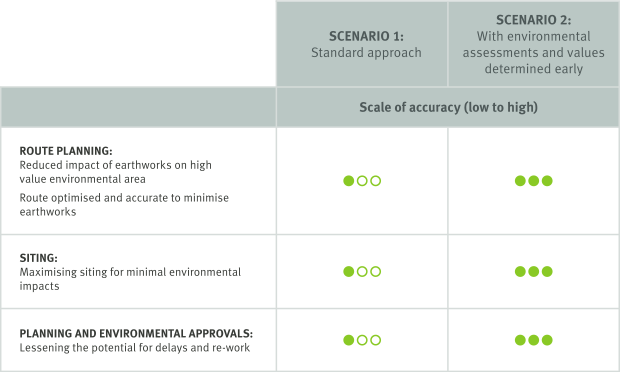
Figure 1. Scale of accuracy in approvals and planning.
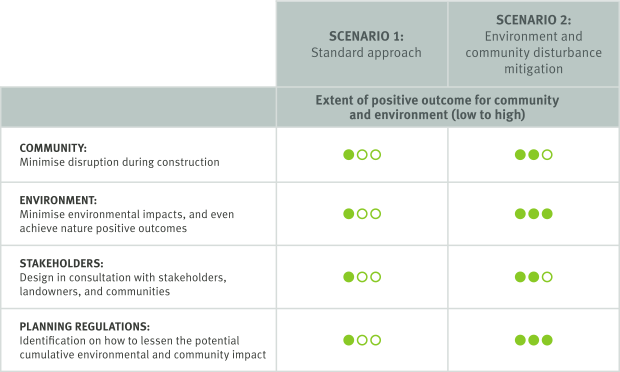
Figure 2. Extent of positive outcomes for community and environment.
Scenario 1 shows the impacts associated with the technical aspects of wind farm developments when actions are not taken to minimise or mitigate disturbances to the environment and communities.
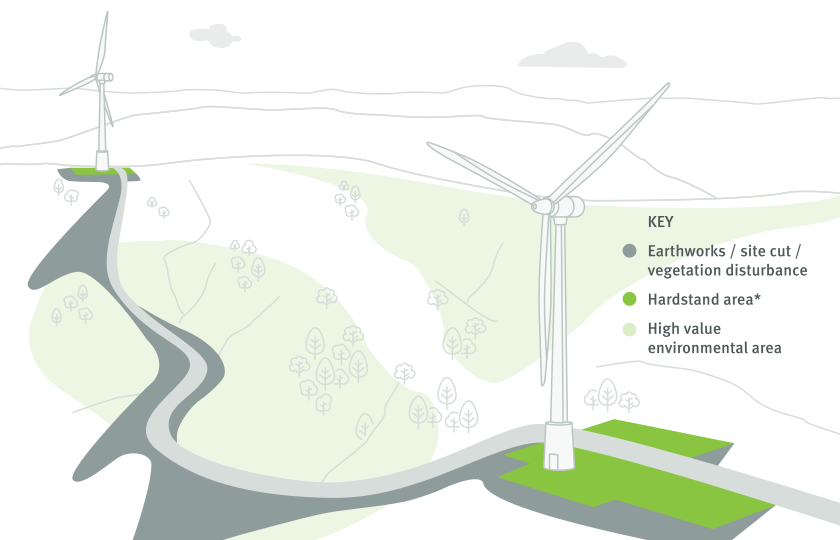
*Hardstand areas vary between projects, with some areas rehabilitated post-project, or different sizing depending on construction methodology.
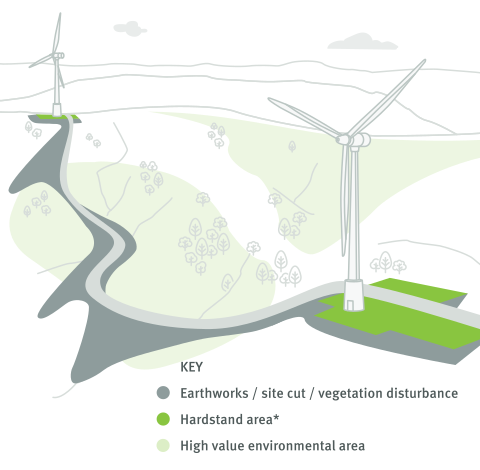
*Hardstand areas vary between projects, with some areas rehabilitated post-project, or different sizing depending on construction methodology.

Impact of earthworks on high value environmental area

Hardstand area is large – up to 50 per cent more than scenario 2

Crews might be present for relatively longer timeframes during construction

Impacts on native vegetation, trees, geology and soils mostly connected with access roads and civil works

Approvals: Protracted environmental and planning approvals

Timing: Extensive delay in approvals and project start

Costs: Increased offset costs
Scenario 2 shows the impacts associated with the technical aspects of wind farm developments when actions are taken to reduce disturbances to the environment and communities.
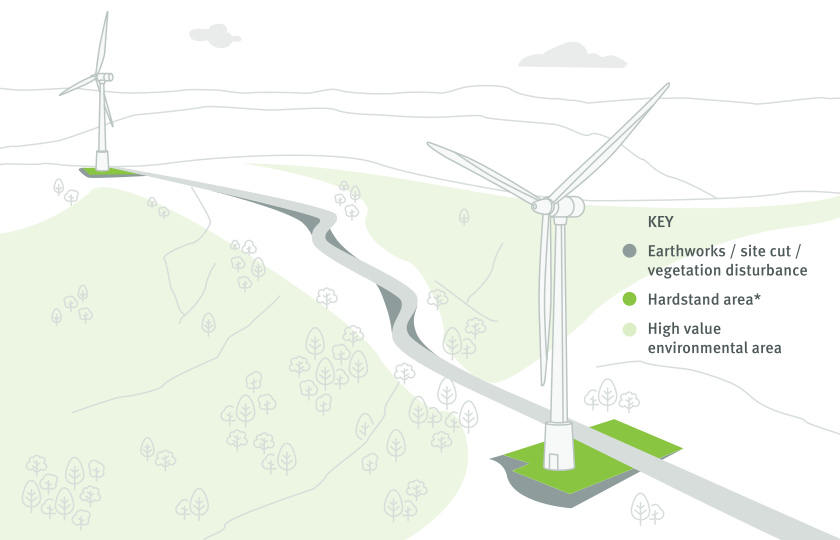
*Hardstand areas vary between projects, with some areas rehabilitated post-project, or different sizing depending on construction methodology.
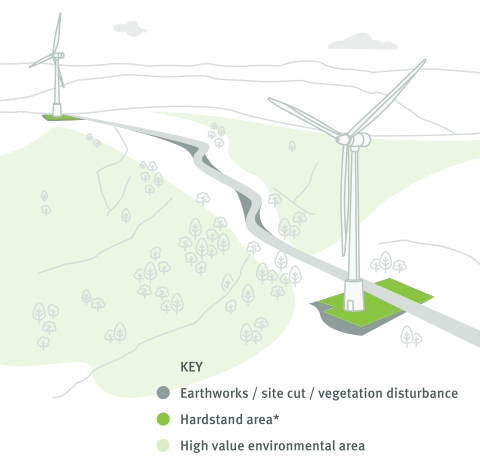
*Hardstand areas vary between projects, with some areas rehabilitated post-project, or different sizing depending on construction methodology.

Reduced energy use, waste, materials

Less impacts on geology, soils and natural drainage than scenario 1

Avoidance or impact minimisation on vegetation and trees

Less impact on birds and bats using detection and operational technology applications

Improving biodiversity outcomes, even achieving nature positive

Approvals: Streamlined environmental and planning approvals

Timing: Reduced delay in approvals and project start

Costs: Reduced offset costs
There are complex and sensitive considerations that investors and developers of wind energy projects need to work through to achieve approval. The design and construction for any individual project depends on multiple factors and needs to be done with sensitivity and empathy for the directly impacted landowners, communities, and the environment.
Aurecon, an Asia Pacific design, engineering and advisory company, specialises in delivering optimum design, community and environmental outcomes for challenging wind energy developments with complex requirements. Contact us to learn more.

Power Generation Practice Leader, NSW & ACT – Australia

Principal, Power Generation

Associate, Environment & Planning – Australia

Environment Leader – Australia
Energy & Industrial Leader – NSW & ACT, Australia

Energy & Industrial Leader – VIC & SA, Australia

Energy & Industrial Leader – WA & NT, Australia
Energy Leader – QLD, Australia

Engagement & Change Advisory Practice Leader – Australia
This fact sheet compares the impacts and technical aspects of overhead and underground high voltage (330kV-500kV) transmission infrastructure.
Aurecon shares insights on how the 2032 Brisbane Games can deliver legacy infrastructure and lasting economic, environmental and community value.
How engineering and construction projects are evolving to champion biodiversity, through early planning, advanced technologies, and ecosystem stewardship.