
Brisbane 2032: Creating lasting impact through transformative infrastructure
Aurecon shares insights on how the 2032 Brisbane Games can deliver legacy infrastructure and lasting economic, environmental and community value.


Change your location to view content tailored for you.
According to the United Nations, the world’s population is expected to increase to almost 10 billion by 2050. To cater for this growth, we need to build 10,000+ buildings a day. How are we going to achieve that without significant change in the way we design and construct buildings?
The construction industry’s predominant material of choice is concrete, with more than four billion tonnes of cement produced every year, accounting for an estimated 8 per cent of global CO2 emissions. To bring the cement sector in line with the Paris Agreement on climate change, its annual emissions will need to fall by at least 16 per cent by 2030. We need to radically rethink the way forward if we want to engineer our ongoing survival.
Timber has the potential to be one of the most significant disruptors to our industry even though it’s one the oldest construction materials.
Over the past decade, timber has emerged as a viable mass-scale complement to traditional materials in the construction industry. The proliferation of mass engineered timber (MET) products, along with the growing realisation of the socio-ecological advantages of timber buildings, suggests that this industry is on the rise. The benefits of timber are versatile and far-reaching, including reduced carbon consumption and CO2 emissions, biophilic design, and reforestation as a sustainable methodology to fuel ongoing supply and demand.
MET buildings also closely align with circular economy principles and can be an exemplar in circularity. For example, renewable timber sourced from certified sustainably managed forests has a lower carbon footprint than traditional building materials.
MET also allows for modular design and construction, helping to design out waste and pollution at the start. Modular timber buildings are assembled from prefabrication which reduces waste and can support disassembly at end-of-life, enabling components to be re-purposed.
By using MET in a circular economy approach, we can promote sustainable forest management, design out and reduce waste whilst conserving finite resources.
As design techniques and materials continually improve within the timber sector, could we envisage a time in the not-too-distant future when concrete and steel take the industry backseat, and timber arises as the dominant material in the global construction industry? What would it take to move the needle on such an historic industrial norm, and to facilitate a radical re-shifting in industry, economy, and ideology towards a circular, net zero, timber future? It’s not impossible, so it’s time we give this conversation the gravitas it’s due.
We believe the MET used in construction today has the potential to disrupt the construction industry in much the same way plastic transformed the manufacturing industry in the early 1900s. At that time, the manufacturing technique of injection moulding allowed production costs to drop rapidly, enabling unprecedented availability of goods to the masses. MET has the capacity to do something similar for construction, although in this case the environmental consequences will not have the negative impact that plastic has had – in fact, quite the opposite.
Timber is a compelling option because of its wide array of versatile benefits. Timber offers the opportunity for carbon sequestration, as well as sustained carbon mitigation (provided a quality forestry stock is well managed to keep generating a yield).
The tight envelopes of mass timber buildings, along with their natural insulating properties, make timber buildings strong thermal performers. They are a natural partner to high performing and efficiently serviced Passivhaus buildings. Timber’s strength-to-weight ratio competes with that of steel, but its lightweight efficiency reduces the load on foundations and improves structural performance.
As compared to the complex and labour-intensive process of concrete construction, timber could offer a more agile, efficient and speedy solution for building our spaces in ways that are lighter, uses less material, are faster and safer.
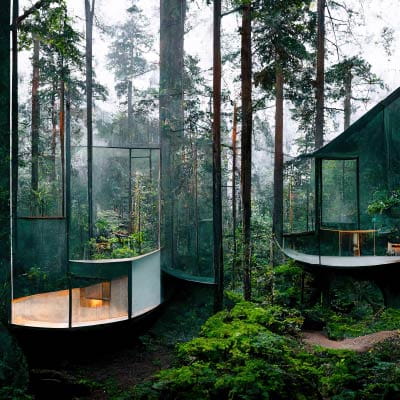
Not surprisingly, timber buildings provide access to nature in a way that increases positive thoughts and personal wellness, which in turn improves productivity and long-term health. Due to its modular construction, MET also lends itself to dismantling and re-use at ‘end-of-life’, providing opportunities for circularity.
One of the most exciting possibilities we see with the rise in MET construction is the role it can play in accelerating the introduction of robots on site. Because building with timber is more a process of assembly than construction, it makes timber a highly attractive entry point in the development of robot-driven construction.
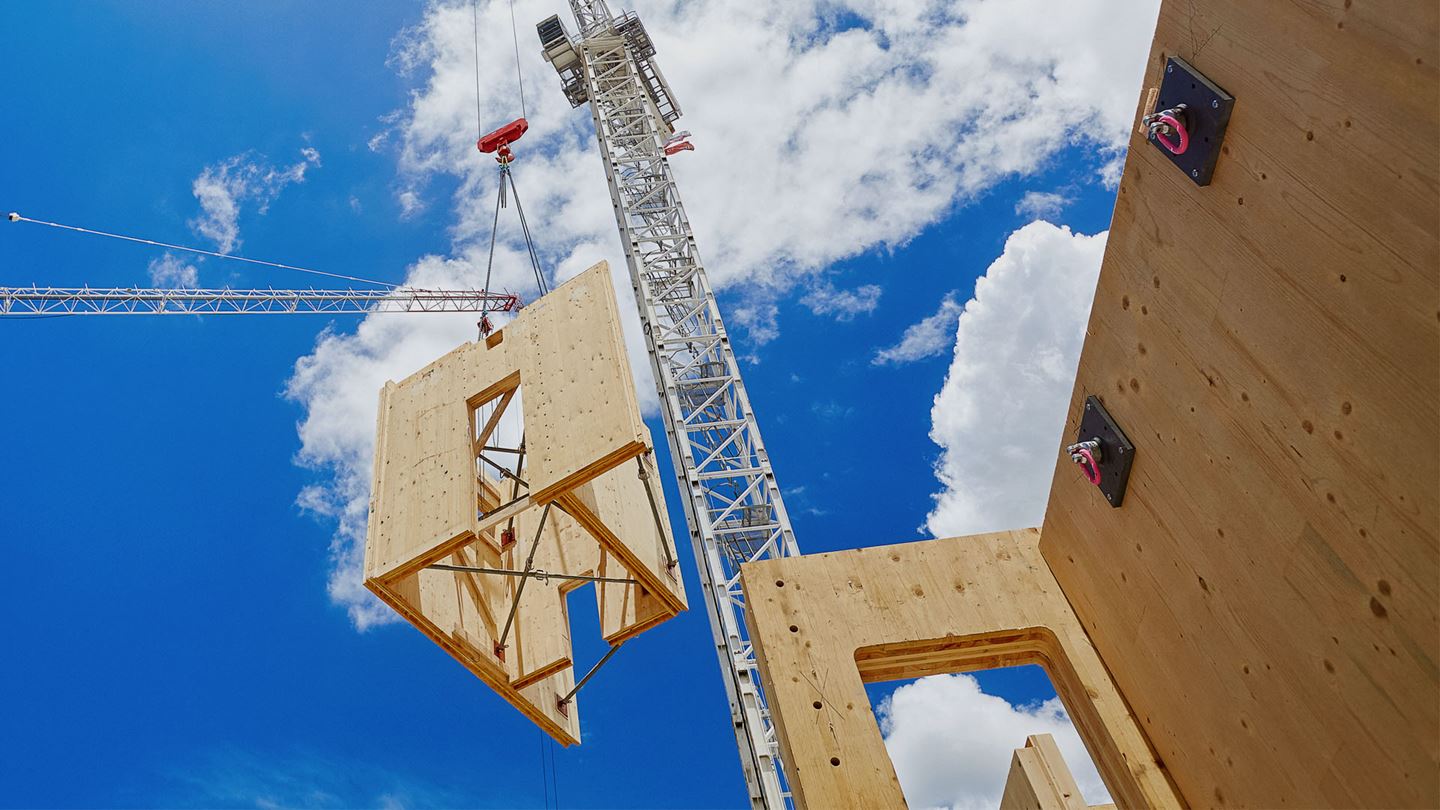
Structural components made from timber are fabricated at offsite locations and transported to the job site ready to be assembled. From here it is a question of unloading the sections from the delivery vehicle and lifting them into position on the structure. It doesn’t take too much imagination to see how this simple and effective building method might be automated in the near future.
In addition to introducing new construction techniques, the rise of MET construction could also lead to a new generation of construction skills. Consider carpentry, which today we associate with skilled craftsmen working at much smaller scales to serve the residential and interior disciplines. Now imagine what skills are needed to apply that learning at a much larger scale and with an intimate understanding of structural engineering.
Could we one day see the ‘master engineer carpenter’ in the mainstream of our industry?
But while we may wait many years for the industry to get to the automation and skills levels we envision, the efficiencies of timber construction are already being realised, demonstrating why we’re seeing such a strong rise in demand.
On an average construction site, both the number of people on the job site and the time taken to complete the project can be reduced by around 30 per cent when using timber versus traditional materials and methods, based on recent experience. This offers a saving for the developer in construction costs and delivery time; and with fewer workers needed on site, it creates a safer and quieter environment.
A further benefit of the modular construction process of timber buildings is that it naturally lends itself to space-constrained job sites. Asia, for instance, is home to many of the world’s largest urban centres and has the fastest growing population on earth. So, a new building method that combines speed with agility offers many advantages to urban developers.
Research shows that near-term use of mass timber in buildings seven to 15 storeys high on a global scale could have the same carbon mitigating effect as taking more than two million cars off the road per year. As a sense of scale, in 2018 there were 600,000 cars and taxis in Singapore. So that’s a lot of carbon!
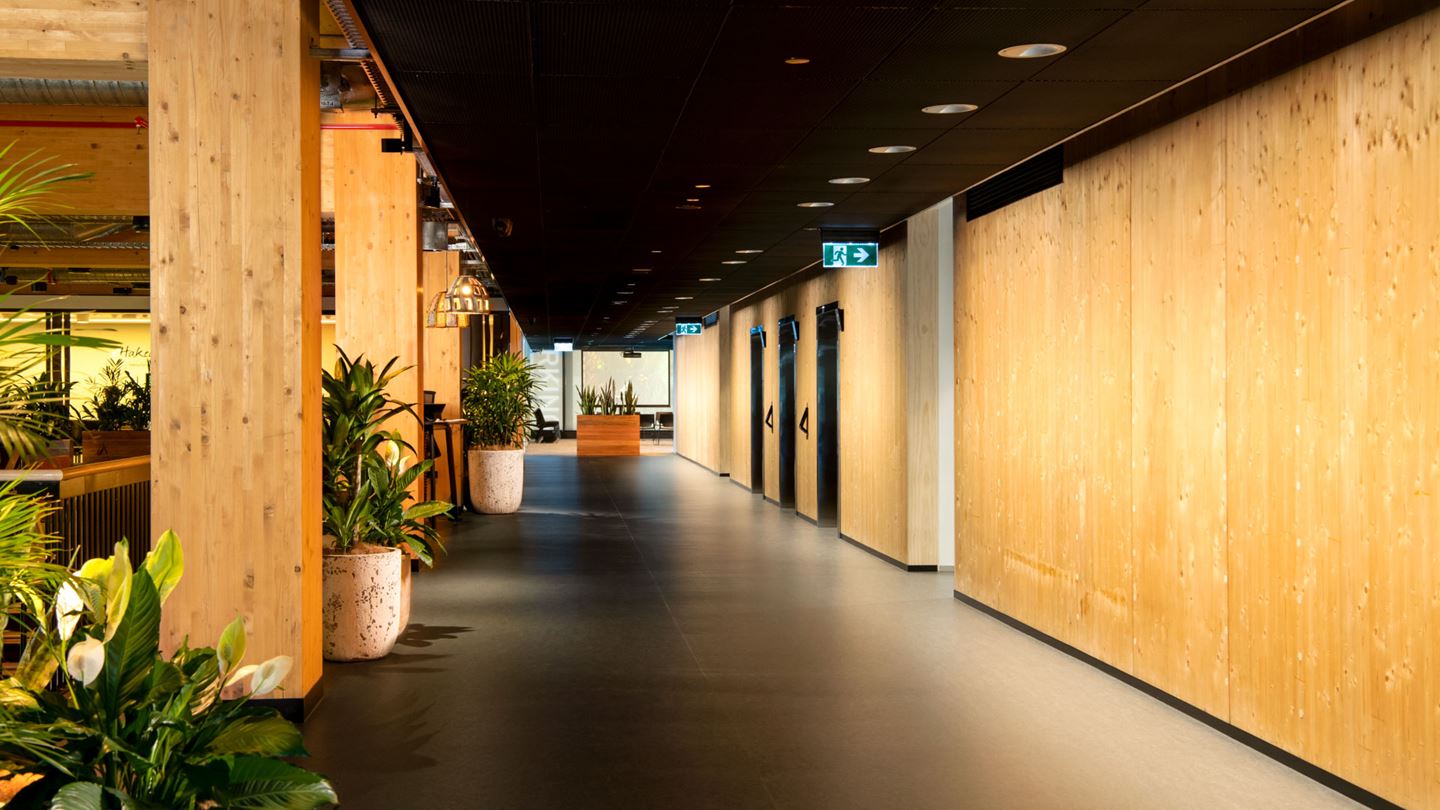
In the meantime, we need to champion successful projects as touchpoints to engage industry in a more thoughtful discourse concerning our sustained future. Projects like Aurecon’s 25 King Street, Australia’s tallest and largest engineered timber office building, is a success story worth telling. All nine of its timber floors showcase the power of timber buildings to host out-of-the-box experiences, cutting-edge innovations and human-centric design on a mass, sustainable scale.
Another example is Asia’s largest timber building, the Nanyang Technological University (NTU), in Singapore.
We also need to invest R&D into better systems of automation that will improve the pace and efficiency of our off and on-site construction. At the moment, cranage is one of our biggest challenges because it represents a slow, and often cumbersome, part of the construction process.
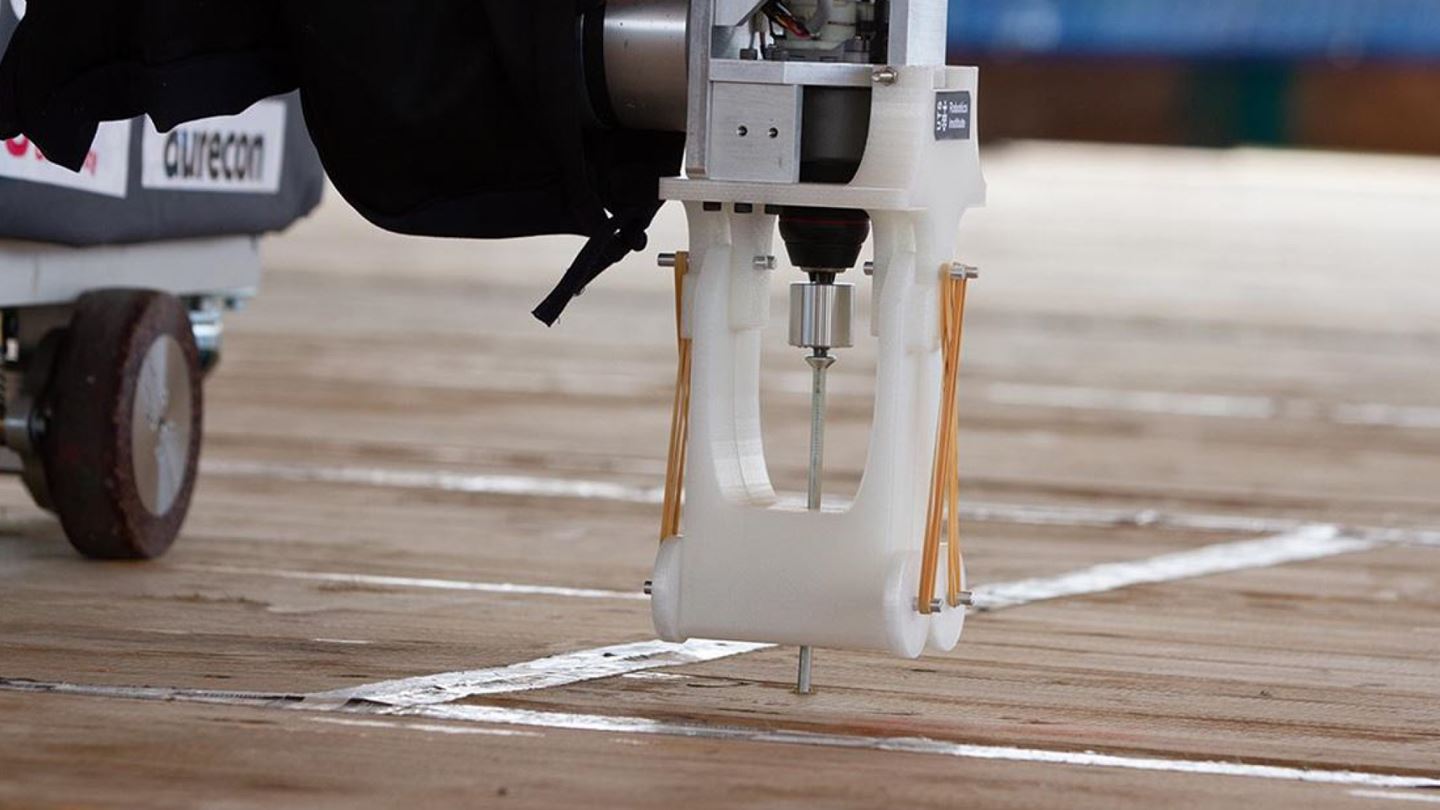
Murdoch University’s Boola Katitjin, Western Australia’s first timber building, has been the test-bed for an innovative robotics trial that could revolutionise timber construction.
A change of approach by companies like Aurecon can also play an important role in bringing mass timber to the market. Traditionally, engineers have a default setting to ‘solutionise’, rather than co-navigate alongside clients to deliver custom solutions that address the problem at hand. As part of Aurecon’s commitment to offer fresh, value-add solutions that forego formulaic thinking, timber and off-site construction will most definitely feature as a viable, exciting option for alternative building design.
Concrete still reigns supreme, but if we invest in timber’s potential and develop its renewable capabilities over the next decade, we are well on our way to reaping the benefits of a more circular and sustainable design and construction approach for our future buildings.
As we look to a future with more timber construction, much of the uptake rate will depend on two things: updating building codes in place and myth-busting preconceptions about timber.
Fortunately, in terms of building codes, we are in a situation where most countries now have them. However, these codes may not be as evolved as those for more traditional construction methods. Even though we expect this to change as timber use increases, it will take time.
For the myth-busting part, it is more a question of education. One of the most obvious preconceptions to overcome is the idea that timber buildings are more vulnerable to fire. Clearly wood is a combustible material, but as designers, we provide systems to mitigate the apparent risks. One great advantage of MET is that it doesn’t lose its structural integrity in a fire. It will continue to carry load while burning which provides the required redundancy and time for occupants to escape.
MET chars at a predictable rate, which forms a barrier to fire to limit damage – much like a heavy log of wood will smoulder and burn very slowly when added to an existing fire. Modern design codes in most countries require buildings to maintain their structural strength after fire damage, so MET has been designed to meet these global standards.
Concrete still reigns supreme, but if we invest in timber’s potential, we are well on our way to reaping the benefits of a more circular design and construction approach for our future buildings.
Another preconception, and one that is particularly relevant to the Asia-Pacific, is that high humidity levels can adversely affect the structural integrity of timber. However, because the timber is treated, humidity is not an issue. There are certain types of timber which are highly suitable for use in exposed areas, for example, exterior facades.
As with so many industry disruptors, the road to success is seldom without challenges. But with enlightened thinking, changing perceptions and growing interest from developers, we can expect to see even more timber buildings taking root in areas across the Asia-Pacific in coming years.
Contributing authors & reviewers: Serena Yap
Aurecon shares insights on how the 2032 Brisbane Games can deliver legacy infrastructure and lasting economic, environmental and community value.
This fact sheet compares the community and environmental impacts of wind farm projects, and how ecologically sensitive design can deliver better outcomes.
How engineering and construction projects are evolving to champion biodiversity, through early planning, advanced technologies, and ecosystem stewardship.