

Making choices for de-risking renewable project delivery
Aurecon shares insights on how renewable project delivery models are evolving to better manage risk and deliver long-term value through project partnerships.


Change your location to view content tailored for you.
As decarbonisation targets loom large across industries and many organisations are now well advanced in the pursuit of reducing operational carbon, attention is turning to embodied carbon as the next critical opportunity in the net-zero journey. Organisations relying on carbon intensive infrastructure to support their business functions are reimagining the materials they use, and timber – the only mainstream building material truly sustainable at its core – is proving a smart choice as a decarbonisation tool.
Mass engineered timber (MET) is no longer just sought after for its aesthetic appeal. It is now being used in unexpected ways – in data centres, hospitals, industrial facilities – even swimming pools and wind turbines – reducing carbon emissions and helping lower embodied carbon and achieve climate goals.
When we think of timber buildings, we often imagine beautiful award-winning architecture and elegant civic spaces – not the ‘guts’ of infrastructure or industrial operations. In a world urgently seeking to decarbonise, adopting timber for its value beyond aesthetics can be a decarbonisation gamechanger.
The Clean Energy Finance Corporation (CEFC) 'Australian buildings and infrastructure: Opportunities for cutting embodied carbon report' (published 2021) shows that building with timber reduces embodied carbon up to 75 per cent. Its modelling also shows that if 50 per cent of traditional steel and concrete materials in a building were replaced with engineered timber, it would result in an 11 per cent reduction in embodied carbon.[1]
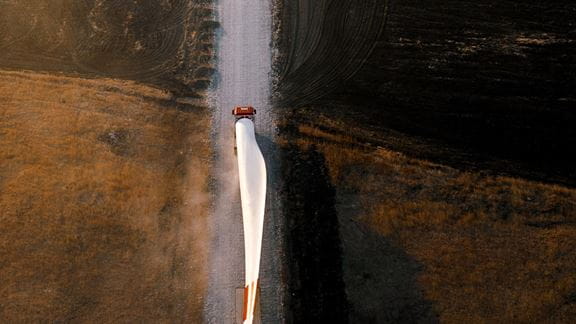
As organisations push the limits of their operational carbon reductions, focus is turning to embodied carbon – the emissions locked into construction materials themselves – which is seen as the next frontier in net-zero strategies. And timber – the only mainstream building material we grow, harvest, and regrow – is emerging as a frontrunner material for use in non-traditional applications such as hospitals, data centres, water treatment plants, minor industrial structures, swimming pools, and even wind turbines.
Mass timber in non-traditional settings is not just possible – it is essential to decarbonising our infrastructure without compromising durability, safety or performance.
"Timber is not just for architectural showpieces. With the right design and expertise, it is a serious contender for hard-working infrastructure. And in the race to net-zero, it might be the smart, sustainable building solution we have been overlooking."
Ralph Belperio, Major Projects Director – Australia, Aurecon
There is an opportunity to re-frame how we view timber – and get back to seeing this material as one to use to do a certain job, rather than only fulfilling the task of looking and feeling beautiful. Timber has far more to offer than just its face value.
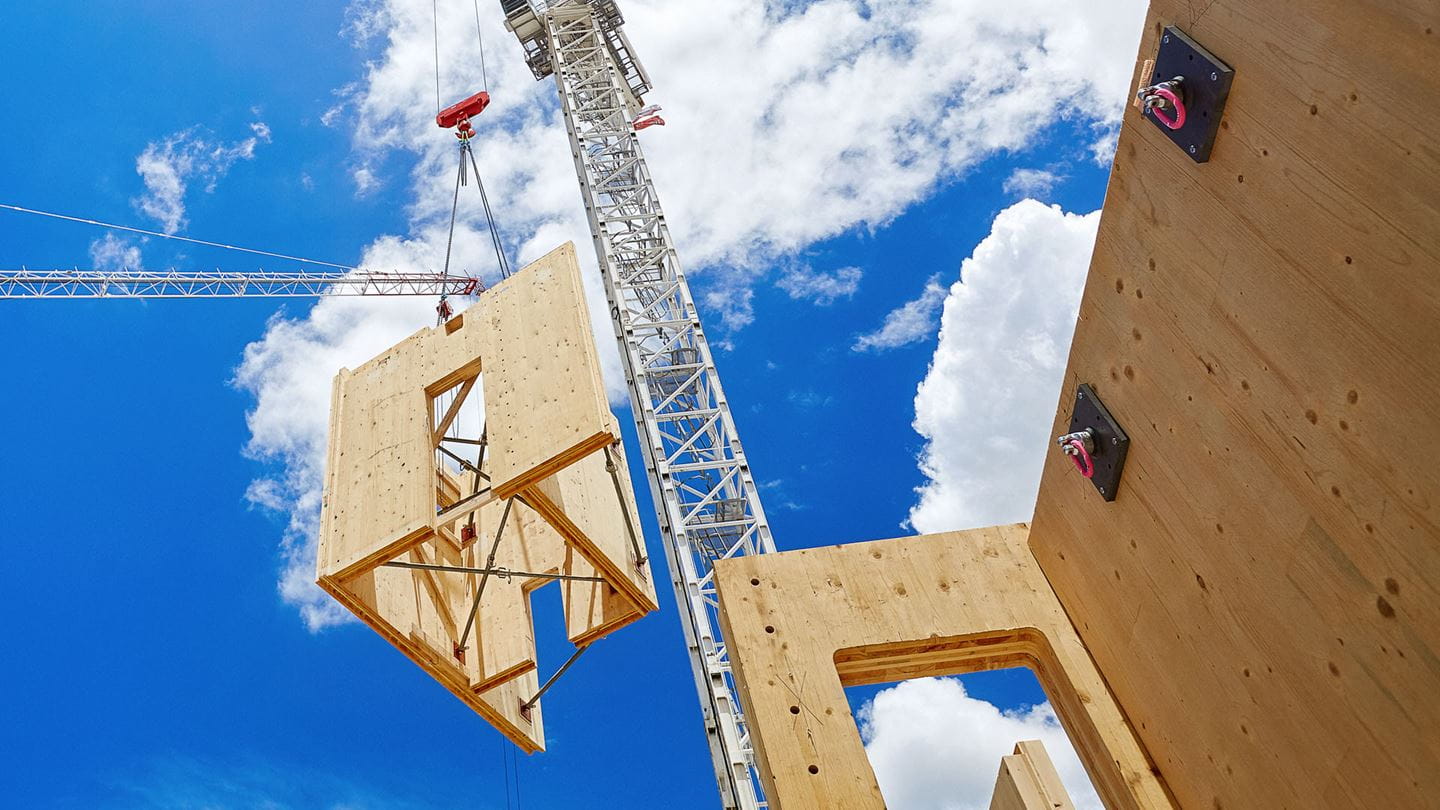
From data centres and hospitals to wastewater and industrial facilities, there are many opportunities where using mass engineered timber can slash the use of steel and concrete, which are among the most significant sources of carbon emissions.
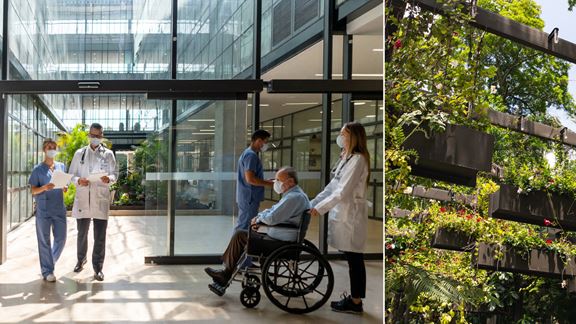
Just a few decades ago, timber-framed one and two-storey hospitals were not uncommon in regional Australia. Today, hospitals are one of the least expected settings for timber – but that’s beginning to change.
Beyond delivering biophilic benefits enhancing patient wellbeing and recovery, timber offers advantages for high-performance healthcare environments. Certain species of timber exhibit microbial properties. This may seem counterintuitive in an environment where usually elements in the space are completely sealed and hygienic, however some timber’s microbial properties actually help in fighting bacteria naturally, supporting hygiene while reducing reliance on synthetic materials.
Timber also contributes to healthier indoor environments through improved air quality, humidity control and natural acoustics – all vital in promoting healing.
From a structural standpoint, timber is lightweight – a critical factor in hospital builds subject to strict seismic requirements. Lighter structures reduce foundational loads, which can translate into cost savings and enhanced resilience. Plus, timber enables prefabrication, improving build speed and reducing site disruption – crucial in complex, active hospital environments.
As data centres rapidly scale to meet demand, reducing carbon impacts both operationally and in the structure has come into significant focus. Data centres are energy-intensive, emissions-heavy and critical to a net-zero digital economy – not just from their energy use but from the material intensity of their builds.
With floor systems accounting for a large share of embodied carbon, cross-laminated timber (CLT) is emerging as a smart alternative to steel or concrete framed floors. And some of the world’s largest technology companies, including Microsoft[2], are also experimenting with timber-framed data centres.
Engineers for Microsoft have developed a hybrid approach using CLT, a fire-resistant prefabricated wood material that will enable the company to reduce the use of steel and concrete. The hybrid mass timber, steel and concrete construction model is estimated to significantly reduce the embodied carbon footprint of two new data centres by 35 per cent compared to conventional steel construction, and 65 per cent compared to typical precast concrete.
Beyond the benefits of lower emissions, timber can improve thermal performance and can be prefabricated for the benefits of less materials wastage on site, and streamlined construction at scale.
Chlorine-laden air and harsh chemicals can make water treatment, desalination plants and swimming pools especially punishing for steel infrastructure. Yet timber – when properly selected and detailed – can offer a surprisingly resilient alternative. Properly ventilated and treated timber resists decay, offers cost advantages and eliminates corrosion risks that can sometimes plague steel.
Timber structures are increasingly being used in wastewater treatment plants due to their durability, sustainability and potential for cost-effectiveness in aggressive environments. In these settings timber can be used widely – for buildings, foundations and also structural components. When combined with stainless steel fixings, treated or naturally durable timber components may replace steel elements such as purlins, contributing to greater embodied carbon.
France’s Aubevoye Wastewater Treatment Plant[3] uses Douglas fir to create a bioclimatic timber structure resistant to chemical decay, and in another project example, there is a sewage treatment plant in Katowice, Poland that includes structures like septic tanks with radial walls and a conic dome roof made with timber beams. Both setting a precedent for utilities across the globe looking to decarbonise infrastructure without compromising resilience.
While industrial buildings have historically been the domain of the steel structure, timber in industrial structures is actually not new – it’s just forgotten. The Borg Plantation Pine facility in Tumut NSW at 90 m long by 40 m wide, remains one of the longest spanning timber structures in Australia since its completion in 1988. Approaching four decades in operation it is testament to the suitability of timber in an industrial environment.
Although timber alternatives in industrial facilities have been around for decades, mass market acceptance has been slow. In an era of carbon scrutiny and rising steel costs, why not return to materials we can grow, harvest and grow again?
There’s even an opportunity to rethink industrial scale: What if prefabricated timber-framed sheds became the new backyard norm, replacing carbon-intensive steel kits?
Timber provides long term durability in industrial use and offers a viable alternative to steel. It is structurally sound, aesthetically warm, offers biophilic benefits for workers and is capable of spanning large distances without the need for supporting walls, making it ideal for industrial applications. It can be cost effective, can speed up construction timeframes and is low in embodied emissions. With decarbonisation becoming a key business driver, it is likely this will increase appetite for uptake of lower carbon alternatives to traditional steel structures across the industrial sector.
From hospitals to hyperscale infrastructure, clients increasingly seek solutions that are not just fit-for-purpose, but future-fit. Understanding timber and selecting and designing appropriately, brings biophilic benefits, use of sustainable materials, and construction efficiencies. These are no longer ‘nice to haves’ – they are strategic advantages.
Across each of these non-traditional applications of timber, despite the many benefits, barriers do persist: market resistance from an unfamiliarity with mass timber; competition from established steel and concrete industries; ongoing changes in building codes and fire safety regulations; misconceptions regarding sustainability and the ecological impact of timber harvesting.
What is holding back timber is not technical feasibility. It is perception. And each successful use case chips away at old assumptions, contributing to a shift where timber is seen as both a design feature and a high-performance structural solution that meets the clinical, operational and sustainability demands of tomorrow.
Changing perceptions about building materials requires bold leadership, agile regulation and integrated design thinking. Governments, institutional investors and private operators all stand to gain from decarbonised infrastructure – but only if they rethink what is possible. Timber needs champions willing to prototype, learn and share. And it needs collaborators – engineers, architects and regulators – who understand the stakes and are willing to evolve.
The path to net-zero is not through one material or method. But embracing timber in the places we least expect it may be one of the smartest steps we can take to create a lasting environmental impact and a more hopeful, resilient tomorrow.
[1] Clean Energy Finance Corporation (CEFC), 2021, Australian buildings and infrastructure: Opportunities for cutting embodied carbon.
[2] Sally Beatty, 31 October 2024, Microsoft builds first datacenters with wood to slash carbon emissions, Microsoft.com.
[3] AR ARCHITECTES, 19 June 2018, Eco-wastewater treatment plant Aubevoye, Construction21 International.
Aurecon shares insights on how renewable project delivery models are evolving to better manage risk and deliver long-term value through project partnerships.
As climate impact events become increasingly prevalent, there is a sharpening focus on resilience investment for Australia's infrastructure across every sector.
Building sustainable hospitals demands a focus on adaptability, climate resilience, and sustaining capital to address the healthcare needs of the future.