Brisbane 2032: Creating lasting impact through transformative infrastructure
Aurecon shares insights on how the 2032 Brisbane Games can deliver legacy infrastructure and lasting economic, environmental and community value.


Change your location to view content tailored for you.
Command Google Assistant with the words “Hey Google”, and you’ll be met with plenty of data related to your topic of interest. What if we could adopt this concept for gathering data on the condition and health of hydropower and dam schemes, with the aim of sustaining the performance of these assets?
The further development of digital technologies promises to have significant impacts in the hydropower industry. This will certainly involve the creation and use of digitised information, and processing of vast amounts of data.
Digital hydropower can enable smart sustaining capital investments to improve operations and maintenance through improved condition monitoring systems, automated maintenance practices and enhanced control systems, together with decision-making tools to optimise decisions around modernisation and upgrades.
At a time when organisations are seeking automation improvements to bolster operations and the bottom line, asking our assets how they’re feeling could provide those all-important marginal gains.
Just as solar and wind energy decarbonise electricity supply, hydropower is a mature technology that will be a core part of the energy mix in the transition to a net zero emissions future. Hydropower in some regions plays an even greater role than its counterparts because it provides sustainable energy as well as community water security, flood control; irrigation and water supply.
At the end of 2020, the International Renewable Energy Agency reported that total renewable energy generation capacity amounted to 2 799 GW with hydropower accounting for the largest share (1 211 GW). It also remains an attractive power source due to its competitive levelised cost of electricity and dispatchable nature.
Hydropower (and pumped hydropower in particular), provides balancing, security and storage to the electricity grid in a manner that is considerably cheaper, cleaner and more applicable at a larger scale than other solutions.
To adapt to a greater role in the future energy mix, and remain relevant and competitive in the renewables landscape, hydropower assets will need to become digitally enabled, data-driven operations.
Innovative digital tools have been used for good effect to solve discrete problems and provide specific outcomes within the field of hydropower and dams for many decades. However, the use of such tools within a single, fully integrated digital platform, or common data environment (Figure 1) – in which the project teams and stakeholders work collaboratively together throughout the project delivery stage – is still developing.
Just as a Google Assistant is ready to help when and where needed, digital forecasting and analytics from a hydropower asset can be one of the greatest ways that developers and operators can optimise power production and hedge climate vulnerability.
A digitally enabled and data-driven approach can provide confidence and accuracy to a sustaining capital programme, making hydropower and dam assets smarter, and shifting operations from incident response management to a proactive approach to selecting and delivering projects, and maintaining and operating assets.
Using data efficiently requires several steps, and this is why a common data environment for assets matters. It’s fair to say that a hydropower or well monitored dam asset (as part of a dam safety management program) will generate a colossal amount of data. The struggle for operators is wrestling with, and dispersing, this information effectively so that it can input into effective sustaining capital management.
The goal is to create one connected digital delivery ecosystem, or asset information model (AIM), with seamless integration from project inception through to the operation and maintenance phase. This will empower the whole project team (owner/operator, consulting engineer, contractors and suppliers), to promote innovation and increase overall productivity and project performance in the key areas of cost, project duration, quality, safety and asset sustainability.
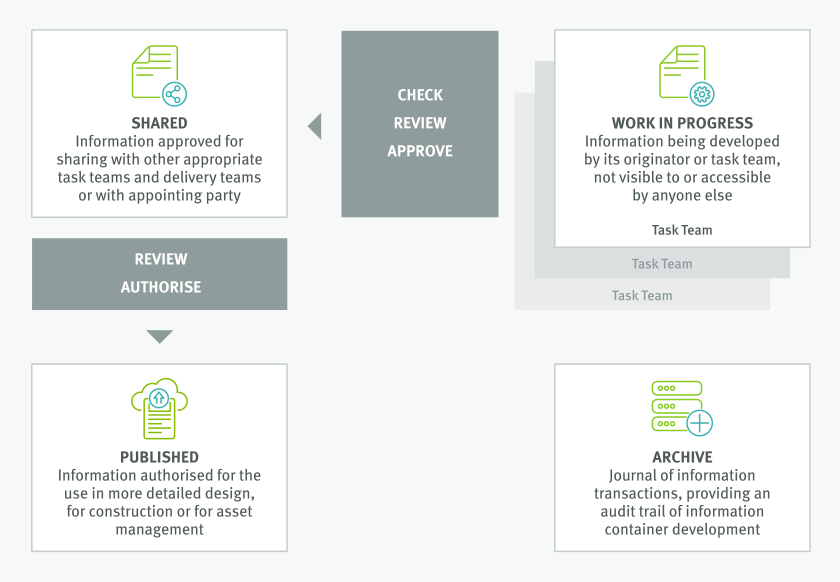
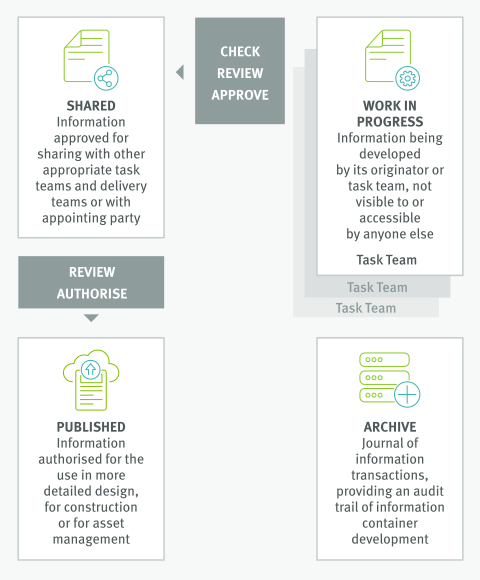
Figure 1. A typical common data concept for flow of information capture and use
In order for any digital platform to be of real value, it is necessary from the outset to ensure that data and information frameworks are consistent, and various software programs have a high degree of interoperability (Figure 2) so they can ‘talk’ to each other in a unified and integrated, seamless environment. Use of industry foundation classes (IFC’s) is a prerequisite in this regard.
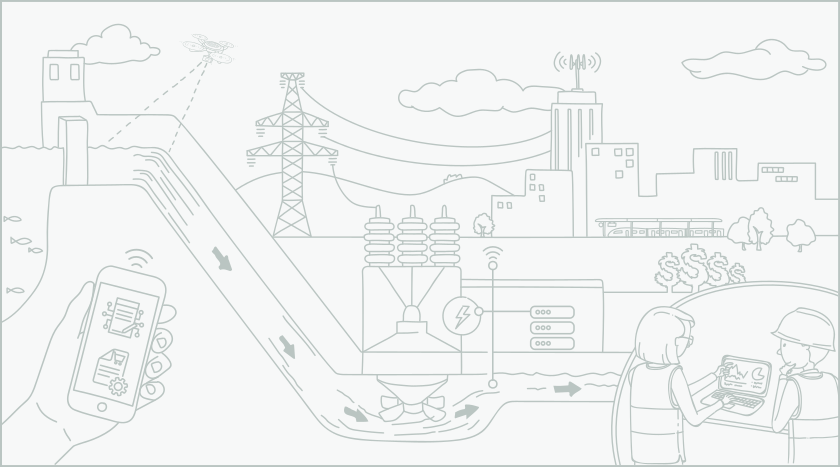
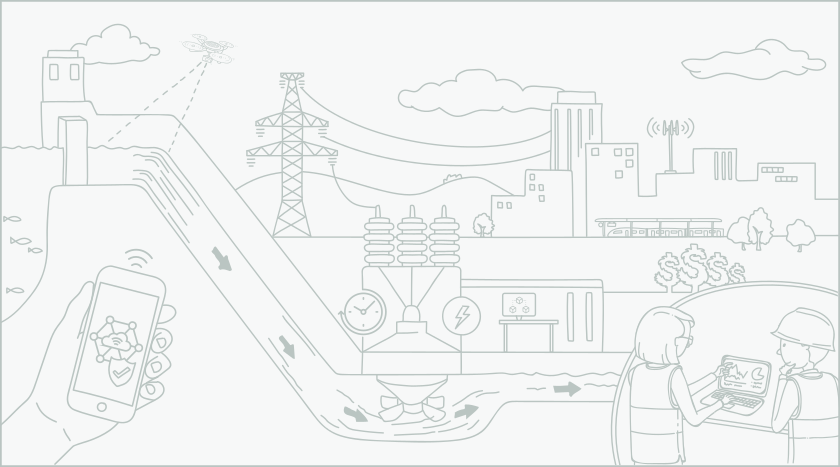
Linking the physical and digital worlds allows data from any stage of the development and operation stages to automatically update digital twins, or models, allowing an almost real-time feed to continuously tell operations teams and sustaining capital decision-makers how assets are ‘feeling’.
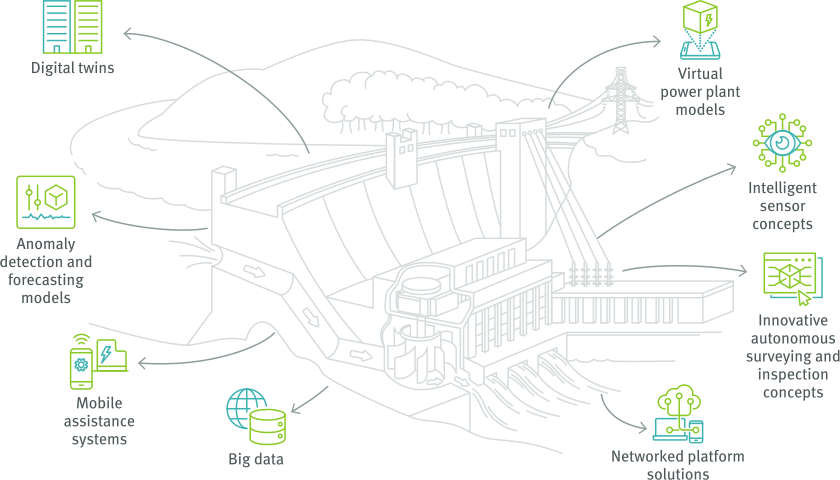
Figure 2. Digital tools to enable hydropower assets to tell us how they’re feeling
This approach to digital data capture for project development and sustaining capital contributes to effective asset maintenance and operation and provides confidence and assurance to future asset investment decisions. A common data environment is mapped to digital forecasting and analytics tools to inform long-term asset management and performance optimisation decisions.
As within most industries, the key to productivity improvements in hydropower and dam project delivery and operation/maintenance/dam safety management lies in more efficient asset management practices and better collaboration within, and across the delivery teams, (asset owners/operators, consultants, contractors and suppliers alike).
Moving sustaining capital asset management and new infrastructure project delivery to a unified digital platform is likely to be the most powerful way to address the challenges of rectifying ageing assets or constructing new projects. These challenges include making infrastructure more resilient to maintain productivity, moving organisations to a digital way of thinking, and adequately resourcing organisations with digital specialists.
As digital tools mature, a cultural shift away from traditional design and delivery towards a data-driven mindset will be necessary to maximise asset value for asset owners, communities, and customers that rely on them. A key cultural challenge here is that it is the organisation’s leadership which must generate the right company culture – a digital one and this must be planned from project inception and embedded in the procurement approach.
Currently, very few hydropower or dam projects are delivered entirely in a digital format as proponents are unsure of the step change required to achieve this. Organisations may not necessarily be set up to create the best digital outcomes with their existing procurement processes.
Operators will need to address data capability issues to be able to aggregate and process data for production optimisation across their existing assets, and to inform rehabilitation projects.
Not to be forgotten are the potential legal and contractual issues faced when using digital models or federated, combined models, and their required consistency of standards. When an originator’s digital models and software are federated to a common data environment, issues of intellectual property ownership and liability will also surface.
While providing essential adaptation services, hydropower and dam facilities are not immune to the changing climate. The increasing volatility of weather patterns pose an increasing challenge.
To mitigate this issue, operators will need to develop a long-term strategy for monitoring and maintaining data and, where possible, incorporate historical records into forecasting models in order to promote asset resilience.
This will require the definition of environment related targets that are tracked to create a proactive approach to environmental sustainability, and share value creation with local communities.
Concrete opportunities to realise hydropower and dam projects lie in the digitalisation of control systems that help operators make more sophisticated choices during the planning, design, construction, operation, maintenance and dam safety management phases.
The technology is already at our disposal – it’s the framework on how to use it in the short-, medium- and long-term that is required to make the step change towards more resilient assets.
Explore below the different mechanisms for generating and integrating digital frameworks for hydropower and dam assets over the short-, medium-, and long-term:
1
New technologies provide desirable returns on investment
2
Data-driven culture in operator organisations
3
Obtaining tangible value from collected data
4
Appoint experienced Knowledge or Data Managers to oversee digital project delivery
5
Choose consultants with ISO 19650 certification




Short-term opportunities for integrating digital frameworks for hydropower and dam assets. Tap or hover over the numbers to reveal the different mechanisms.
1
Digital collection and analysis cover multiple disciplines, aspects and processes
2
Move procurement process and asset delivery to a digital platform
3
Integrate a digital framework across the whole organisation
4
Electronic contracts are replaced with true digital contracts
5
Use a common data environment during project delivery that drives collaboration and productivity



Medium-term opportunities for integrating digital frameworks for hydropower and dam assets. Tap or hover over the numbers to reveal the different mechanisms.
1
Common language for data in the hydropower industry
2
Long-life durability of assets using ‘big data’ and advanced analytics
3
A digital framework that complies with security standards and processes
4
Digitally enabled workers

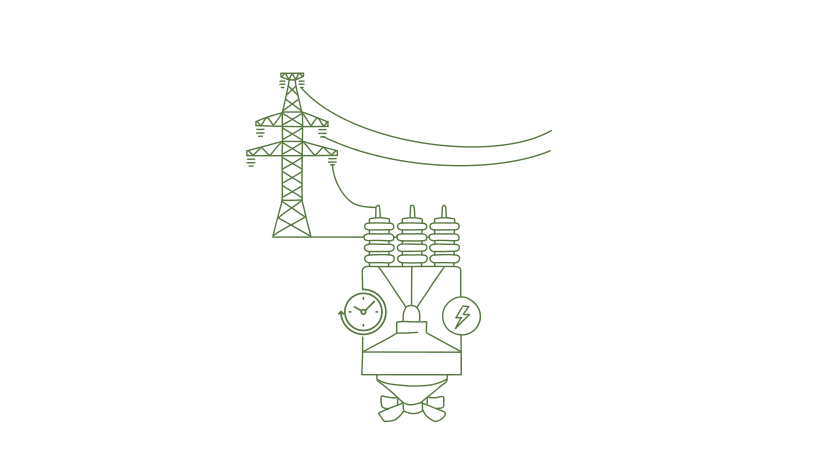


Long-term opportunities for integrating digital frameworks for hydropower and dam assets. Tap or hover over the numbers to reveal the different mechanisms.
Short-term opportunities for integrating digital frameworks for hydropower and dam assets:
Medium-term opportunities for integrating digital frameworks for hydropower and dam assets:
Long-term opportunities for integrating digital frameworks for hydropower and dam assets:
Hydropower and dam operators are faced with increasing customer and business demands for water and energy, along with ageing assets that are sometimes no longer able to provide optimal performance to meet these demands. To effectively address the transition risks of climate change, and water demand to contribute to a net zero emissions future, these assets face a critical transition.
If hydropower and dam project procurement can evolve digitally, and the project delivery and sustaining capital process be shifted to a common data environment, the supply of renewable energy from hydropower will become even more competitive in the renewable energy landscape.
The wider value of digitisation includes economic growth and productivity improvements, improved value to customers, and environmental preservation through enhanced quality and sustainability of built assets.
The benefits provided by digital platforms are to capture, explore and maintain consistent and coordinated information that can be readily understood and shared between teams and stakeholders.
While hydropower and dam operators are no strangers to using digital tools and systems, it’s the modern way of capturing and using digital data that drives asset resilience, reliability and efficiency.
Achieving far-reaching, industry-wide change for successful, fully-integrated digital platforms, will need time to truly manifest. Proponents, or employers, that take a leadership role in directing the inclusion of integrated digital platforms and well-managed information and data in their organisation’s operations will reap the benefits of shorter project delivery times and lower project costs, together with developing the right capital investments that deliver value and sustainable outcomes.
The concept of asking ‘Hey Dam: Tell me how you’re feeling today’ modernises one of the oldest power sources on the planet into a digitally enabled, data-driven future that is more climate resilient and helps future generations prosper.
Contributing author: Bill Hakin.
Aurecon shares insights on how the 2032 Brisbane Games can deliver legacy infrastructure and lasting economic, environmental and community value.
This fact sheet compares the community and environmental impacts of wind farm projects, and how ecologically sensitive design can deliver better outcomes.
How engineering and construction projects are evolving to champion biodiversity, through early planning, advanced technologies, and ecosystem stewardship.