Beyond bricks and mortar: designing resilient high-containment facilities
Learn how adaptable, sustainable building design for complex research and high-containment facilities enhances public health outcomes and disease preparedness.


Change your location to view content tailored for you.
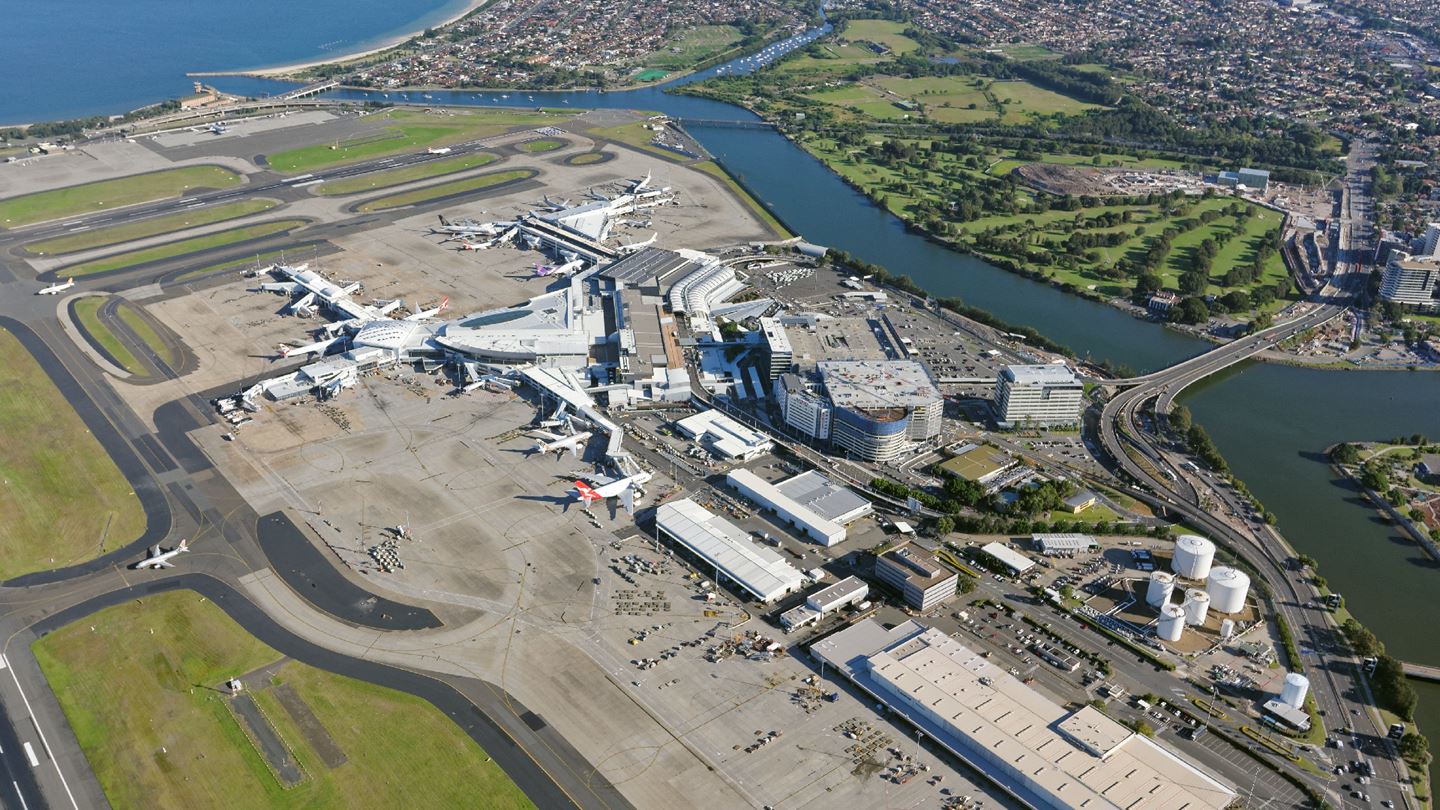
Airports are critical components of a city’s transportation infrastructure, connecting people and businesses to other parts of the world and facilitating the movement of goods and services. Australian airports are continuing to evolve and plan against a myriad of fluctuating factors, including population growth, regional city expansion, increasing tourism, and the urgent need to decarbonise.
Through effective planning, airports can optimise the use of available land and assets to generate significant economic activity by attracting new airlines, supporting increased passenger traffic, and promoting regional economic development.
Against this backdrop, an airport’s plan for growth may include the need for a major development plan (MDP) under the Airports Act 1996. An MDP is required for certain major development at federally leased airports and may be prepared for either a specific development or an entire precinct that encompasses a programme of works.
This insight paper examines the planning considerations that are involved in the preparation of an MDP.
Early in the planning phases for a major development, it is important to consider the scope of an MDP.
Aurecon often works closely with our aviation clients to assess whether it is more beneficial to prepare an MDP that assesses a single development or a precinct that involves a programme of works.
On one hand, preparing an MDP for a programme of works is beneficial because by grouping several separate, but interrelated, projects together at a precinct level, approvals are obtained for multiple packages of work at once. It also provides a macro planning lens that focuses on the bigger picture, allowing for better alignment with overall goals and objectives to ensure individual projects are in line with the broader airport strategy. By taking a more holistic view, precinct planning can improve staging, coordination, and integration between projects.
On the flip side, it’s acknowledged that some major developments will benefit from an MDP that focuses primarily on a single development. This is advantageous when timeframes are constrained, and available funding is limited. In these circumstances, we work with our aviation clients to break down a project into singular, manageable tasks and activities, to focus on the priorities and ensure approval is achieved as quickly and as efficiently as possible.
Success in an MDP relies on several critical aspects in the planning phases. Goals and objectives need to be clearly defined early in the planning phases. Concept design, and the operational and environmental technical investigations determine the documentation to be submitted as part of the MDP. These early steps will help airport operators maintain a sustainable and flexible approach during the design and development phases of the Major Development Plan.
Click on the points below to learn more:
Review existing available information to determine knowledge gaps and missing evidence where further investigations and validation is required.
Undertake technical investigations such as traffic and transport, contaminated land, geotechnical, cultural heritage, economic, and noise and vibration. This might include relevant field investigations, monitoring, testing, analysis and interpretive reporting.
Develop a plan to safely manage, re-use and/or remediate to make affected areas suitable for future development.
Undertake structure and precinct planning to analyse the shape, look, function and elements of the development (or precinct) to ensure integration with airport operations and functionality.
Complete the analysis to input into the concept design, determining how the future development (or precinct) will bring about the airport operator’s intended social, economic and environmental goals.
Develop costings, as well as expected return on investment, of the works to demonstrate the MDP is viable and will not place undue burden on communities, the airport or its stakeholders.
Flexibility in an MDP is important as it allows adaptability and changes to be made over time as the needs for the development become more defined after MDP approval. An MDP that is too rigid may not be able to accommodate design changes and therefore require airport-lessee companies to go back through the MDP process for an amendment prior to construction.
Flexibility also encourages innovation and improved decision making. A flexible MDP allows for new ideas and solutions to be incorporated through the design and construction process, such as incorporating new technologies or sustainable building materials, and upgrading accessibility.
It’s also important to note that a flexible plan provides more options for decision making so that airport operators are not restricted to specific design details that were defined early in the planning phases.
Developing an MDP can require a substantial amount of effort, including extensive engagement with various stakeholders such as regulatory agencies, airlines, local communities and infrastructure designers and constructors.
Aurecon is well connected with established and strong working relationships with these stakeholders, particularly with the Commonwealth Department responsible for assessing MDPs. Airport operators with this support can engage early and ensure that development requirements and expectations are well understood and communicated. This time is also well spent testing proposed ideas with the Commonwealth and interpreting the MDP guidelines for a development (or precinct).
By engaging with stakeholders, airport operators ensure the MDP takes into account the needs and concerns of all parties involved. This leads to better decision-making, which ultimately results in a more efficient, sustainable, and user-friendly airport.
For instance, engaging with airlines can help design airport facilities that are efficient in terms of passenger experience and retail offering. Likewise, engaging with local communities can help to minimise the noise and environmental impacts of airport development, a key component of an airport’s social licence to operate.
Engaging with stakeholders has the added benefit of increasing their level of support for an MDP. By involving stakeholders in the planning phase, they become more connected with the precinct and the intentions behind its development.
Sustainability, decarbonisation, and climate change mitigation are becoming increasingly important considerations in the planning phase for MDPs. A robustness will be required by airport operators in the future with regards to concepts that align with their carbon neutrality strategies. These include:
One project where Aurecon has applied the above approach is at HMAS Albatross. Ground contamination investigations were undertaken using geological and topographical modelling, contaminant volumetrics, and 3D spatial statistical confidence analysis. It enabled the Department of Defence to make informed decisions regarding remediation works and cost at the base.
Australian airports have clear plans for the future, whether it’s to expand capacity, improve facilities or create new revenue streams. Developing a clear and compelling vision through the MDP will articulate the benefits of a proposed development, including its economic impact, community benefits and improved passenger experience.
Engaging with stakeholder groups and the Commonwealth Department as the regulator of federally leased airports, and listening to their feedback, can help identify potential concerns or issues that need to be addressed during the technical investigation and concept design phases, prior to submission of an MDP.
The undertaking of thorough environmental, planning and social impact assessments and investigations will help avoid delays or objections with valid, meaningful and informative data. The outcome being an accurate roadmap for future single developments of programmes of work.

Director, Environment & Planning

Director, Environment & Planning
Learn how adaptable, sustainable building design for complex research and high-containment facilities enhances public health outcomes and disease preparedness.
Aurecon shares insights on how renewable project delivery models are evolving to better manage risk and deliver long-term value through project partnerships.
Aurecon draws insights from Committee for Sydney’s Jeremy Gill on how we grow Auckland's tech economy through placed-based, connected innovation precincts.