Links to decarbonisation
Network infrastructure upgrades that enable accelerated and increased levels of service will support growth opportunities and regional initiatives.
This becomes particularly important on rural lines that support national economic development by enabling movement of commodities such as wood, food and dairy, to major cities and to Seaports such as the North Island Ports of Auckland and Tauranga, and Lyttleton Port on the South Island, for export. Investment in these linkages increases throughput of freight, while improving the resilience and sustainability of the infrastructure that connects to it, such as ports and intermodal precincts.
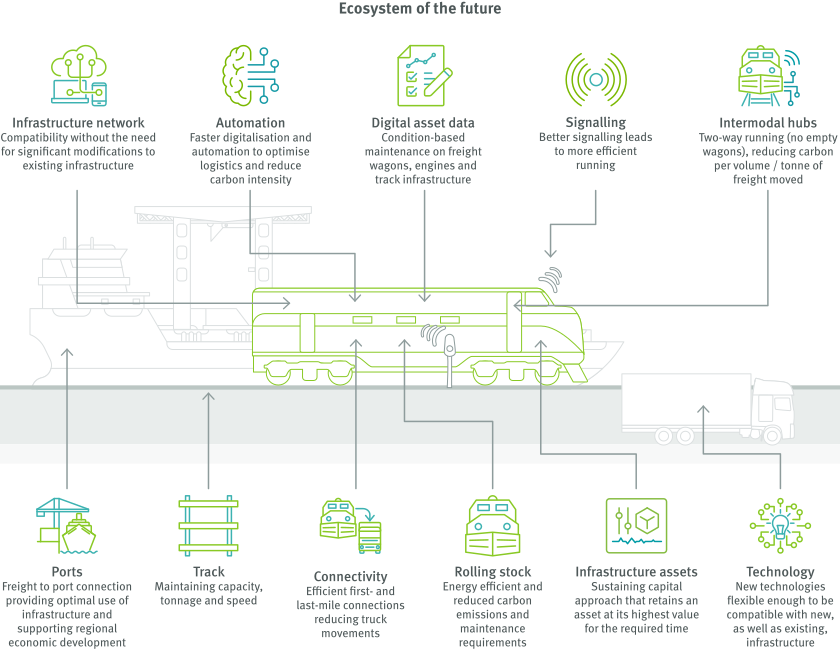
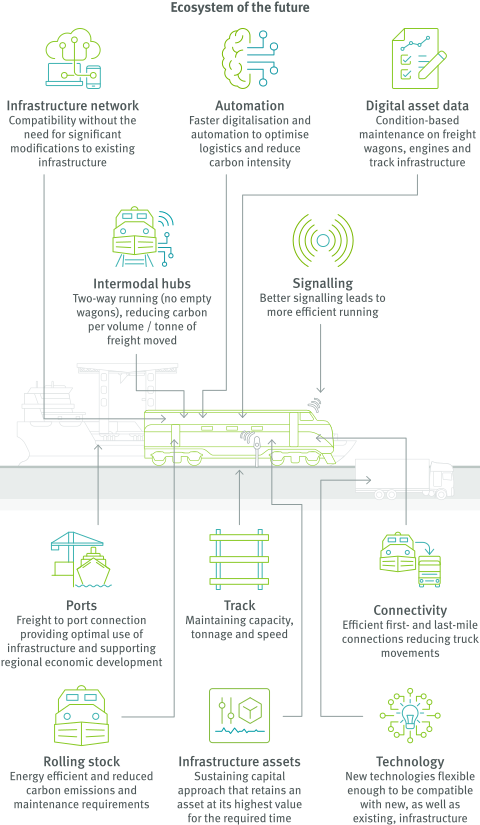
Not only does moving freight by rail produce fewer carbon emissions than road freight, it lowers roading costs (new construction or ongoing maintenance) and reduces congestion by taking freight off the roading network. A number of linked track and enabling infrastructure factors are critical to decarbonising the journey of freight (Figure 2).
Figure 2. Linked track and enabling infrastructure factors are critical to decarbonising the journey of freight in the context of the future ecosystem.
Displacing diesel
If decarbonisation is the ticket to destination net zero, then rolling stock is the pass to lowering carbon dioxide output from freight rail.
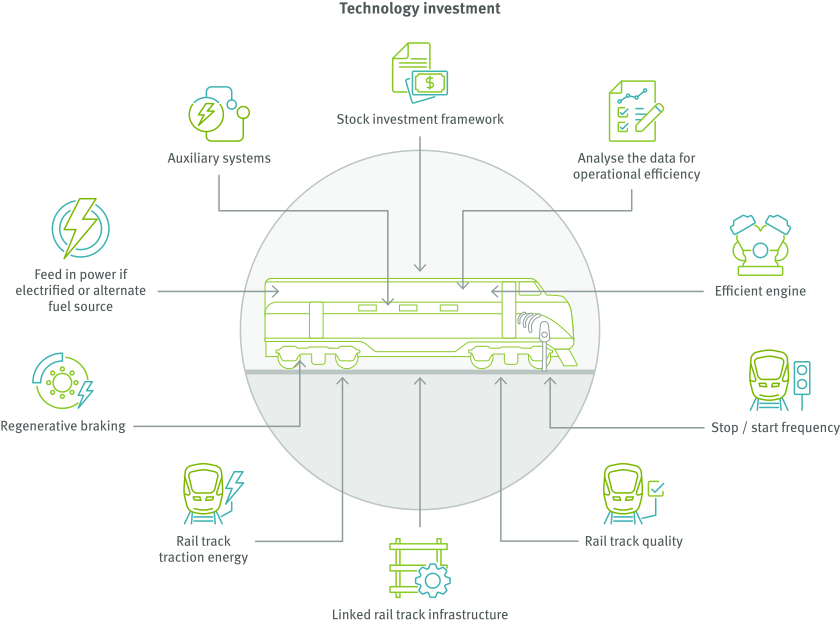
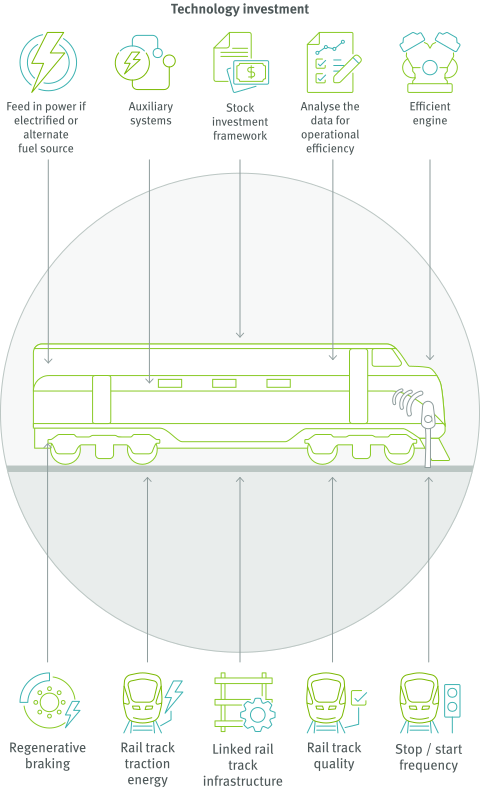
When it comes to decarbonisation, displacing diesel is one of the most significant rolling stock changes that New Zealand can make. There are a number of factors to consider when decarbonising rolling stock from an ecosystem-wide perspective (Figure 3).
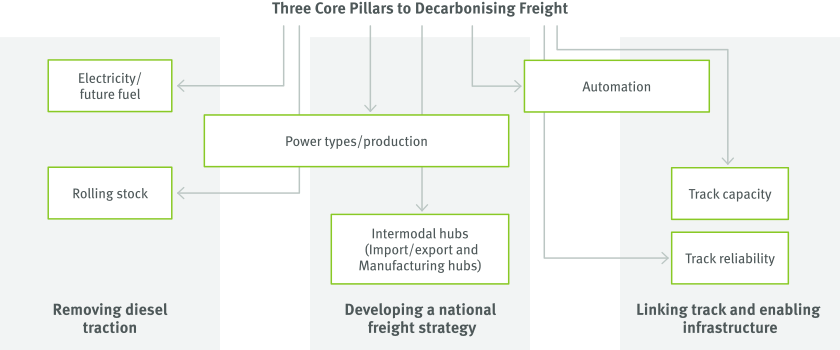
Figure 3. Building blocks to removing diesel traction.
Displacing diesel is able to include a range of items, such as improving logistics, energy efficiency, and introducing battery locomotives for hybrid diesel/battery solutions that have lower emissions per freight tonne than a straight diesel locomotive does.
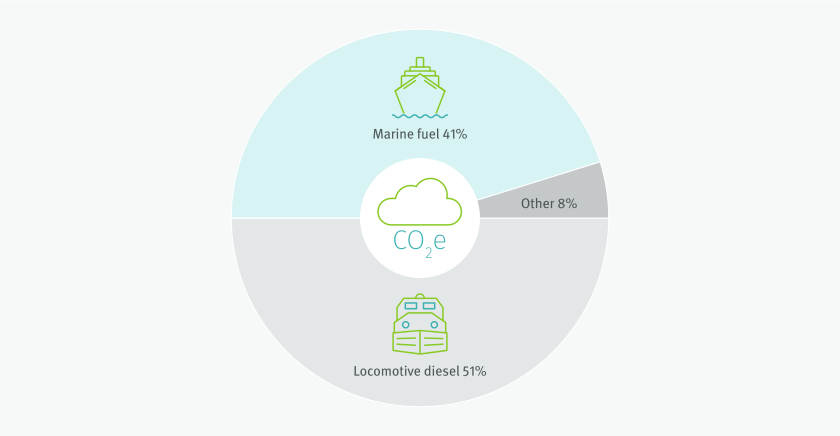
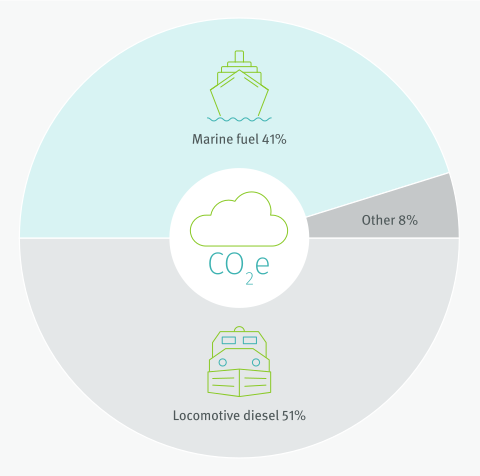
KiwiRail has made great inroads to addressing its carbon footprint, investing in two hybrid diesel-electric battery ferries to address its marine fleet which accounts for 41 per cent of its carbon footprint (Figure 4), and addressing locomotive diesel emissions through refurbishment or replacement of the country’s ageing stock (the majority of which is close to 50 years old).
Figure 4. KiwiRail carbon footprint – FY21[1]
Currently, only a fraction of New Zealand’s freight rail network is electrified, however, 80 per cent of the country’s electricity production is from renewable resources. Consequently, only a small proportion of electricity supply required for an electric locomotive fleet depends on burning fossil fuels.
For areas of the track that are not electrified, considerations such as rolling stock age and condition, service patterns, depot operation (refuelling, storage), safety, and regulations, may influence rolling stock choice.
Hybrid electric trains would maximise future flexibility. The diesel generator / alternator could then theoretically be converted to a hydrogen fuel cell or a rechargeable energy storage system to drive the electric engine.
On one hand, new technologies and rolling stock will enable better utilisation of future fuels, as well as achieve lower carbon emissions and greater efficiency.
On the other hand, fuel cell or hybrid-battery replacements are costly when you’re replacing a significant volume of rolling stock all at once. The other limitation to this approach is that the energy required to pull a freight train through New Zealand’s mountainous landscape would require a very large power source, increasing the embodied carbon associated with it, and extending the time until it becomes a carbon neutral asset from a lifecycle assessment perspective.
Propulsion technologies as alternatives to diesel engines are becoming increasingly available and may become more economically viable compared with electrification.
The development of new engine technology is coming out predominately from the USA and Europe as the policies originating from these regions are directing the way in which technology is developed for their markets. As a smaller market, New Zealand may face some uphill challenges, similar to Australia. While there may be appetite to purchase new clean technologies, many international Original Equipment Manufacturers (OEMs) consider Australasia as a low priority.
The social licence and long-term horizon risk around this is if global products markets begin to turn their back on products that were manufactured or transported using diesel. This makes it a critical time to begin for inevitable change (in whatever form it may present), linking with education institutions, other countries, between organisations and cross markets, to develop the skills necessary to embrace future alternatives and opportunities.
Linking track and enabling infrastructure
Rolling stock assets purchased today may still be operational in 20 years, so it’s critical that infrastructure, capacity, signalling systems and enabling infrastructure decisions are relevant for the same time period.
Supply chains serviced by resilient and efficient corridors and precincts
While only 12 per cent of total freight and 25 per cent of exports in New Zealand currently travel by rail, the country’s long-term investment ambition, supported by the Rail Network Investment Programme, is to ramp up freight rail capacity.
Expanding the network is an obvious step forward, though not the only one. Increasing the national freight rail capacity will require appropriate access to trade gateways, first- and last-mile connections to the freight task, digital infrastructure availability, operational enhancements, and freight infrastructure provision.
Linking track and enabling infrastructure is the foundation to ensuring that infrastructure and operational investments drive the efficiency and productivity gains that New Zealand needs to meet its growing freight rail task now and into the future.