
Safeguard Mechanism’s contribution towards ambitious 2035 NDC
This paper explores three individual change scenarios for the Safeguard Mechanism, illustrating different pathways for greater emissions reductions in Australia.


Change your location to view content tailored for you.
If decarbonisation is the ticket to destination net zero, then rolling stock is the rail pass to reducing and removing carbon dioxide output from the rail sector.
The transport system globally is one of the biggest emitters, more than 25 per cent of CO2 emissions[1] and nearly 30 per cent of the final energy consumed. The function of rail transport only accounts for a minor percentage of this total, and nearly 80 per cent of Australia’s rail networks are electrified.
However, while electrification avoids the ‘direct’ generation of CO2 and other greenhouse gases, the generation of power to supplement the electrified network comes from fossil fuel combustion in most instances around Australia. So, the ‘indirect’ CO2 consequences remain high.
In view of the performance of the rail sector in terms of load/emissions ratios, many governments and private organisations are turning to rail in an endeavour to meet targets for reducing carbon emissions. A large factor in decarbonising the rail sector and reaching destination net zero will be more energy efficient rolling stock, which is considered in this insights paper as the vehicle itself, together with the alternative (clean) energy sources that power it. Power Purchase Agreements have been widely used and considered but shouldn’t be the only long-term strategy for governments to decarbonise rail.
There is currently no legislation in Australia to mandate the uptake of new traction technology to convert diesel train engines to hybrid (or alternative energy sources), and the size of the capital investment is significant – whether it be for the public or private network.
On the flip side, the emphasis is building on moving Australia to net zero emissions by 2050 with a technology investment roadmap and national hydrogen strategy. This insights paper underlines the decarbonisation possibilities that energy-efficient future rolling stock provides, the decisions that need to be made, and the trip hazards that might be encountered.
Rolling stock traction systems utilise the greatest proportion of network power but AC traction motor technology is largely refined and deemed optimal. However, auxiliary systems on rolling stock contribute to high energy usage and therefore offer opportunities for suppliers to optimise designs of systems and control technologies.
Of the on-board auxiliary systems, the largest consumer of energy is the heating ventilation and air conditioning (HVAC) system, then the main air compressor and traction cooling system, followed by lighting.
Decarbonisation of rolling stock can be achieved using different approaches. A transition to new and more efficient refrigerants for HVAC systems, and introduction of intelligent controls for these systems, together with better insulation of the vehicle, would maintain performance, reliability and comfort for passengers yet be more environmentally responsive.
Manufacturers in Europe are at the forefront of using more energy efficient devices and smart systems that regulate heating, ventilation and cooling, and lighting, making it possible to manage on-board interior comfort more efficiently and reduce the energy consumption of rolling stock.
A significant challenge is the interoperability of new and old technologies (or assets) when new systems are retrofitted into ageing rolling stock. In addition, fuel cell or battery replacements are costly over the lifetime of the asset (up to 40 years potentially) due to regular replacement needs.
With a future firmly focused on around enabling the decarbonisation of industries and economies, along with rapid emergence of new technologies, the rail sector has an opportunity to reimagine its net zero carbon emissions strategy.
Australia’s rolling stock will need to evolve to meet expectations. A decade ago, Europe and the US were already specifying the use of more sustainable and fuel-efficient train engines. Australia is in a fortunate position given that most government operations have control over passenger rail fleets from cradle to grave (noting that some are Public Private Partnerships and others are franchised).
Since the networks are not franchised to the same extent as some international countries, there’s a better opportunity for consistent, coordinated and supported implementation of rolling stock technology and infrastructure that achieves decarbonisation (Figure 1).


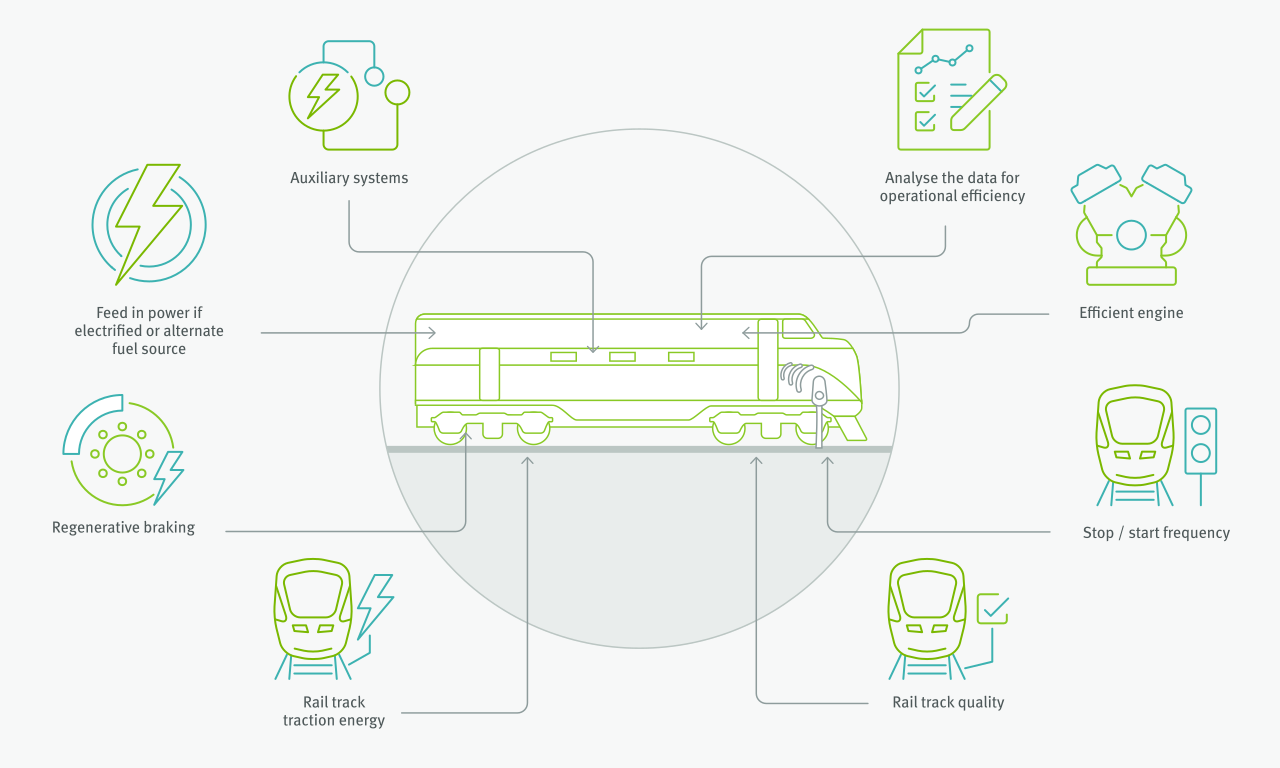
Recently, international networks introducing energy recovery systems (for example on-board supercapacitors or batteries) are experiencing reduced total energy consumption. The development of diesel engine technology is predominately based in the US and Europe as the policies originating from these regions is directing the way in which technology is developed for their markets. The technology emanating from these regions in the future may be the only options for the smaller markets, (such as Australia). This inevitable change in the policies on more sustainable rolling stock, and the manufacture of vehicles in accordance with policies, means uncertainty for Australia.
Australia’s rolling stock will need to evolve to meet the future
and provide a pathway to decarbonisation.
Australia’s rail sector is presently without any legislation or framework to guide the sustainable introduction of new rolling stock technologies and provide a pathway to decarbonisation. As diesel engines become obsolete and overseas suppliers transition to manufacturing more sustainable rolling stock, Australia is left with no choice but to move along the decarbonisation pathway. This is the next stage of rolling stock advancement after full electrification technology, which is already mature and being applied actively in rail projects, with on-board supercapacitors and batteries capturing regenerative braking.
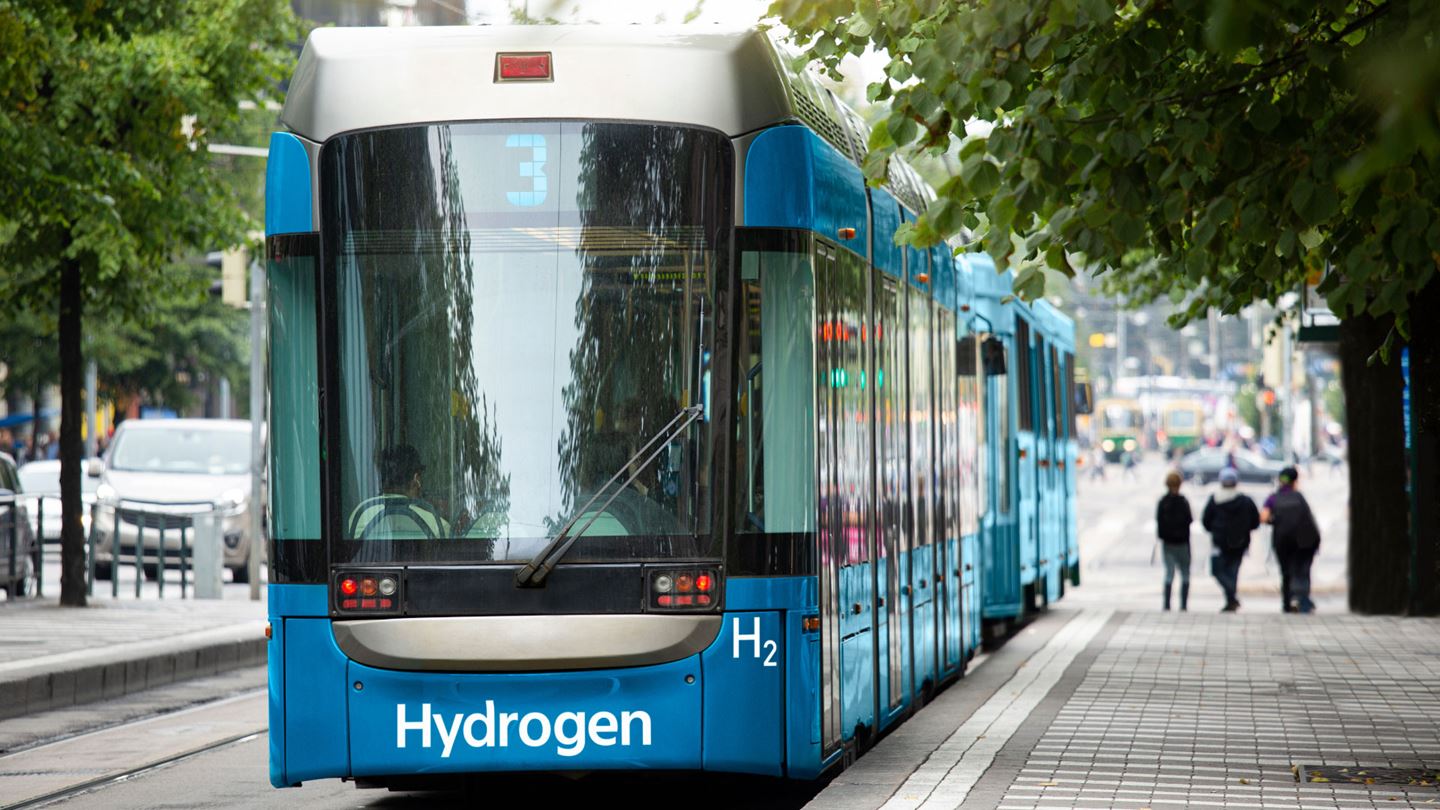
In the US and Europe, trials of hydrogen passenger trains are underway. Implementation of hydrogen passenger trains commenced in Germany in 2018 and there are hydrogen fuel cell powered rail track maintenance machines in operation. The US government is currently reviewing hydrogen fuel cell design standards for adoption in the rail sector.
The migration of systems would be implemented in phases, but the investment in any country is likely to be significant. The drivers in the public sector may be vastly different to privately-owned rail networks. Private entities consider the whole-of-life costs when planning infrastructure and rolling stock investments, and look at options that support their individual company climate change and decarbonisation targets.
The potential now offered by intelligent digital data systems makes it possible to adjust the use of energy to the actual needs of rolling stock, and to reduce carbon emissions at the same time. For example, improved driving modes, whether computer assisted or not, would mean that braking and acceleration could be minimised, saving on traction energy. Computerised assistance would reduce braking needs.
The use of smart grids can better control the power demands of passenger trains in circulation or reduce them on a route segment. Another aspect of a passenger train is the application of digital analytics to optimise scheduling. Asset owners can make more informed train timetable decisions to eliminate wasteful stop-start frequencies, thereby reducing energy consumption and keeping emissions to a minimum.
This makes sense in major cities; however, it becomes much more challenging in regional settings with longer distances to cover and less options for reducing the stop-start frequencies.
Fuel efficiency and the rising price of diesel, the cost of network electrification conversion, climate protection and noise reduction, will demand future innovation in the rail sector with a focus on alternative fuel sources. Beyond an electrified network, hydrogen fuel cell and battery propulsion are increasingly seen as viable alternatives to diesel operation, and a means of reducing carbon emissions.
Most of the major rolling stock suppliers globally are working on how to commercialise main line hydrogen, in many cases with the support of academic institutions and government-funded research programmes. The challenge for any country is the required investment and planning to develop the network infrastructure to refuel (or repower) trains at stations or between stops, and how that action might affect train travel times.
An added challenge for passenger rail is that it requires substantial energy to travel from station to station, taking longer to charge batteries. The question is whether this will make train trips longer and if customers are willing to accept that.
Further research is required to reduce the technical and implementation uncertainties of introducing hydrogen, or alternative fuel sources or fuel technologies. In addition, trials and research need to consider rail’s connection to other infrastructure around the mode of transport, for example how freight rail and passenger rail weaves into the fabric of regional communities, cities and export terminals.
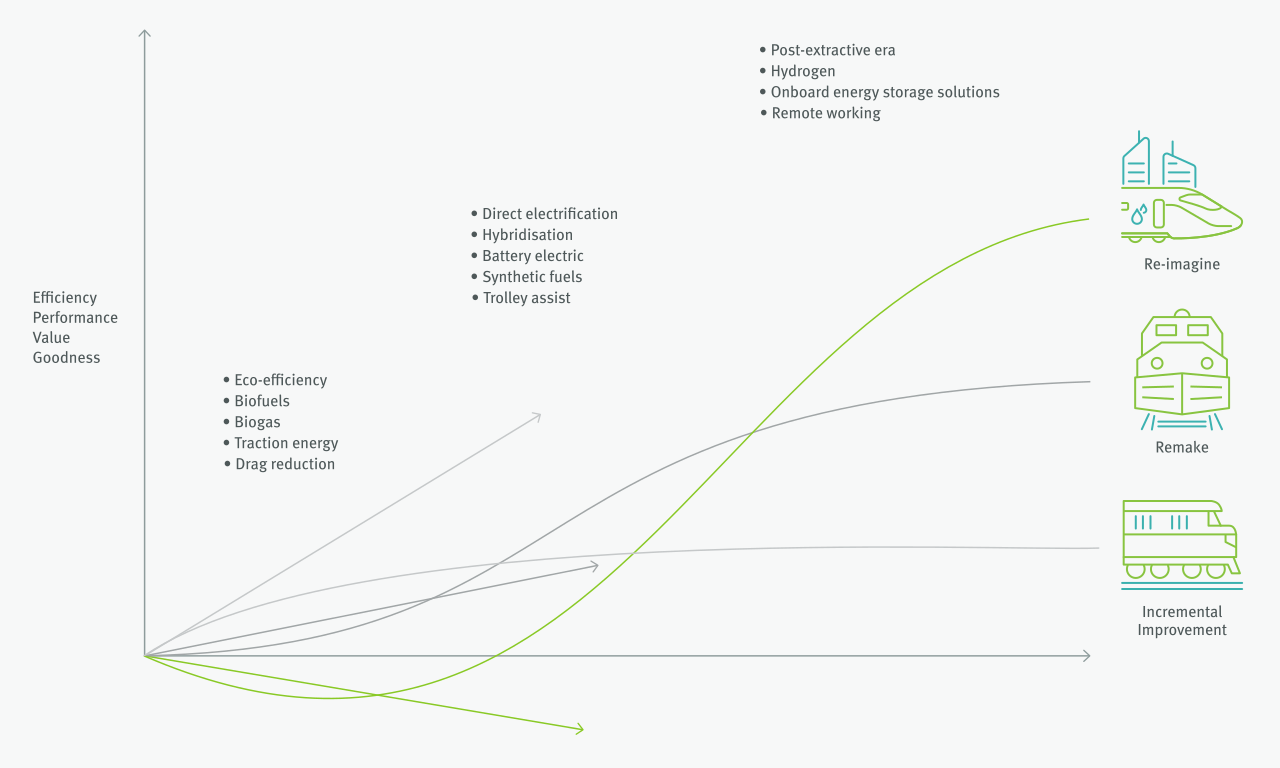
Figure 2. Reimagining energy in rail will most likely waver between incremental improvements and re-thinking the future.
In Australia, it may be a case of starting small with dedicated discrete corridors, and then building from there, or introducing hydrogen fuel cell track maintenance machines before passenger trains.
In the area of rolling stock investment, there is emerging global research, and several trials, into the use of new materials to reduce the weight of trains. One example is carbon fibre structures currently under trial in Europe, representing a weight reduction of more than 10 per cent[2] compared to a conventional train. These trains would have a corresponding improvement in the drag coefficient, resulting in reduced traction energy.
Traction energy represents up to 85 per cent of the total energy[3] consumed by a moving train (and return of experience). New materials that reduce the weight of trains is a compelling opportunity to optimise existing fleets, compared with capital investment in new trains, to reduce energy used and therefore overall carbon emissions.
It’s important to note however, that new materials (carbon fibre or others) in train construction can only reduce mechanical friction so far in as much as their overall benefit is far less than the other options discussed in this paper.
A common trend that the rail sector should be cognisant of is the growing expectation of customers. Customer demand is becoming not solely about sustainably manufactured products, but also about how those products were transported, forcing companies to relook at how to decarbonise entire supply chains. This will feed into the revolution on how people and goods are moved between and within cities – both for the private and public sectors.
The challenge in passenger rail in Australia is that, unlike Europe and the US, locally there just isn’t the same volume of daily commuters to drive up the cost benefit analysis of capital investment. The business case model is going to look different here.
There are also competing incentives for an array of new modes, such as electric vehicles, and new platforms for ride sharing, encompassing cars, bikes, buses and peer-to-peer models. Does rail need to respond quicker?
While rail is generally considered an energy-efficient form of transport (as a majority of the networks are electrified), there is still significant potential for the industry to reduce energy consumption and carbon emissions. The decarbonisation of rolling stock is the conversation the sector needs to have.
The scale of the decarbonisation challenge demands a step change in both the breadth and scale of ambition, and the rail sector has a duty to act quickly and decisively to progress to net zero emissions.
How significant its contribution will be and the speed of its deployment will depend on several economic factors: its ability to mobilise sufficient investment, its price competitiveness and sustainability when compared with the road sector for freight; and compared with car, bus and personal mobility options for passenger transportation.
The opportunity is to bring forward sector-wide collaboration and policies with a plan that anchors the role of rail in decarbonisation. Decarbonised rolling stock (and associated infrastructure) through electrification, reducing traction and auxiliary energy use, and new technology, would represent a step change to reducing Australia’s transport carbon emissions.
[1] Climate Council, 2019, Aim High, Go Fast: Why emissions need to plummet this decade.
[2] MDPI, 2020, Evaluation of Strategies to Reducing Traction Energy Consumption.
[3] CER & UIC, 2015, Rail transport and environment: facts & figures.

Industry Director, Transmission & Distribution – Australia

Design Director – WA & NT, Australia

Principal, Energy – Australia

Technical Director, Rail & Mass Transit
This paper explores three individual change scenarios for the Safeguard Mechanism, illustrating different pathways for greater emissions reductions in Australia.
Australia's energy transition requires more than technical plans. Discover four ways to build the people, culture and capability to deliver infrastructure at scale.
Aurecon’s ecology and biodiversity expert shares how to achieve timely project approvals, what regulators want, and how to navigate regulatory changes.