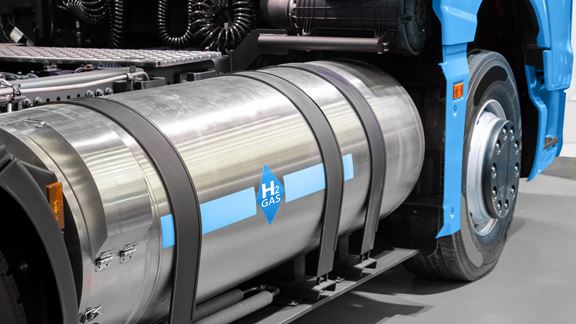
Renewable Hydrogen Ecosystem Study, Goulburn Valley, Australia
Aurecon's study guided Goulburn Valley Water to identify pathways to a renewable hydrogen ecosystem and support a clean energy transition in regional Victoria.



Change your location to view content tailored for you.
With evolving ESG (environment, social, governance) factors presenting extra considerations for water corporations, long-term environmental and net zero emissions targets and planning are critical.
Working with WaterNSW through the ESG strategy development process, Aurecon developed their current ESG Program Plan to include environmental considerations, together with a net zero emissions target and delivery plan. This took the combination of Aurecon’s technical expertise, combined with strategy skills and water market knowledge.
Developing the program plan began with a United Nation Sustainable Development Goals (UN SDGs) materiality assessment, followed by interviews with WaterNSW executives, and a refinement of actions to align with community and governmental pressures, as well as legislative changes.
The plan now ensures that WaterNSW can design future strategies and work programs to be resilient and sustainable, and consider a circular economy approach to water infrastructure and use.
It forms part of the corporation’s continuing commitment to build a sustainable future by aligning operations and customer service delivery to the UN SDGs.
Many water corporations are exploring how to transform business strategy and operations through the lens of sustainability. Quite often the challenge arises when many plausible ideas must be distilled into feasible deliverables.
Aurecon’s experience in water infrastructure strategy and delivery supported the development of a clear ESG Program Plan that identified clear actions and delivered the greatest value, impact and resilience for WaterNSW. Input was critical from a series of interviews with WaterNSW executives to understand how their policies and procedures could resource and progress the plan and communicate its progress.
Development of the plan was fundamentally focused on sustainability, providing WaterNSW with the future direction to understand, plan for, and respond to, the suite of new challenges and expectations related to ESG. Across five pillars, the plan’s objectives and focus areas were founded in WaterNSW’s aspiration to be socially accountable by playing a part in creating a more resilient water system that enables liveable communities and healthy ecosystems.
Indicators of success for the plan were defined according to each pillar, together with a methodology to track its progress against the ESG-related targets. Setting timeframes for the ESG actions across three horizons – H1, H2 and H3 – together with costing initiatives, were also core components to the plan.

Achieve net zero greenhouse gas emissions to meet or exceed NSW government targets, considering all relevant emissions caused by WaterNSW.
Focus areas:

Understand and build resilience to the growing impacts of climate change across WaterNSW’s activities and take appropriate actions to minimise impacts on operations, customers and communities.
Focus areas:

Determine optimal use of lands owned, managed, or influenced by WaterNSW, and the impacts that land management has on the management of water. Seek opportunities to maximise economic, social, and environmental values.
Focus areas:

Design-out waste and keep resources at their highest value through extending life, sharing, reusing and recycling. This applies to assets, products and materials purchased and used across WaterNSW activities, services and operations.
Focus areas:

Embed sustainability within procurement practices to maximise the environmental, economic and social value outcomes and to support ESG outcomes and WaterNSW’s Reconciliation Action Plan (RAP) to create equitable opportunities.
Focus areas:
The plan’s actions are connected to WaterNSW’s Reconciliation Action Planning (RAP) and corporate health and safety initiatives. For instance, capital project procurement guidelines were investigated to set a more in-depth process for engaging with local and Indigenous businesses.
The plan is now in the implementation phase, providing a framework for WaterNSW to adapt to the changing ESG landscape that includes national and state regulations, and more broadly, climate change resilience, energy transition, decarbonisation and emerging technologies.
Aurecon's study guided Goulburn Valley Water to identify pathways to a renewable hydrogen ecosystem and support a clean energy transition in regional Victoria.
Seqwater’s Integrated Master Plan redefines sustainable water planning for South East Queensland, a 30-year program of capital and non-capital interventions.
Aurecon, in partnership with SA Water and KBR, delivered the concept design for Australia’s largest drinking water ultraviolet (UV) disinfection system.