The design and construction of bridges in Asia has until recently focused very much on cost efficiency and functionality, often leading to unimaginative bridges and few truly iconic structures. But that is changing, says Mike Tapley of Aurecon. What’s more, the tools and technology are here to kickstart an exciting new era of bridge design in Asia.
The design emphasis of bridges in Asia has generally centred on functionality; aesthetic form, elegance, durability and provisions for future maintenance are often not fully considered in any great detail.
There has been little appetite to shift away from tried-and-tested technologies and formulaic construction methods, and in more practical terms, we have also seen inspection, maintenance and sustainability given insufficient attention, often leading to problems in the future.
However, the good news is that change is coming. And importantly, it is being driven from the top. Client perceptions for how a bridge should look are changing. Many are yearning for something different; something more aesthetically complex that can deliver a signature look which highlights aspiration and achievement. That means moving away from the stark concrete structures of traditional designs while ensuring appropriate consideration is given to durability and sustainability.
With the prospect of exciting new design briefs on the horizon, the question is: how can we as bridge engineers advance our capabilities to meet evolving expectations? Fortunately, the tools, the technology and the skills are already available.
Recent years have seen rapid advances in design tools that enable engineers to create aesthetically pleasing, durable and increasingly complex structures. The adoption of scripting techniques as a means to develop analytical models, has been a significant benefit to the bridge designer.
These techniques eliminate the need for the trial-and-error approach to bridge design, with multiple options being analysed and the bridge optimised in a short period of time. At the same time, we are also able to run more complicated analyses in combination with the development of advanced erection methodologies.
We are consequently able to better ensure that the construction on site matches the analytical predictions – a vital factor in ensuring quality and efficiency on any new project.
Our design work also considers in much greater depth the appreciation of bridge maintenance needs. Provision for maintenance now goes way beyond simple visual inspections, with the introduction of SMART bridges that incorporate sensors into their design to monitor structural health.
This makes maintenance a more proactive process, while the structure itself now incorporates much more comprehensive access facilities making inspections and repairs easier.
The evolution of precast concrete beams
To understand where our industry is heading, it first makes sense to look into where we’ve come from. In Asia, precast concrete beams have been the standard solution for bridge construction for decades. It’s easy to see why. They are proven and effective, with a simple design that makes them easy to install.
Over the years, we have seen some useful advances in their design too. Since the basic design standard (AASHTO I Girder) originally developed in the 1950’s, the form of the girder has steadily been refined into a more material-efficient building block for bridges.
Significant savings have been delivered in the volume of concrete required, most notably with the North American NU girder in 1994, and the Australian Super T girder, which was brought into industry the following year, allowed the deck slab to be constructed on an immediate working platform and removing the need for specialist formwork.
A more recent refinement, the Umax girder developed by Aurecon in 2014, delivered further advantages – most notably, the potential to eliminate 20 per cent of the piers in a design thanks to an increased typical span length of between 45m and 50m.
Although the mass of these elements is around 150 tonnes, fewer girders are required, and the total tonnage of prestressed girders per span is substantially reduced.
| 40.0m spans |
AASHTO Type 6 I Girder |
AASHTO Type 6 Bulb T (AASHTO-PCI) |
NU girder (NU1800) |
1800mm Super T girder |
Umax girder |
| Year developed |
1980 (USA) from a 1950's concept |
1988 (USA) |
1994 (USA) |
1995 (Australia) |
2014 (Australia) |
| Temp formwork |
yes |
yes |
yes |
no |
yes |
| No of Formwork panels |
144 |
144 |
144 |
Not required |
32 |
| No of girders |
10 |
10 |
10 |
10 |
4 |
| Girder spacing |
2.5m |
2.5m |
2.5m |
2.3m |
5.6m |
| Girder depth |
1830 mm |
1830 mm |
1800 mm |
1800 mm |
2200 mm |
| Area of section |
700 x 103 mm2 |
495 x 103 mm2 |
550 x 103 mm2 |
706 x 103 mm2 |
1384 x 103 mm2 |
| Top flange width |
1280 mm |
1067 mm |
1225 mm |
2300 mm |
2600 mm |
| Girder mass |
1.82 t/m |
1.29 t/m |
1.43 t/m |
1.83 t/m |
3.6 t/m |
| Total tonnage/span |
728 tonnes |
516 tonnes |
572 tonnes |
732 tonnes |
576 tonnes |
| Diaphragms |
yes |
yes |
yes |
no |
no |
| Deck thickness |
200+90mm PC |
200+90mm PC |
200+90mm PC |
200 mm |
210+90mm PC |
| Bearings/span |
20 |
20 |
20 |
20 |
12 |
Table 1. Evolution of precast concrete beam bridge design to advance structural efficiency
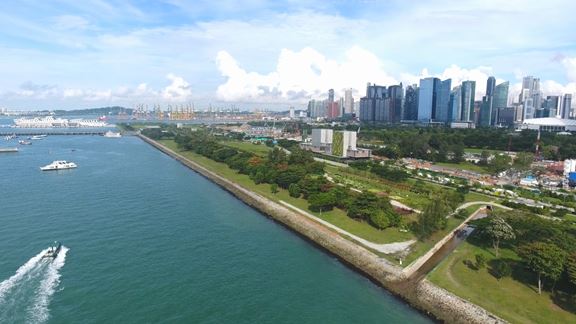
When executed correctly, these structural elements can deliver impressive results. At Aurecon, we utilised Umax technology on the Tuas Basin Access Bridge project in Singapore. Spanning 75m across a wide inlet canal, this pair of parallel bridges consists of the longest and heaviest precast girders ever used in Singapore – 50.5m long and weighing 278 tonnes, with each pier head extended by 12m to complete the span.
However, precast beams are not suitable in all locations. The risk in lifting, placing and securing precast beams during construction needs to be carefully assessed particularly in busy urban centres. Precast beams can also be slow and inefficient to transport and difficult to install depending on the availability of crane access, often requiring night-time closure of existing roads and highways.
One famous example is the UK’s sprawling highway intersection in Birmingham, known locally as Spaghetti Junction. Here it was not so much the need for repairs that causes perennial headaches, but rather the difficult detailing and lack of suitable access for maintenance personnel. It serves as a cautionary tale for all clients and engineers of the dangers of failing to futureproof designs.
Advances and innovation in bridge design
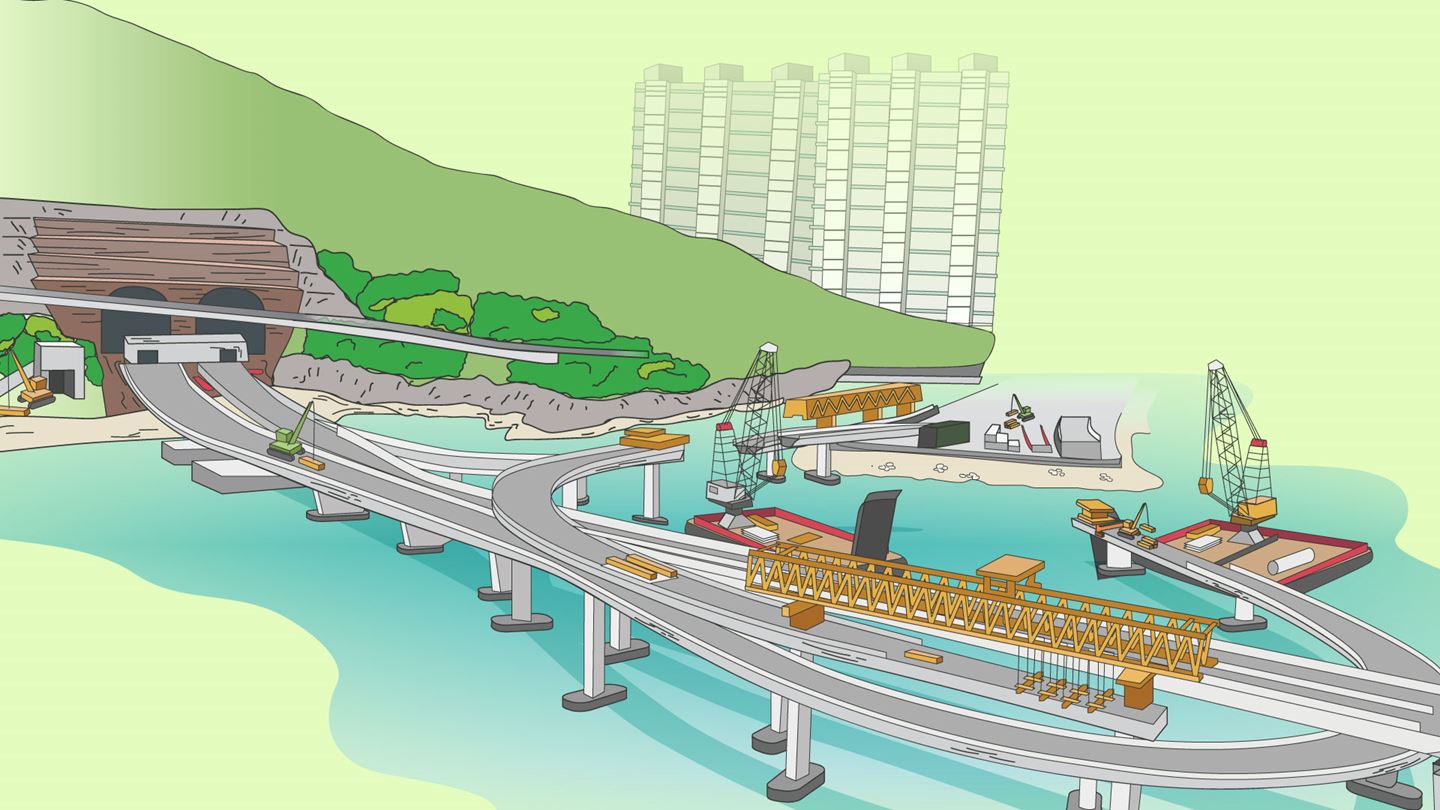
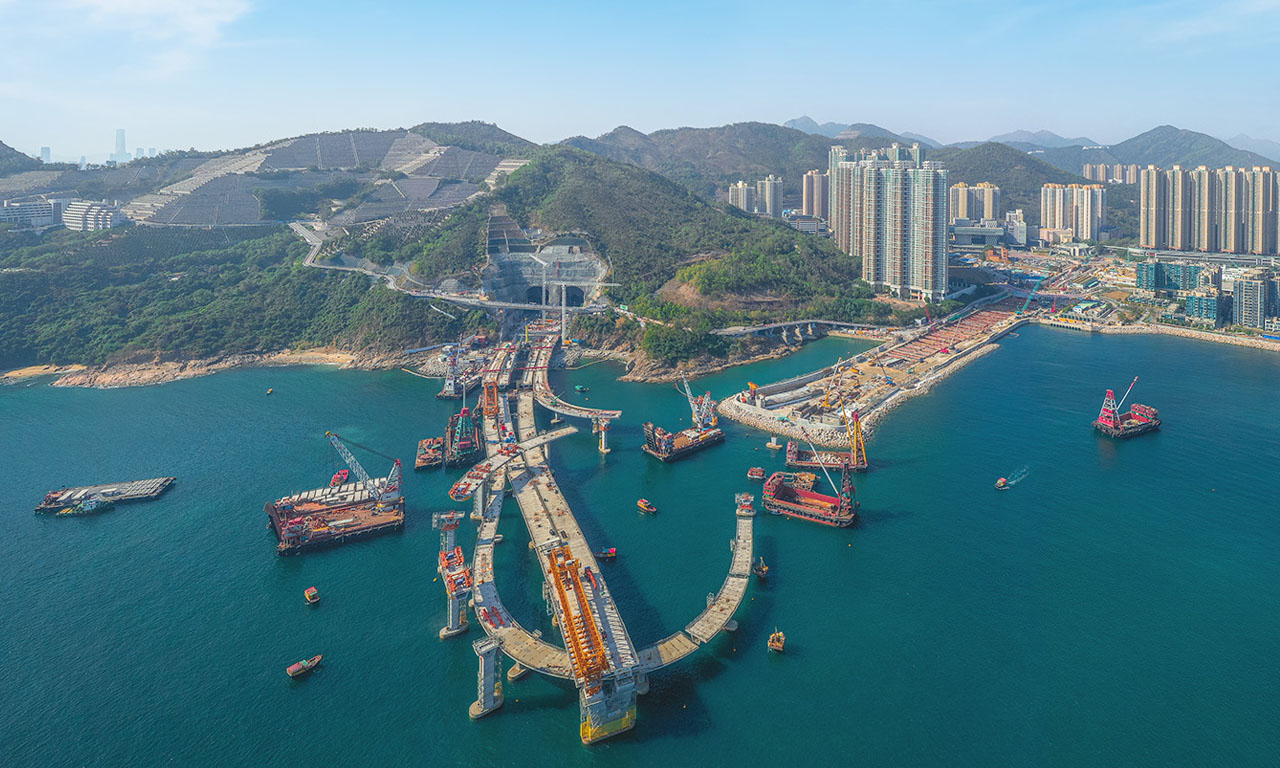
While precast concrete beams remain the most popular option for bridge construction, this construction technique is not the only option. In recent years, we have increasingly looked to the precast segmental box girder construction for our projects, particularly in the major cities of Southeast Asia.
In precast segmental box girder construction, the beams and deck comprise transverse segments stressed together with post-tensioning either as balanced cantilevers or full spans. This form of construction offers several important advantages over precast beams:
- Installing the bridge deck as segments enables faster assembly compared to designs using precast beams. Typically, at least one deck span can be installed in less than one week.
- The design offers a more durable solution which can also be inspected more easily from inside the box girder structure.
- The balanced cantilever method of erection is particularly suitable for bridges with horizontal curvature, and other complex road geometries, enabling more versatile planning for highway interchanges. In many cases, it can substantially simplify the construction of complicated designs, as we found on the St Peters project.
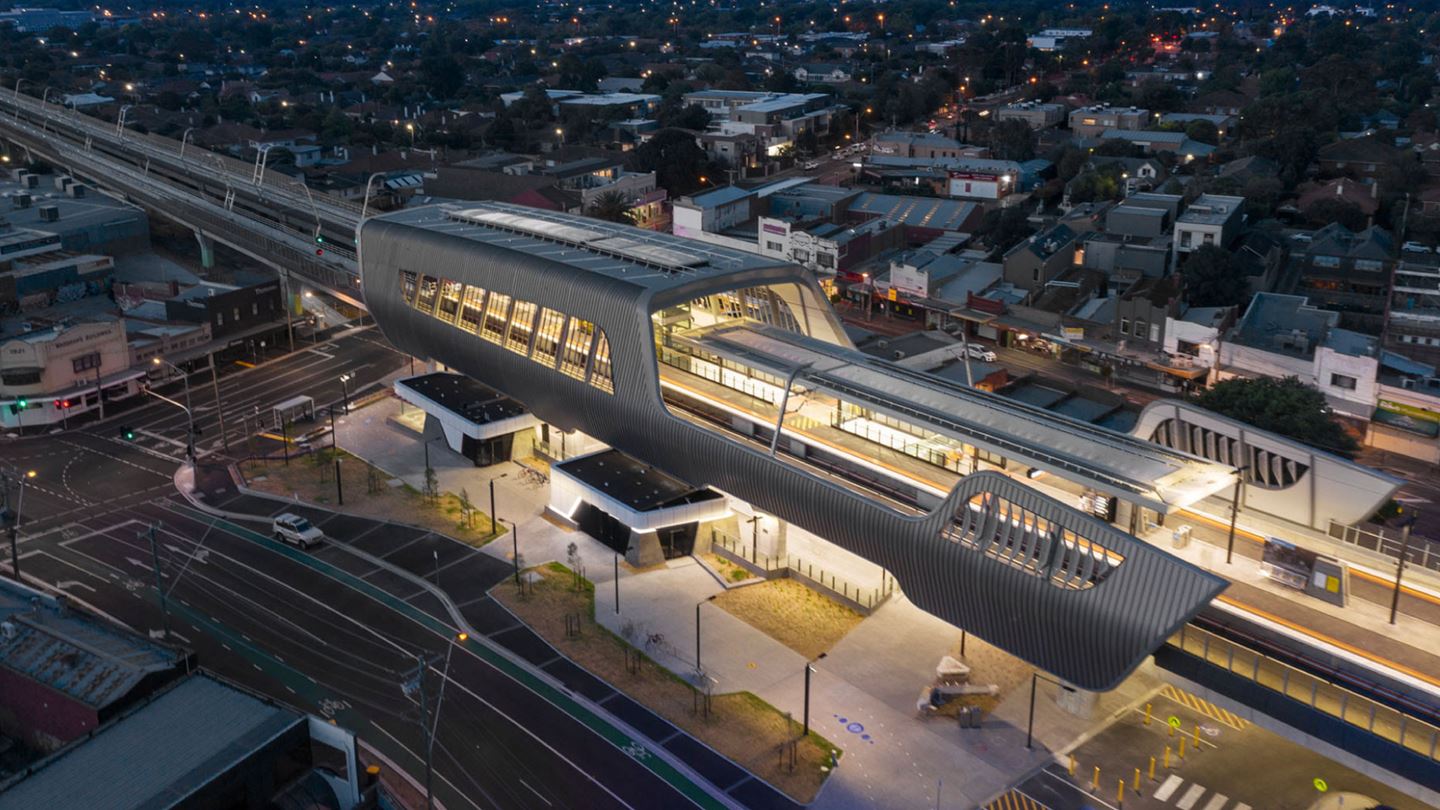
- Precast segmental construction using an overhead or underslung gantry provides virtually no disruption to the ground level road system, as demonstrated in the Level Crossing Removal – Caulfield to Dandenong section in Melbourne, Australia.