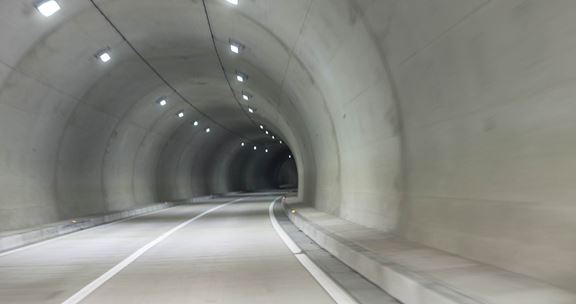
TKO-LTT Main Tunnel and Associated Works, Hong Kong
Aurecon uses digital engineering to handle complex data for the blast engineering analysis on Tseung Kwan O – Lam Tin Tunnel (TKO-LTT) in Hong Kong.


Change your location to view content tailored for you.
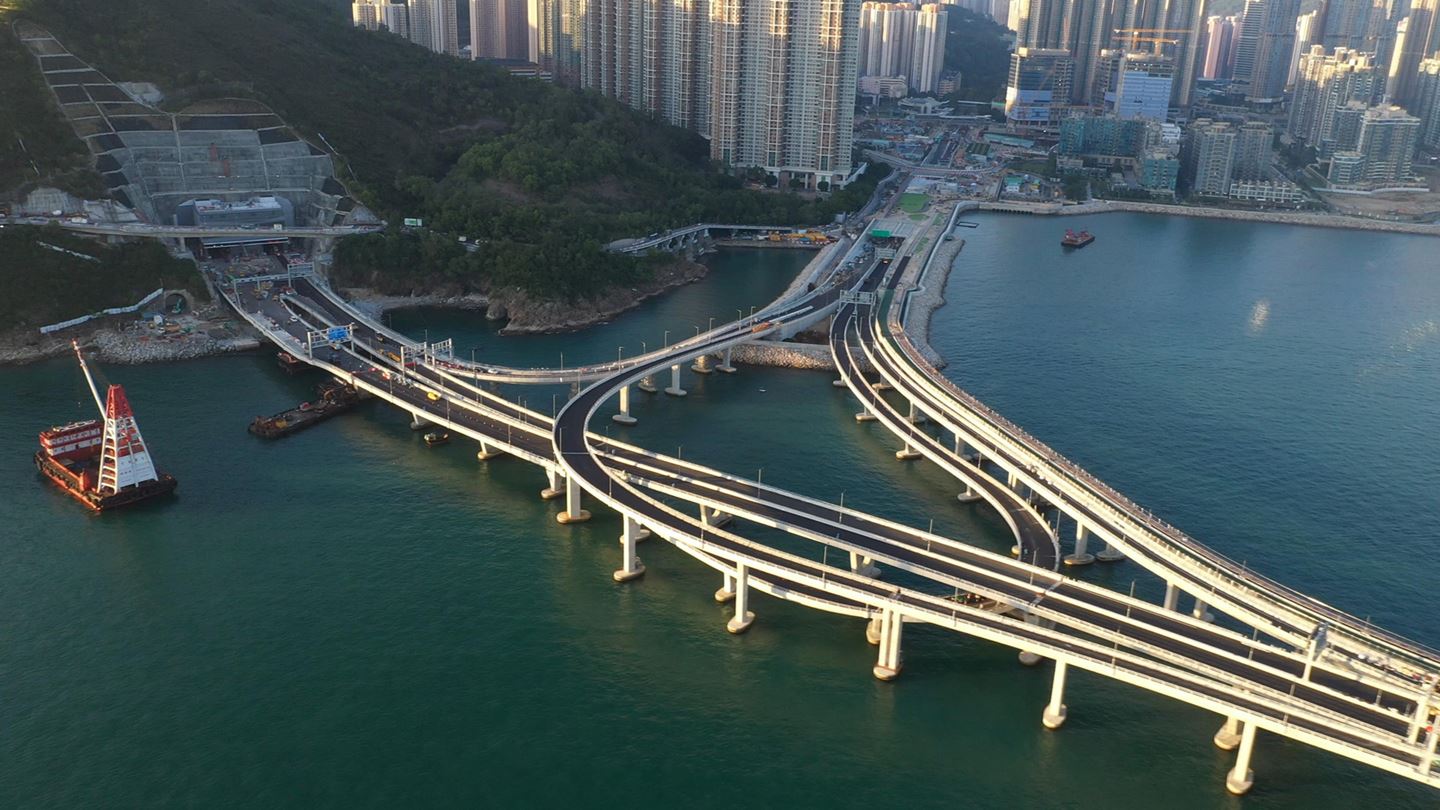
Developed in the 1980s, Tseung Kwan O (TKO) is the seventh new town in Hong Kong that is home to a population of 414,000. To improve the district’s accessibility and to cope with the continuing increase in transport demand between TKO and East Kowloon, the Hong Kong Government worked on the Tseung Kwan O – Lam Tin Tunnel (TKO-LTT) as an additional and alternative highway route incorporating tunnel and bridges works.
Aurecon was commissioned by Chun Wo – Shanghai Tunnel – China Metallurgical Joint Venture (CW-STEC-CMGC-JV) to deliver structural, geotechnical and temporary design works for the bridge component of the TKO Interchange and Associated Works project.
The project comprised the construction of an elevated interchange over the sea with seven post-tensioned concrete bridges. The interchange was erected with the use of the precast segmental balanced cantilever method. When completed, these bridges will also form a part of Route 6 – a major new link between the New Territories and Kowloon.


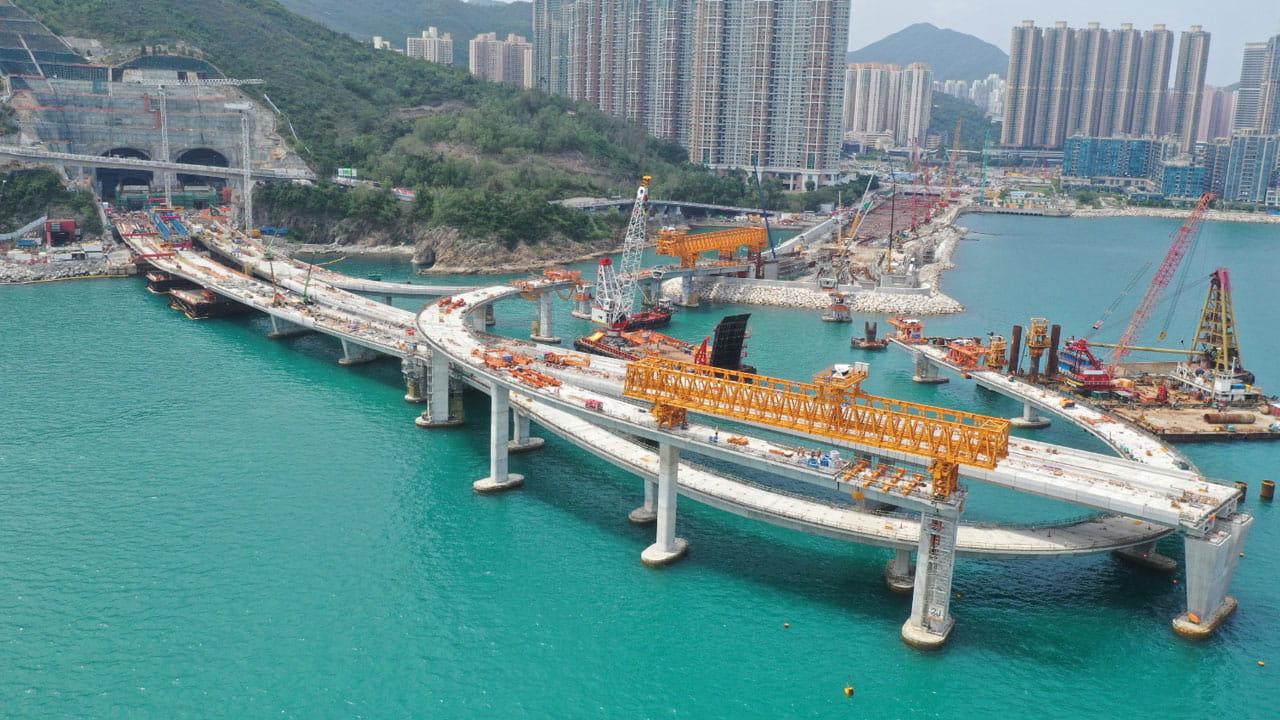
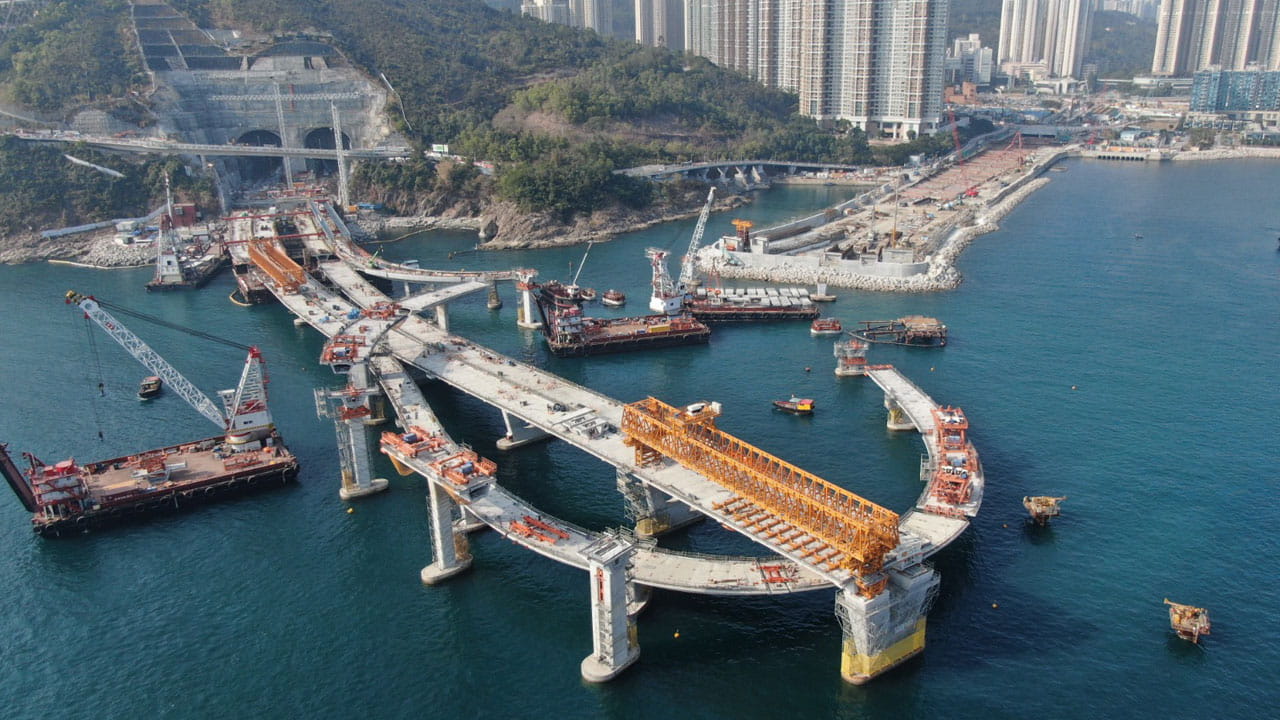
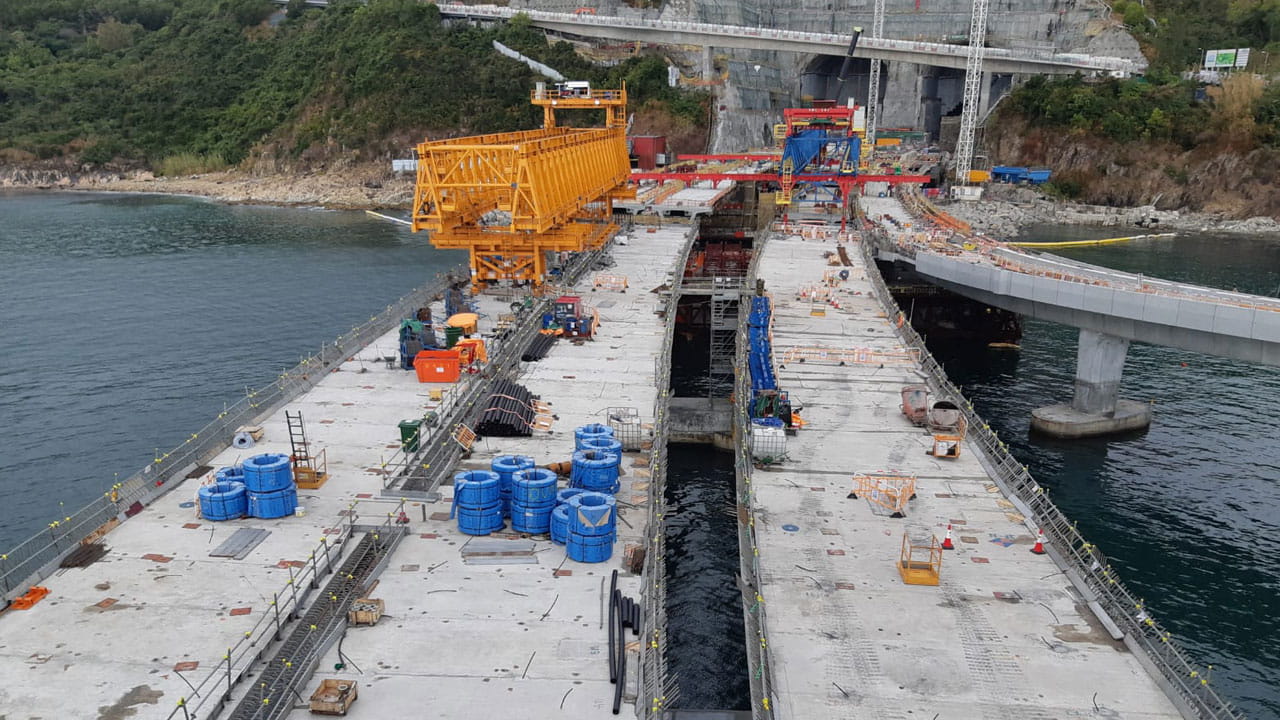
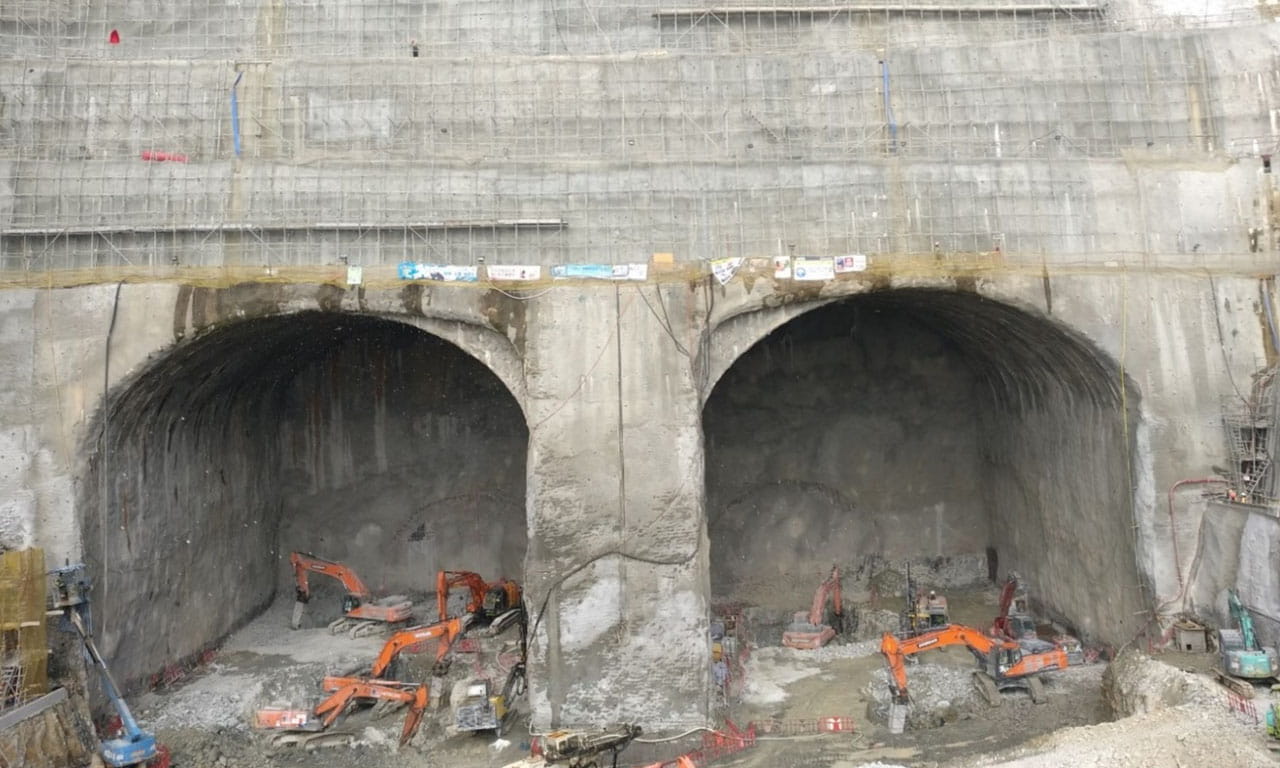
Designing the interchange was not an easy feat. Challenges included designing and constructing the seven bridges over the marine zone that pose aggressive environmental conditions. Some of the project complexities included:
Accurate assessments of exposure severity were vital to determine appropriate approaches with sufficient durability. According to the requirement, the bridges were designed and built for a design life of 120 years. To ensure the structure remains resilient to the extreme natural events, the piles for the bridges were founded in competent rock with some pile lengths exceeding 50 m.
With the bridges constructed over the sea, the geological longitudinal section of the rock goes as deep as 50 m below sea level requiring longer piles, while the bridge piers have piles cantilevering reaching to 20 m from the seabed. The team at Aurecon considered the method of erection, ensuring the geometry of the bridge superstructures met the required tolerances.
Geometry control work included the development of segment casting geometry, provision of segment data for individual segment match casting work at the precast yard and on-site erection geometry control work during segment erection. Aurecon also worked closely with the contractor to avoid step joints between the T-spans.
The bridges have extreme tight curvature with radii as low as 44 m, the geometric behaviour of the bridges is more complicated than straight bridges with inherent challenges. To address this, the project team avoided using external post-tensioning but adopted internal tendons. This approach saved the cost of erecting closely spaced deviators and resulted in better constructability.
To successfully construct the precast segmental bridges in the marine zone with minimal disturbance to the natural environment, while providing design solutions for the works to be carried out safely, was also a challenge.
Aurecon strived to integrate safety in both the design and construction phases to ensure that workers were protected against any unnecessary exposure of potentially unsafe matters. This initiative also helps to reduce the amount of future maintenance works by enhancing the durability of the permanent works. Measures taken included:
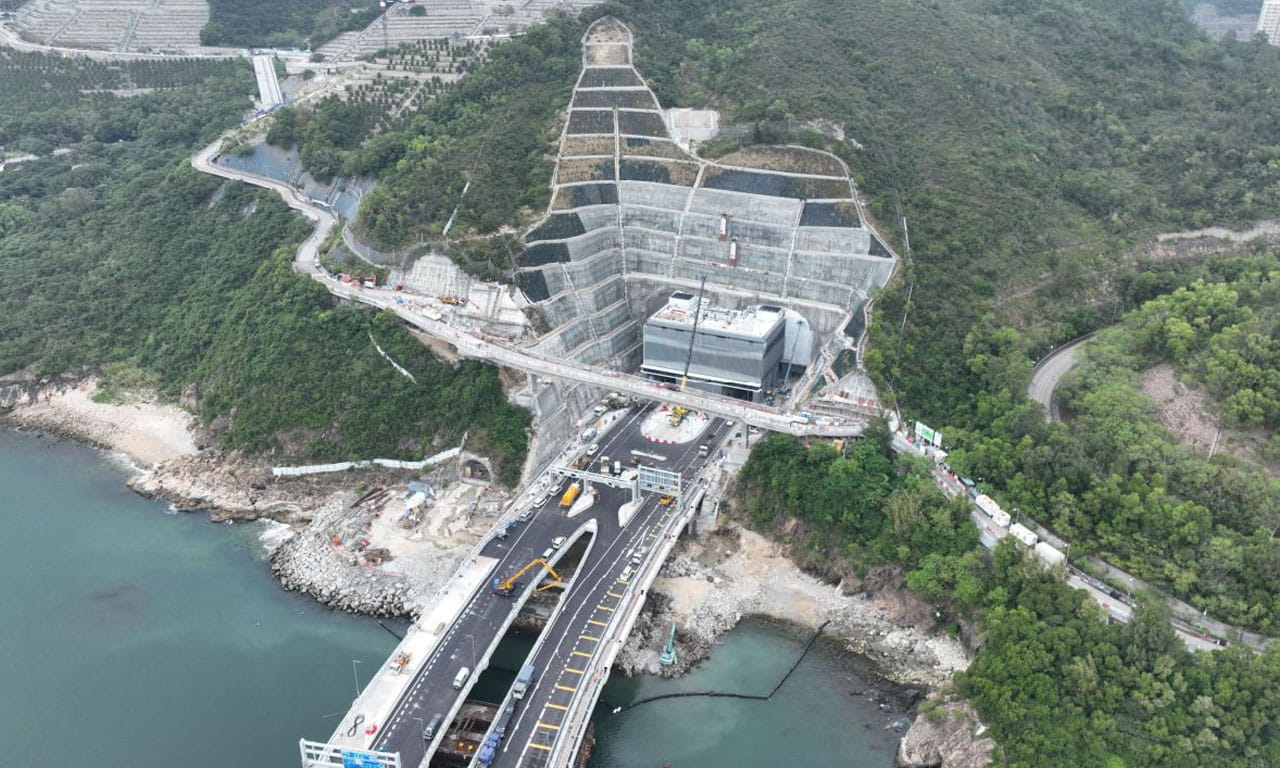
This project is one of two contracts that Aurecon was enjoyed for as part of Tseung Kwan O – Lam Tin Tunnel (TKO-LTT). The other is the tunnel and associated works that connects to the interchange. Together, these two projects are a vital part of forming a new strategic route network for the citizens of Hong Kong.
The project won the following awards:
Aurecon uses digital engineering to handle complex data for the blast engineering analysis on Tseung Kwan O – Lam Tin Tunnel (TKO-LTT) in Hong Kong.
Long-term monitoring of Tuen Ma Line wetlands shows how thoughtful infrastructure mitigation can foster thriving, biodiverse habitats in urban Hong Kong.
Aurecon's geotechnical, tunnelling and 3D modelling expertise helps to navigate complex urban environments during construction of Central Kowloon Bypass.