The MIW region has a heritage sugar industry complemented with emerging bioproduct feedstocks:
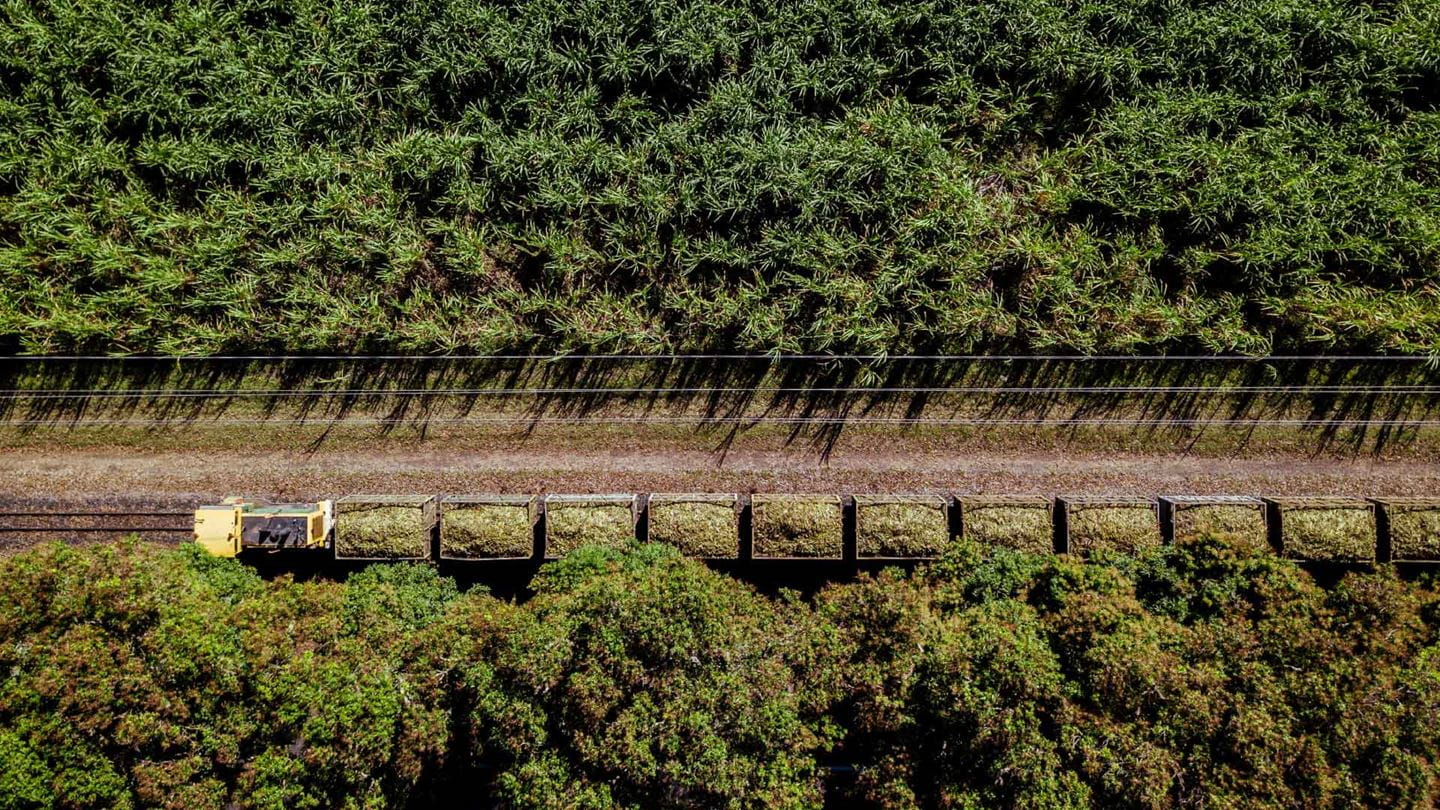
- Five sugar mills:
- three Mackay Sugar mills operated at Racecourse, Farleigh and Marian
- two Wilmar owned mills at Proserpine and Plane Creek
- Wilmar BioEthanol in Sarina, Australia’s largest producer of molasses-based ethanol, liquid fertilizers and animal feeds
- Sugar Australia’s White Sugar Refinery co-located at the Racecourse precinct
- Mackay Renewable Biocommodities Pilot Plant, a pilot scale research and development integrated biorefinery at the Racecourse precinct
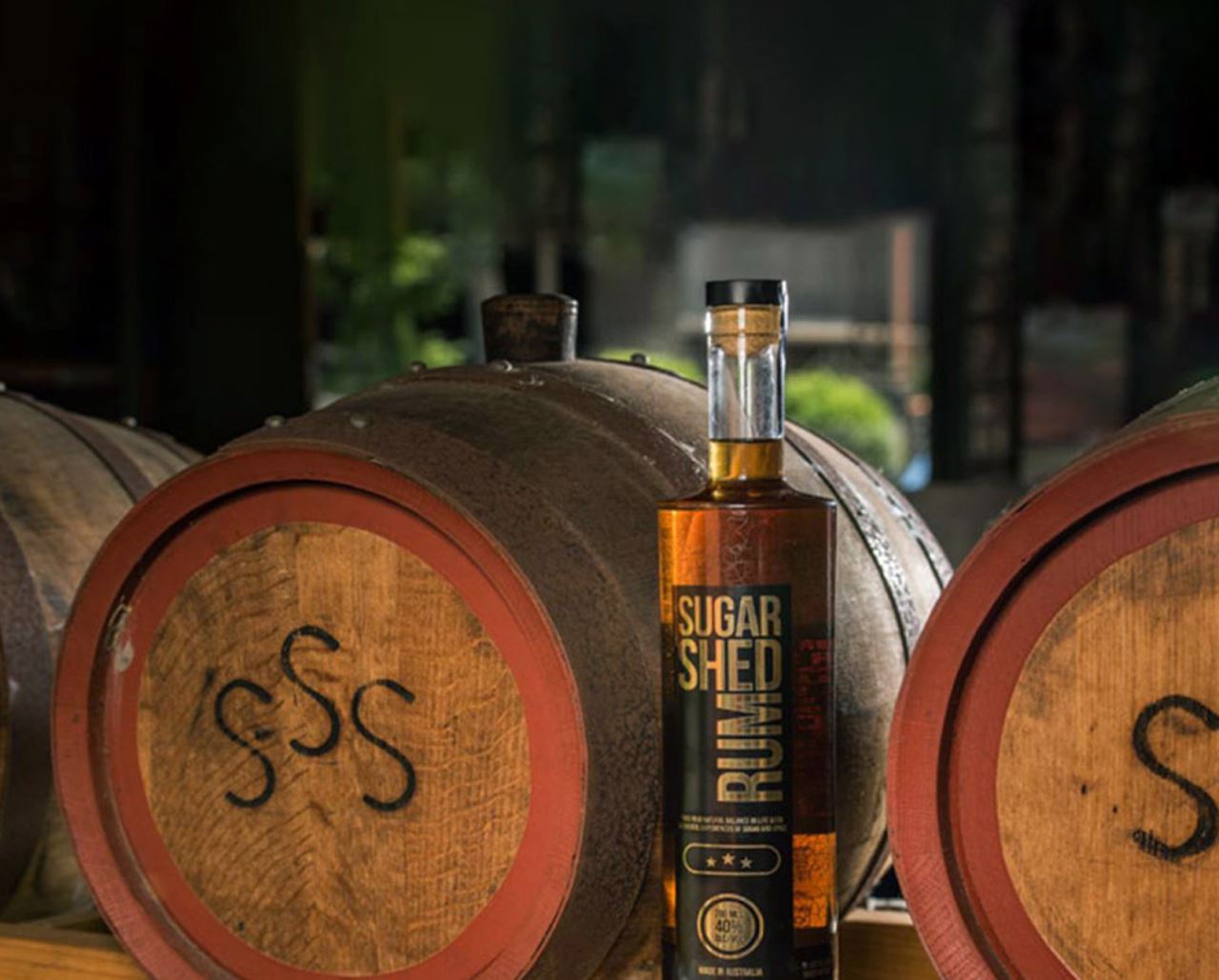
- The Sarina Sugar Shed tourism facility
- The Thomas Borthwick & Sons abattoir at Bakers Creek with potential tallow and wastewater by-products
- Various prawn and barramundi farms
- Potential horticultural waste from approx. 150 fruit and vegetable producers (tomatoes, capsicums, mangoes and macadamias) within the Bowen area
- Potential municipal solid waste and industrial waste
The bioeconomy is, and will continue to be, a substantial part of the sustainable use of bio-feedstocks in the MIW region. By accelerating the sustainable production and use of ‘bioprecincts’, the economic and environmental impacts will be optimised, resulting in more cost-competitive sharing of infrastructure, utilities and services. Using a bioprecinct concept approach may increase the attractiveness, benefits and synergies of co-locating biorefineries into mutually beneficial ecosystems.
This approach will facilitate the commercialisation and market deployment of environmentally sound, socially acceptable, and cost-competitive bio-based systems and technologies, and to provide jobs and growth for the local communities.
Biofutures industries are intrinsically connected with the growing demand for food, feed and fibre to meet emerging markets. Co-locating processing facilities is a key factor to make bioproduct production feasible given capital cost constraints in developing new processing facilities.
Additionally, locating facilities near to feedstocks will reduce logistical costs. Co-location fosters technological innovation to commercialise bio-based products by linking technology companies with partners with operational expertise. Potential bioprecincts in the MIW region may offer advantages to future projects with quick-to-market site selection, supply chain, feedstock logistics, by-products and value adding opportunities.
Importance of understanding the entire value chain
Primary industries, value-adding processes and manufacturing facilities can be classified based on where they fit in the circular economy value chain, technology lifecycle or commercial readiness:
- Technological implementation status: conventional and advanced feedstocks, bioenergy or biofuels (1st, 2nd or 3rd generation manufacturing)
- Type of raw materials used: agriculture operations, whole crop biorefineries, recycling operations, waste management facilities, and aquaculture or marine processors
- Type of main intermediates produced: natural product, recycled products, waste-based by-product, chemical feedstock or value-added final product
- Main type of conversion processes applied: natural, thermochemical, biochemical, mechanical or renewable processes
The key to commercial success for emerging circular economy projects relies on the ability to gain the maximum intrinsic value out of feedstocks, bioproducts, coproducts and waste streams. There are many inter-related value chains that need to be established for the development of successful bioenergy sites, biorefineries or bioindustries.
In order to develop example value chain scenarios, it is necessary to make many assumptions about what typical combinations of available technologies, processes and logistics would be viable to create viable energy and bioproducts that provide a return on investment.
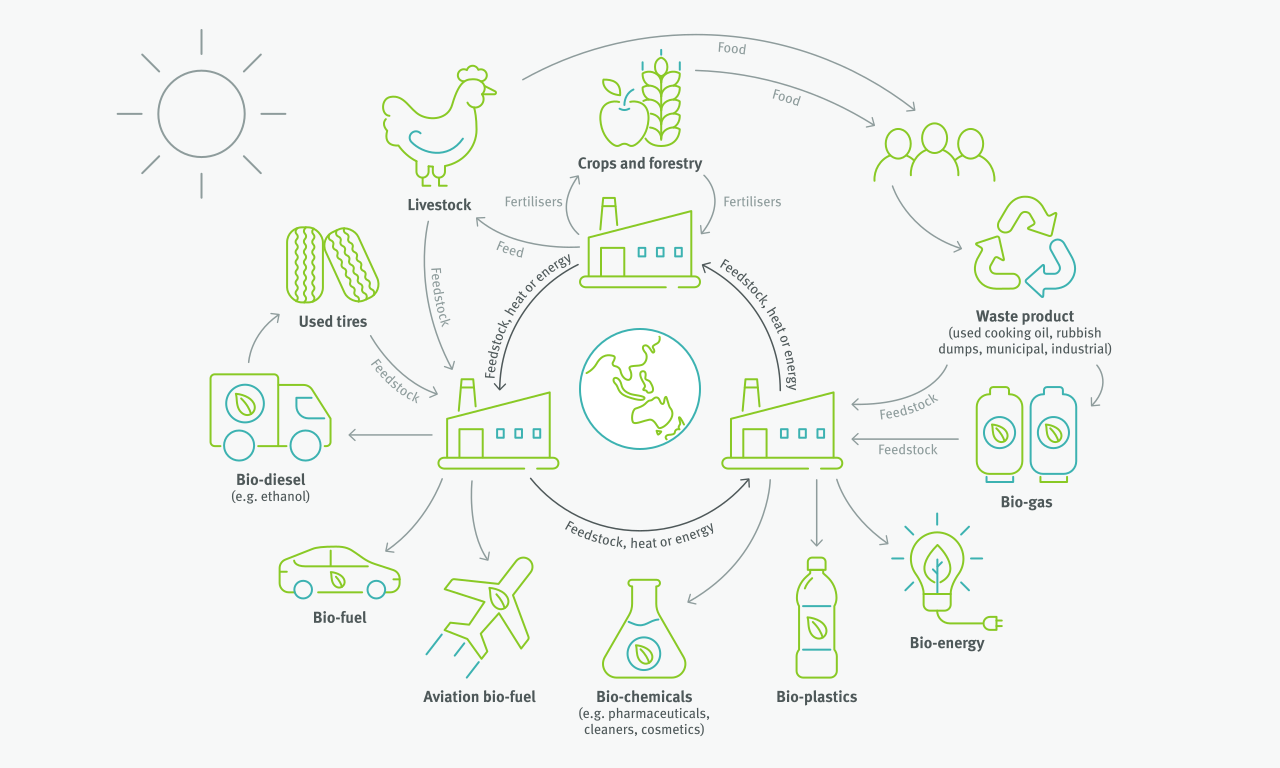
The following infographic illustrates the overall interrelationship of the various circular economy value chains: