Renewable Hydrogen Ecosystem Study, Goulburn Valley, Australia
Aurecon's study guided Goulburn Valley Water to identify pathways to a renewable hydrogen ecosystem and support a clean energy transition in regional Victoria.


Change your location to view content tailored for you.
The emergence of bioprecincts is providing modern economies with vibrant industries grounded in innovation and research, along with creating jobs and defining circular economy pathways.
This is the case for the Mackay Isaac Whitsunday region where the biofutures industry is slated to have a transformative effect on the economy. Biofutures precincts are distinct places that focus on design, innovation and technologies to develop and manufacture products from sustainable organic and waste resources, rather than fossil fuels.
In partnership with the State Development group of the Queensland Department of State Development, Infrastructure, Local Government and Planning, Aurecon defined the bioprocessing pathways and key economic development considerations to be able to identify suitable biofutures precincts in the region.
This included consideration of the circular economy elements in the biofutures value chain for sustainable precincts that deliver value to the community, and the environment, for the future.
Key economic drivers for the region are mining, tourism, beef, sugar and agriculture. Biofutures precincts intrinsically connect these sectors by co-locating processing facilities with existing operations, making bioproduct production more feasible given the capital cost constraints of developing new facilities.
Co-location can also foster technological innovation to commercialise bioproducts by linking technology companies with partners that have operational expertise.
Aurecon’s original partnership with the State was an industrial land planning investigation to evaluate suitable sites for biofutures precincts, based on infrastructure connection and site suitability characteristics.
Several precinct options were then analysed in more depth, based on the possibility of co-location with existing mills or processing facilities, and easy access to the port.
The key to understanding the entire value chain is a circular economy approach (Figure 1) to gaining operational efficiencies, complementary infrastructure around the precinct, and industry participation.
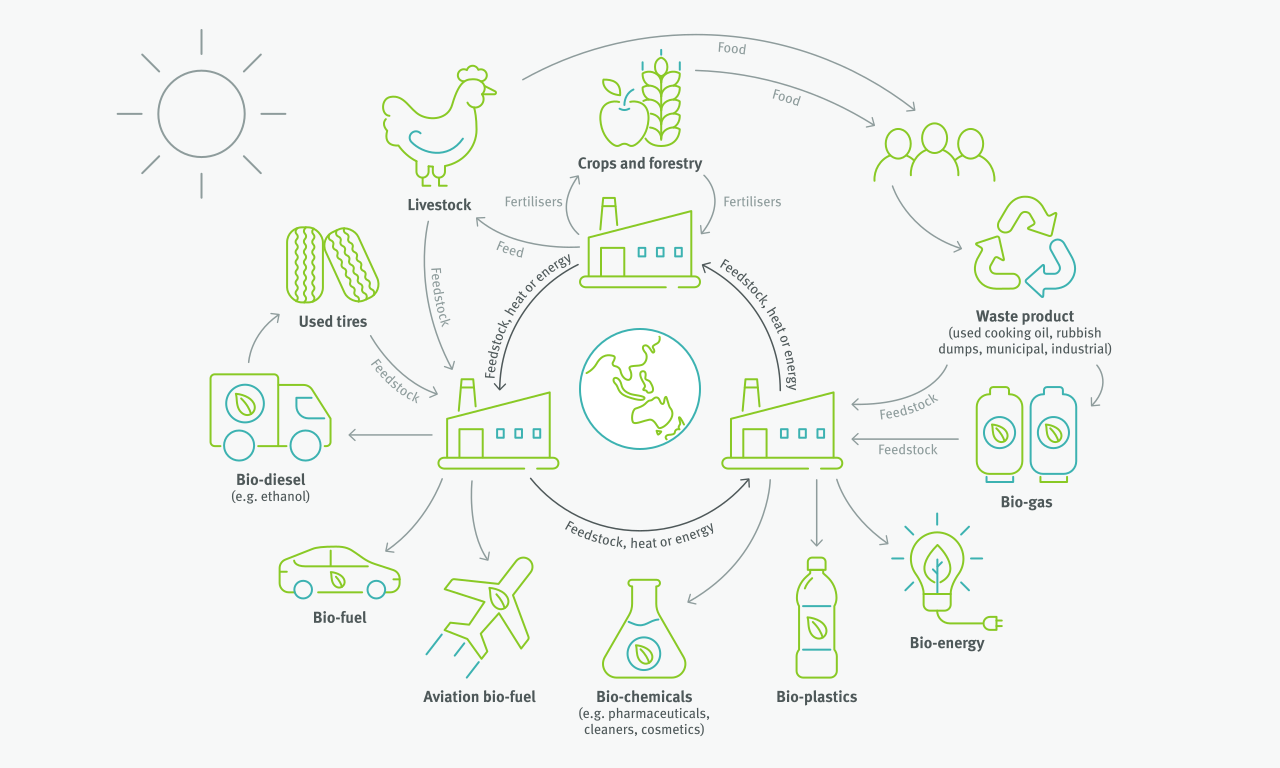
Figure 1. Circular economy value chain
The reach of a bioprecinct goes beyond its geographical boundaries with integration of the surrounding infrastructure and collaborations between precinct partners.
Aurecon’s investigation and evaluation of precincts built from two current pilot precincts – Racecourse Mill and Sarina Sugar Shed:
Both operations are focused on developing socially, economically, and environmentally sustainable bioproducts with exciting opportunities for commercial and economic development.
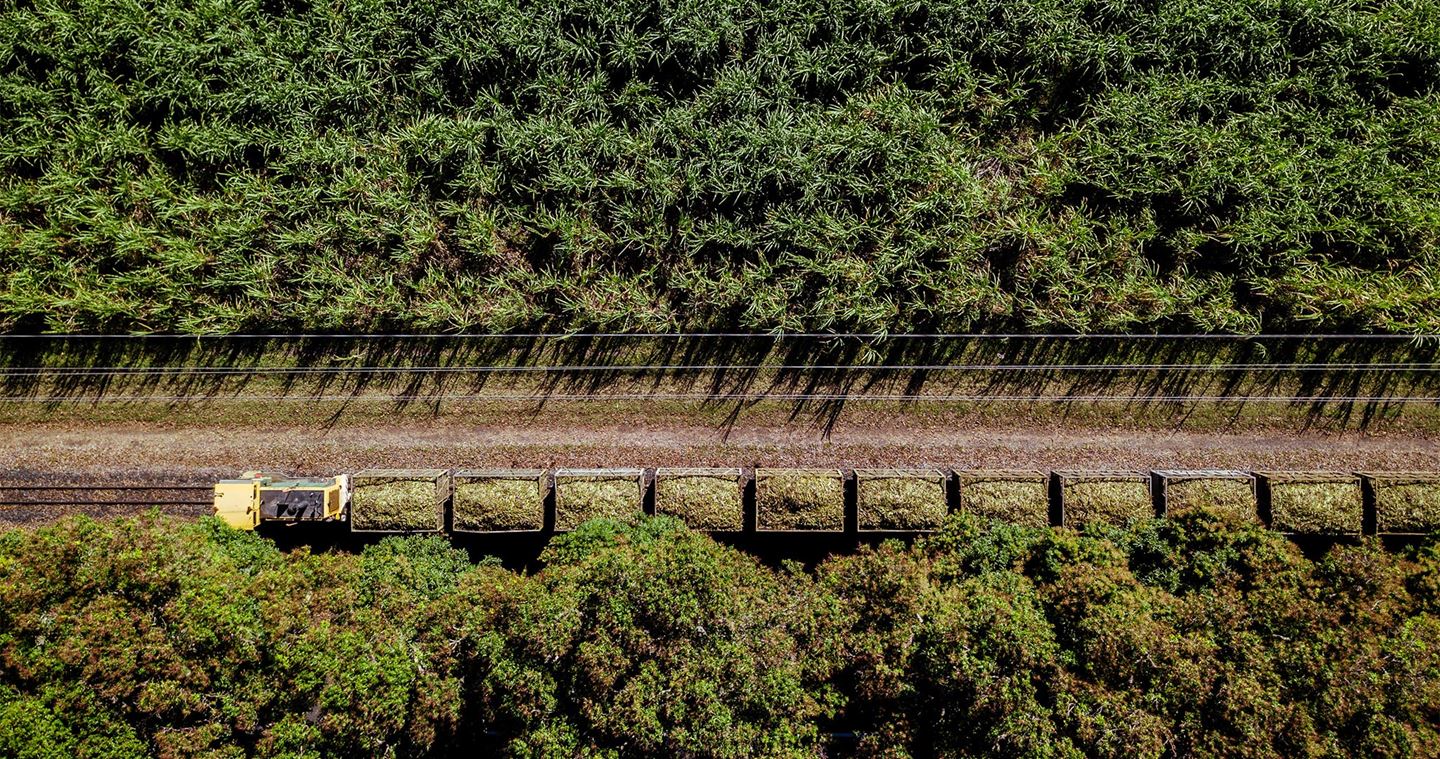
For example, a 38 MW renewable bagasse cogeneration plant installed at the Racecourse Mill precinct now converts into electricity and powers more than 25 per cent of Mackay's homes. This approach to a circular economy sees the burning of fibrous cane by-product (bagasse) to generate electricity. Co-generation based on bagasse is renewable because the sugarcane crop that produces it can be continually regrown.
The Mackay Isaac Whitsunday region has the capability to competitively produce some of the world’s most energy dense and productive feedstocks, such as sugar cane, eucalypts and algae.
There are five main advantages that a precinct concept for biofutures offers the region:
The demand for bioproducts is growing as industries and consumers place a greater value on the environmental benefits of renewable technologies and environmentally conscious products, and supply chains.
Defining biofutures precincts for future development forms a part of Queensland’s vision for a billion-dollar sustainable and export-oriented industrial biotechnology and bioproducts sector, with the intention to attract international investment and create knowledge-intensive jobs.
Aurecon's study guided Goulburn Valley Water to identify pathways to a renewable hydrogen ecosystem and support a clean energy transition in regional Victoria.
Aurecon leads building services engineering for the New WCH to deliver a 100% all-electric tertiary hospital for South Australian women and children.
Aurecon delivers engineering, environment and planning advice to transform CleanCo’s Swanbank Precinct into a low-emission energy generation and storage hub.