Defence-Aurecon Ascend Program, Australia
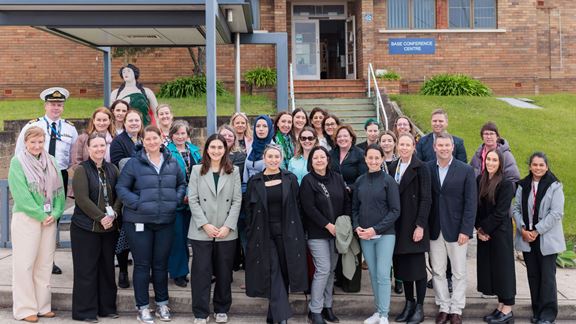
The Ascend Program is designed to support women to step into leadership roles and drive greater gender equity and inclusion within the Defence workforce.



Change your location to view content tailored for you.
The Department of Defence (ADF) has a significant footprint in rural Northern Territory. Amongst its extensive bases, three training bases were bolstered with upgraded access roads to continue supporting exercises at each site and providing safe entry and exit for vehicles.
Aurecon was engaged to project manage and design the road upgrade programme to include pavement remediation, drainage upgrades, erosion control construction and floodways.
With roads geographically dispersed across the vast training areas, and long drives to reach each base, Aurecon introduced digital surveying to capture asset data before designing infrastructure.
In addition to delivering efficient data and insights to inform the project, this technology also leaves a legacy of construction and material data that Defence can use as a baseline to prioritise and implement asset maintenance tasks in the future.
With such a large and complex project, there were design and construction challenges to overcome. Works could only proceed outside the wet season period which coincided with training exercises. Sophisticated coordination and collaboration with Defence and base Range Control Officers aligned the construction and training schedules to ensure minimal impacts.
Originally appointed in three separate contracts, Aurecon proposed to consolidate all sites under one portfolio to optimise design scenarios, procure supplies in bulk orders, and achieve resourcing and budget efficiencies. In addition, fewer transits by plane or car were needed when resourcing was consolidated.
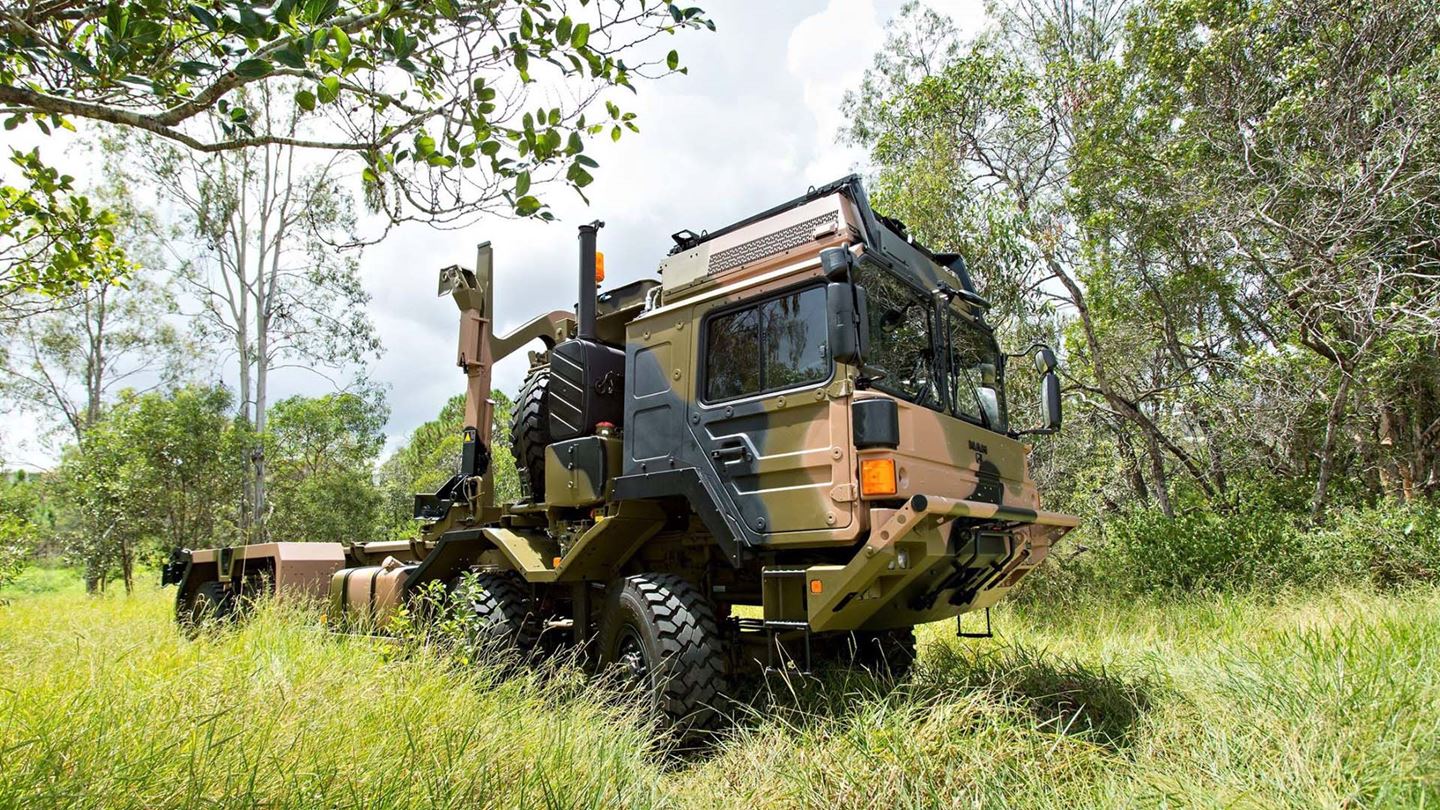
The baseline for road design specifications was accommodating Defence’s HX 77 utility truck as it is used extensively in the region for tactical training and is very heavy with a payload capacity of 17,000 kg.


Due to the remote location of the three sites, one a seven-hour drive from Darwin, the procurement of materials required careful consideration.
With only two asphalt contractors available in the Northern Territory, Aurecon designed most road repairs to incorporate material from an existing, Defence-owned, gravel pit. This delivered a sustainability outcome by reducing the use of virgin materials and optimised the overall project cost by reducing the purchase of new materials.
Some use of asphalt was unavoidable, so when required, Aurecon aligned its design and materials use specifications with national road contracts underway near two of the sites so that the contractor could complete both contracts simultaneously.
With limited as-built drawings or asset management data on existing access roads, Aurecon introduced satellite imagery, surveys and light detection and ranging (LiDAR) to document the 74 km of mostly unsealed roads.
By capturing the physical characteristics, shape and dimensions of these assets digitally, Aurecon could then prioritise which access roads to upgrade based on required safety performance and extent of use. Our designs used the state’s standard specifications to optimise the planning and approvals process.
Defence now retains a high level of understanding about its road assets at the three training bases – condition, materials specifications, pavement details and designs, environmental and geological features – rendering it better able to manage future maintenance and operational requirements. All drawings and asset data were populated into the Defence asset management system using consistent naming conventions and inventory.
Under the portfolio of projects, Aurecon ensured that 80 per cent of total procurement spend (in dollar value) was allocated to Indigenous Business Enterprises. This is in line with the components of the Defence Reconciliation Action Plan. It improves economic and social outcomes for Aboriginal communities, fosters local talent and skills, and promotes the adoption of new construction techniques.
The health and safety of Aboriginal people was a priority for Aurecon. By January 2022, mid-way through the construction phase at all three sites, 90 per cent of patients with COVID-19 in Northern Territory hospitals were people who identified as Indigenous.
To reduce the risk of potentially exposing construction personnel to COVID-19, Aurecon transitioned to predominantly hosting design and construction meetings via digital technologies, and used videos and photography taken on-site to witness and confirm critical milestones.
At one of the sites, Bradshaw Field, the original access road meandered very close to an historic pastoral homestead and nearby river, making it difficult to manoeuvre vehicles along the often-waterlogged road, and close to several Boab trees that are a protected and sacred species.
To change the direction of the access road required collaboration with the Aboriginal Land Council and local community, as well as area surveys and flood modelling. The new access way is now a 1.3 km dual-carriageway with asphalt pavement and crossing of four floodways.
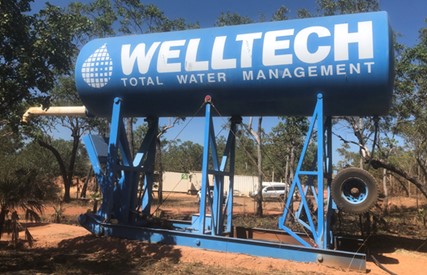
Bore water was the principal water source at all three sites, quite often in short supply to accommodate both construction works and existing base operations. To retain critical water supply for base requirements, Aurecon procured new above ground water tanks to store purchased water from nearby towns.
New pumps and generators directed water to where it was required during construction. The tanks will remain in place at each base as future storage options for rainwater capture and use.
Collaboration between Aurecon, Defence and industry partners was combined on this programme with a genuine desire to deliver upgraded access roads. Personnel and visitors to each base now have roads and associated infrastructure that are better suited to their training and operational needs.
The Ascend Program is designed to support women to step into leadership roles and drive greater gender equity and inclusion within the Defence workforce.
Aurecon, as a GWEO Enterprise Partner, facilitated a complex schedule of works to help transform Australia's munitions storage and distribution network.
Aurecon is transforming Sydney Harbour, replacing dredging with TBM tunnel engineering to deliver a faster, safer and more sustainable second harbour crossing.