
How will convenience culture impact our cities and transport?
Convenience culture is changing the way we live and work, but at what cost to the Australian economy, our transport infrastructure and our environment?


Change your location to view content tailored for you.
Mobility as a Service (MaaS) is about creating choice, bringing all modes (car, ride share, public and active transport) together, integrating them into people’s lives rather than forcing transport solutions upon them.
The benefits of an integrated MaaS system are many: people can understand the choices available to them, selecting from options designed to meet user needs, make transport decisions (and pay for them) more easily, all of which creates a better ability to move around.
The '2035 How we move people and goods' survey shows people want this integration and on-demand choice. But with so many differences regarding the way people want to move around and want their goods to move around, what challenges does that present for the future of urban mobility and MaaS? How can we tackle those challenges to create a mobility future that is people driven, and improves lives?
Creating this MaaS culture will be challenging. In growing cities, the only option to achieve reasonable mobility and journey time success is to improve integration, access to, and use of, mass transit. This is a challenge when – as our data reveals – a majority of respondents still rely on a car, rather than considering other options.
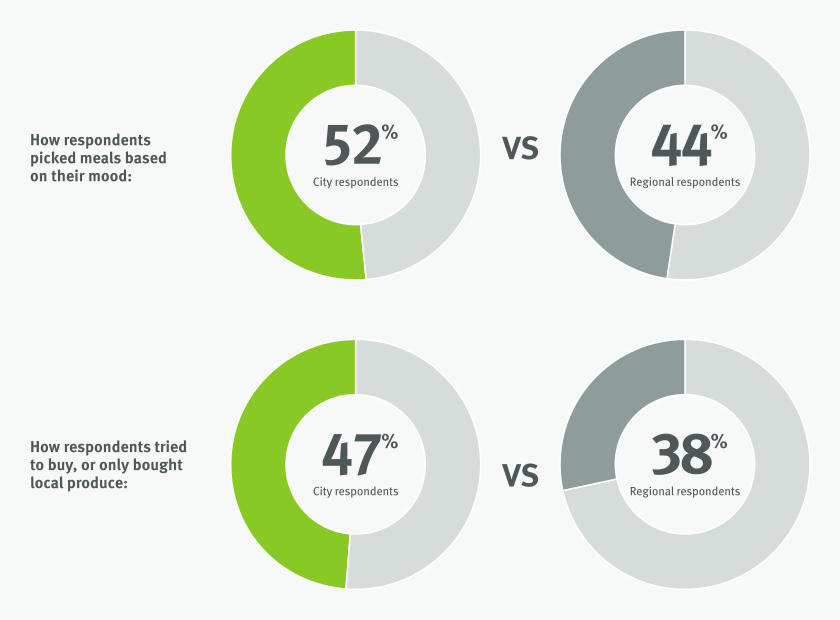
Figure 1. 2035 Future Transport Survey Question: the morning has flown and it's lunch time. How do you decide what's for lunch?
How will growing urban and declining regional populations impact the MaaS culture and fair and equitable access? Solutions must reflect the needs of the people – one solution for one area, might not be right for the next.
As cities mature, we are seeing more ways to get around and more convenience. On-demand transit gives us more choice – there is no need for a timetable, you can turn up and a service will be there or in some cases it will come to you. Add into the mix more micro-transport (e.g. e-scooters) and urban dwellers have more ability to get from their city apartment to transit hubs, transport becomes cheaper and more accessible, and the need for a car becomes less.
With more transport options available in regional areas, could we see this drive population growth?
In regional areas where the needs are different, the MaaS picture will be different. As technology enables regional areas to become places where people live AND work, the distances needed to travel every day will reduce – this opens up opportunities for MaaS options suitable to shorter trips, such as on-demand transport and ride sharing. With more transport options available in regional areas, could we see this drive population growth?
In some suburbs and towns there are no alternatives to a car, or at best a reliance on an at capacity bus transit system. While other areas are spoilt for choice. Equitable access to transport and freight options maximises participation and inclusion in the community and leads to better liveability.
In some suburbs and towns there are no alternatives to a car, or at best a reliance on an at capacity bus transit system. While other areas are spoilt for choice. Equitable access to transport and freight options maximises participation and inclusion in the community and leads to better liveability.
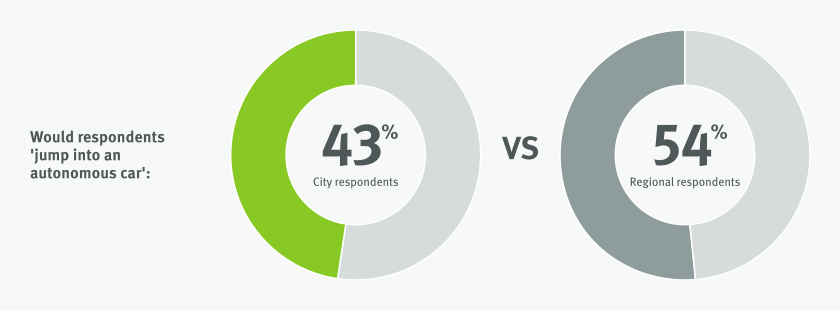
Figure 2. 2035 Future Transport Survey responses on whether users would 'jump into an autonomous vehicle' unplanned if this transport option was available to them.
Governments and the private sector have important roles to play in fostering equity in the provision of transport, ensuring geographic coverage and accessibility, as well as serving low-income and vulnerable populations. By working together to build a mobility future that is people driven, we have the opportunity to improve lives for all people.
The survey revealed some major disconnects between the general public and industry – relating to multi-modal offering. Overwhelmingly, industry was more inclined to consider multi-modes of transport in their daily choices.

When commuting to work, overall 46 per cent of all respondents would use an autonomous car, whereas industry prioritised ‘catch a few modes, usually bus and tram’ (36%) and ‘riding bike or walking’ (32%), with 28 per cent using an AV.

When it came to where we live and work, overall, most respondents see themselves living and working in the suburbs (43%), whereas industry respondents (38%) predominantly see themselves living in the suburbs and working in the CBD.

Unplanned transport: the results show that industry is more inclined to order a car that will take the passenger directly from A to B (48% industry versus 36% overall), but also industry is more likely to consider an on-demand bicycle scheme (14% industry versus 8% overall).
There is significant industry activity in planning, building and delivering on-demand intelligent public transport. Industry sees that future. The general public is in the here and now. We need to bridge that gap through education, creating infrastructure geared towards the public and integrated transport and physically bringing these multi-modal choices into people’s daily reality.
How do we navigate through the mobility jungle? It starts and ends with people. By accelerating the fusion of people focused design and new technology, we have an unprecedented opportunity to improve quality of life.
By working together to build a mobility future that is people driven, we have the opportunity to improve lives for all people.
Understanding what people need and why will enable us to plan our cities better. The survey shows convenience, liveability and integration of services are all very important to people. Historically transport and freight planning has been done in isolation, but new insights reaffirm the case for future planning to not be siloed and to focus on multi-modal transport / MaaS.
The people centric trend of precinct-based city design is key in navigating towards a MaaS culture. In 2035, the need to live in the suburbs and work in the CBD may not be as common as it is today.
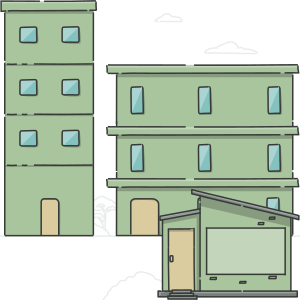
43% of respondents see themselves living and working in the suburbs.
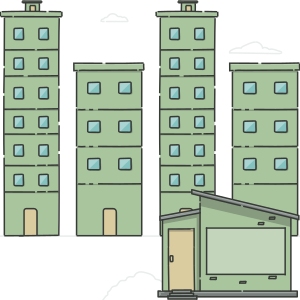
30% living in the suburbs and working in the CBD. 15% live in the inner city and work in the CBD.

12% live in a regional town and work in a capital city.
New technologies are driving a real shift in thinking when it comes to city design – with on-demand vehicles and other new services, our travel options increase and we have more choice around where we work.
All these elements feed into providing convenience, impact how we will move around and are significantly changing the nature and dynamic of cities.
People want more time back for themselves. The more we can integrate MaaS transport into our lives, the more time we can give back to people. That’s the future we should be planning for.
At Aurecon, we are constantly thinking about how to adapt and achieve the balance between convenience, cost, environment, safety, wellbeing and equity. The '2035 How we move people and goods' report sets out a vision for the future of a transport ecosystem to move people and goods. By reflecting on the survey data, we will inform decisions for future freight solutions, and navigate towards more positive outcomes.
By working together to build a mobility future that is people driven – we have the opportunity to improve lives today, and for future generations.

Discipline Leader, Technical Advisory, WA & NT – Australia
Convenience culture is changing the way we live and work, but at what cost to the Australian economy, our transport infrastructure and our environment?
Will automated cars live up to their promise of being faster, safer, cleaner, more reliable? Or will they create new levels of congestion and environmental impacts?
As the population grows, our roads will not cope with increasing goods transported throughout our cities. How do we keep our roads safe and our cities liveable?