
Can we ensure transport safety with increased freight on our roads?
As the population grows, our roads will not cope with increasing goods transported throughout our cities. How do we keep our roads safe and our cities liveable?



Change your location to view content tailored for you.
The trend towards vehicle automation gathers momentum every day. It is replete with opportunity, what they might offer and what they might achieve. But our cities, governments and transport agencies are playing catch up when it comes to the infrastructure to support these vehicles and their understanding and ability to manage them.
Automated vehicles are already here. Driverless rail has been operating in some industries such as mining for some time now, and Australia’s first driverless passenger train is now a reality. The cars that we drive today have varying degrees of automation, which we can benchmark against the Society of Automotive Engineers (SAE) levels of automation.
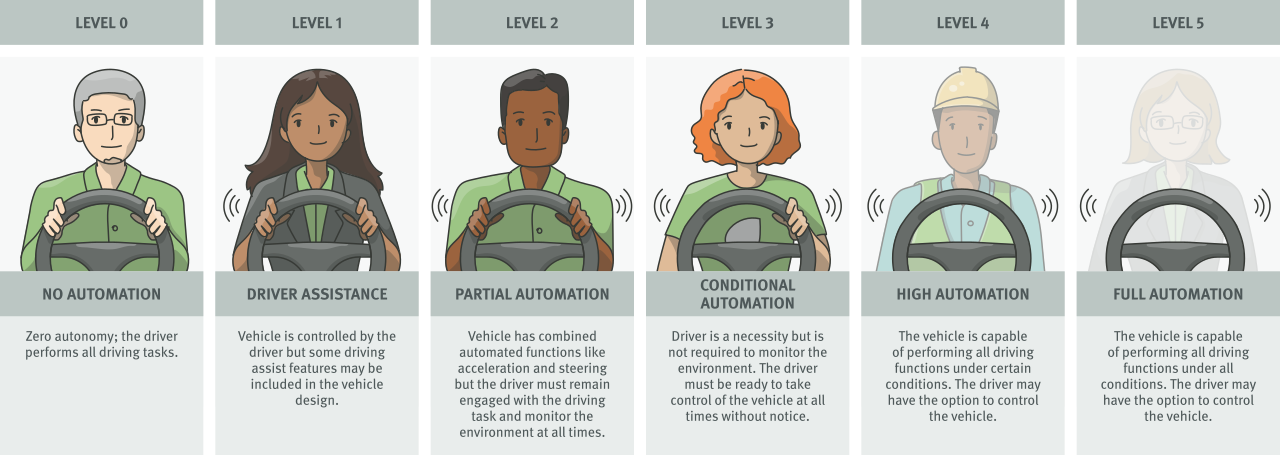
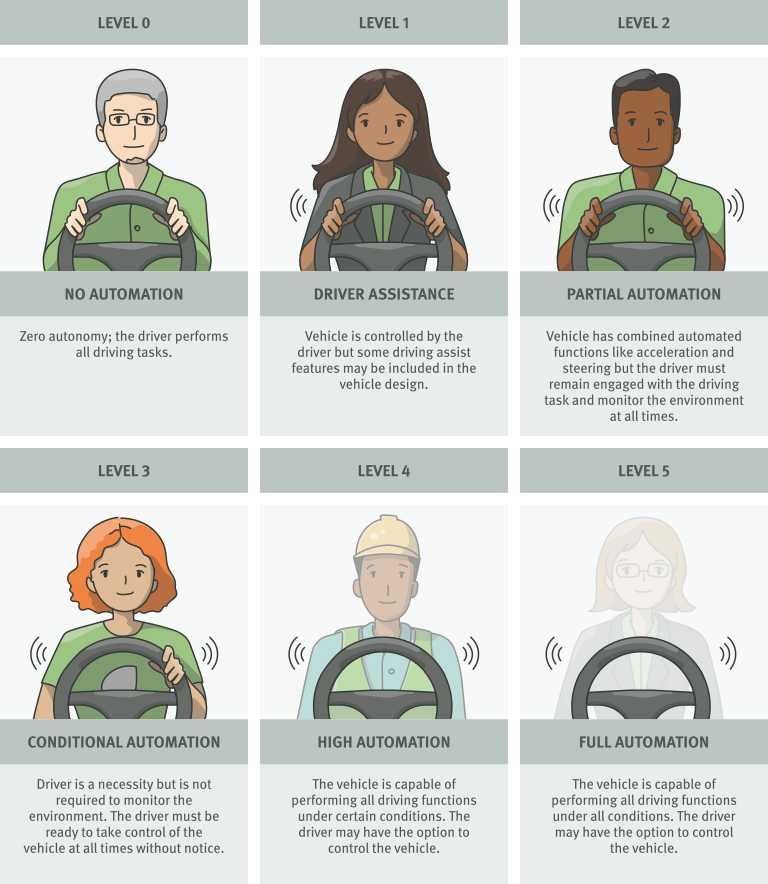
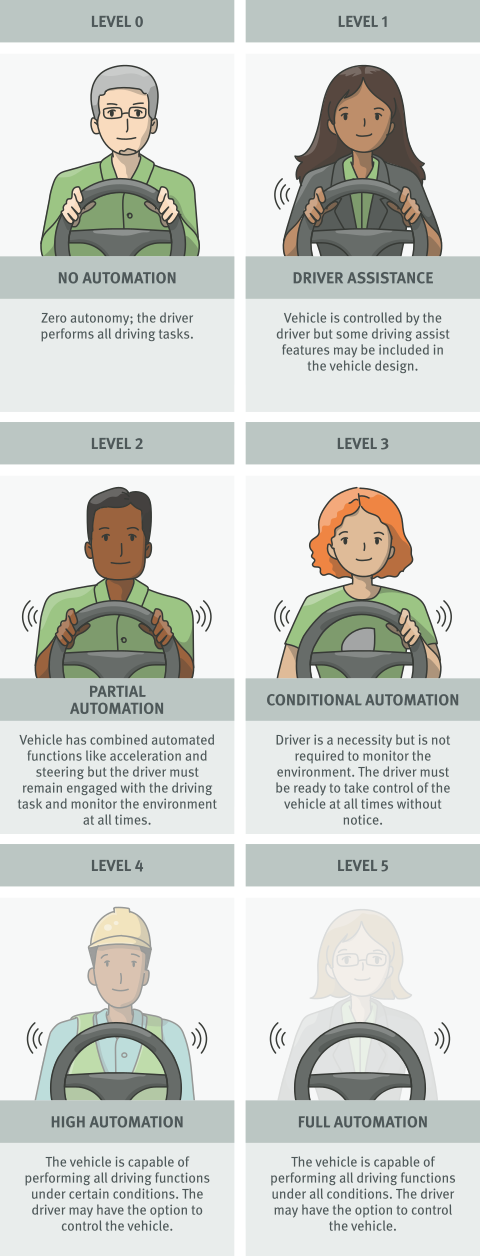
The Society of Automotive Engineers (SAE) levels of automation
Australia is well regarded in terms of its current engagement and testing in the AV world. New cars today come with emergency brakes, collision avoidance, parking control, radar enabled cruise control.
These levels of automation have been gradually increasing and will continue to increase in capability in coming years, until they (possibly) reach SAE’s Level 5 — full automation (as per graphic above).
Perhaps this is why in 2035:
When we gaze into this future, is this the future we want? Will automated vehicles and driverless trains live up to their promise of being faster, safer, cleaner, more reliable? Or will they simply produce a raft of new travel patterns which create more congestion, pollution and danger?
Improving safety is one of the great opportunities, but the full extent of whether removing human error could see improved safety outcomes is still to be proven. The major challenge will be how a mix of fully automated vehicles and human driven vehicles share our road network.
While AVs might save lives, there is a concern they could destroy jobs and it’s predicted more than 400,000 driving jobs could be impacted by self-driving technology. These include train drivers, workers in the freight sector as well as taxi drivers and of course we would no longer need as many driving instructors.
The flip side is that new jobs will be created, new work opportunities we have previously never thought of, particularly in the engineering, data analytics and robotics sectors.
The flip side is that new jobs will be created, new work opportunities we have previously never thought of...
For example, human trainers will be required to teach and modify the machines plus new roles will be responsible for supporting machines in collecting and analysing reams of data that we’ve never before had access to.
Just as the tractor was introduced in farming, creating jobs in factories and manufacturing for the design and importing of tractors and spare parts, whilst also increasing productivity on farms, ultimately creating many more jobs than people could ever have dreamed.
But making decisions on future freight solutions must be inclusive, and operators need to be part of the conversation. A people centric perspective is vital – not only the users, but the transport workers too.
Autonomous vehicles will have widespread impacts on society. If their integration is not planned properly with a balance across the four pillars of future mobility – connected, automated, shared, electric – the future could be worse than today, with larger populations and higher volumes of cars swamping streets, creating more gridlock.
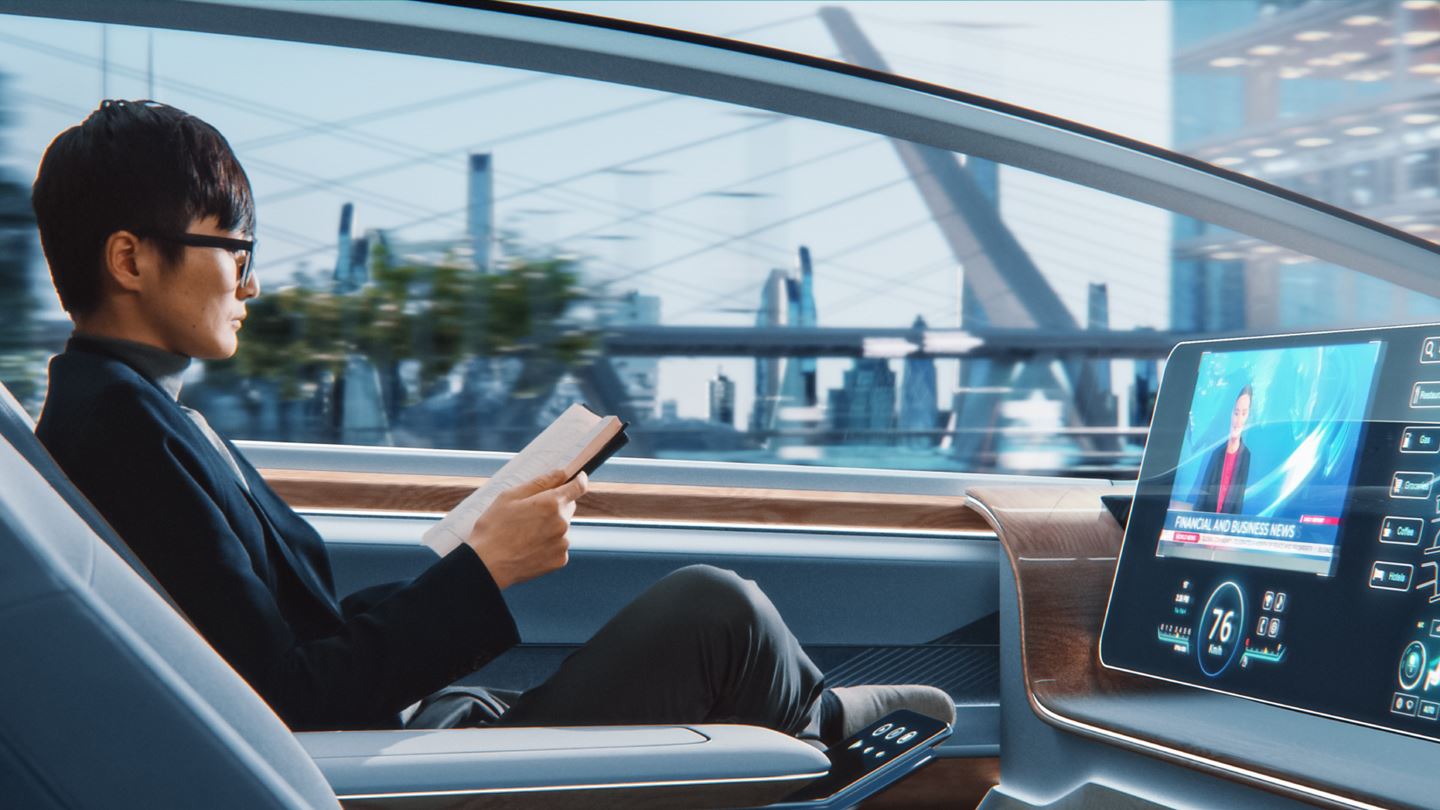
Congestion costs our nation billions of dollars every year, but if AVs are an integrated part of an interconnected multi-modal transport system (Mobility as a Service), we could see reductions in car ownership and increases in vehicle sharing. Add in the ability for passengers to work while travelling, and the potential economic and productivity gains could be sizable. Wellbeing and happiness could also improve through sharing vehicles and simply interacting with each other more.
If technology trends are harnessed for the greater good, AVs and driverless transport could see positive outcomes for society’s vulnerable – those with physical impairments, young children, the elderly – providing more cost-effective options, and improving social mobility, equity of access. We have an unprecedented opportunity to improve quality of life.
With greater automation in our freight and transport networks, comes a greater need to influence at the government level. Every government is grappling with creating policy and how to regulate and respond to changes. Many of today’s policies were created more than 100 years ago when cars first hit our roads, and there’s been little evolution since.
We need to hack into policy at a strategic and ground level. It needs to be more agile to meet changing needs of our growing population. It needs to be more flexible for city planners and operators to adapt infrastructure to meet people’s needs.
Policy and regulation must have the ability to respond and embrace technology and innovation as it comes and be more nimble for an uncertain future.
We also need to be cognisant of the significant funding constraints that every level of government faces, that pose substantial challenges with regard to how well-equipped these organisations are in creating solutions to these very complex problems.
Governments need to enable and clear the path of any barriers to progress, which is challenging when you can’t predict new business models – such as e-scooters, which blindsided many cities. Policy and regulation must have the ability to respond and embrace technology and innovation as it comes and be nimble for an uncertain future.
With new technologies and evolving models disrupting all facets of the transport network, governments need support in helping determine where to focus their priorities. Are the right questions being asked by decision makers, internally and externally with suppliers, to ascertain the right priorities?
Is there a risk that we can’t meet demand? The Australian public know what they want. In 2035, 46 per cent of all respondents want to jump in an autonomous car to get to work. But the dream for industry respondents differed vastly – with 68 per cent going to work via multiple modes of transport (bus/train), riding or walking (Figure 1).
While the public see AVs as a reality, industry is much more aware of the constraints of the transport system and the ability for it to absorb any more traffic congestion. How do we bridge this gap between the public’s expectation and what industry perceives to be the future reality?
Without appropriate ‘market shaping’ and behaviour changes needed to effectively manage the advent of AVs, these modes could exacerbate the problems we currently face in our network (congestion, safety, less walking space etc).
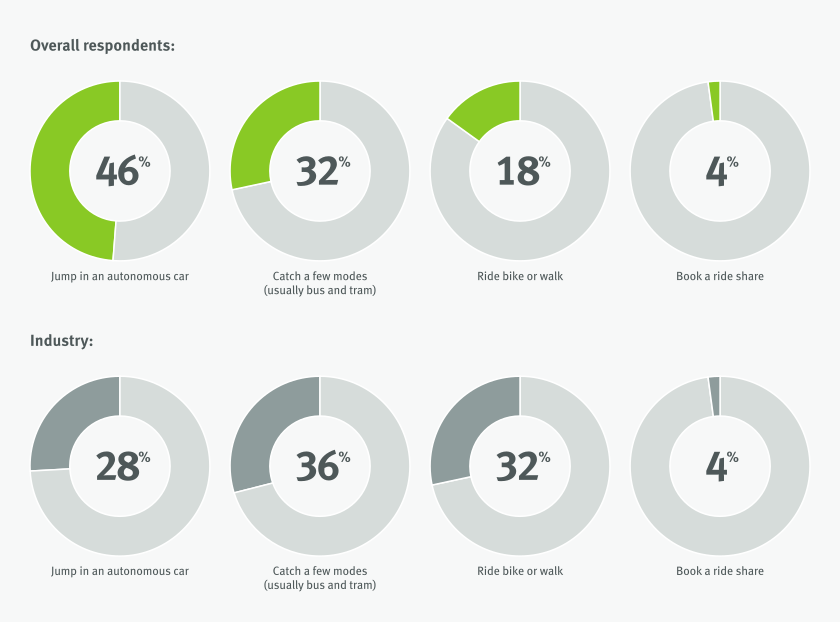
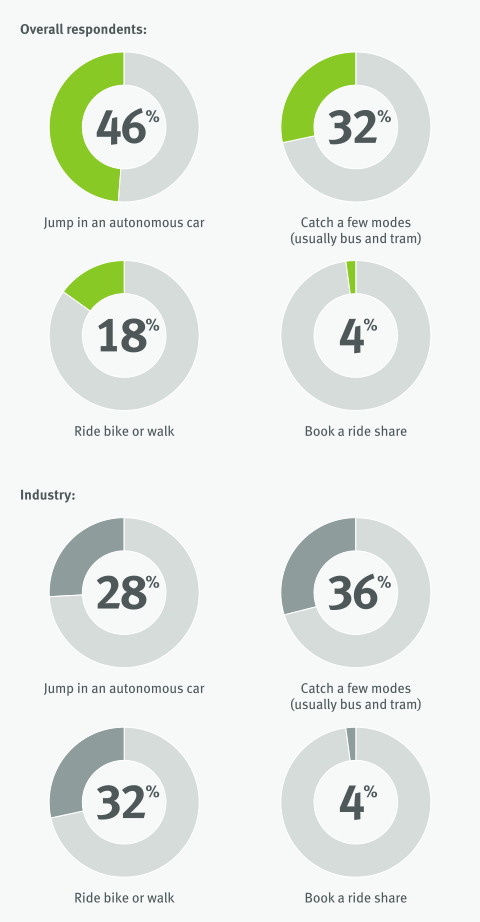
Figure 1. Overall survey respondents vs industry respondents on how they think they will be getting to work in 2035
Engagement with the public is fundamental, for their informed understanding of what all this means now and into the future, and also for industry to understand what people really want.
To meet future demand, regulatory barriers need to be overcome, procurement models for public transport services need to change, and we need to think differently about how these vehicles are procured. Currently most buses are diesel, and it’s only a few years before electric is the norm – how quickly can governments transfer their fleet to fully electric when they are inhibited by the way they purchase the vehicle?
Some government authorities such as Transport for NSW – one of Australia’s biggest energy users – are already preparing for this. Aurecon has developed an Energy Futures Strategy to help the Government achieve their aspirational net zero carbon target by 2050, including not just electricity but all energy (diesel, petrol and gas) for all transport modes. It’s this kind of leadership that is required across public and private industry to truly make a difference.
We can meet the anticipated demand for AVs if cities enable them to integrate seamlessly with other transport modes and existing infrastructure. Instead of seeing them as competition, AVs need to be seen – and understood – as being part of an ecosystem that better connects people to other modes of transport.
At Aurecon, we are constantly thinking about how to adapt and achieve the balance between convenience, cost, environment, safety, wellbeing and equity. The '2035 How we move people and goods' report sets out a vision for the future of a transport ecosystem to move people and goods. By reflecting on the survey data, we will inform decisions for future freight solutions, and navigate towards more positive outcomes.
By working together to build a mobility future that is people driven – we have the opportunity to improve lives today, and for future generations.

Managing Director, Transportation – Australia
As the population grows, our roads will not cope with increasing goods transported throughout our cities. How do we keep our roads safe and our cities liveable?
Convenience culture is changing the way we live and work, but at what cost to the Australian economy, our transport infrastructure and our environment?
Mobility as a Service (MaaS) is about creating choice for the user, designing an integrated transport system allowing them to travel easily throughout our cities.