The road to data driven asset performance: three practical steps to take now
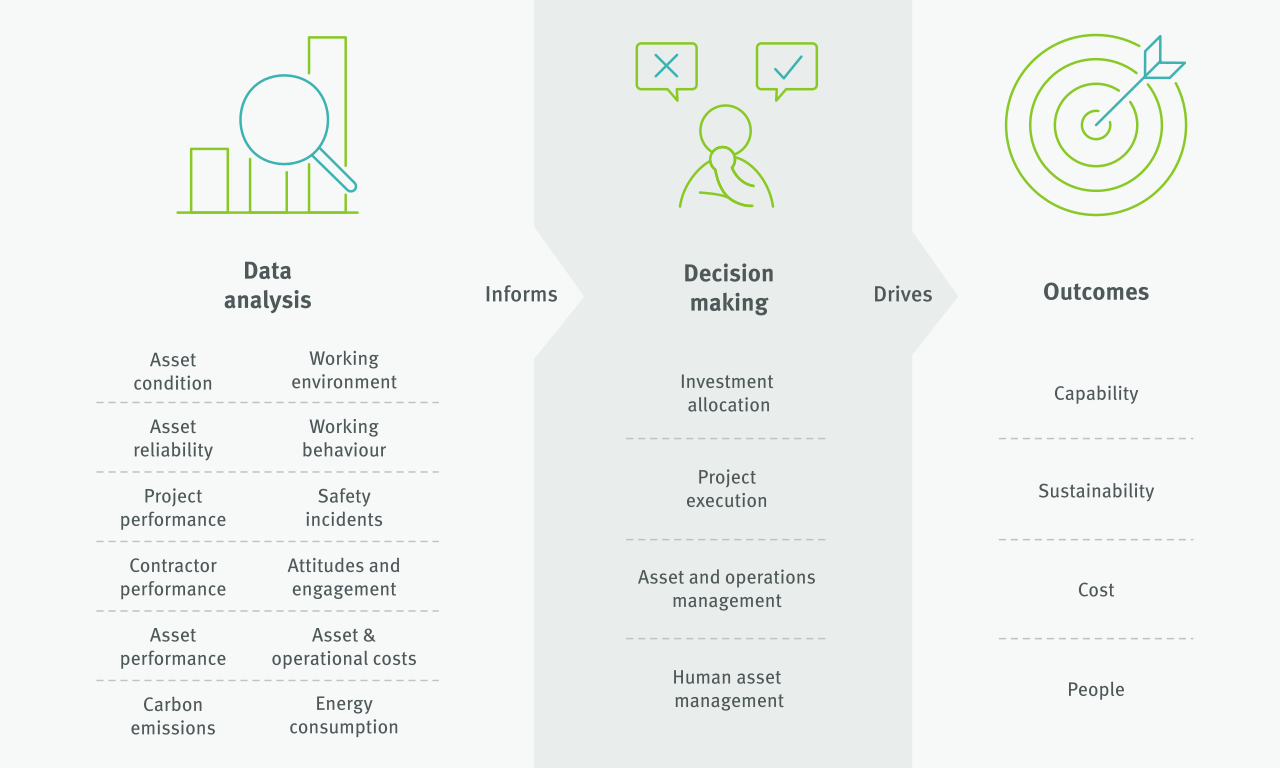
As discussed in our previous articles, there are the two fundamental buildings blocks Defence needs to have in place in order to use data to achieve its strategic objectives: capturing the right data with the right tools (aka the fuel for the insights engine) and making sense of that data – building a strong analytics capability (aka the insights engine).
But at a practical level, what should Defence do to move forward with this opportunity? We suggest three simple and practical steps to start with:

Define value and purpose: This is fundamental for asset performance in any scenario. Many organisations face challenges in making value cases and often focus on the wrong problems. But when you know your value and purpose and have the information and analytics to go with it, it enables high agility, and allows the business to adapt to changing conditions – which for Defence is crucial to achieving strategic and operational goals.

Shift mindset to understand that the challenge is not insurmountable: Be comfortable building the ecosystem and foundations while you are managing operations, and work with what you have as a start. With a strategically designed program, it is possible to get value with what you already have and there are ways of attaching a degree of confidence to the analysis to get real outcomes. The key is to get started – you don’t need 100 per cent of the data on day one to obtain valuable insights from data analysis and take the first steps towards a data-driven decision making culture.

Create strong data teams and capability: Provide strategies to ensure the right people, processes and tools are in place to understand what data is most useful to enable better decision making about assets and business purpose, and maintain Defence ownership of critical data. Creating an internal data analysis capability is an achievable first step to get into the data, understand what the questions are, if they can be answered or supported with data you have, and take a view on what additional data may be needed to collect going forward, and how to structure and analyse it. Also, bringing in expertise to create quality control at the data entry point is essential. Data quality is a significant challenge, especially with data that has come from multiple parties and contractors. Bringing in expertise to ensure robust data quality up front, creates a strong foundation and gives teams confidence in the data and analysis to make informed operational decisions.
Managing assets into the future starts now
Data underpins the ability to make informed decisions, quickly. And with rapid advances in data capture, processing and analytics technology, managing assets without data – or with bad data – will hamper an organisation’s ability to achieve its strategic and operational goals. With the vast scale and diversity of its assets and infrastructure, Defence is in a unique position to fully realise the value that data can deliver.
Now is the time for Defence to embrace digital technology to enable cost-effective data-driven asset management. This will improve Australia's Defence capability, reliability and sustainability through the efficient planning, management and operations of the critical assets, infrastructure and people that support it. Taking simple, practical steps will allow Defence to start this value realisation journey by extracting insights from the from data it has today, while building a strong value-focused data capture and analytics capability for the future.
This article is the third in our three-part series on ‘Data and digital smarts for better asset decisions in Defence’. Read article one: ‘Capturing data to enable Defence strategy, capability and operations’, and article two: ‘Making sense of data for more valuable insights across asset management and operations.’
Contributing author & reviewer: Eric Louw