Kakadu Tourism Master Plan and Roads Strategy, Australia
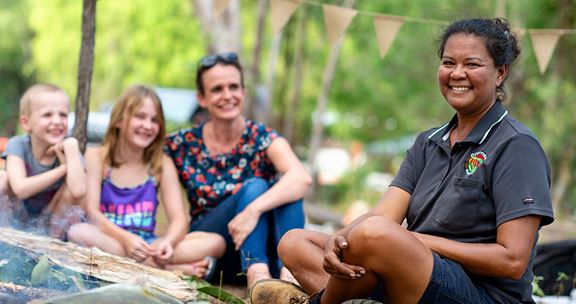
Aurecon engages Traditional Owners to capture the unique attributes of the Kakadu National Park and help guide sustainable tourism.


Change your location to view content tailored for you.
Jabiru, the gateway to the World Heritage-listed Kakadu National Park, was transferred to its Traditional Owners, the Mirarr People, in June 2021 following the end of the town’s 40-year Ranger Uranium Mine lease.
As part of this historic process, Aurecon was engaged by the Northern Territory Government to review the township’s wastewater treatment system, and to propose optimised and sustainable solutions requiring minimal maintenance.
Applying Aurecon’s successful “Design to Innovate” framework in close consultation with the client, and completing a thorough literature review, the team offered four solutions. The new options each provided opportunities for re-imagining and enhancing the existing infrastructure, while applying new technologies and approaches. The proposed options were:
The project required Aurecon to utilise the existing wastewater treatment infrastructure where possible. The project team devised how existing plant (including ponds) could be transformed into new assets, underpinned by low maintenance, and more advanced processes.
The scope included:
Importantly, the client required solutions that were tested and proven in comparable geographic sites, would be suited to Jabiru’s very hot and dry climate, and could accommodate plans to grow the township into a cultural and tourism hub.
The proposed solutions provide sensible-yet-innovative approaches which outperform the business-as-usual scenario, minimise community impact, are contained within the existing site footprint, and reduce the land required for effluent disposal.
Aurecon’s recommended solution was chosen because it performed well against the following established criteria:
Aurecon’s research found no comparable study for similar conditions as those faced in Jabiru. Nevertheless, the team provided the client with multiple innovative options for wastewater management, compared to the business-as-usual scenario.
These differ from waste stabilisations ponds frequently found in remote and regional Australia, but offer resilience, acceptable effluent quality and can be operated by the community with minimal intervention. They include the potential to use a nearby golf course for irrigation.
We considered permissible spray and absorption rates, and the precedent of similar examples in other states, where irrigating amenities have formed part of the wastewater treatment solution.
In the concept design of the options, the existing physical site characteristics and its assets were used to accommodate alternative treatment processes such as wetlands, and the methods of operation altered to improve efficiency or to enable different technologies and their hydraulic requirements – an innovative approach to reusing assets.
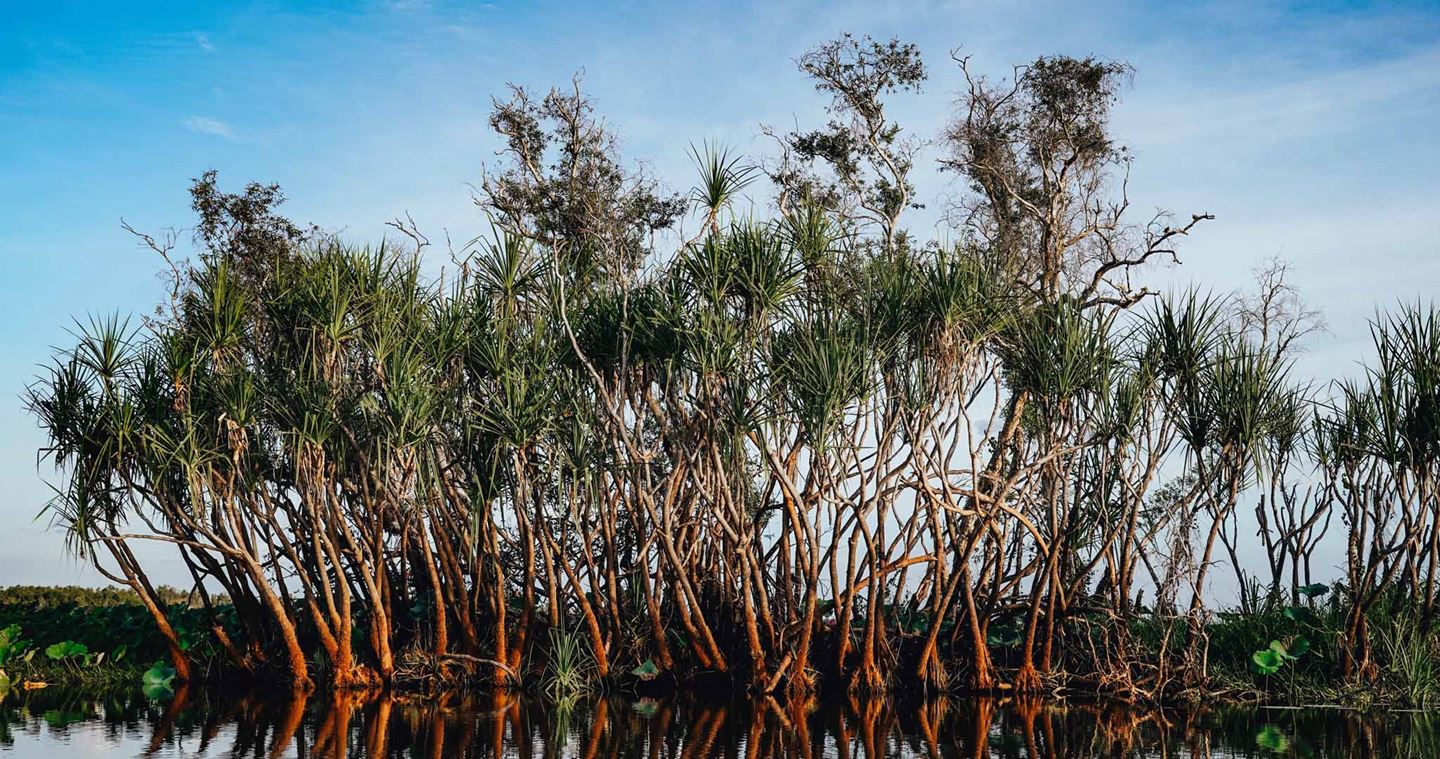
Another consideration was the use of ecologically appropriate grasses and plants for the wetlands solution. These native species are more efficient than other options, reducing the required footprint of the wetlands by 30-40 per cent. The solution has been devised to use as little land, within the existing plant footprint, as efficiently as possible.
This project represents a working model for how existing wastewater infrastructure can be enhanced and improved, particularly in the regional Australian context. While the current infrastructure in Jabiru is functional, it could be optimised, particularly considering the desires of the township to attract significant, additional tourism traffic to the area.
One of the objectives of the project was to enhance wastewater treatment capabilities by overhauling the treatment process to include modern treatment techniques – all while reusing existing plant infrastructure like ponds, piping and the existing irrigation area.
The project also recognises the immense importance and value of our national parks and provides a case study of wastewater treatment optioneering which avoids any discharge to a watercourse, and considers other sustainable solutions, while remaining cost effective, and low maintenance.
Aurecon engages Traditional Owners to capture the unique attributes of the Kakadu National Park and help guide sustainable tourism.
Aurecon is transforming Sydney Harbour, replacing dredging with TBM tunnel engineering to deliver a faster, safer and more sustainable second harbour crossing.
Aurecon's study guided Goulburn Valley Water to identify pathways to a renewable hydrogen ecosystem and support a clean energy transition in regional Victoria.