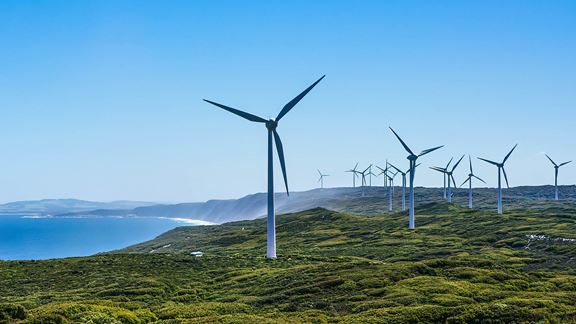
EPWA Power System Security and Reliability (PSSR) Standards Review, Western Australia
Aurecon provides technical analysis EPWA's Power System Security and Reliability Standards Review, supporting Western Australia’s energy transformation.


Change your location to view content tailored for you.
The driving motivation for the Queensland Energy and Jobs Plan is to provide real and lasting benefits for communities by meeting the state’s renewable energy targets and creating new jobs, growth and transformation opportunities.
Aurecon was appointed to deliver a cause-and-effect study of the state’s projected energy use by industry type and geographic region. The results of Aurecon’s study were used to inform demand side analysis and provide the Queensland Government with multiple energy generation and consumption models to quantify future impacts of its energy transition, supporting network capital investment decision-making, and underpinning the state’s decarbonisation aspirations.
A key foundation of the study was AEMO’s Integrated System Plan (ISP), which Aurecon had previously supported. The ISP identifies broad electricity system needs in the long-term interests of consumers, primarily at the state level.
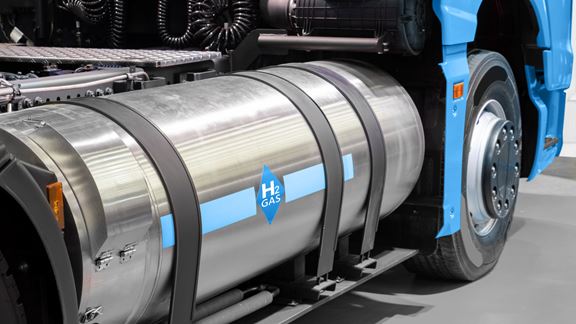
To obtain the required granularity, Aurecon completed further analysis of the state’s total current energy consumption across 15 separate industry types and 13 geographic regions across Queensland. Inputs included the impact from emerging economies such as hydrogen, and data on how electric vehicles and other transport electrification will change future energy demand. Industries likely to transition from fossil fuels to more sustainable sources of energy were included in the analysis.
With this baseline data, Aurecon developed the first of two energy generation models, the first examining potential energy demand scenarios for each industry and region up to 2050.
The second model shows the prospective demand on the government’s energy networks under each scenario by determining half-hourly electricity demand profiles, according to both industry type and region year-on-year to 2050.
By 2035, Queensland’s energy system is forecast to be powered by 80 per cent renewables, including a total of 25 gigawatts of large-scale wind and solar, and have all publicly-owned coal-fired power station sites operating as clean energy hubs.
As the energy landscape is rapidly changing in Australia, both models were created with a customisable and modular structure, complete with comprehensive visualisations to communicate results to strategic decision makers and other audiences. This allows the state electricity transmission system provider, Powerlink, to update them with new information, and different future scenarios, by adjusting the inputs and parameters.
Aurecon provides technical analysis EPWA's Power System Security and Reliability Standards Review, supporting Western Australia’s energy transformation.
Aurecon's study guided Goulburn Valley Water to identify pathways to a renewable hydrogen ecosystem and support a clean energy transition in regional Victoria.
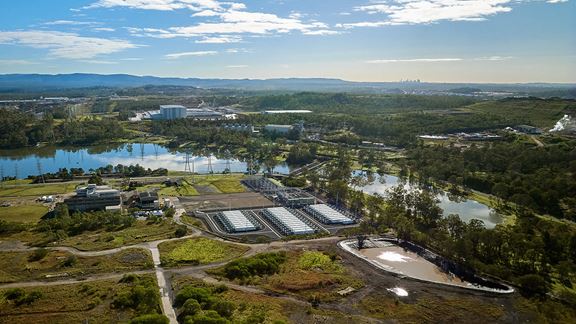
Aurecon delivers engineering, environment and planning advice to transform CleanCo’s Swanbank Precinct into a low-emission energy generation and storage hub.