AEMO Costs and Technical Parameter Reviews, Australia
Aurecon updates AEMO’s set of costs and technical parameters for a concise list of new entrant generation and storage technologies for a renewable future.


Change your location to view content tailored for you.
We’re currently in the world’s fastest energy transition, and the Integrated System Plan for Australia’s National Electricity Market (NEM) identifies essential actions to optimise consumer benefits in Australia.
This is to support Australia’s electricity grid transforming transitioning from fossil fuels to renewable energy, from centralised to distributed generation, from supply-led to demand-driven use.
The 2020 Integrated System Plan (ISP) modelling confirms that the least-cost, least-regret transition of the NEM is from a centralised coal-fired generation system to a highly diverse portfolio dominated by distributed energy resources and variable renewable energy. To ensure the country’s power system can reliably meet demand, dispatchable resources and enhanced grid and service capabilities are required.
The ISP provides an actionable roadmap for the NEM, to guide the transformation to more renewable energy supply. It aims to minimise costs and the risk of events that can adversely impact future power costs and consumer prices, while also maintaining the reliability and security of the power system.
For the Australian Energy Market Operator (AEMO) to develop the ISP, Aurecon was engaged to facilitate stakeholder engagement, drawing together insights from industry specialists. To challenge and affirm the ISP’s logic, the process drew out constructive and critical input from AEMO’s stakeholders.
The ISP confirms that Australia is moving towards an electricity system dominated by distributed energy resources, and utility-scale solar and wind, supported by storage technologies such as pumped hydro and batteries.


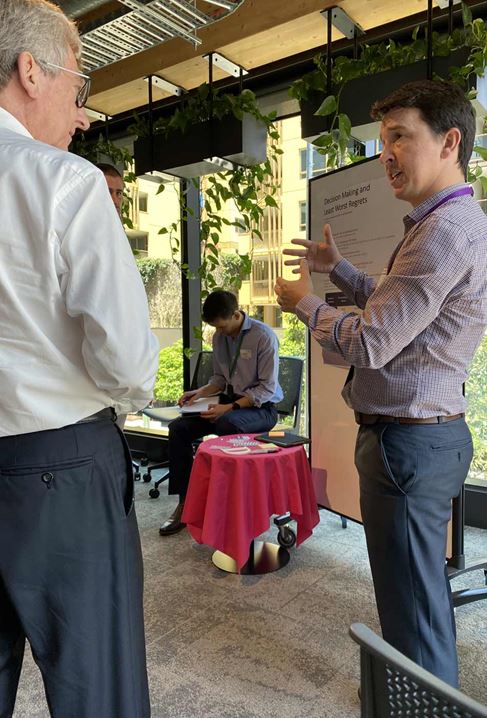
Extensive consultation was undertaken with stakeholders through two rounds.
Prior to Aurecon’s appointment, AEMO conducted a first round of consultation focused on the scenarios and underlying assumptions used for the modelling to inform the Draft 2020 ISP.
Following the release of the Draft ISP in December 2019, Aurecon consulted with industry, government, investors, academic and consumer stakeholders in Round 2. Aurecon’s consultation summary report from the workshops and webinar contained a summary of the written submissions and stakeholder engagements, along with AEMO’s responses to the material issues raised.
More than 170 stakeholders shared their insights and feedback in three public workshops, a webinar and formal written submissions. A variety of stakeholder engagement platforms were used to ensure that proponents in regional or remote locations were able to contribute.
Stakeholders were provided with the opportunity to voice their feedback on each aspect of the Draft 2020 ISP through the collaborative workshops and webinar. The second round of consultation resulted in targeted refinements of inputs and assumptions into the final ISP.
These included:
The Integrated System Plan is a whole-of-system plan that identifies power system needs in the long-term interests of electricity consumers. It serves the regulatory purpose of identifying actionable and future projects, as well as the broader purposes of informing market participants, investors, policy decision makers and consumers.
The consultation process undertaken by Aurecon assisted AEMO to identify the most appropriate development options for Australia’s future energy and the most likely and optimal candidate development pathways.
When implemented alongside market and regulatory reforms, the targeted transmission investments identified in the Plan will bring the right resources into the system. It supports the creation of a modern, efficient and resilient energy system across scenarios over the next 20 years.
Following this contract, AEMO commissioned Aurecon for the GenCost 2020-21 report to assist with calculating the current costs and utilise its own data to project where these costs might move in the future. This, combined with industry feedback, is invaluable to produce the most accurate data possible for the future of energy generation and renewables in Australia.
Aurecon updates AEMO’s set of costs and technical parameters for a concise list of new entrant generation and storage technologies for a renewable future.
Aurecon provides technical analysis EPWA's Power System Security and Reliability Standards Review, supporting Western Australia’s energy transformation.
Aurecon's study guided Goulburn Valley Water to identify pathways to a renewable hydrogen ecosystem and support a clean energy transition in regional Victoria.