
Stormwater can drive Aotearoa's water reform
Stormwater management reflects the full complexity of water reform. From the UK's experience, five lessons Aotearoa's water sector cannot afford to overlook.


Change your location to view content tailored for you.
Calls to deliver infrastructure cheaper and faster can drive us to look for the next ‘new thing’, but what if some of the answers to the climate and resilience challenge lie in nature?
Multiple reports have shown it: Building our way out of Aotearoa New Zealand’s infrastructure deficit is no longer an option. There’s too much to do, we’re not keeping pace with growth, and there aren’t enough funds to go around.
According to ASB Bank in 2024[1] and Sense Partners in 2021[2], our infrastructure deficit now sits at $NZ100Bn (equivalent to 25 per cent of our GDP) just to meet current needs. Because our current and future investments will need renewing and upgrading, the total bill to address our infrastructure challenges over 30 years would be more than $1 trillion (in today’s prices).
Political and financial constraints mean it’s not possible to borrow or invest those sums, nor do we have the workforce to be able to deliver it.
There is also another ‘cost’ we need to consider – the cost of carbon. Construction is a high carbon activity, generally requiring significant concrete and steel. We’re in an environment that needs to have an increasingly lower carbon ‘ceiling’, which means we need to make choices around how and when we ‘spend’ that carbon. While the supply chain is making real progress on developing lower carbon products, we cannot rely on that as the only solution.
New Zealand’s infrastructure deficit now sits at $NZ100Bn (equivalent to 25 per cent of our GDP) just to meet current needs, without accounting for renewals or future investments.
In this context (limited funds, limited carbon and so much infrastructure to deliver), choices and trade-offs must be made. Trade-offs around what we do and don’t build, and in what timeframes. It means we need to make the most of what we already have, through demand management tools, such as smart water metering.
But there is also another option that offers promise: Nature.
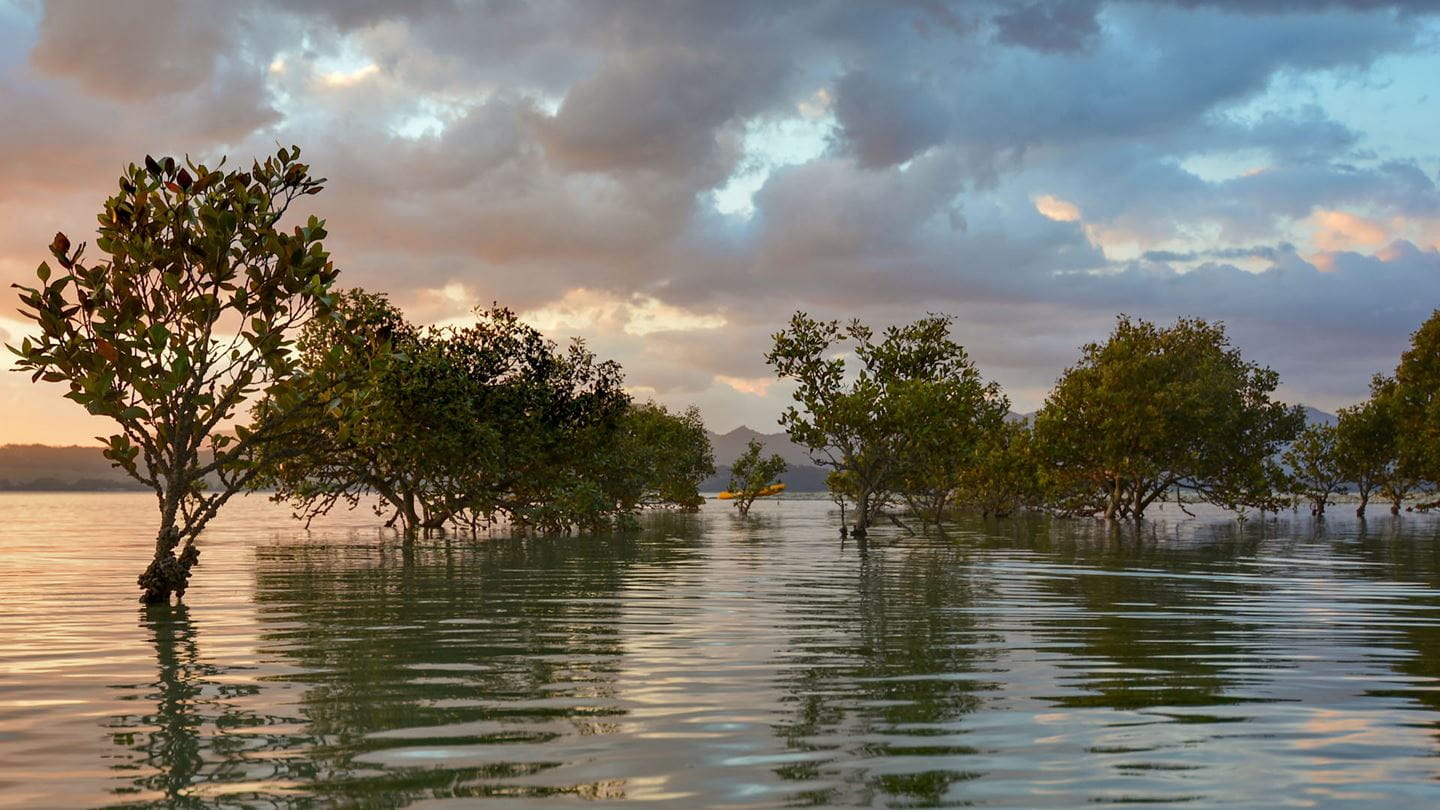
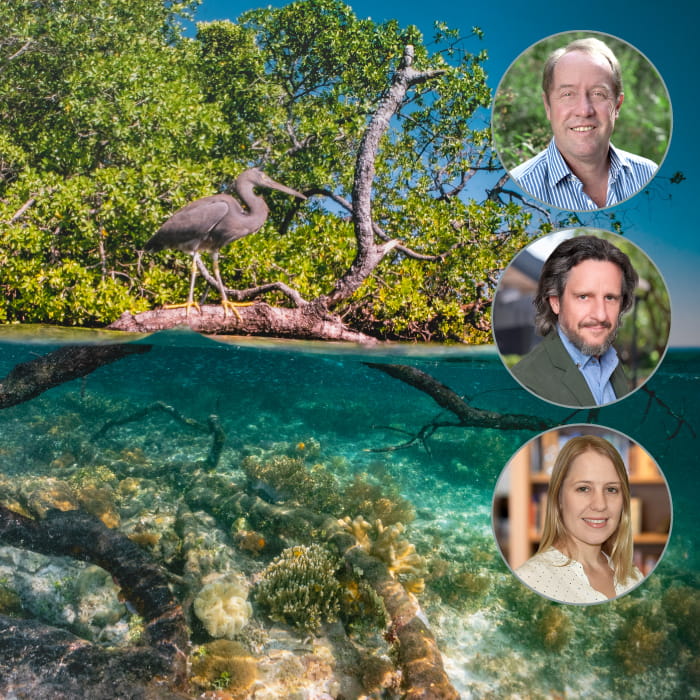
Whereas using concrete and steel draws down on our carbon budget (creating a deficit), nature actually sequesters carbon. Green infrastructure, such as trees and wetlands, act as natural carbon sinks, while providing solutions to infrastructure challenges that can be cheaper, faster and less disruptive than traditional built options. In fact, nature-based solutions can actually do a better job of solving some problems than ‘infrastructure’ itself; for example, mangroves can help reduce erosion, reduce the impact of waves and storm surges, and improve resilience of coastal communities.
Although nature won’t work in every context, implementing a lower-carbon or nature-based solution where it’s proven allows us to ‘allocate’ the cost and carbon of heavy engineering materials to where traditional infrastructure is the only choice; for example, a new bridge.
Nature and climate have a symbiotic relationship. Climate change will change ecosystems, and by the same token, nature can support climate resilience; for example, sand dunes can support flood resilience and protection.
There are also clear economic reasons for investing in nature. A 2024 report by the World Wide Fund for Nature (WWF) New Zealand and EY New Zealand[4] showed that implementing nature-based solutions to climate change could save NZD $56.4 billion by 2080. This would come from capturing and storing an additional 13.7 million tonnes of carbon dioxide every year from 2030, helping us to meet climate targets domestically and reducing the need to purchase offshore mitigation.
A study published in the Global Environmental Change Journal[5] looked at the costs of servicing society’s growing water infrastructure needs, making a strong case for the use of natural capital solutions in combination with traditional engineered solutions. The benefits of such an approach are twofold: first, the avoided costs of building and maintaining traditional engineered infrastructure, and second, in the protection of natural systems.
With most countries facing funding shortfalls for meeting their infrastructure needs (the US alone has an annual $55B billion shortfall in capital investment for water engineering, meaning that only 40 per cent of today’s needs are satisfied) considering new approaches is critical.
Although this study looked specifically at water infrastructure, a similar approach can logically be applied across other infrastructure forms.
There is also the growing potential for mandatory Nature-Based Disclosures[6], following mandatory disclosures of climate-related risks. Proactive organisations may choose to begin understanding their relationship with nature to manage risks now and avoid playing catch up later.
An exemplar for ‘getting things done’ when it comes to infrastructure, Singapore is also leading the way with nature-based solutions. Under their Green Plan[7], the city is creating a ‘City in a Garden’ with major investments such as the ‘Gardens by the Bay’[8] development, as well as smaller initiatives, such as green bus shelters and linear parks. Most roads are built with adjacent vegetation areas and fully-grown trees, some with specifically selected species to support biodiversity.
Vertical and rooftop gardens and urban greenery in private developments are also highly encouraged with the LUSH (Landscaping for Urban Spaces and High rises) programme. Since LUSH was launched in April 2009, more than 100 developments have proposed sky rise greenery features in their development proposals.
Locally, Auckland Transport is doing excellent work, with a focus on extensive tree planting and implementing living green bus shelters across the city. These offer myriad benefits, including providing shade and reducing temperatures on hot days, absorbing carbon, improving air quality, soaking up stormwater (in turn, reducing flooding) and supporting biodiversity for native insects.
As cities grapple with growth pressures and the growing realities of climate change, we need cost-effective approaches to enhance resilience and support the transition to a lower carbon economy. Nature offers options to support these goals, while achieving in some cases, similar or better outcomes than traditional built infrastructure.
Investing in nature safeguards and enriches our priceless mountains, waterways, and flora and fauna that define Aotearoa New Zealand, underpin our primary industries, and serve as treasures to be preserved for future generations.
Find out how Aurecon’s sustainability and environment expertise can help you.
[1] Infrastructure: It’s not just a pipe dream ASB Infrastructure Overview Apr 2024
[2] New Zealand's Infrastructure Challenge: Closing the gap and finding a path to close it
[3] What happens when you set a river free? BBC News example of nature-based solutions
[4] Tackling nature loss could bring major economic boost: World Wildlife Fund (WWF) NZ
[5] Global Environmental Change Journal: A green-grey path to global water security and sustainable infrastructure
[6] Mandatory disclosures of climate-related risks nature-based disclosures
[7] Singapore is leading the way with nature-based solutions under Green Plan
[8] Singapore's Gardens by the Bay

Director, Sustainability & Resilience – New Zealand
Stormwater management reflects the full complexity of water reform. From the UK's experience, five lessons Aotearoa's water sector cannot afford to overlook.
The economic case for integrated asset and investment management in New Zealand and how well-governed infrastructure delivers lasting cross-sector value.
Aurecon draws insights from Committee for Sydney’s Jeremy Gill on how we grow Auckland's tech economy through placed-based, connected innovation precincts.