Can numerical modelling guide smarter coastal development decisions?
Numerical modelling enables coastal cities such as Singapore to develop targeted mitigation strategies for sustainable, climate-resilient coastal infrastructure.


Change your location to view content tailored for you.
Southeast Asia is at a pivotal moment in its energy development trajectory. As one of the world's most dynamic regions, it is projected to contribute over 25 per cent of global energy demand growth between 2024–2035, creating significant opportunities for new power generation developments.[1] This growth, driven by urbanisation, industrialisation, and electrification across buildings, industries, and transportation sectors, positions the region as a global economic powerhouse.[2]
This insights article explores renewable energy generation in Southeast Asia, with particular focus on floating solar farms and their potential in addressing regional challenges of limited land availability and growing energy demands while unlocking sustainable development opportunities.
Southeast Asia possesses abundant renewable resources which are poised for accelerated development as the region transitions toward cleaner energy solutions.
While currently leveraging its existing energy infrastructure, the region has an opportunity to implement innovative strategies that enhance energy security while advancing decarbonisation goals. Eight out of ten ASEAN countries have already demonstrated leadership by committing to net-zero targets, creating strong policy foundations for renewable expansion.[1]
Watch video. Junwei Lu, Nicolas Price and Jaclyn Ooi reveal success factors for floating solar implementation across Southeast Asia.
Despite this promising landscape, Southeast Asia faces several critical barriers that impede the full realisation of its renewable energy potential and threaten to undermine climate commitments[1]:
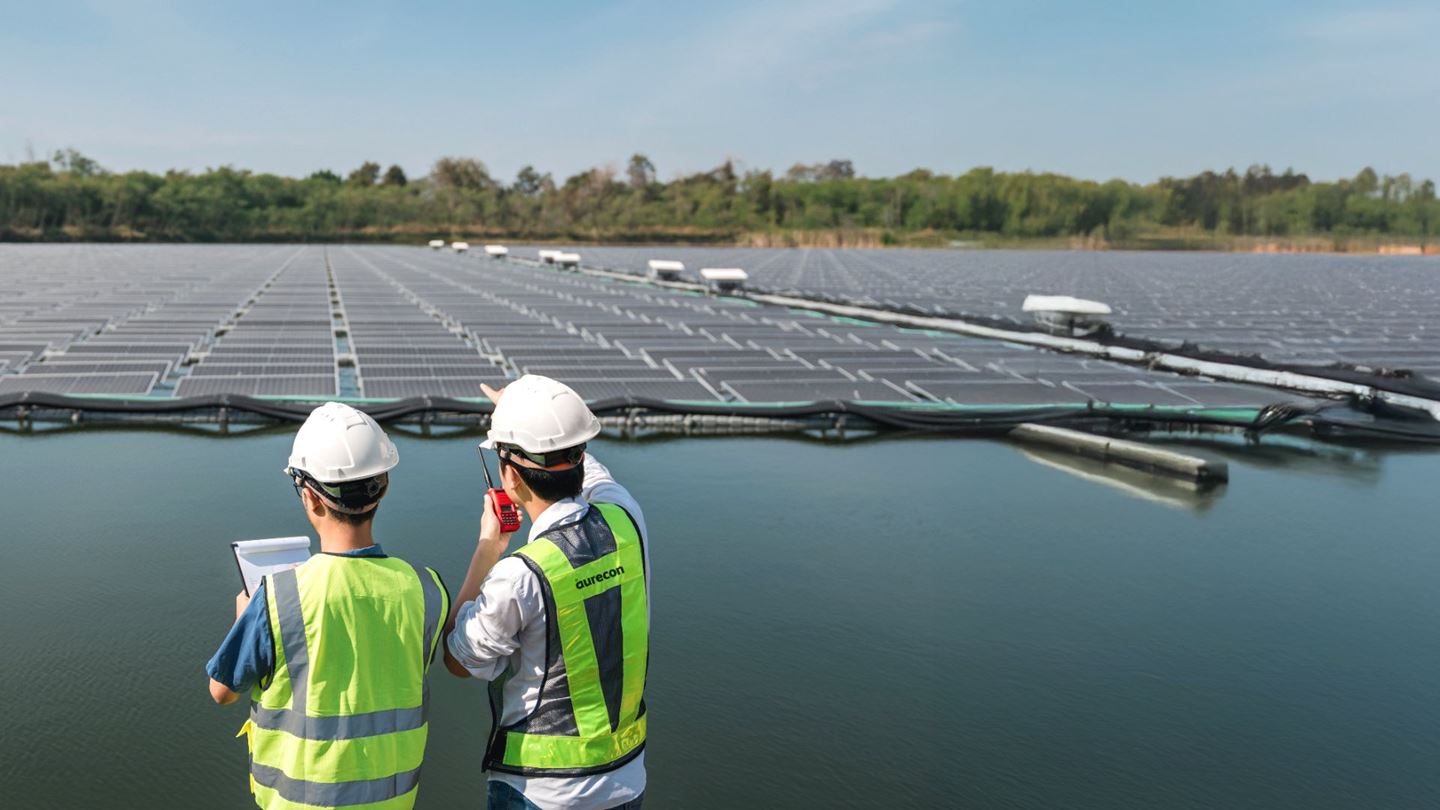
Within this complex energy landscape, floating photovoltaic (FPV) systems have emerged as a promising solution to Southeast Asia’s energy challenges. By utilising existing water bodies such as lakes and reservoirs, FPVs overcome land limitations that restrict traditional ground-mounted solar expansion in densely populated areas.
FPVs also offer additional benefits. They shade the water surface, which reduces water evaporation (especially important for freshwater reservoirs), the natural cooling effect of water enhances panel efficiency by lowering ambient temperatures, and FPVs are less impacted by shading from nearby trees or buildings.
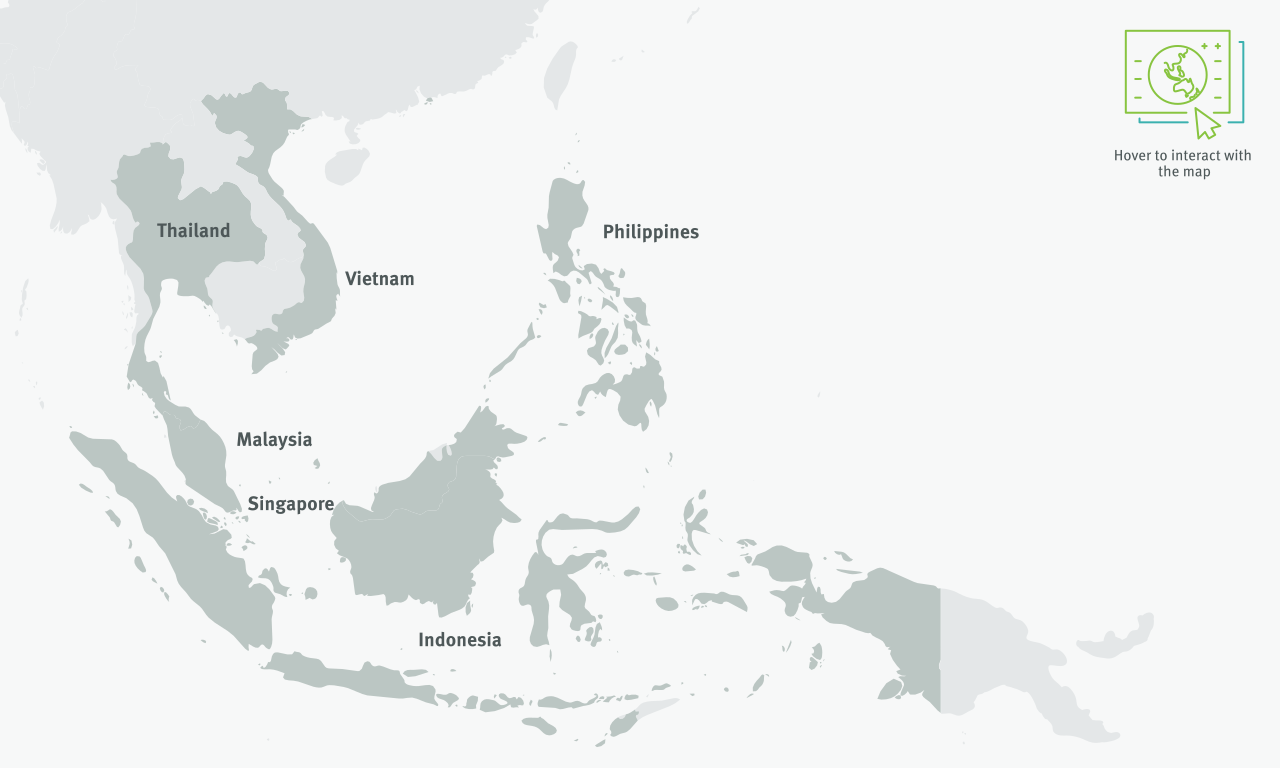
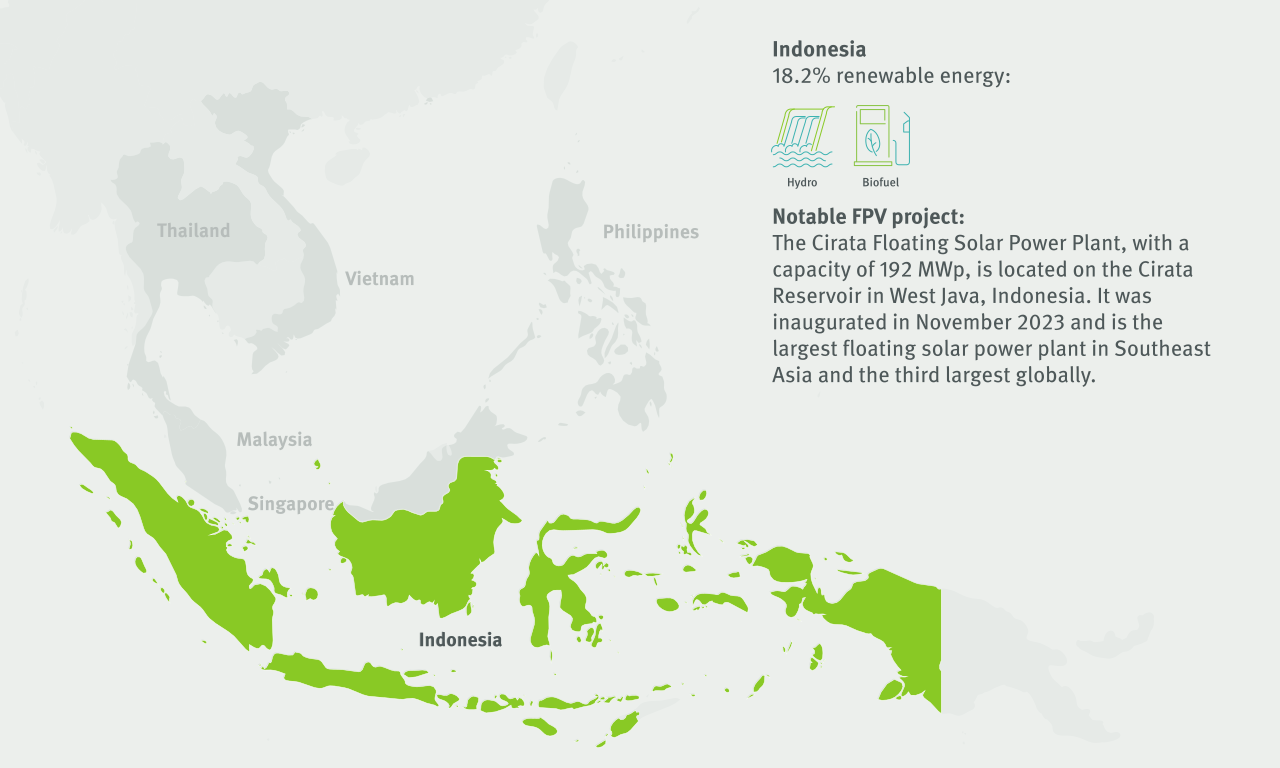
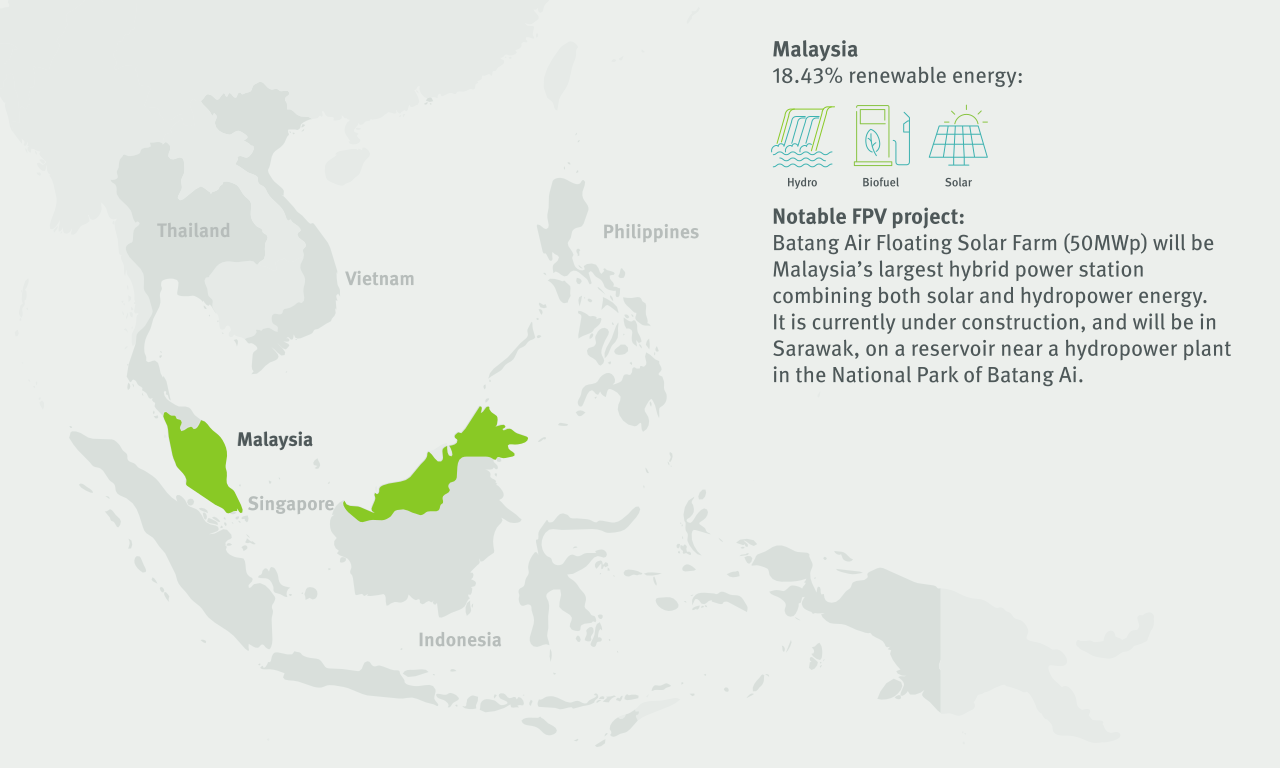
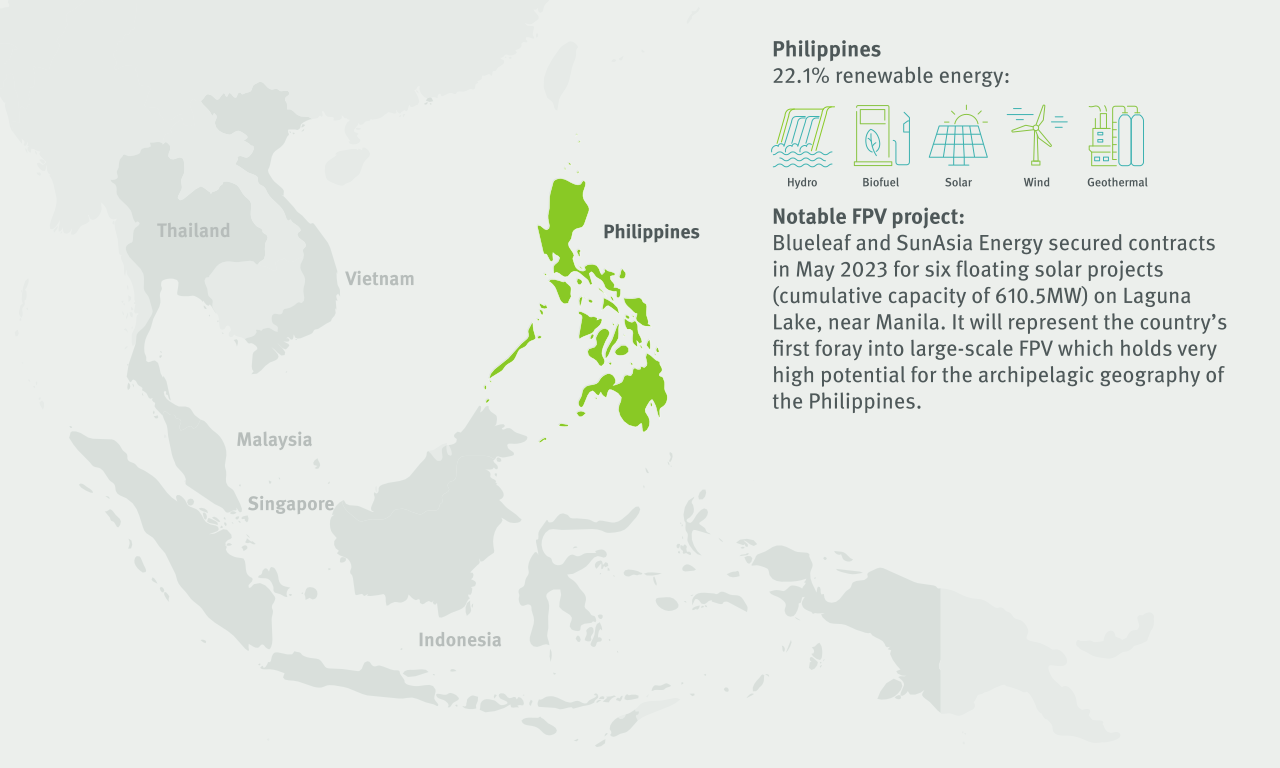
The region's renewable energy landscape is diverse and expanding rapidly within Asia. Learn more from the interactive map below.
The region's renewable energy landscape is diverse and expanding rapidly within Asia.
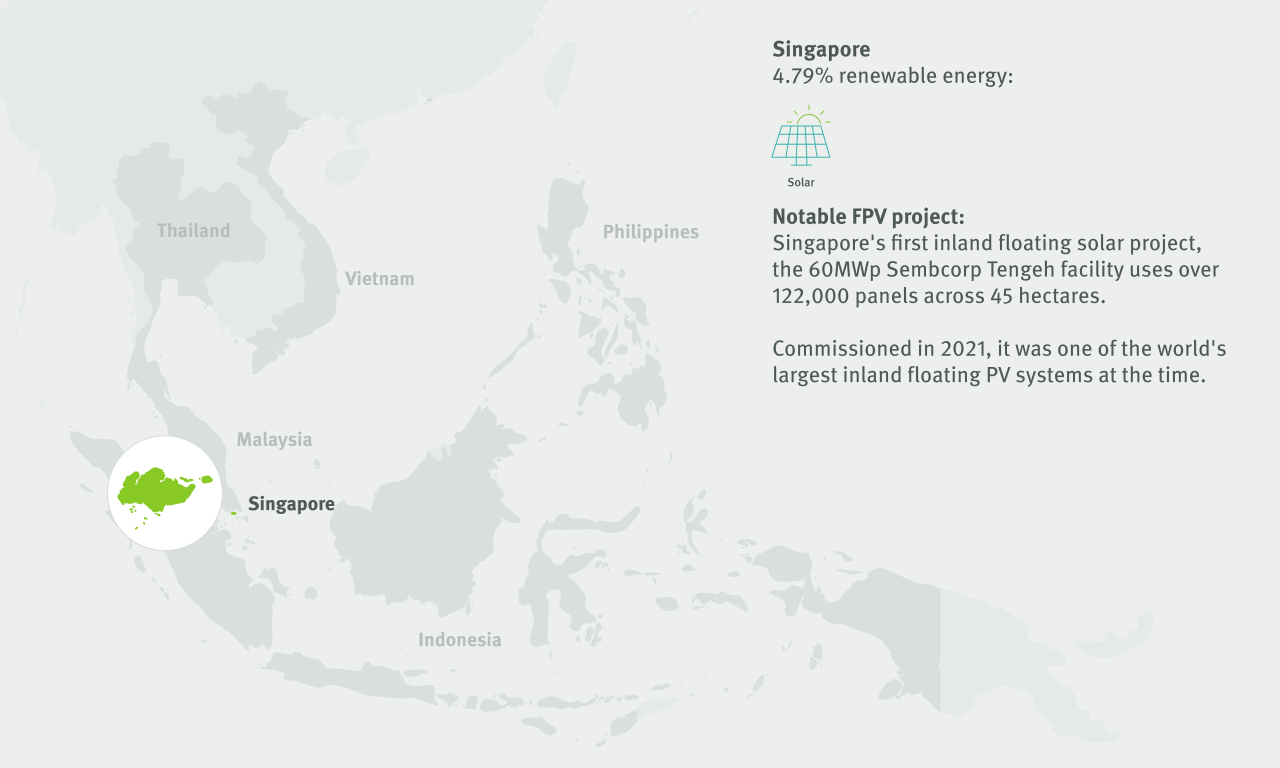
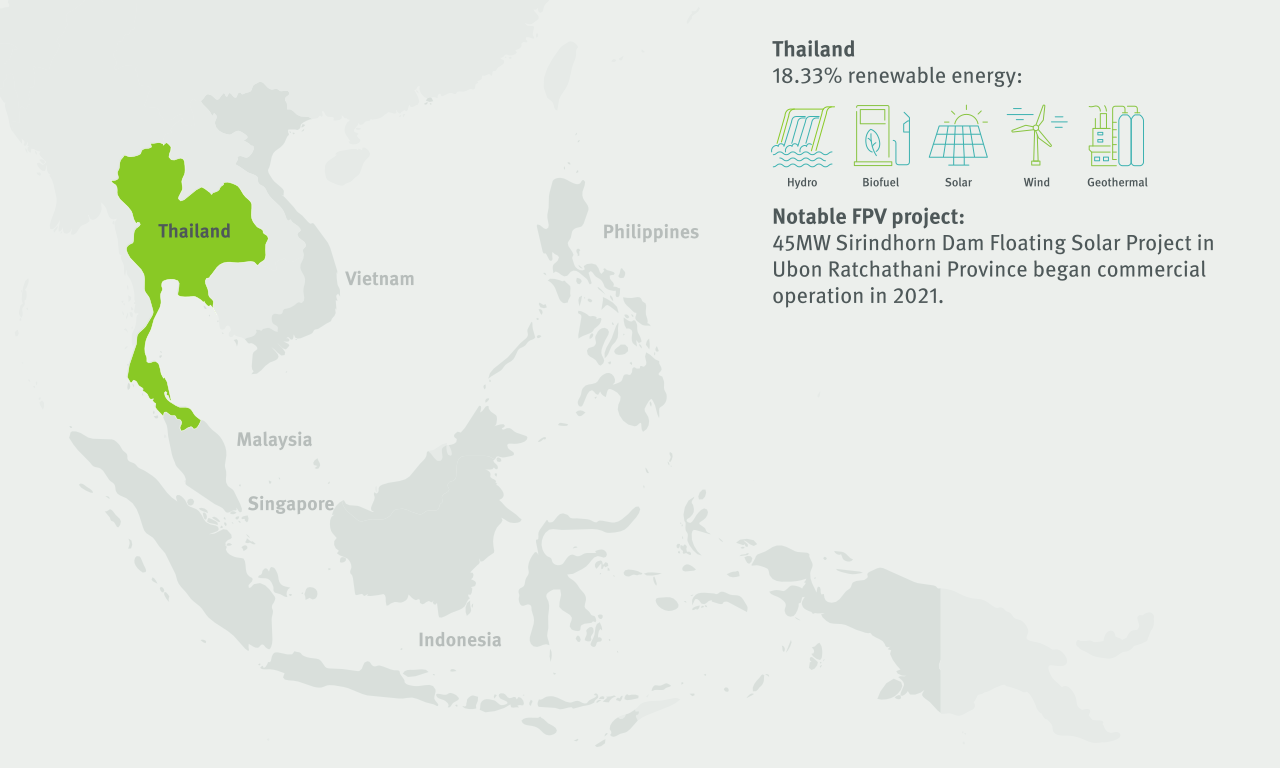
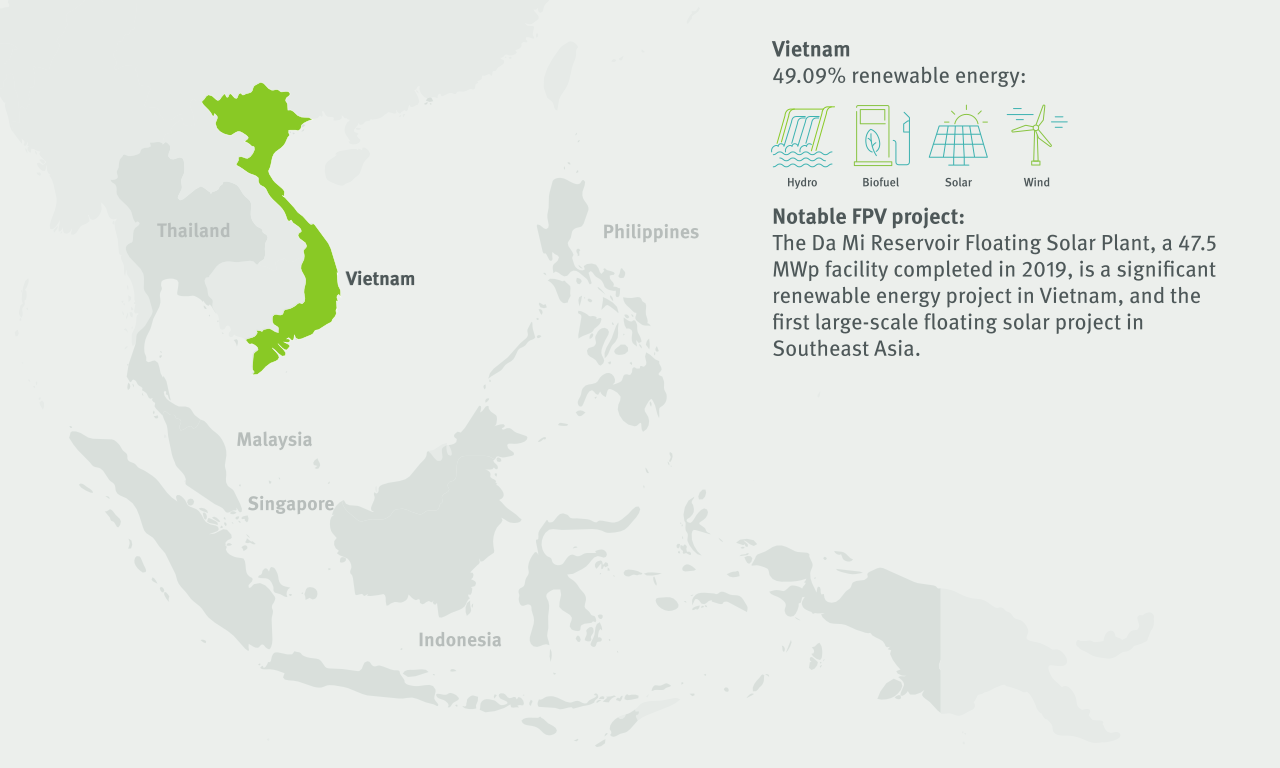
| Countries | Electricity generation | RE Types | |
|---|---|---|---|
| RE (%) | Non-RE (%) | ||
| Indonesia | 18.200 | 81.800 | Hydro, biofuels |
| Malaysia | 18.431 | 81.569 | Biofuels, hydro, solar PV |
| Philippines | 22.132 | 77.868 | Hydro, biofuels, Solar PV, waste, geothermal, wind |
| Singapore | 4.794 | 95.206 | Solar PV, waste |
| Thailand | 18.330 | 81.670 | Hydro, biofuels, Solar PV, wind, geothermal, waste |
| Vietnam | 49.097 | 50.903 | Hydro, biofuels, Solar PV, wind |
Figure 2. Southeast Asia’s renewable energy mix. Source: International Energy Agency, 2022[1]
The development landscape for FPVs in Southeast Asia has also gained momentum over the last 5 years, with several large-scale projects commissioned:
Even more ambitious projects are underway, such as EDP Renewables' 2.2GWp FPV development at the Duriangkang reservoir in Indonesia and a 141MWp project in Kranji Reservoir in Singapore.
Both Hong Kong and Singapore represent compelling case studies for FPV implementation due to their similar geographical and resource constraints:
Aurecon has been involved in several FPV projects that demonstrate the practical implementation and technical considerations of floating solar in Asia.
The development of a 55 MWp FPV at Pandan Reservoir, a freshwater reservoir located in Singapore, required careful planning to balance energy generation with existing uses.
Key considerations addressed by Aurecon included:
Hong Kong is exploring deploying FPVs on its reservoirs to generate renewable energy in a land-scarce setting. This supports Hong Kong’s carbon neutrality goal targeted for 2050 through innovative and sustainable energy solutions.
Aurecon has been involved in this strategic Hong Kong initiative, bringing its expertise from Singapore to explore key technical considerations:
These projects illustrate how floating solar installations can be successfully integrated into existing water infrastructure while carefully balancing energy generation with environmental protection, recreational use, and operational requirements.
There are several considerations to keep in mind when leading, designing, and delivering FPV projects in the Southeast Asian context:

In land-constrained environments, FPVs are desirable when strategically located. Optimal placement near grid infrastructure minimises costs and power losses.
In urban settings like Singapore, successful integration requires maintaining water quality while considering recreational activities and minimising disruptions to residents and the surrounding environment.

FPV designs must address environmental challenges from water exposure, waves, and wildlife while facilitating effective operations and maintenance. Strategic design choices improve serviceability, such as wide integrated walkways for personnel access and maintenance-friendly equipment like string inverters.
Small adaptations to local conditions yield significant benefits, for example, covering gaps between floats prevents insect breeding in stagnant water.

Extensive engagement with various stakeholders is critical to project success in urban areas. This includes addressing concerns of:
Countries in Southeast Asia face the dual challenge of meeting climate targets while addressing rapidly growing energy demand. This balancing act is further complicated by the region's unique constraints: limited suitable land, insufficient transmission infrastructure and isolated grids, and regulatory and permitting obstacles.
FPVs have emerged as a particularly valuable solution in this context, especially for highly urbanised areas like Hong Kong and Singapore, where energy demand is concentrated but space for traditional power generation is scarce. Recent innovations in both photovoltaic technology and floating systems have substantially enhanced the cost-effectiveness and practical viability of FPVs.
With experience spanning from initial feasibility assessments through concept design to tender management, construction supervision and oversight, Aurecon brings end-to-end expertise to floating solar projects. Our proven track record across leading markets in floating solar development equips us with insights and capabilities essential for advancing renewable energy solutions throughout Southeast Asia. Partner with us to unlock the full potential of floating solar for the region's sustainable energy future.
[1] International Energy Agency, October 2024, Southeast Asia Energy Outlook 2024, accessed June 2025.
[2] National Renewable Energy Laboratory (NREL), July 2023, Enabling Floating Solar Photovoltaic (FPV) Deployment: FPV Technical Potential Assessment for Southeast Asia, accessed June 2025.
[3] BlueLeaf Energy, May 2023, DOE awards contracts to Blueleaf Energy and SunAsia Energy for world's largest floating solar project, accessed June 2025.
[4] Construction Review Online, June 2024, Largest Hybrid Power Station in Malaysia to Welcome Floating Solar Farm in Batang Ai HEP Operational by Q4 2024, accessed June 2025.
Contributing author & reviewer: Nicolas Price

Consultant, Advisory – Singapore

Technical Director, Buildings Electrical, Buildings – Singapore

Market Director, Environment & Sustainability, Asia
Numerical modelling enables coastal cities such as Singapore to develop targeted mitigation strategies for sustainable, climate-resilient coastal infrastructure.
How engineering and construction projects are evolving to champion biodiversity, through early planning, advanced technologies, and ecosystem stewardship.
In a cost-constrained environment, nature-based solutions offer cost-effective approaches to enhance New Zealand's infrastructure resilience, while supporting decarbonisation efforts.