Change your location to view content tailored for you.

9 October 2017 | 20 min | Featured article

Is 'prove it' the enemy of innovation?

The majority has almost always had a thing for playing it safe. No one wants to be wrong. So, we shouldn’t be surprised when the case for a new innovation narrative meets with our best defence of ‘business as usual’.

But when famous architect Norman Foster admits to getting it wrong on Apple’s headquarters, there’s definitely cause for concern. Foster’s practice spent eight years designing Apple’s Campus 2 — but, looking back, regrets that the headquarters feature a massive underground garage for 11 000 vehicles. The cost of digging a deep, dark underground cavern is huge.

Today, this is an amenity but, in future, as transportation patterns evolve, parking garages may very well become obsolete. Foster cautions others that “By rethinking the spaces during the design stage, building owners can ensure that garages can be retrofitted into habitable space when garages become less important…

A long-term view of a building is much more than designing 'open plan' office spaces...

Of course, everyone wants Buildings of the Future to pay off in our back pockets, but cost-value equations that champion future buildings’ return on investment simply don’t exist yet.

And all our traditional design methods and delivery models tend to block innovation before it is able to take a step out of the door. In the constant effort to ‘prove it’, we are forced back into short-term thinking, and we spend our time delivering interim solutions rather than exploring the long-term possibilities of intelligent future design.

The truth is, we don’t have the tools or language to make the guarantees that they will pay off. Intelligent building design is carving out fresh tracks as we go, and there’s little by way of historical precedence to provide the landmarks for the journey.

Dividing net profits by total assets is no longer an acceptable way to determine the ‘profit’ of the building. The equation is far more complex than this, and includes a building’s ability to provide a healthy working environment – and thereby reduce absenteeism; its ability to attract top talent; to create the perception of value to influence rental returns; and successfully support corporate strategy elements such as environmental responsibility and collaboration.

This second edition of our  Buildings of the Future series explores why and how our thinking around ROI needs to evolve. Explore our insights below.

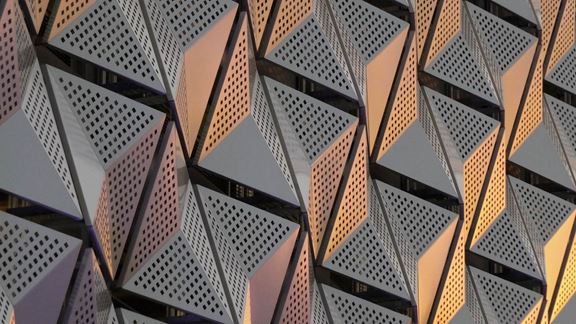
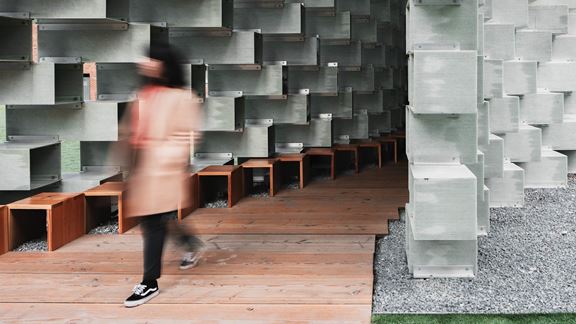
Texture of an exterior of a building

A new ROI narrative

The future will arrive, as it always does. The question remains – how prepared will we be? There’s a new ROI narrative emerging, and it’s demanding new thinking.

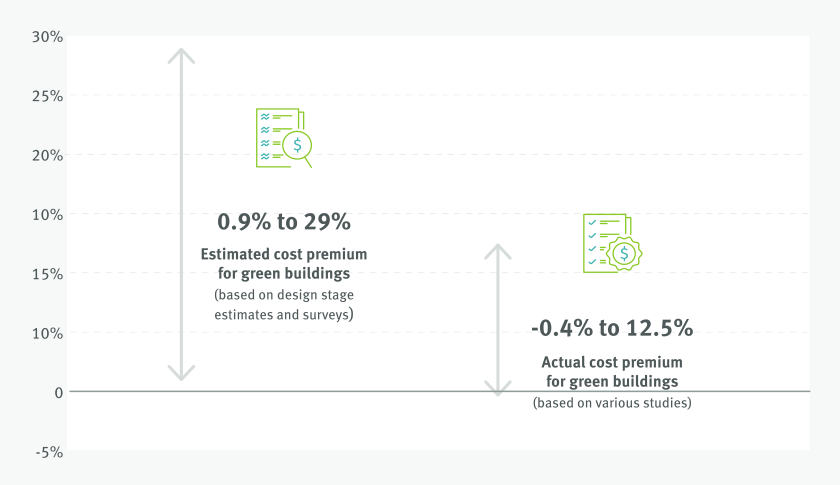
The ROI analysis of the future is far more three dimensional in its approach – presenting the elements of design as interconnected pieces of a living and dynamic puzzle. The drivers of a building’s ROI have also shifted to include aspects that everyone from building owners to occupants can intuit and harness its compound value. The ‘estimated’ (or ‘perceived’) and ‘actual’ costs of constructing a sustainable building can be very different.

Proving value starts at the design phase

Solving the investment conundrum is a key hurdle for Buildings of the Future. Often, initiatives get culled during the schematic design and design development stages because we don’t yet have the necessary financial models to convey the message.

Efficiencies in operations, building practices and response to climate change are at the heart of innovation in the building of the future.

To solve the investment conundrum, we will need to focus on improving the tools we use to calculate the cost-value equation. We’ll need to develop better metrics to support the business case for Buildings of the Future, and take advantage of government incentives to foster innovation in this field.

The first step in proving the value of an innovation should start at the design stage. This involves working hand in hand with a client to identify which innovations will provide real value and instilling a shared understanding of the vision.

For example, space optimisation doesn’t only involve asking 'how small can we make the space?' Rather, it involves understanding a client’s future space requirements and the need for flexible design, which will minimise long-term operational costs.

Returns on investment aren’t always financial

Traditionally, when calculating the cost of a building, two factors were taken into consideration: the start-up cost and the cost of construction. Buildings of the Future demand a more robust and full-bodied evaluation of their ROI.

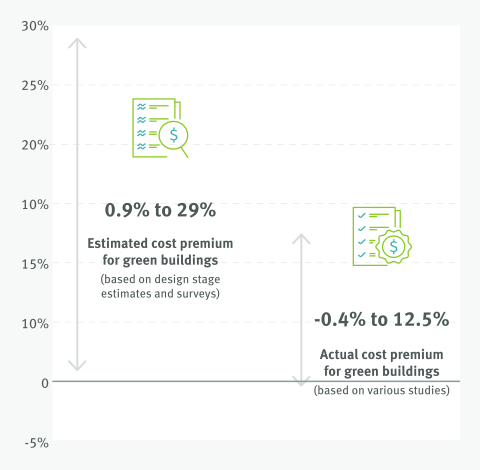
Estimated and actual cost premium for green buildings from The Business Case for Green Building, World Green Building Council 2013
Estimated and actual cost premium for green buildings. Source: The Business Case for Green Building, World Green Building Council 2013.

Figure 1. Estimated and actual cost premium for green buildings from The Business Case for Green Building, World Green Building Council 2013.

A holistic approach is needed because everything from operating and maintenance costs, employee comfort and productivity, as well as the building’s ability to attract prospective tenants needs to be considered.

A holistic ROI package will account for energy savings on operational efficiencies, for example, as well as tax incentives from the resulting utility savings. Employee satisfaction and increased productivity also leads the pay back picture to become much more complex than kilowatt savings alone.

Energy savings have typically been the main financial driver for sustainable buildings (which makes sense, since building automation and integrated control systems can save 10–40 per cent on electricity bills alone). In fact, buildings achieving Green Star certification in Australia have been shown to consume considerably less energy and therefore produce 62 per cent fewer greenhouse gas emissions than average Australian buildings. But simply focusing on the hard numbers won’t embrace the full ROI for intelligent design. There’s more to the story than energy savings alone.

Today’s war on talent requires a physical environment that can match its people’s creative and innovative spirit. That’s where the benefits of sensor technologies play out, offering invaluable insight into the way in which people interact with their built environments. Analytics track the effect of air quality, acoustics and natural lighting on employee well-being and productivity.

A healthier work environment means less days at home in bed and more time to innovate with engaged colleagues. And the more these interdependencies are understood, the more changes can be made to the overall design of the building which, in turn, boosts staff engagement, customer service, ‘rentability’, while reducing building maintenance. While these aspects may seem like ‘soft’ benefits because they aren’t always easy to quantify, they carry a very real return on investment.

According to the Green Building Council of Australia, when Indoor Environmental Quality (IEQ) elements are given good attention, productivity increases by up to 10 per cent. For most businesses, that 10 per cent boost is enough to completely change the game. And the good news is these options apply to existing buildings as much as intelligent ones. The Internet of Things is helping to bring old buildings into the future.

Taking a long-term view of investment is key

Taking a short-term view could lead you to end up with wasted space, inefficient designs and inflexible storeys within your building.

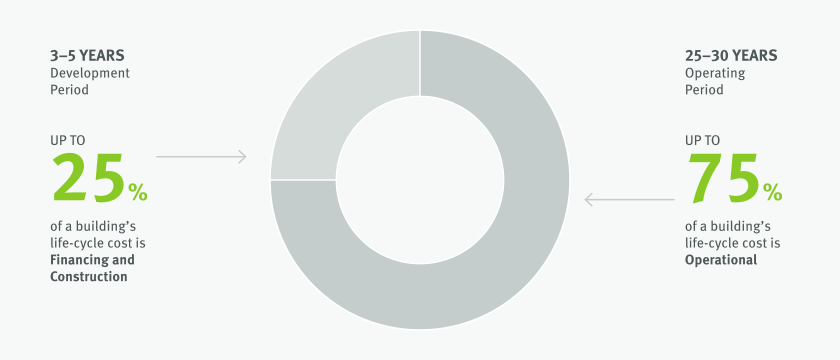
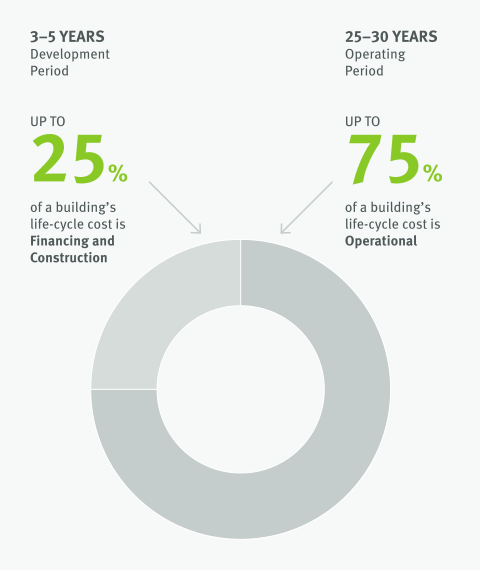
Looking at what is needed today and in the short-term can lead you to miss the disruptors on the horizon (much like Apple’s parking garage). When you consider 75 per cent of a building’s life-cycle cost is operational compared to 25 per cent in the development period, the investment focus should be in the operational phase (Figure 2).

The life cycle cost of a building shifts over time.

Figure 2. Life-cycle cost of a building. Source: Schneider Electric.

Today, legislation can also present significant disruption for those who don't invest in the right tools and methodologies from the outset.

The building sector is still lagging behind the implications of buildings becoming micro-energy hubs. The European Commission is currently proposing a voluntary scheme for rating the ‘smart readiness’ of buildings.

The scheme, which is expected to be adopted by the end of 2019, will include the development of a Smart Readiness Indicator (SRI) and a methodology to calculate this. The SRI will measure a building’s capacity to use Information Communication Technology (ICT) and electronic systems to optimise operation and interact with the grid.

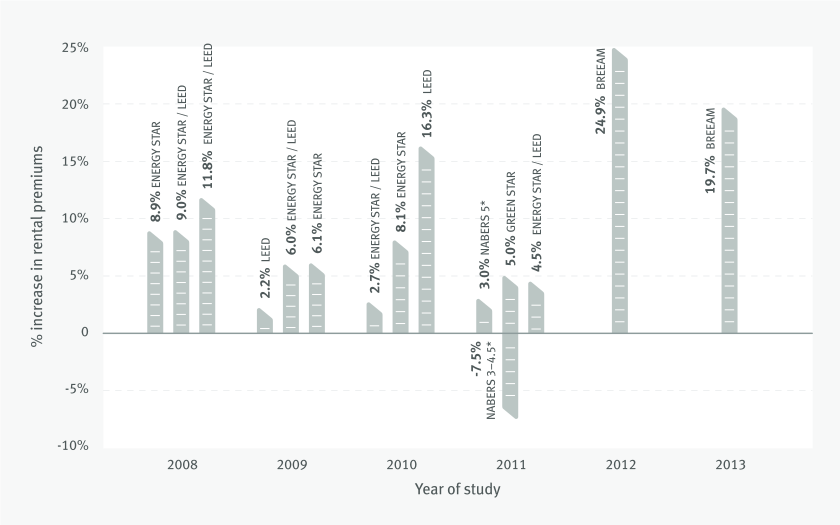
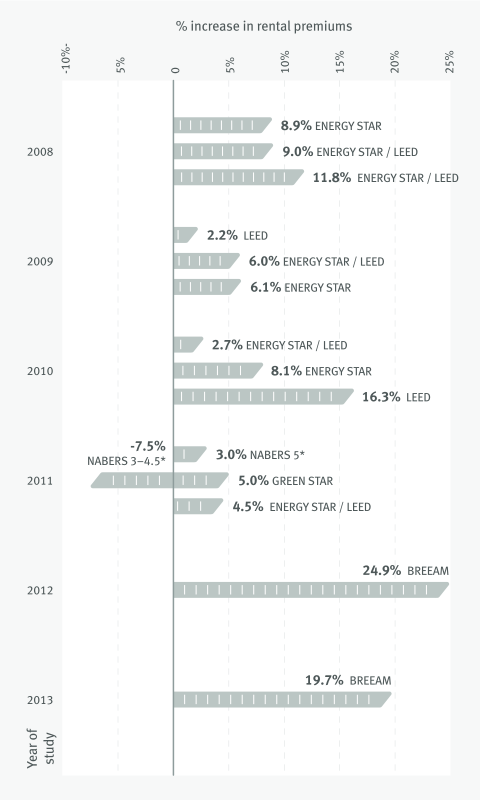
The Business Case for Green Building, World Green Building Council 2013.

Figure 3. Percentage increase in rental premiums for green buildings compared to conventional code-compliant buildings. Source: The Business Case for Green Building, World Green Building Council 2013.

While it’s true that in the short-term, Buildings of the Future have marginally higher start-up costs (2–6 per cent more expensive than that of traditional buildings), many buildings can boast that ROI is achieved within six months to two years. With focus given to heating, ventilation and air conditioning (HVAC), lighting, and some types of electrical loads, operating costs can be reduced anywhere between 10–50 per cent.

Maintenance costs are between 8–12 per cent lower; employee productivity increases by 10 per cent; and landlords can charge 5 per cent more for premium property rentals. All of these statistics offer significant savings down the line and it’s also important to remember, as the cost of new technologies continues to become more affordable, even the initial cost of a Building of the Future will decrease in time.


Texture of an exterior of a building.

Thinking of designing a building? Forget what you know!

Once we’ve included long-term thinking and non-financial returns in the ROI equation, we also need to consider the changing nature of construction design and materials.

Prefabricated construction, automated technology such as robotics to install these prefabricated construction materials, and additive printing are all construction technologies that can be implemented to make not only construction but also building maintenance easier — driving down short- and long-term costs.

These buildings will be highly accurate, with small tolerances. They will achieve a high quality finish throughout any storey level and will be fully planned and documented very quickly. Because they will be manufactured, not built, there will be reduced weather delays and waste, and carbon generation and site time will be reduced. This safer way to build will require only low or semi-skilled labour for fast onsite assembly/installation.

In future, the ROI on a 3D printed building assembled in ‘next to no time’ could be almost immediate, with its parts integrated into a digital model of the building that makes maintenance a cinch.

Staying one step ahead

Beyond construction and maintenance, the way we maintain our buildings is also set to undergo a significant evolution, enabled by advent and progression of digital technology.

Like anything that is smart or intelligent, Buildings of the Future have a nervous system. These embedded digital ‘organs’ capture and monitor consumption and usage in order to optimise building performance over the long haul.

It’s a far more fascinating venture that demands an equal amount of learning and unlearning from stakeholders.Thanks to the Internet of Things (IoT) and blockchain, Buildings of the Future are becoming living canvases that, through ongoing and real-time feedback, keep speaking to us about how we can do design better, smarter, safer.

Predicting versus reacting

'If it ain’t broke, don’t fix it.' How often have we heard that before? But the problem with a traditional ‘wait until it breaks’ approach to building is that: one, things always break; and two, it’s always more expensive than you planned. According to the International Facility Management Association, maintenance typically accounts for 35 per cent of a facility’s operational cost.

Within the new building model, this reactive approach to fixing the problem is moving to a more proactive posture of anticipating the problem before it arrives. While a preventative maintenance approach relies on performing regular, prescheduled maintenance checks and repairs, a better way to go about it is by using a predictive maintenance approach based on the actual condition of the equipment. In this way, repairs and maintenance are prioritised according to what the building owner and operator deem important.

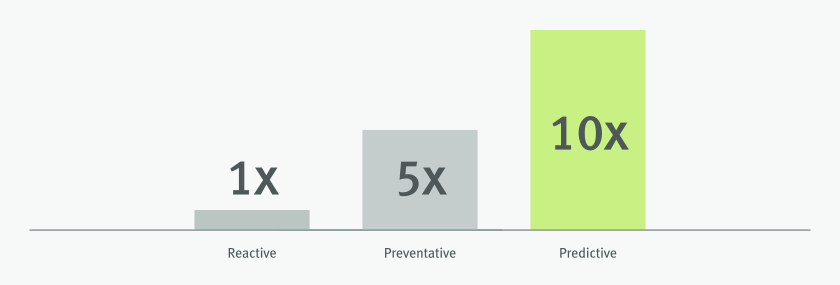
The ROI success story speaks for itself, with 70–75 per cent fewer breakdowns, 35–45 per cent reduction in downtime, 20–25 per cent increase in production and a 10 per cent ROI. When supported by analytics, an optimised system can reduce a building’s maintenance and energy costs by up to 20 per cent.

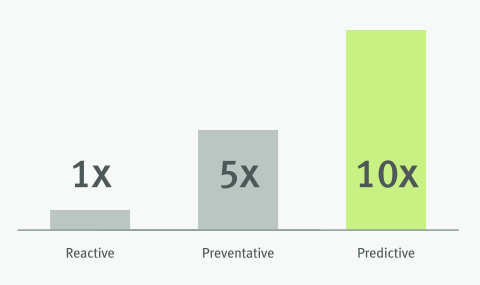
Lifetime ROI of different approaches to maintenance. .
Lifetime ROI of different approaches to maintenance.

Figure 4. Lifetime ROI on different approaches to maintenance

Asset performance over entire life cycle

When analytics and predictive maintenance are coupled, building owners and operators have real-time information that allows them to make decisions quicker and easier. System faults and physical malfunctions are fast detected and dealt with accurately, which sets a positive ripple effect into motion.

Operational costs are reduced, as the overall process becomes more efficient. Instead of playing guessing games, with breakdowns only a matter of time, designers and patrons of future buildings can keep their finger on the pulse of their assets and even see them improve over time.

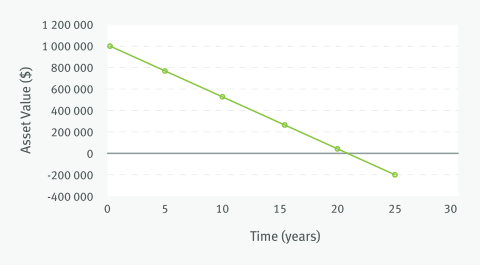
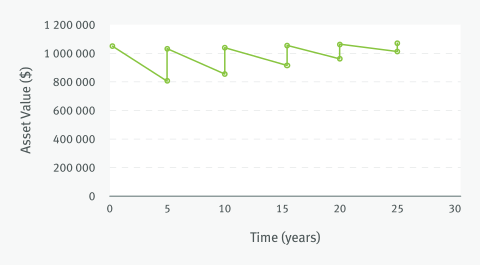
With this new approach, the asset performance over a life cycle could change from a linear reduction to a saw tooth drop and rise, maintaining a higher valued asset, as shown in Figure 5b.

Asset performance over entire life cycle, traditional buildings see a linear reduction.

Figure 5a. Traditional Buildings (linear reductions)

Buildings of the future: Asset performance over entire life cycle, buildings of the future have a seen tooth drop and rise.

Figure 5b. Buildings of the Future (saw tooth drop and rise)

A new kind of learning

The analytics around these maintenance systems are robust. Stakeholders will look at everything from maintenance logs to inspection reports, repair invoices to warranty claims, and operator profiles to test results, when building resilient systems.

Analytics will even go a step further and analyse patterns of frequent failures; identify ineffective repair methods; match the best usage of lights and energy to environmental controls that react to weather patterns and occupancy.

These algorithms and ‘machine learning’ will be able to make the ‘smartest’ maintenance choices almost instantly and precise calls will be made around predictive failure almost immediately, which will allow businesses to focus on the more important matter of serving clients and delivering to shareholders.

Leaping forward

Leapfrog technologies such as blockchain and cryptocurrencies will also have a large impact on facilities management that investors should consider. Facilities will be run smarter and also be able to run themselves due to self-executing contracts that can preschedule, monitor and automate processes that needed manual interventions in the past.

Cryptocurrency can be used to short-circuit the need for time-consuming administration logs of maintenance contracts and tasks. There will be greater transparency in the supply chain records of intelligent buildings thanks to public ledgers that connect the physical to the digital world by housing a digital version of assets, maintenance and costs.

Manual, routine tasks such as rubbish collection will become ‘on demand’ tasks to sensors that can report when the bins are full and need to be collected and emptied; robots may be used to welcome staff, and the entire building will become a living organism that knows occupants’ meeting schedules, the way they use the building and how to optimise the spaces for them.

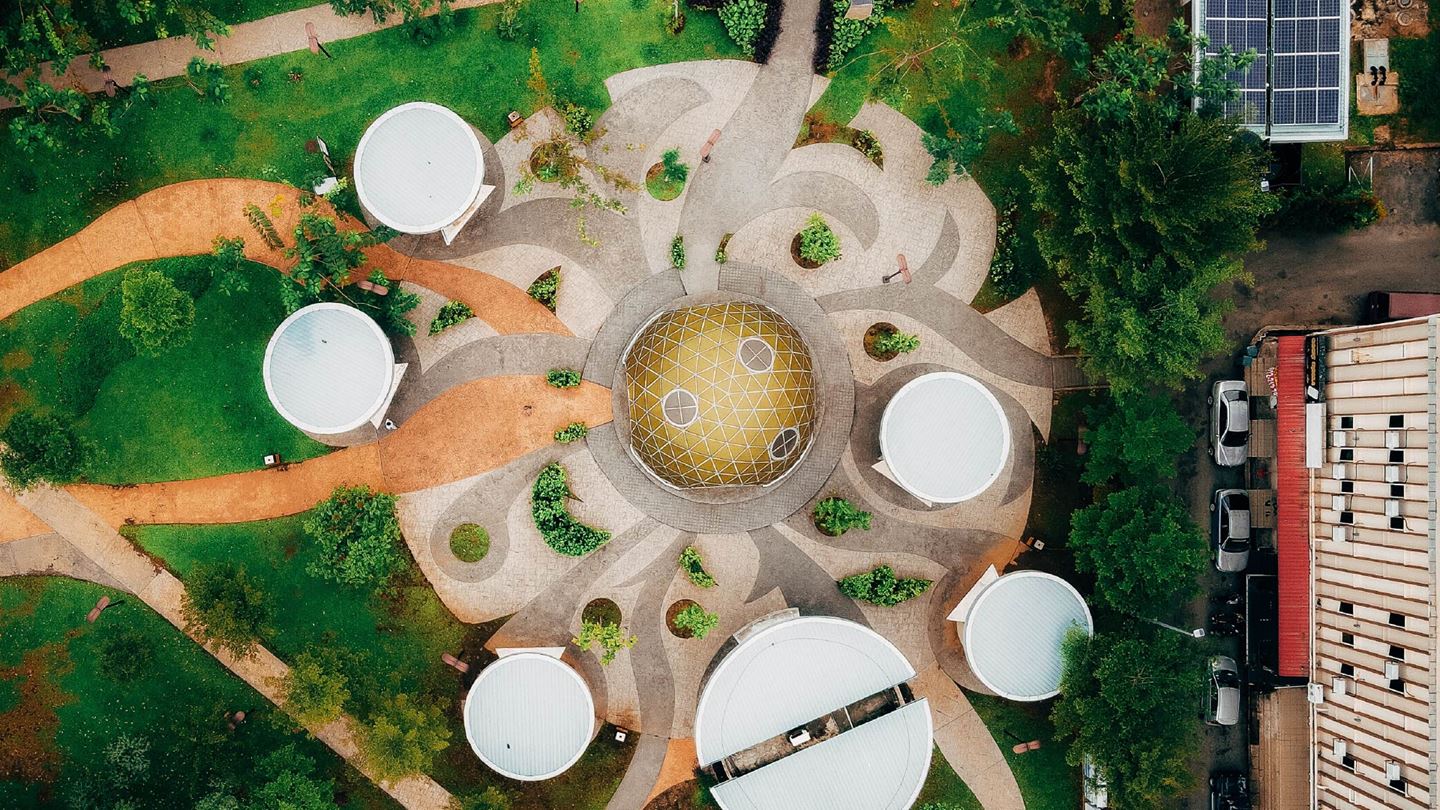
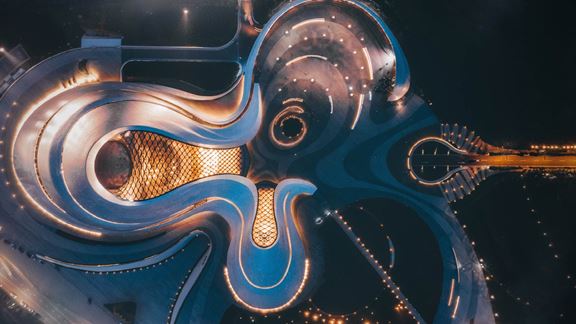
Birds eye view of a building and garden

Driving smart investment

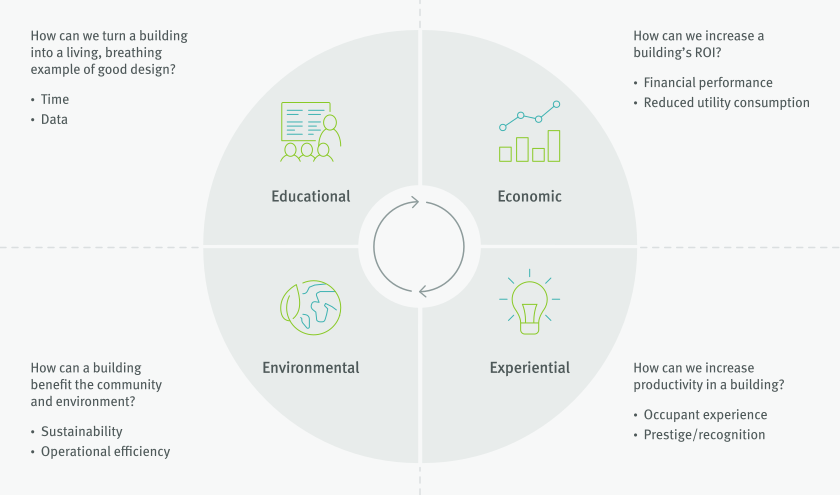
There are four key areas that drive smart investment into Buildings of the Future. Learn below how these key factors have played out in two of Aurecon’s recent projects, to build a considerable case for the smart design of Buildings of the Future. We like to call them the 4 E’s.

The 4 E's that drive smart investment into Buildings of the Future

The four key areas that drive smart investment into Buildings of the Future.

How can we increase a building's ROI? On average, a Building of the Future only requires 2–6 per cent more upfront capital. If done well, the full payback to this investment could be as soon as six months. Intelligent buildings can offer tremendous economic incentives, and the new Corporate Headquarters for client Transport Accident Commission (TAC) in the city of Geelong in Victoria, Australia, which Aurecon designed, is no exception.

Over the past four years, we have been able to reduce the TAC’s energy consumption by 40 per cent.

This is due to a series of rigorous energy saving initiatives, which include fully-automated energy efficient lighting; smart, customised air controls; and a rather funky building facade that reduces energy consumption. Grey, double glazed low-e glass eliminates glare and traps heat on the surface, creating a natural heating system for the building. Altogether, from 2014–2015, the Centre saved approximately AUD109 472 in energy consumption and, in 2015–2016, gas consumption was optimised by an average of 23 per cent.

  • Economic paybacks depend on the design team and client
  • Tremendous economic incentives can be achieved with proper planning

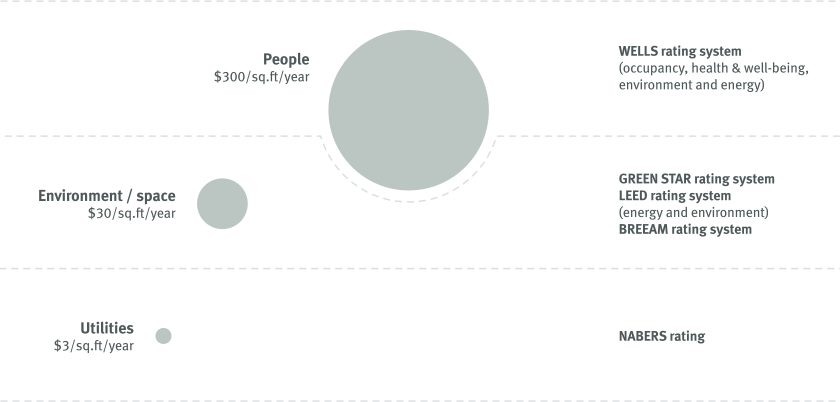
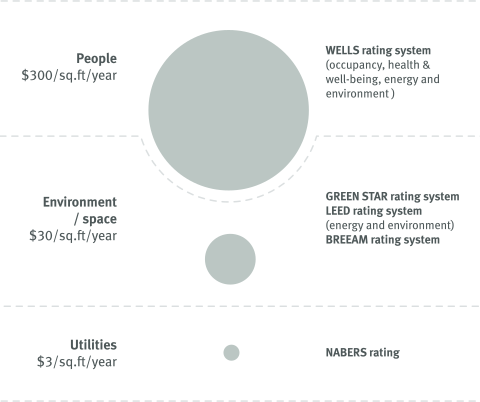
How can we increase productivity in a building? The rapidly accepted 3/30/300 model says that for every $3 per square foot that organisations spend on energy, they spend $30 on rent and $300 on their employees’ salaries and benefits. People are always central to the design imperative. So, addressing their needs should be the highest priority when developing intelligent building technologies.

Aurecon saw productivity levels increase by 8 per cent when designing the Aurecon Centre. Due to the fact that the building was situated close to traffic and transportation systems, we implemented noise reduction initiatives and better spatial design to overcome these factors.

Temperature controls and systems to regulate air quality were part of the overall intelligent design. According to a sick building syndrome study of the facility, staff health improved by 11 per cent. Not only was the occupational experience vastly improved, but so was the reputation of Buildings of the Future to draw and retain talent with better working conditions in place.

  • People should be central to the design imperative
  • Failing to incorporate human-centred design leads to wasted economic opportunities
The division between the rapidly accepted 3/30/300 model says that for every $3 per square foot that organisations spend on energy, they spend $30 on rent and $300 on their employees’ salaries and benefits.

How can a building benefit the community and environment? Given the ubiquity of climate change and the pressure of urbanisation on our already-overpopulated city spaces, future-proofing our buildings just makes sense.

The less negative impact a design can have on the environment, the greater benefit it may prove to have in the long run. But going green is not just a once-off investment. A sustainable building is not deemed sustainable, because you plug green elements into the initial design alone. Rather, what makes a building green is the degree to which smart, connected systems interweave and continue to optimise operational efficiency over time.

Operational efficiency has been enhanced at TAC Headquarters. The TAC is now a green building, having achieved an initial 4.5 Green Star rating from the Green Buildings Council of Australia (GBCA), which was later optimised to a 5 Green Star rating. We were able to reduce the carbon footprint by 50 per cent and increase the solar energy generation on the premises by 7.9 per cent per year.

Additionally, the greenhouse gas emissions that were generated from running the building have decreased by an average of 7 per cent per year. So, evident were our achievements that the initial 4.5 NABERS (National Australian Built Environment Rating System) rating was optimised to a 5.5 NABERS rating within one year.

  • Going green is not a once-off investment
  • What makes a building green is the degree to which smart, connected systems interweave to optimise efficiency

How can we turn a building into a living, breathing example of good design? When we first pitched the vision of today’s Aurecon Centre, home base for 700 Melbourne staff, the goal was pretty straightforward. We wanted to be an example of what a smart, green, connected and innovative building should look like. The task of getting there, however, was rather more oblique.

With market-leading standards for air quality, energy efficiency and sustainability driving design, key data that was needed to build our innovative portfolio was either inconsistent, or it simply wasn’t around yet. Integration systems were inadequate and failed to paint a picture of the kind of value we could derive from our proposed model of integrated sustainable design.

We knew full well that technology for the sake of technology didn’t make a building intelligent, especially if those systems didn’t continue to optimise the building’s performance and the people’s well-being. But we didn’t know exactly how to integrate those innovative elements into a cohesive whole that would achieve this intelligent picture.

The learning experience has helped us mitigate risks to reduce initial building costs and use these systems to maximise operational efficiency and predictive maintenance. Since then, we are far more equipped to understand the interdependent nature of each design element as it relates to the integrated whole.

Thanks to the opportunity to experiment, fail and refine as we go, the Aurecon Centre project gave us ample legroom to run with new ideas and see them come to life. We gathered up expertise in the area of green building — knowledge that we have been able to share since then within the engineering industry.

Our holistic approach to designing Buildings of the Future now includes a triple bottom line, where the economic, social and environmental benefits of design are built into the big picture on strategic sustainability.

  • Education is as much about learning from past mistakes as it is about achieving a good example
  • Innovative elements need to be implemented in smart ways to achieve a cohesive whole
  • Embarking on a learning curve teaches you how to mitigate risks and reduce initial building costs
How are key trends changing the way we design and construct buildings of the future?

Join us as we build (pun intended) our knowledge, understanding and readiness about Buildings of the Future.

Building the synergy to build the future

As is the case in every industry, silos remain the great enemy to innovation. If smart buildings are going to meet their full potential, everything from water saving and heat generation to optimising the internal environment and ICT has to be linked, tracked, analysed and measured.

The nine pillars of intelligent design (water, light, internal environment, information supply, ICT, resource utilisation, fire and safety, building access and building safety) require ongoing and interconnected analysis, in order to keep talking as one integrated digital organism.

Too often, we fail to achieve the intended outputs because we don’t have a sense of long-term buy-in from the relevant stakeholders.

Engineering consultants go off the job after construction is completed, and the original design or intention is lost or muddled over time. Either constraining budgets are to blame, or incorrect installation, or faulty configuration of the systems during construction and post-completion. Whatever may be the case, the overall design loses value because of this inability to tie all elements through the entire life cycle of the building.

Smart buildings stand to benefit greatly from innovations like new materials, robotics and blockchain. But the ROI will only be realised if the impacts of innovation are considered in light of how each of those nine elements will benefit and draw on these resources

The key in all this: building synergy to build our future. Not only do smart systems and technologies demand tight collaboration; so too do the people who design, fund and use them. Buildings of the Future can offer a model of future-ready architecture, but they are only as good as the sum of all its parts working together as a functioning ecosystem.

From engineers to designers, city planners to politicians, it will take all hands on deck to turn a truly transformative design into society’s new normal. But, with automated construction; energy sources and the analysis of data for enhanced efficiencies changing so rapidly – can we afford not to make it our new normal?

Get in touch with our people

Or contact an office near you.
Peter Greaves, Aurecon
Peter Greaves

Client Director, Clients & Growth