Renewable Hydrogen Ecosystem Study, Goulburn Valley, Australia
Aurecon's study guided Goulburn Valley Water to identify pathways to a renewable hydrogen ecosystem and support a clean energy transition in regional Victoria.


Change your location to view content tailored for you.
Canberra’s provider of essential water and wastewater services, Icon Water, is committed to playing a critical role in the protection of public health and the environment by working towards net zero greenhouse gas (GHG) emissions. Its calculations indicate that it generates about 1 per cent of the ACT’s total emissions, with 17,530 tonnes of carbon dioxide equivalent (tCO2e) (2021 figures).
With the role it plays in the future of water supply for communities, their eMission Possible Plan has been prepared as a roadmap to reduce GHG emissions against the backdrop of reaching net zero.
Aurecon collaborated with Icon Water to prepare the plan, enabling net zero actions to be integrated into business investment, planning, and project delivery, consistent with customer expectations and Australia’s long-term decarbonisation objectives.
In this video, Icon Water explain their eMission Possible Climate Change Mitigation Approach with Aurecon.
The ACT government has declared its intent to achieve net zero by 2045 (based on 1990 emissions levels), and the eMission Possible Plan is structured to meet this by evaluating the necessary pathway to achieve progressive targets over time.


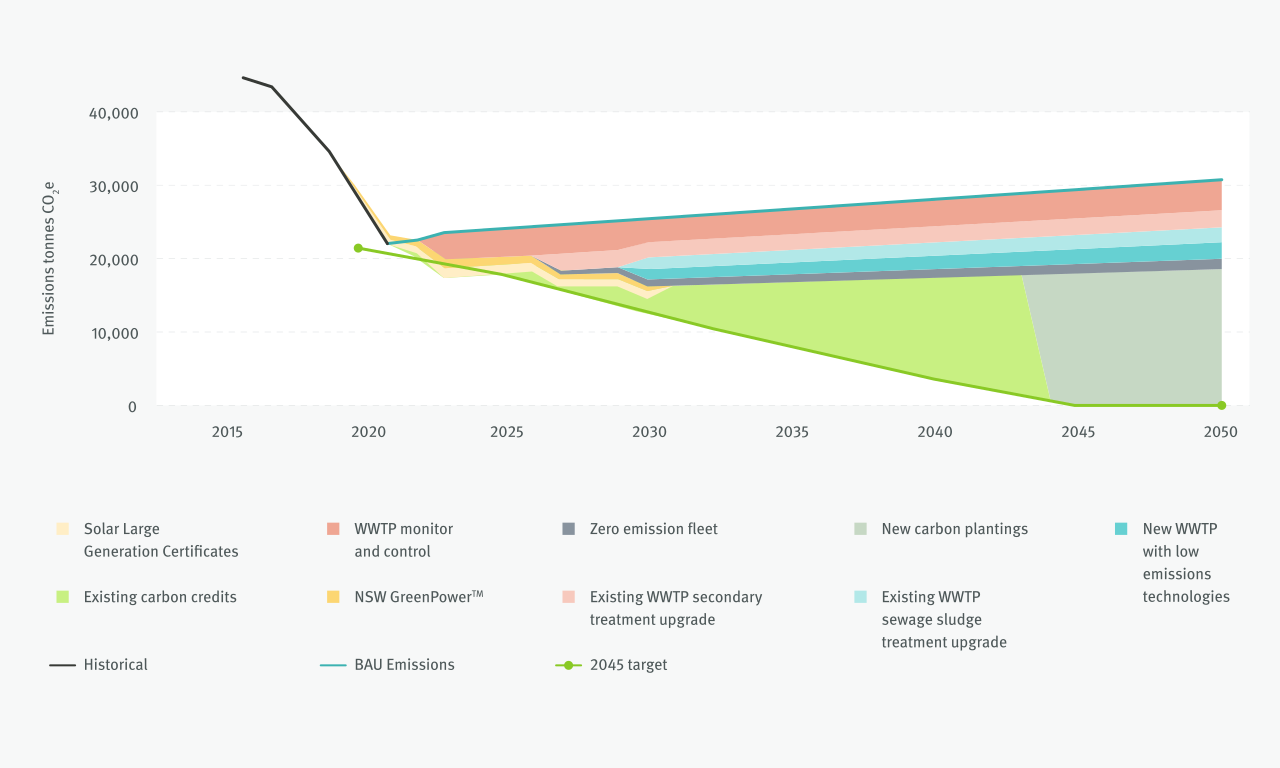
Indirect emissions arising from energy supply is relatively insignificant as the ACT has 100 per cent renewable energy which powers Icon Water’s wastewater treatment plant. Still, attaining the net zero goal is a challenging and complex task, with the assessment of direct, fugitive emissions from Canberra’s wastewater treatment proving to be the main challenge.
Processing sewage produces nitrous oxide (N2O) emissions which, with current technology, cannot be reduced completely to zero.
As a motivational starting point, Icon Water conducted staff workshops to obtain everyone’s ideas on the ways it could reduce GHG emissions. These ideas were assessed for their technical merit, and then shortlisted to develop implementation timeframes, cost estimates, feasibility, and abatement quantities for the final options selected. This included development of a novel multi-criteria analysis for shortlisting additional carbon offsets that balanced risks, integrity, timeliness, cost, and co-benefits.
This successful collaboration between Icon Water and Aurecon has informed the eMission Possible Plan for a pathway to net zero using the final options selected. In addition, it shows initiatives that are already underway, together with the most likely techniques available to progressively reduce Icon Water’s carbon emissions and effect on climate change.
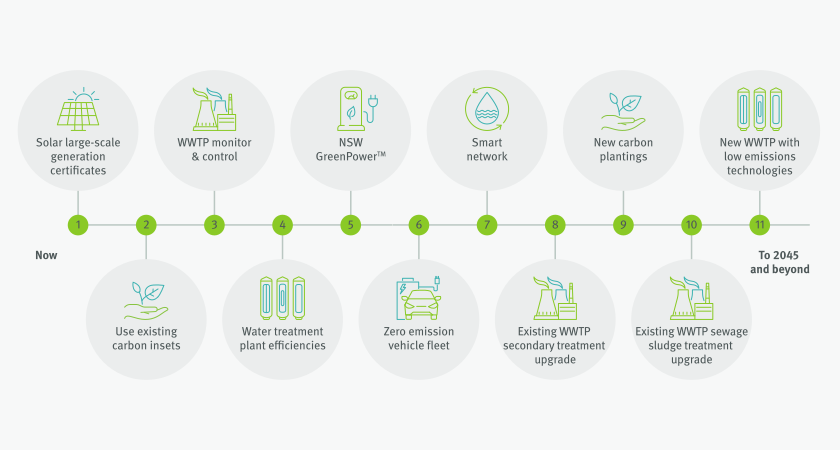

Figure 2. Indicative timeline of activities.
Wastewater treatment represents a major proportion of greenhouse gas emissions, with close to 70 per cent coming from fugitive N2O gases. It presents a challenge for the whole Australian water industry, and Icon Water’s approach of sharing the plan publicly promotes a better general understanding of the impact of these emissions and identifies ways to control them.
This will further help the development of new and economically viable methods of lowering greenhouse gas emissions, as well as facilitating the formation of research partnerships and collaborations with industry or educational institutions with similar values.
The primary benefit to Icon Water of the GHG emissions research and the carbon offsets assessment is the progressive reduction of the impact of its operations and facilities, in line with the ACT’s target of net zero by 2045.
The eMission Possible Plan specifically:
The project has won the following award:
Aurecon's study guided Goulburn Valley Water to identify pathways to a renewable hydrogen ecosystem and support a clean energy transition in regional Victoria.
Seqwater’s Integrated Master Plan redefines sustainable water planning for South East Queensland, a 30-year program of capital and non-capital interventions.
Aurecon, in partnership with SA Water and KBR, delivered the concept design for Australia’s largest drinking water ultraviolet (UV) disinfection system.