


Stormwater can drive Aotearoa's water reform
Stormwater management reflects the full complexity of water reform. From the UK's experience, five lessons Aotearoa's water sector cannot afford to overlook.



Change your location to view content tailored for you.
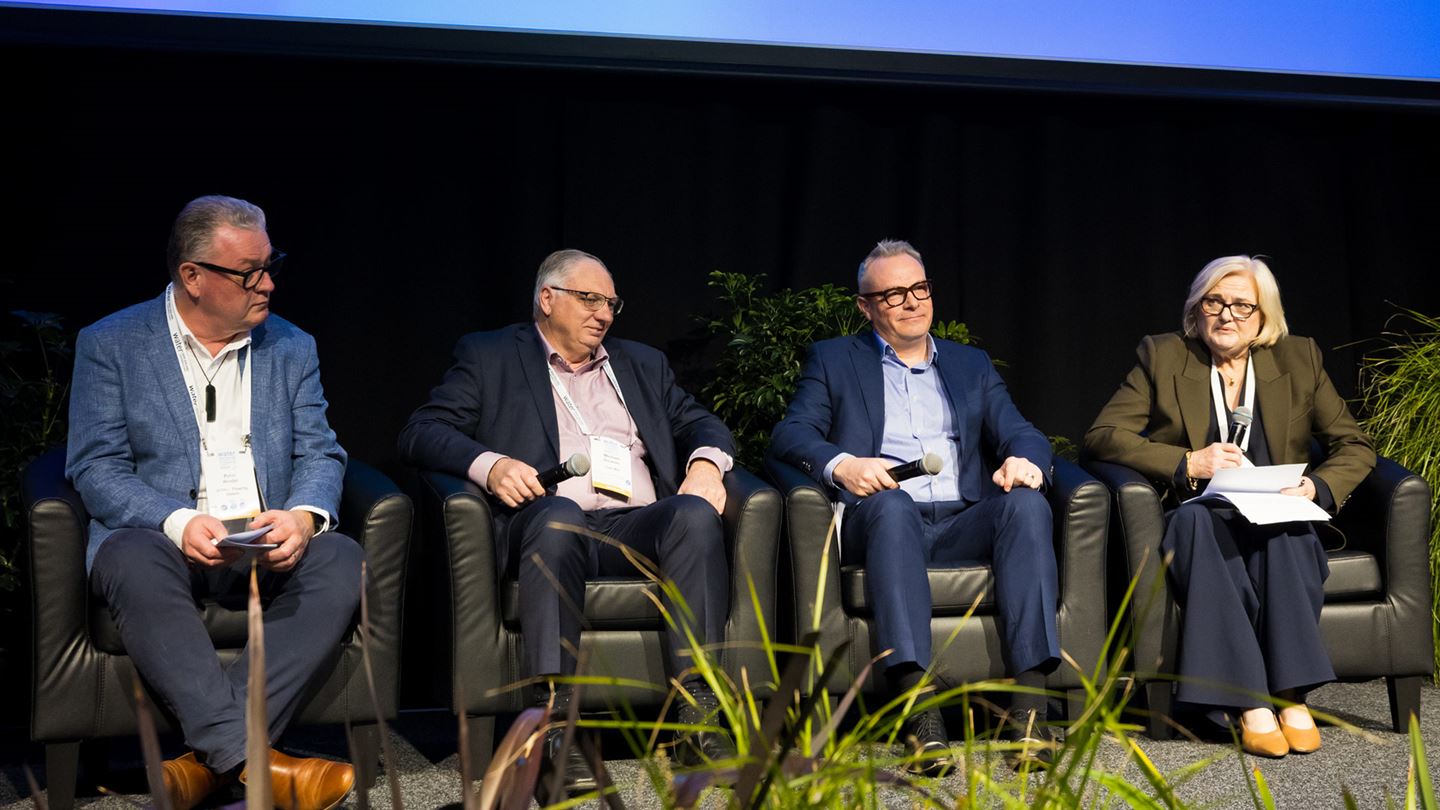
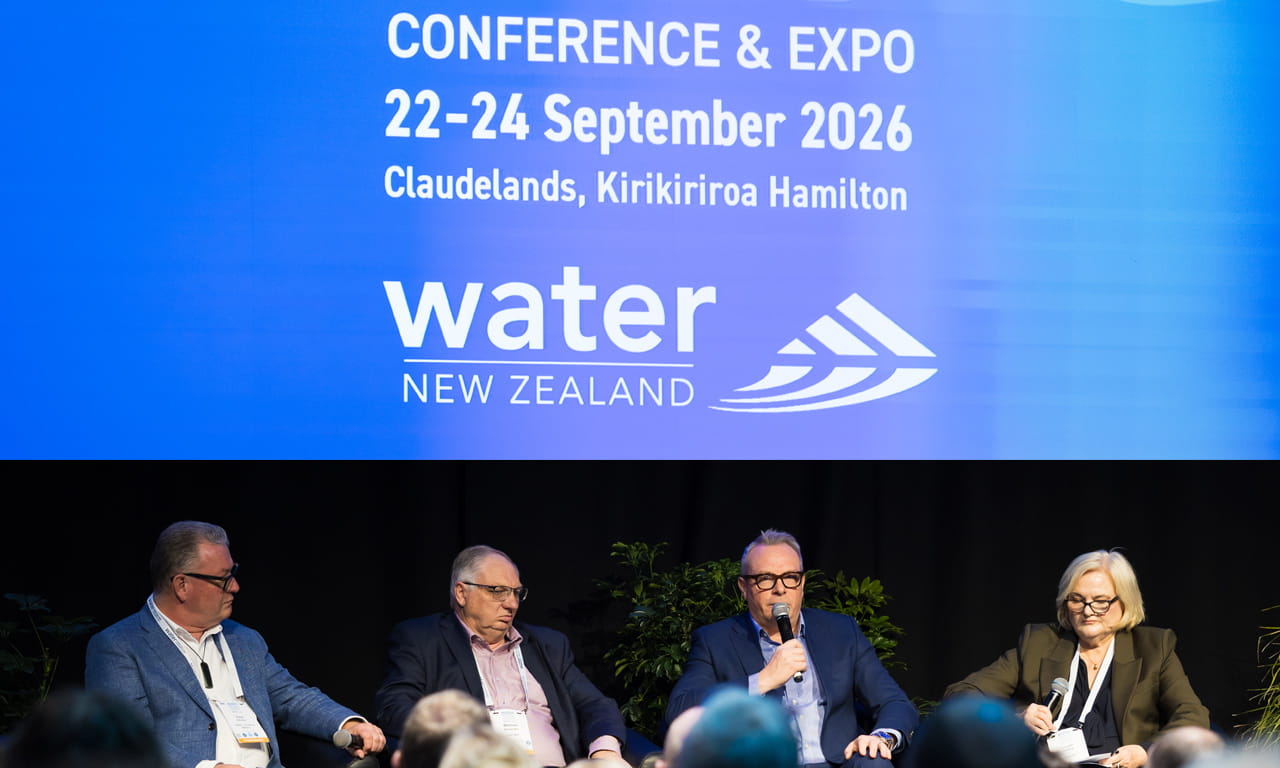
At this year's Water NZ Water Conference, held in Kirikiriroa Hamilton in September 2026, Aurecon heard from leaders, peers, international experts and technical specialists about the opportunities, challenges and possibilities ahead for the New Zealand water sector as it continues to navigate its reform.
Reform is no longer ‘whether it will happen’ but ‘how do we make it work’. Across the pre-conference leadership panel and the CEO Perspectives session, panellists from new and established water organisations kept returning to one idea: social licence is the sector's most valuable and most fragile asset.
Our leaders Deborah Lind and Louise Dudley were involved in both the pre-conference leadership panel and the CEO perspectives session. Here’s what water leaders told the Water New Zealand Conference about affordability, trust and getting on with the job.
Facilitator Louise Dudley, Aurecon Strategic Advisor and former CEO of Urban Utilities during its formation, opened the Thursday CEO panel by citing estimates of $160 to $180 billion of water infrastructure investment over 30 years. Watercare alone is planning more than 1,000 projects worth about $15.2 billion over the next decade.
Yet none of the chief executives named physical delivery as their biggest concern. Peter Winder, CEO of IAWAI – Flowing Waters, said the real barrier is affordability. IAWAI went live on 1 July with a $500 million wastewater plant rebuild and a $660 million networks renewals contract already signed. His first water services strategy shows revenue tripling within a decade.
This is a path made more complex by starting from median Hamilton waters charges of about $1,000 compared with around $3,000 in Waikato District. Getting the transition wrong, he warned, would mean losing social licence and then "we will not be doing anything very much."
Mike Brewster CEO of Wellington's Tiaki Wai faces a $6.5 billion programme. He wants better asset condition data, a focus on critical assets first and a whole-of-life ‘Totex’ view of capital and operating spend.
Watercare CEO Jamie Sinclair said the market will scale up when the investment pipeline is visible and predictable. He emphasised Watercare’s focus on being a good client through transparent work programmes, earlier contractor involvement, collaborative delivery models and a strong whole-of-life value mindset. Jamie stressed commercial acumen was also a necessary capability for water entities as investment needs grow.


The comment ‘growth pays for growth’ highlighted the nuances of this discussion. Watercare's Chief Strategy and Planning Officer, Priyan Perera, suggested that this must be considered amongst well-planned and sequenced growth that benefits all. While growth should make a significant contribution toward growth-related infrastructure, the reality is complex because both current and future customers benefit from investment in resilient, future-ready networks.
Winder argued that developer contributions have recovered perhaps 30 to 40% of growth-related costs. He suggested new connectors should contribute to the value of the network they join, much as a shareholder buys into a company, rather than the sector guessing the marginal cost of growth.
He also pointed to the electricity sector's approach to large customers, asking whether a user taking 15% of wastewater capacity really pays 15% of the costs. "Reform," he said, "is a rare chance to ask whether water usage is being charged in the right way and to the right people."
Awareness and understanding are two of the sector's biggest issues. Mike cited a consultation in which about half of respondents did not think water reform was needed. Most customers, he said, want four things: the tap works, the wastewater goes away, bills are accurate and on time and someone turns up when there's a problem. Otherwise, they don't want to hear from you. When IAWAI sent its first bills alongside council rates, the overwhelming reaction was to ask what this new ‘thing’ being billed was.
Jamie's solution to this issue was to ‘show, don't tell’, citing how positively customers respond when they visit treatment plants, see the Hūnua catchment or meet the people behind the delivery. With the water sector digging up nearly every street over the next decade, all panellists agreed that a sector-wide communications effort is needed.
On the Monday panel, Louise described what building trust from a ‘standing start’ looks like. Urban Utilities in Queensland had to introduce itself to residents who had never heard of it. It adopted a spokesperson model, established representative roles who worked directly with councils and set up a customer reference group covering pensioners, tenants and developers.
Urban Utilities resolved never to give a ‘no comment’ answer and to be open and honest with customers, media and the market. Her recommendation for early focus areas were; act with honesty, do the right thing under pressure, be consistent and predictable, and show compassion and connection.
Deborah Hart of the Utilities Disputes Scheme argued that complaints handling is part of what makes a monopoly legitimate, not just a service function. Research she cited suggests people are often more affected by whether the process felt fair than by the outcome.
The UK is a cautionary tale: public trust fell to record lows post-reform and the government eventually had to create a Water Ombudsman. Social licence, Deborah said, can be eroded gradually and almost entirely through poorly resolved concerns and low organisational performance.
Her advice to new entities was to get the complaints process right early, communicate any obvious patterns in these complaints up to the executive and board and be ready for the Commerce Commission to require reporting and both publish complaints and service-level performance.
Priyan noted that AI-enabled tools are making it easier for customers to submit detailed correspondence and complaints. “This poses a new and evolving challenge for us, and we need to make sure we keep pace with this change.”
All organisations must support a new approach to water management and customer engagement. Deborah Lind, Aurecon's Water Market Leader, who was with Watercare during the 2010 Auckland Council amalgamation, asked the pre-conference panel how they will build team culture.
Steve Maharey Board Chair of Central District Waters spoke of a real desire to do things differently from Day One, pointing to Horowhenua Council's Innovation Lab as an example. Louise described Urban Utility’s ‘Innovation Hour’ where staff pitched ideas directly to the chief executive, with each successful idea assigned an executive mentor and both successes and failures were celebrated.
Views on regulation varied. Steve noted that the new entities are being asked to be creative within fairly restrictive regulatory requirements: "If we're going to be innovative, we need the regulator to move with us."
Jamie said tension with the regulator is not necessarily bad, but late conversations most certainly are. Early, transparent engagement helps regulators and water organisations work through difficult issues before positions become entrenched.
Peter cautioned that regulators can fixate on visible issues such as overflows while the greater risk sits in invisible single points of failure, such as pumps effectively running at ‘0.8 N’, where N is the capacity needed. Panellists cited the Banking Ombudsman as a model that works well to keep an eye on innovation as well as regulation.
Deborah Hart urged attendees to think of complaints as early warning systems, a trust measurement tool and a social licence indicator, and a way to prevent escalation to the media, regulators and ministers.
Louise Dudley encouraged the sector to reframe the wider conversation around what success would look like. Hart reminded the room that monopolies should behave as if a competitor were snapping at their heels, because the public and regulators are watching.
The message: Delivery matters, but so does how the public experiences it.
This article first appeared in the Water NZ Journal, November 2026.

Water Market Leader – New Zealand

Strategic Advisor – Australia
Stormwater management reflects the full complexity of water reform. From the UK's experience, five lessons Aotearoa's water sector cannot afford to overlook.
The economic case for integrated asset and investment management in New Zealand and how well-governed infrastructure delivers lasting cross-sector value.
As climate risks intensify, New Zealand must adopt nation-wide resilience planning that connects infrastructure, leverages data, and empowers communities.