How will Asia connect billions through resilient transport systems?
Asia’s transport networks must evolve to deliver sustainable, connected mobility. Learn how Aurecon is shaping Asia with innovative infrastructure solutions.


Change your location to view content tailored for you.
As Hong Kong faces sustained population growth in new town areas and a continuous increase in cross-border connections between Hong Kong and Mainland China, the question of where and how people move in a city is being redefined. This, together with how technology and sustainability are influencing rail infrastructure development, will likely be the foundation on which Hong Kong shapes its rail transport network in the future.
In this context, there are unusual characteristics unique to Hong Kong that its rail transport network has to contend with. Major constraints are the management of huge volumes of passengers, the need to get a return out of scarce and expensive land, the weight of increased centralisation, and achieving a sustainable future.
This leads to the question: What does the future hold for Hong Kong’s railway network?
In the early 1900’s, when the first railway operations in Hong Kong made use of a single-track line, the focus was transporting passengers and supplies to and from Mainland China. Expansion and extension work from the 1970’s focused more broadly on capacity, safety and coverage to support the city’s growth.
Subsequently significant new transport infrastructure and facilities have been put into operation, such as the expansion of the international airport at Chek Lap Kok on Lantau and the multi-modal West Kowloon Station connecting to many major cities in Mainland China. These projects have contributed to making Hong Kong a 21st Century metropolis, while requiring additional rail links to ensure accessibility.
Planning the future of rail in Hong Kong, and how it moves residents, traders and tourists, expands beyond solely modernisation, but encompasses new opportunities, which further open up the city. This includes the distribution of land and new town growth (with increased density of the new transport nodes with additional land reclaimed from the sea), and the consideration of environmental impacts and sustainable solutions provides opportunities.
Just as a pin is dropped in Google Maps to indicate places of interest, planning an effective rail transport network involves identifying, and ‘dropping a pin’ in each of the suitable station interchange locations. However, these pins come packed with a great deal of complexity: location, surrounding precinct development around the station, first and last mile connection, and the unique user requirements of the city
In a city such as Hong Kong, rail is the backbone of public transport, providing fast, frequent, reliable and high-capacity services along corridors.
A focus on the economic opportunities above and around railway stations delivers in return a larger and more consistent patronage. Hong Kong rail infrastructure has seen an evolution from solely a transport system to contributing to the shape of new town developments.
The foundation to shaping new town developments is good planning that addresses the constraints of a site while at the same time enhancing its features from different engineering discipline perspectives and stakeholders (Figure 1).
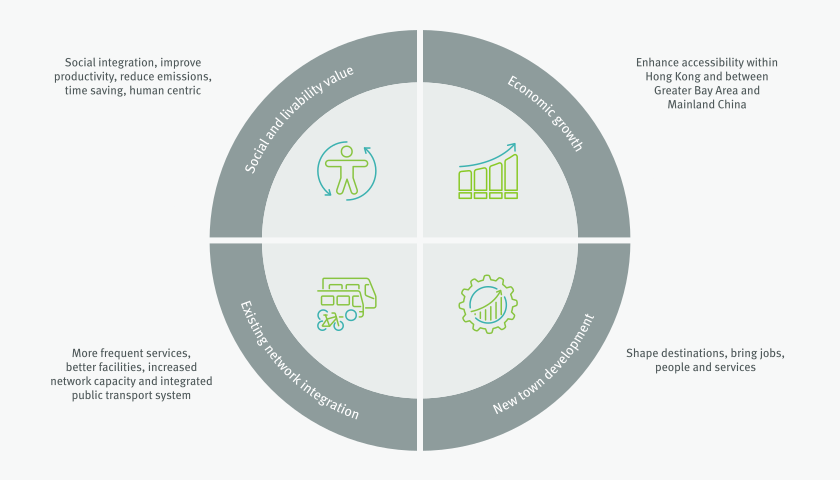
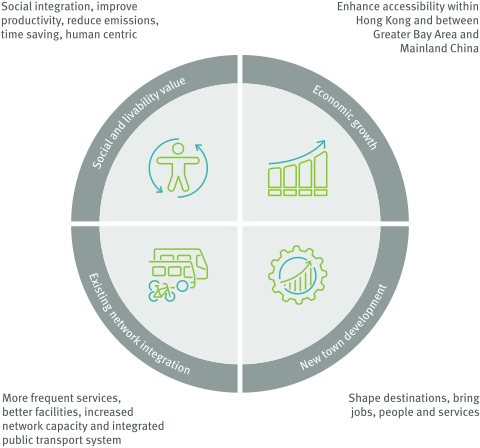
Figure 1. Achieving full value from future rail projects.
A step-by-step approach to future rail planning covers feasibility studies, preliminary design through to detailed design and operation. These are contributing factors to rail infrastructure in Hong Kong being developed in a more strategic way, as highlighted in The Chief Executive’s 2021 Policy Address.
Projects such as the Northern Metropolis Development Strategy (the Development Strategy), announced by the Government of Hong Kong, will be driven by the development and expansion of the city’s rail transport network, ensuring that rail remains as the backbone of the wider public transport system.
With the evolutionary role of the Hong Kong rail infrastructure, its development and expansion are being strategically planned to unleash the development potential of land in the northern part of Hong Kong, increasing land supply for residential, commercial and industry purposes. The Government anticipates that these projects will create enormous job opportunities and further drive economic development in the neighbouring areas.
With the transport infrastructure-led concept widely accepted in Hong Kong, more ambitious rail projects have been put forward in the Development Strategy. For example, to create a barrier-free external connection to Shenzhen in Mainland China, the Government of Hong Kong has proposed different railway projects including Hong Kong‑Shenzhen Western Railway, Northern Link extension to the new Huanggang Port in Shenzhen, the exploration of the East Rail Line extension to Luohu in Shenzhen, and Northern Link extension (both eastwards and southwards).
All these initiatives aim to strengthen the economic activities and social interactions between Hong Kong and Shenzhen, which in return will maintain the competitiveness of Hong Kong within the Greater Bay Area and its position as one of the world's great cities to live and work in.
With so much investment in rail infrastructure, in Hong Kong and in many cities across the world, we are moving towards an increasingly smart, technology-enabled future. The rail industry will have to evolve and adapt as fast (or even faster than) a bullet train to keep up with advanced technology both in the design and construction phases, as well as the operations and maintenance phases.
Aurecon uses advanced parametric (3D) modelling and Building Information Management (BIM) technologies to bring the project to life to improve rail connectivity for the local population in Tuen Mun South area.
At present, residents in the southern part of the district use buses or light rail to reach MTR Tuen Mun station, which is the terminus of the Tuen Ma Line (formerly called West Rail Line). Once completed, the extended train line will serve the community south of the town centre and the nearby residential areas, as well as enhance connectivity to Tuen Mun Ferry Pier.
There are several advantages derived from the digital engineering applied to this project. First, the design and construction models are federated into a single combined model to increase engineering design efficiency and ensure that all data and information is stored for future reference.
As the project involves seamless connections between existing infrastructure, digital engineering assists in designing the services, wiring and signalling to minimise clashes. Any potential clashes that are detected in the modelling can be amended during the design stage, and well before construction commences.
The key benefits that a digitally-enabled future affords are productivity efficiency, design efficiency prior to construction, less material wastage on-site, and a potentially safer construction site with off-site prefabrication processes being widely adopted.
Modular design technology and precision engineering, otherwise known as Design for Manufacture and Assembly (DfMA), are already driving a number of changes in construction – for example in the education and residential housing sectors (across the world). Quite often faster, smarter and greener, modular construction is enabled by new technology and procurement models, prefabricating structural elements offsite, which are then transported to site and installed into position.
The modular construction delivery method emphasises project effectiveness. It aims to identify and adopt the most effective approach to deliver a project with minimised resource use, exploitation and damage to the environment, and maximised quality of work, health and safety together with assurance of delivery (Figure 2).
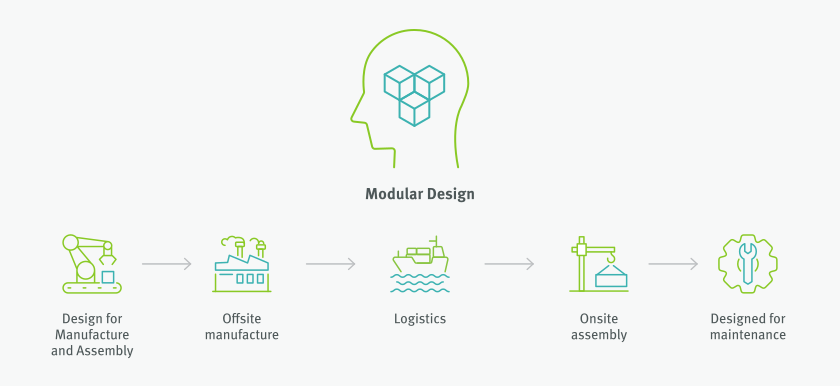
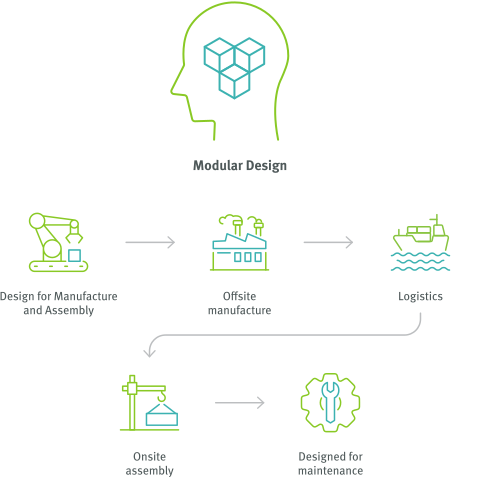
Figure 2. The modular construction mindset.
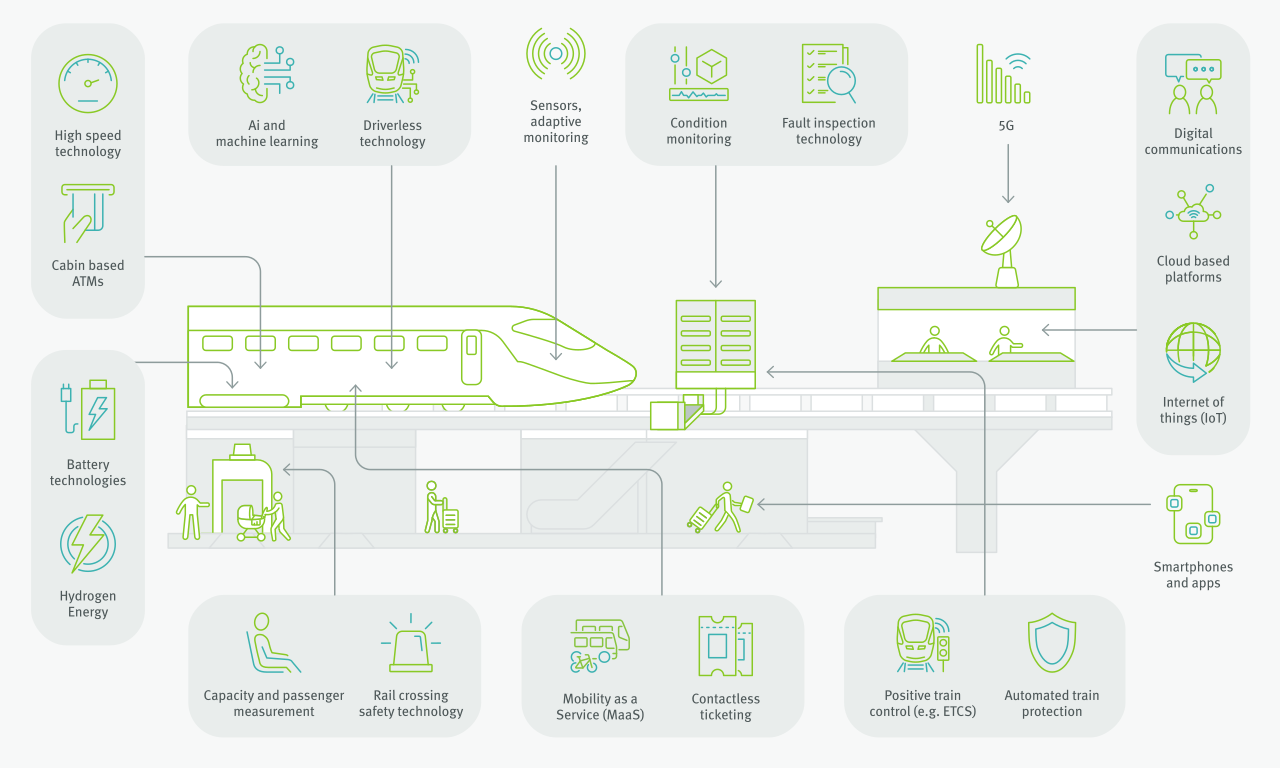
Ultimately, Hong Kong’s rail infrastructure in the future needs to be safe, highly accessible and easily maintainable. In relation to this, there are many roles for technology. Whether it is designing new rail lines more effectively, providing real-time information to passengers, assisting train driver decision-making with signalling, or alerting maintenance crews about required operational works, new technologies can make a difference (Figure 3).


If decarbonisation is the ticket to destination net zero, then rail transport networks are the pass to reducing and removing carbon dioxide output. This places the rail sector in harmony with communities that are becoming more conscious of the impact of infrastructure construction and operations on the environment. Everything from noise levels of trains or public address systems, settlement and damage to surrounding structures, construction disturbances to the environment, and the sustainability of ongoing operations, is becoming more prevalent in a passenger’s mind.
In this context, train station construction, rail line construction, and the operation of railways are becoming more eco-friendly and energy efficient to reduce environmental impacts and carbon emissions.
The Hung Shui Kiu Station will serve the future transport needs of the Hung Shui Kiu/Ha Tsuen New Development Area, bringing convenience to residents and reducing travelling time. Aurecon, in a joint venture with WSP, is leading the engineering design.
A range of initiatives are proposed within the engineering design to reduce carbon emissions during construction and operation.
The station platforms will be sheltered with a light-weight metal canopy, which also supports solar photovoltaic panels, generating electricity for station use and further shading the station. The concourse will be sheltered by the platforms and an existing viaduct. The station is being designed as a natural side ventilated station without the need for mechanical air-conditioning. Mesh wall panels will form the external walls, sheltering the station from heavy rain and wind. Industrial fans together with air amplifiers will be used to maintain a constant breeze for passenger comfort.
The station will be constructed next to live rail tracks on the viaducts. The design team will cater for any adverse impacts to the operated tracks in respect of safety and constructability.
DfMA methods will be extensively used for the construction of the station, further reducing the embodied carbon content and construction waste.
The Hong Kong West Kowloon Station is a landmark building on the city’s skyline, and one of the world’s largest underground cross-border railway stations. The station serves as Hong Kong’s gateway to Guangzhou Province and other major cities in Mainland China.
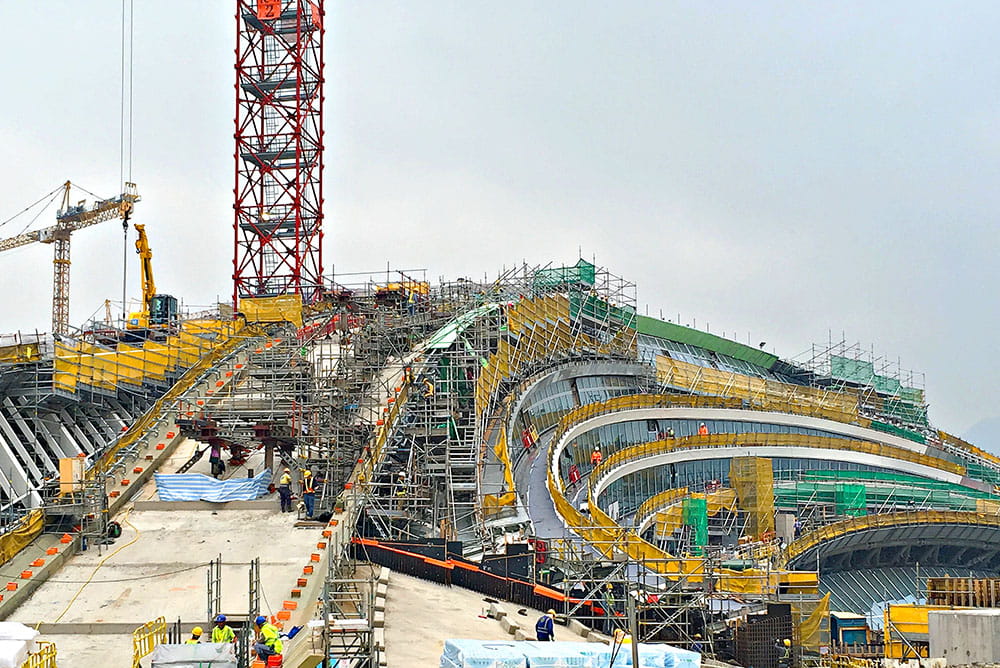
Figure 4: With Aurecon’s support to bring this idea to life, the Hong Kong West Kowloon Station now provides a green oasis and a pleasant strolling route for visitors to enjoy stunning views of the city.
Aurecon performed the challenging role of planning and managing the erection engineering to raise the long-span station roof to sit protectively and elegantly over 400,000 m² of rail station. Underneath the three-dimensionally curved roof structure is a four-storey station building, and above is a green plaza with approximately 8,900 m² of greening open space, accessible by the public.
Not only does the station bring new levels of comfort and experience to travelling into Hong Kong, but its landscaped three-dimensionally curved roof structure also provides a green oasis and a pleasant strolling route for visitors to enjoy stunning views of the city.
While rail is generally considered an energy-efficient form of transport (as a majority of the networks are electrified), there is still significant potential for the industry to reduce energy consumption and carbon emissions.
The scale of the decarbonisation challenge demands a step change in both the breadth and scale of ambition, and the rail sector has a duty to act quickly and decisively to journey towards carbon neutrality.
One opportunity is to bring forward sector-wide collaboration and policies with a plan that anchors the role of railways in decarbonisation. Projects by the Government of Hong Kong, such as Lantau Tomorrow Vision, will connect people and places in a sustainable and eco-friendly way. This 1,700-hectare reclamation project meets housing and economic needs, while also enhancing connections between new town areas and the New Territories in Hong Kong.
The Northern Metropolis, mentioned earlier, also has a very high conservation value. Diverse wetlands, fauna habitats and fishponds form part of the land regeneration that this project twists and weaves through.
Engineers and planners have a contribution to make to the future of rail infrastructure in Hong Kong through a multidisciplinary mindset. This helps to bring together different ideas and design considerations from different engineering discipline perspectives to ultimately achieve optimal design solutions.
Large-scale rail infrastructure projects always require close coordination across different engineering disciplines, and collaboration with construction contractors, clients and local communities. With their multidisciplinary mindsets, engineers and planners can leverage their comprehensive capabilities and experiences from one project to the next, incorporating lessons learned into the next project to further enhance the connectivity of Hong Kong’s rail network.
These skills are invaluable in helping to create a sustainable, data-driven and connected rail network, an environment that encourages public transport use, and the shaping of sustainable new town developments for Hong Kong’s future.

Managing Director – Hong Kong & Macau
Asia’s transport networks must evolve to deliver sustainable, connected mobility. Learn how Aurecon is shaping Asia with innovative infrastructure solutions.
How engineering and construction projects are evolving to champion biodiversity, through early planning, advanced technologies, and ecosystem stewardship.
Exploring how floating solar technology offers Southeast Asia a viable solution for meeting renewable energy targets despite land constraints.