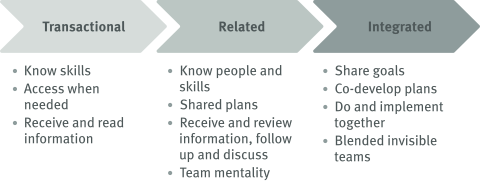
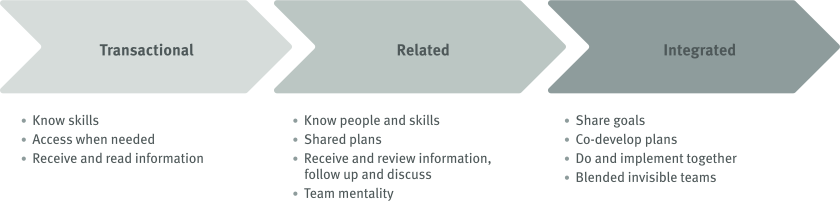
A partnership has to be given the time, passion and energy it needs to flourish so that familiarity is built between parties. This is time dedicated to focusing on the culture, and development of the team, as this is vital given the engagement is no longer transactional.
With an integrated team, management attention must be paid to team health, the adoption of common values, and demonstration of the meaningful and positive behaviours expected in a combined organisation.
True partnering means that all partners can understand the whole system approach to the extent that’s necessary for their specific role, and can invest the time and innovation into how each carries out their part within these broader contexts.
This means a shift from short-term focus on time, cost and quality measured now on this project, to a broader, long-term focus on driving efficiency across the programmes of work, and measurement of outcomes, at a portfolio level. It also means efficiency is gained across the partnership – and the value chain.
Partnering will flourish when there is a sense of empowerment among all parties, transparency in communications, and the motivation to act a certain way
– by building a culture of authenticity.
Examples of current partnerships point to the ability to flex resourcing to adapt to scope development and changes, along with driving better outcomes on managing the ebbs and flows of resourcing requirements. This is in comparison to a transactional approach where labour is usually prescribed, and any changes attract variations.
Partnering will flourish when there is a sense of empowerment among all parties, transparency in communications, and the motivation to act a certain way – by building a culture of authenticity.
A key driver for entering into a partnership is to leverage complementary skillsets and diversity of thought as the project or programme scope is co-defined. It requires leadership. Common to the partnering approach is the desire for genuine, honest, open and transparent leadership. It is one of the hardest things to get right. Everyone should be empowered to show personal leadership regardless of their role.
Legacy
There are two aspects to leaving a legacy that partnering can deliver. The first is the community legacy by contributing to sustainable, liveable and healthy places and spaces. The second is the legacy that partners leave for each other, and the industry, through building and sharing new knowledge, capability and ways of working.
Co-developing a legacy plan and setting the aspects to be achieved through the partnership can be a powerful way to embed the desired future state into day-to-day operations.
By promoting collaboration and focusing diverse skillsets on problem solving, partnering has the power to produce sustainable results with a systematic approach of integrated solutions rather than addressing issues in isolation.
Workshop participants were animated in their discussions around the legacy that partnerships leave, however there was one strong theme – start the way you mean to finish. This includes planning time for managers to invest in the relational aspects, and budgeting for the overheads to drive partnership behaviour.
Our reflection on this is to be open to trying out something entirely different, or implementing an innovative idea, as this will lower the barriers to getting started. Be responsive when things go wrong – partners need to be prepared to jump in and work together under this new framework.
Partnering also doesn’t need to be limited to a client and a service provider. All parties connected to the partnership should be involved in working towards the long-term common goals of the partnership. This is a true reflection of a ‘one-team’ culture.
In creating these environments, the partnering approach delivers on creating value-for-money, a greater customer and community focus, as well as a legacy for the community and the organisations involved.