

Delivering energy infrastructure needs people, capability, and cohesion
Australia's energy transition requires more than technical plans. Discover four ways to build the people, culture and capability to deliver infrastructure at scale.


Change your location to view content tailored for you.
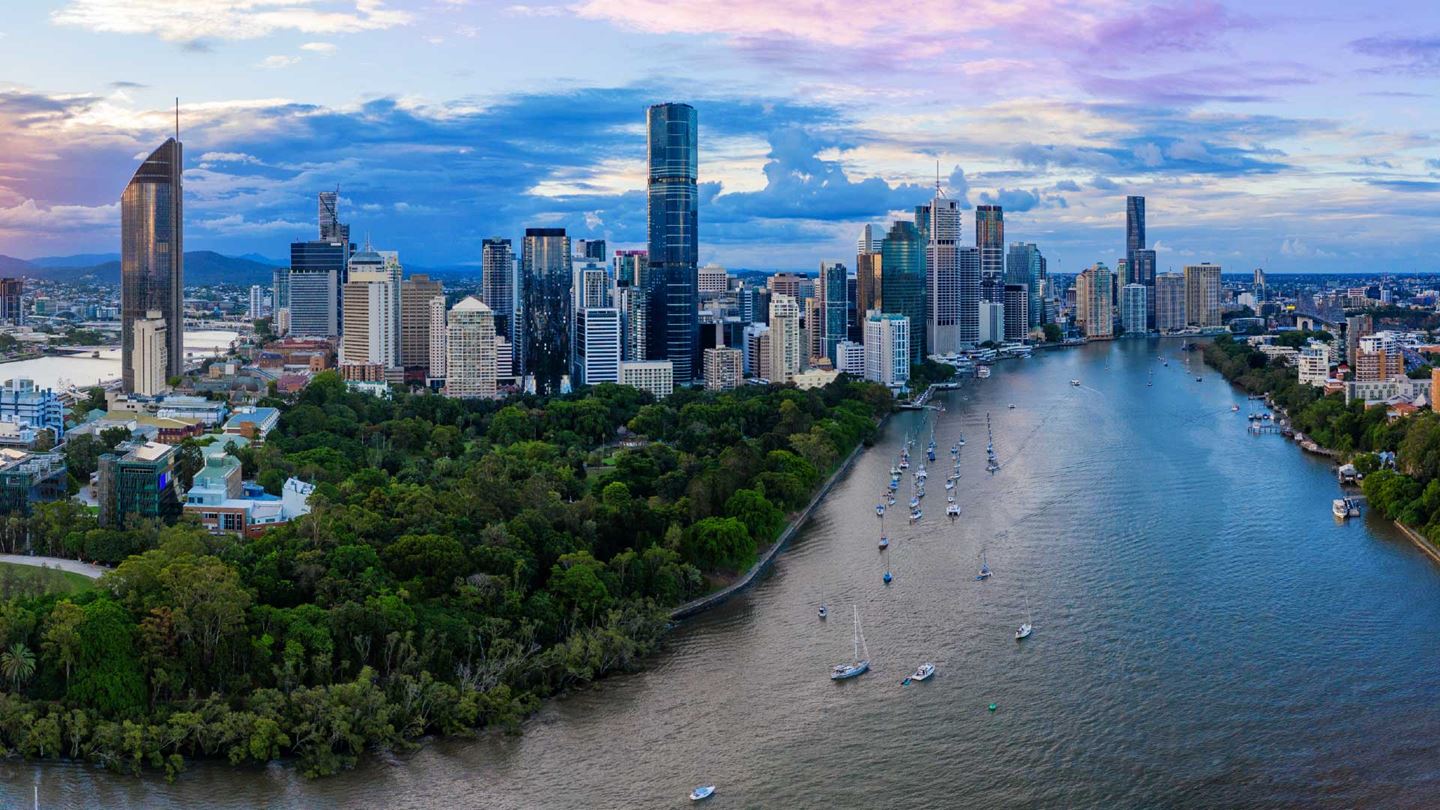
Brisbane is set to host the 2032 Brisbane Games, and plans are already underway for creating a long-lasting, positive legacy for the entire region, far beyond the sporting event.
As part of this legacy exploration, Aurecon joined with the Committee for Brisbane 2033: Olympics Legacy Project, along with other industry participants, to develop a detailed policy paper and framework of SMART goals across the key themes of Connected, Creative, Equitable and Enterprising.
In this article, Aurecon’s Queensland Managing Director, Evelyn Storey, outlines the outcomes of the Enterprising theme, which was led by Aurecon, together with 54 participants from over 34 industry and academic organisations. Using Aurecon’s Design to Innovate methodology, we unpacked the notion of legacy, and in particular, how a focus on creating multi-modal, mixed-use precincts, and Australia’s first net zero carbon and circular economy region, will be amongst the most valuable Games legacies.
There was something different about the 2020 Olympic and Paralympic Games in Tokyo. Not the visual cues of absent crowds, and athletes and officials wearing masks. It was the feeling of passion, spirit, elation and relief that a massive event could actually go ahead in the face of a global pandemic, and at a time of ongoing uncertainty for the health and wellbeing of communities across the world.
It was also a stark reminder of the other crisis facing the world at present – climate change. As athletes and spectators sweltered in 40°C heat, the Tokyo Games made the most of its sustainability credentials, including showcasing zero carbon technologies, such as hydrogen, fuel cell and electric vehicles, and recycled materials, enabling it to claim net zero carbon status, and setting a new benchmark for mitigating the environmental impacts of large-scale events.
So, is this the future of Olympic and Paralympic Games, which have often been overshadowed by budget blow-outs, stranded assets and poor outcomes for the communities of Games host cities? Are we instead facing a future where hosting a Games can have a positive impact, not just as a result of the event itself, but also as an opportunity to set up a better future for host city’s citizens, its economy and the global environment as a whole?
"In 2032, the eyes of millions of people will be in our homes, what do we want them to see?"
John Coates AC, President of Australian Olympic Committee
The International Olympic Committee (IOC) defines Olympic legacy as “long-term benefits that the Olympic and Paralympic Games create for the host city, its people, and the Olympic Movement before, during and long after the Olympic Games.”
One of the legacy aims of London 2012 was to regenerate a 560-acre industrial site in the east of the city. Now known as Queen Elizabeth Olympic Park, managed by the London Legacy Development Corporation (LLDC), it has been transformed into a dynamic mixed-use precinct in East London, which is still thriving and growing today. The UK Government also had a goal to secure at least GBP 11 billion of economic investment from the Games within four years. This was achieved in 14 months and currently stands at GBP 14.2 billion of inward investment, Olympic-related high value opportunities and additional export sales.
Sustainability formally became one of the IOC’s three pillars of the Olympics Agenda 2020 reform programme[1] in 2014 (the other ones being Credibility and Youth). While much has been achieved over the past six years, with 88 per cent of goals being met, there is still more to do.
Paris 2024 is planning to use 95 per cent existing or temporary venues and is committing to being climate positive – the first major sporting event to do so. Its new venues will be turned into eco and social infrastructure for its citizens. For Los Angeles 2028, no new venues will be constructed at all.
So, what commitments has Brisbane 2032 made and what legacy does the Games intend to leave for the communities of Southeast Queensland and beyond?
The Enterprising theme focuses on developing regional economic ecosystems that are founded on knowledge, innovation and entrepreneurship, delivered via structured government, business and community collaboration.
Underpinning the roadmap is a set of SMART goals (Figure 1). Specific, measurable and attainable, these goals map actions to their achievement and outcome so that communities, businesses and entities can get involved and be part of this once-in-a-generation transformational opportunity.
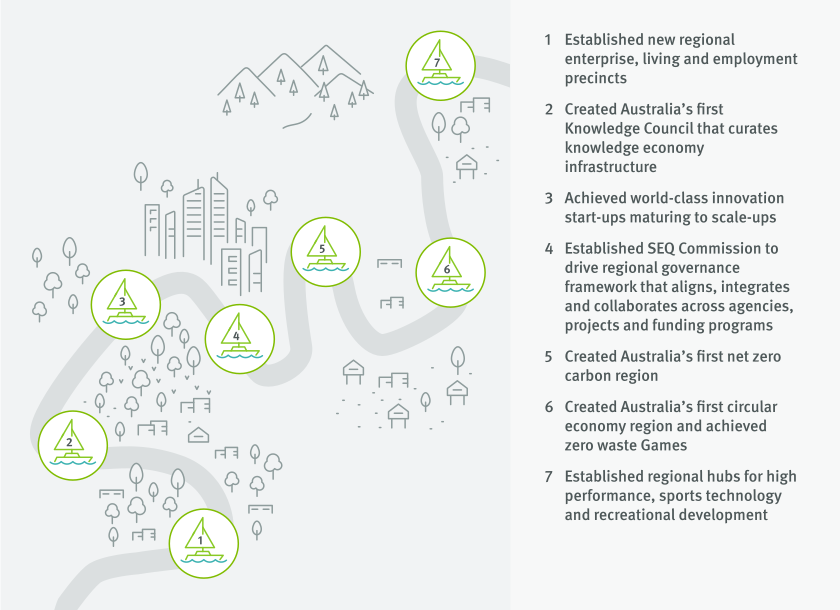
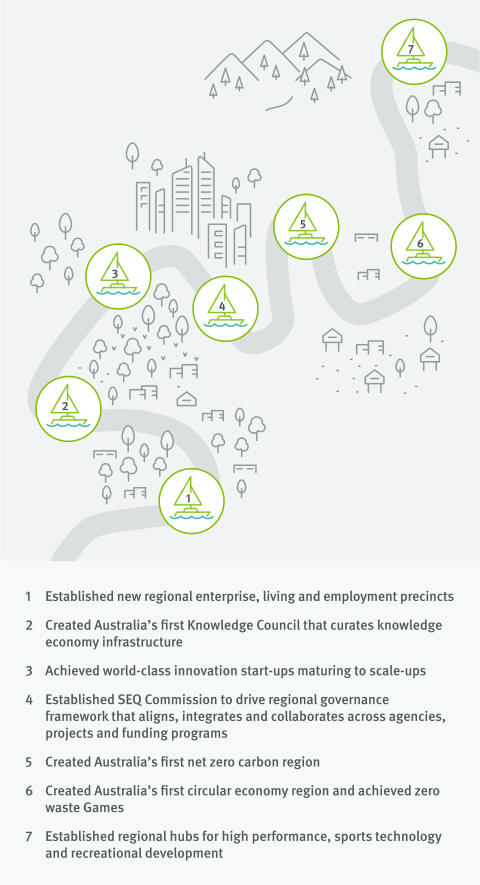
Figure 1: The seven SMART goals defined in the Enterprising Theme roadmap.
We unpack three of the seven SMART goals, which focus on the key aspects of creating new precincts, and reaching net zero and circular economy goals, and importantly, explore the vital question: what will it take to achieve the legacy aspirations?
A deliberate and coordinated approach to the establishment of precincts is recognised as a successful way to stimulate economic growth, create jobs and support sustainable communities.
Many major events have left positive, lasting legacies of mixed-use precincts. The Sydney 2000 Olympic and Paralympic Games has resulted in the 430-hectare Olympic Park precinct that hosts 230 businesses, a daily community of over 21,000 people and 14 million visitors a year, as well as incorporating water recycling, and renewable energy schemes, and transforming many other areas of the city.
The Sydney Olympic Park Authority has developed a Master Plan 2030[2] to guide the long-term development of the park as part of the Greater Sydney Commission’s Three Cities approach. World Expo ’88 in Brisbane led to the development of the South bank precinct, a major residential, commercial, education, arts, media, hospitality, transport and tourism hub. Governed by the South bank Corporation, a ‘Future South Bank’ master plan is currently in development to guide the next 30 years.
While the Brisbane 2032 Games are expected to deliver AUD 8 billion in benefits to Queensland, the opportunity to continue the legacy beyond the event are already being explored. A Brisbane 2032 Masterplan[3] not only provides a pathway to the Games, but also the 10-year legacy beyond.
As a major global event, the Olympic and Paralympic Games have a responsibility to reduce emissions and be a catalyst for sustainable development. The IOC has joined the UN-backed ‘Race to Zero’ campaign, which is aimed at rallying climate leadership from non-government entities to work towards a carbon-free world.
Building on the IOC’s goal, the 2032 Brisbane Games has a goal to be climate positive, and the legacy for Southeast Queensland is to be Australia’s first net zero carbon region, significantly improving its climate change resilience and lowering the region’s ratings on the Lloyds Risk Register.
This is an aspirational goal and not without significant commitment to decarbonise every aspect of the economy, starting with the most exposed industries, such as energy, resources and transport.
Acknowledging the Olympic Agenda 2020 recommendation to “include sustainability practices in all aspects of the Olympic Games”, Brisbane 2032 will be a zero waste Olympic and Paralympic Games and the Enterprising theme intention is that Southeast Queensland becomes Australia’s first circular economy region.
A circular economy is about maintaining materials at their highest value for as long as possible. It is a model of production and consumption (Figure 2), which involves sharing, leasing, reusing, repairing, refurbishing and recycling existing materials and products as long as possible, or indefinitely, so the levels of waste and pollution are eliminated, or minimised, and natural systems are regenerated.
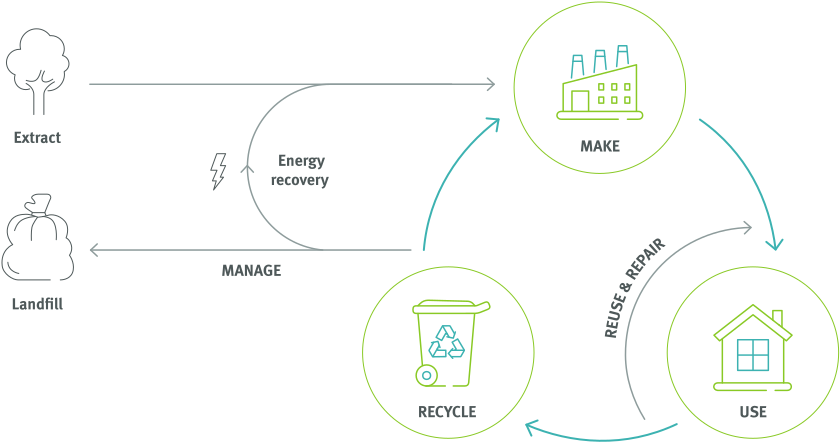
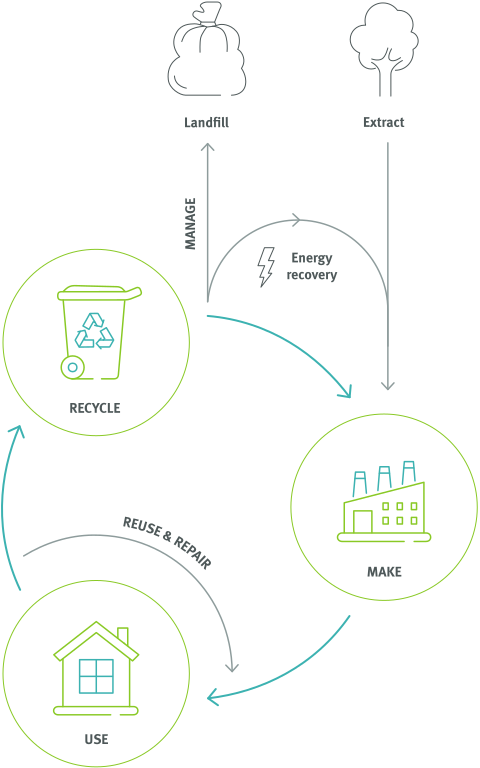
Figure 2: The circular economy is a model of production and consumption.
With a focus on the 2032 Brisbane Games being the first zero waste Olympics, we must start thinking differently about how we design and implement planning and delivery.
McKinsey identified six actions that need to be undertaken to transition to a circular economy. Called the ReSOLVE framework (see Table 1)[4], it could be useful as a guide for identifying opportunities to deliver a zero waste Olympics and Paralympics and create a circular economy legacy that positions the Southeast Queensland region for a more sustainable future.
| Action | Details |
|---|---|
| Regenerate | Renewable energy and materials; reclaim, retain and regenerate ecosystems; return resources to the biosphere |
| Share | Maximise utilisation through sharing; reusing; repairing |
| Optimise | Improve efficiency of products; remove waste; leverage big data, automation and sensing |
| Loop | Keep materials in loops through using renewables. For finite materials, remanufacture or recycle |
| Virtualise | Deliver products and services virtually |
| Exchange | Replace old materials with new renewables; apply new technologies |
Table 1: ReSOLVE framework to achieve a circular economy.
Commissioned by CSIRO, KPMG prepared a report in April 2020 on the ‘Potential Economic Pay-off of a Circular Economy’[5] for Australia. While taking a circular economy approach has benefits in reducing environmental impacts, the economic benefits in terms of GDP and employment growth are also significant.
KPMG estimated that a future circular economy in Food, Transport and the Built Environment represents a potential economic benefit of AUD 23 billion by 2025.
A coordinated and sustained approach by all levels of government to ensure a lasting legacy is provided to the region will help lead an improvement of assessment of opportunities, drive and embed transformation and ensure measurement of benefits is undertaken.
This governance model will also ensure that we design for a circular economy from the outset, embedding and implementing throughout the key stages of planning, investment decision-making; procurement and construction; Games delivery and operations; and post Games legacy.
So, what’s next? The Queensland Government has passed legislation to establish an organising committee for the 2032 Brisbane Games that will operate as an independent statutory body to organise the Games themselves. In parallel, major projects are being fast-tracked to deliver the infrastructure and connectivity needed to deliver the Games.
Any worthwhile legacy must be planned. Executed well, the legacy of the 2032 Brisbane Games will provide long-term benefits for Southeast Queensland and beyond. Not only that, there is the potential to set a benchmark and create a roadmap for how regions and communities can achieve their economic, social and environmental goals going forward.
The Enterprising theme is just one part of the Brisbane 2033: Legacy Project. Together, the roadmaps and action plans of the Creative, Equitable, Enterprising and Connected themes aim to create a legacy of:
The test will be how the Games infrastructure creates a revitalised Southeast Queensland region that will position us for prosperity in the ensuing decades.
[1] International Olympic Committee, 2020, Olympic Agenda 2020 International Olympic Committee Closing Report.
[2] Sydney Olympic Park Authority, August 2018, Sydney Olympic Park Master Plan 2030 (2018 Review), NSW Government.
[3] Brisbane City Council, 2021, Brisbane 2032 Masterplan.
[4] McKinsey&Company, October 2016, The circular economy: Moving from theory to practice, McKinsey Center for Business and Environment.
[5] KPMG, April 2020, Potential economic pay-off of a circular economy for Australia, KPMG Economics.
Aurecon is not a sponsor of the Australian Olympic Committee Incorporated, the International Olympic Committee, any Summer or Winter Olympic Games, the organising committee for any Summer or Winter Olympic Games, an Australian Olympic team, a section of an Australian Olympic team, or an individual member of an Australian Olympic team. This material is not intended to suggest that Aurecon has any formal association with, or has provided any sponsorship or sponsorship-like support for, any of these parties.
About Aurecon’s Design to Innovate approach: Innovation is a mindset. It is a process of looking at problems differently, reframing them as opportunities, looking for diverse opinions and ideas and then using experimentation and iterative prototyping to test those ideas. It is a way of thinking and doing that nurtures selfless collaboration, creative confidence and lateral thinking. For Aurecon, innovation means finding new ways to invent meaningful value. We use our ‘Design to Innovate’ approach to unpack challenges and find solutions. We used this approach, led by Aurecon’s Innovation Partner for Queensland, Matthew Roskam to explore the Enterprising theme.
We would like to thank our fellow Enterprising theme participants: Queensland Investment Corporation, Lendlease, Laing O’Rourke, the University of Queensland, Dexus, Hatch, RobertsDay, Tract, AECOM, Accenture, Sporting Wheelies, Populous, Alliance Airlines, Arkhefield, Cottee Parker, Bornhorst Ward, Stratagility, Archipelago, QUT, Cardno, Mecone, Lions, BT Internet, Peddle Thorp, Profitable Innovation, Donzenac, Bond University, University of Sunshine Coast, Committee for Brisbane, Hvia, Emmconsulting, Arup, Grant Thornton.

Director, Eminence & Sustainability
Australia's energy transition requires more than technical plans. Discover four ways to build the people, culture and capability to deliver infrastructure at scale.
Aurecon’s ecology and biodiversity expert shares how to achieve timely project approvals, what regulators want, and how to navigate regulatory changes.
Aurecon shares insights on how renewable project delivery models are evolving to better manage risk and deliver long-term value through project partnerships.