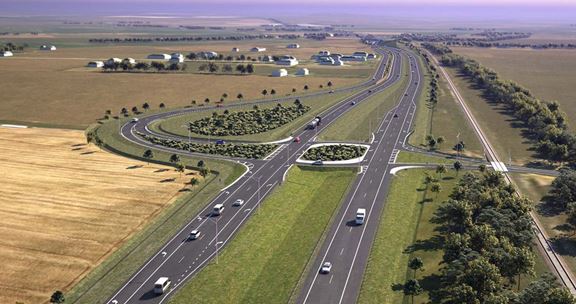
Princes Highway East – Kilmany Upgrade, Victoria, Australia
Aurecon is working on the Kilmany Highway upgrade project with its roads and bridge engineering design, sustainability, and digital engineering services.


Change your location to view content tailored for you.
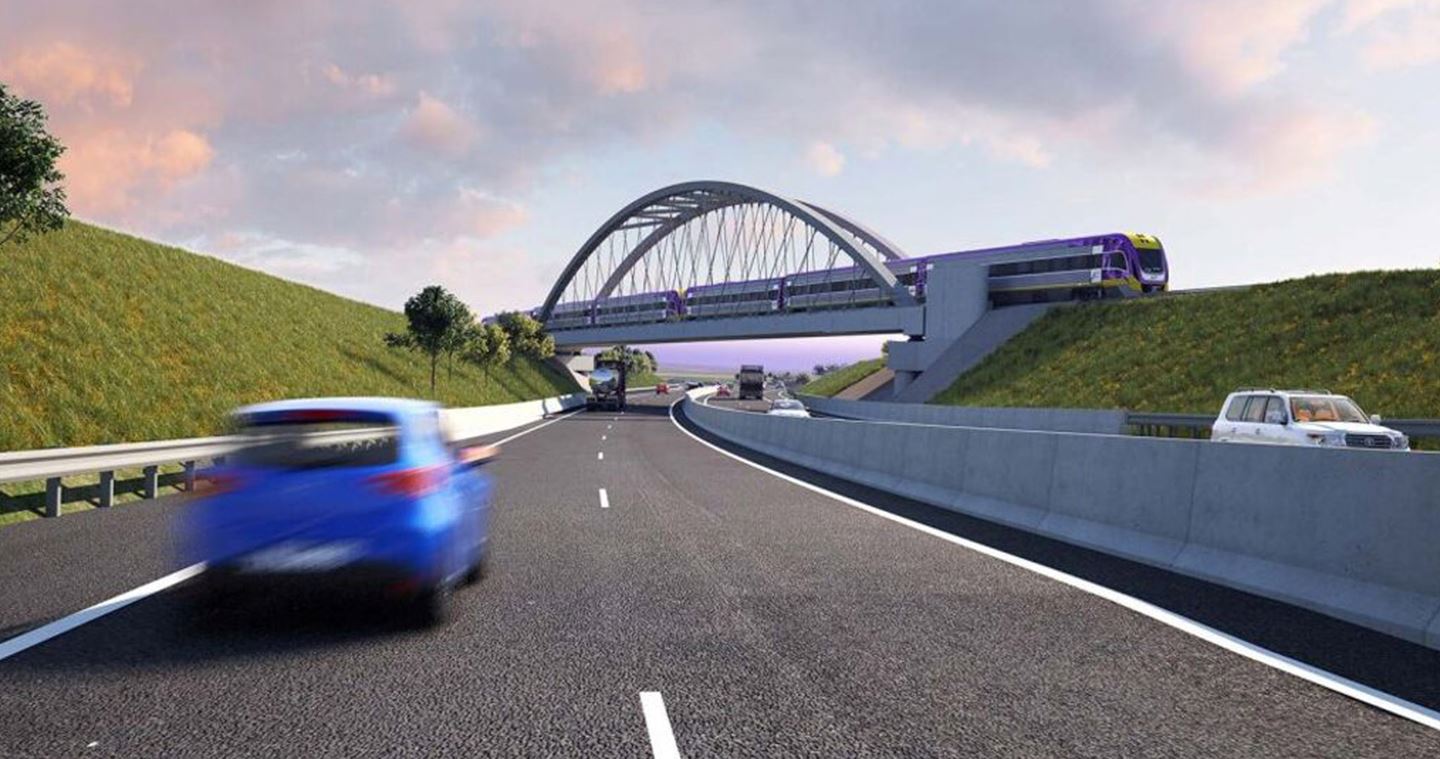
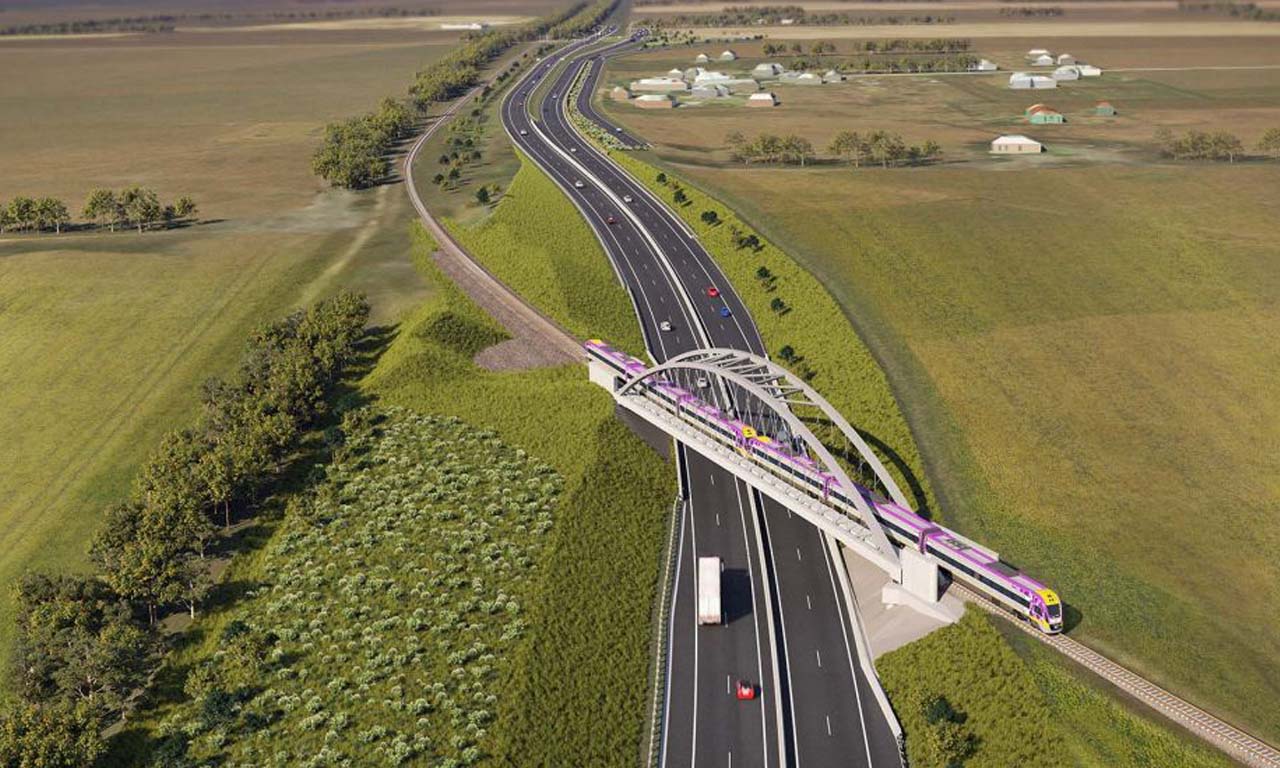
A new rail-over-road bridge is being built at Kilmany, Victoria, which is the first known use of network arch bridge construction in the state for road or rail transport.
To replace the existing road bridge, built more than 55 years ago, the network arch bridge type was chosen for its ability to span the width of the four-lane highway beneath it, and to be prefabricated for ease of installation.
It forms part of the Princes Highway East – Kilmany upgrade project being delivered by Aurecon and Laing O’Rourke.
There were a number of site constraints challenging the engineering team, leading to the decision to construct a network arch bridge. These included the client’s request for no central pier so that motorists have open lines of sight on the highway, and the fact that the bridge has to span the freeway at a length of 94.5 metres.
To achieve this, a highly-skewed, single-span bridge was required that could be prefabricated offsite and slid into position to minimise rail occupation and disruption to highway traffic.
Aurecon researched bridge types used across the world for a bridge design construction that would address and resolve the site constraints and client requirements, with the result being the network arch bridge.


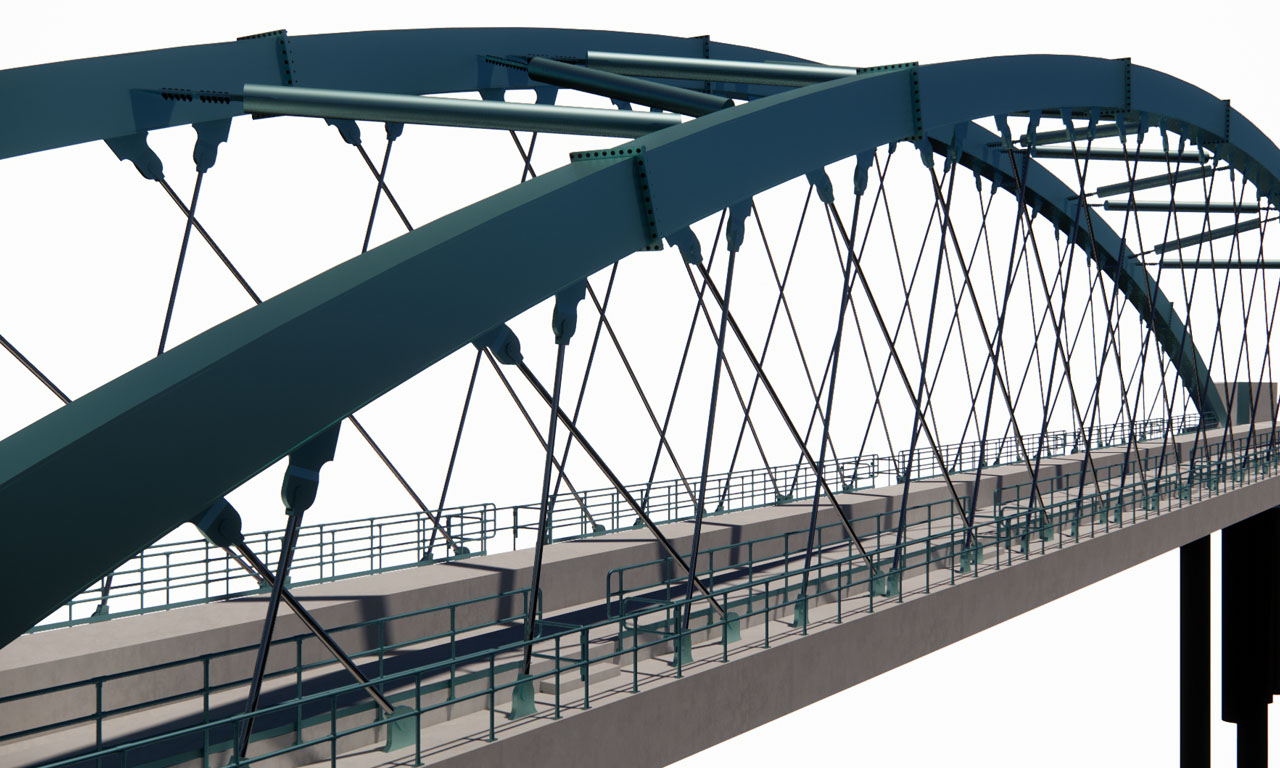
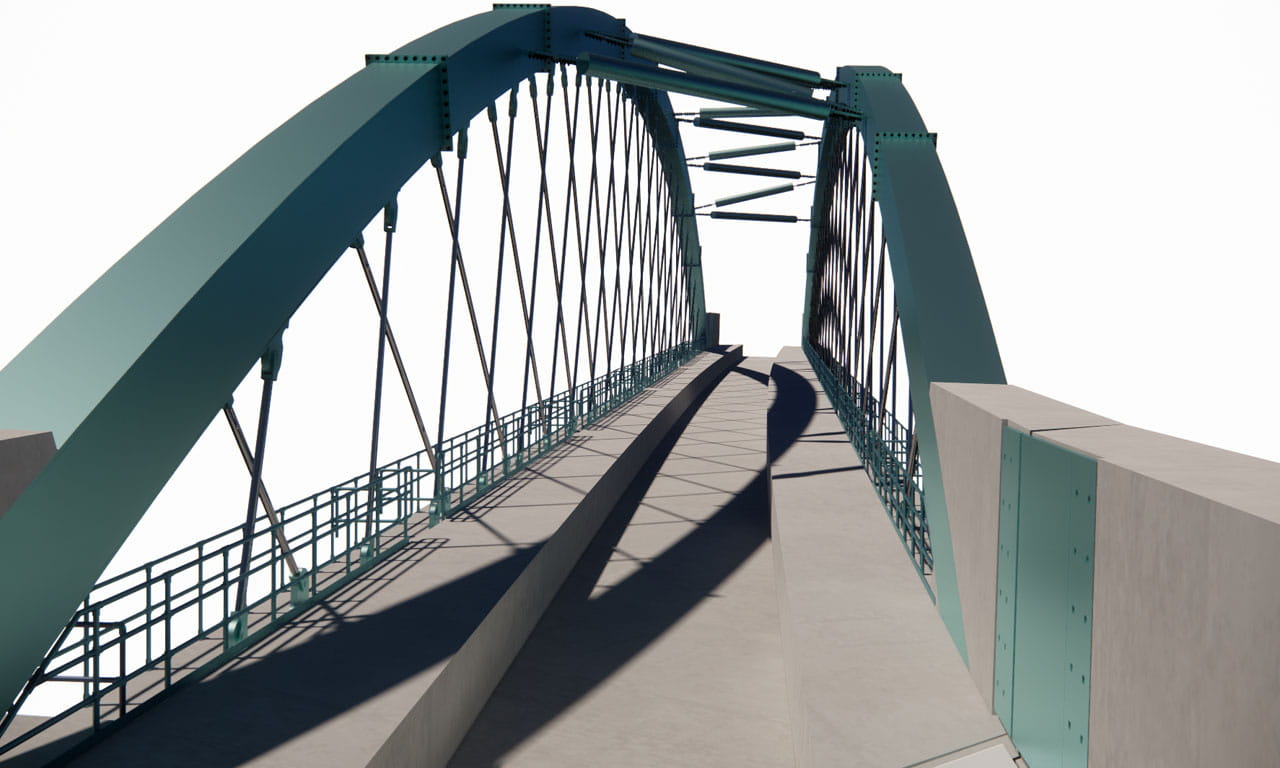
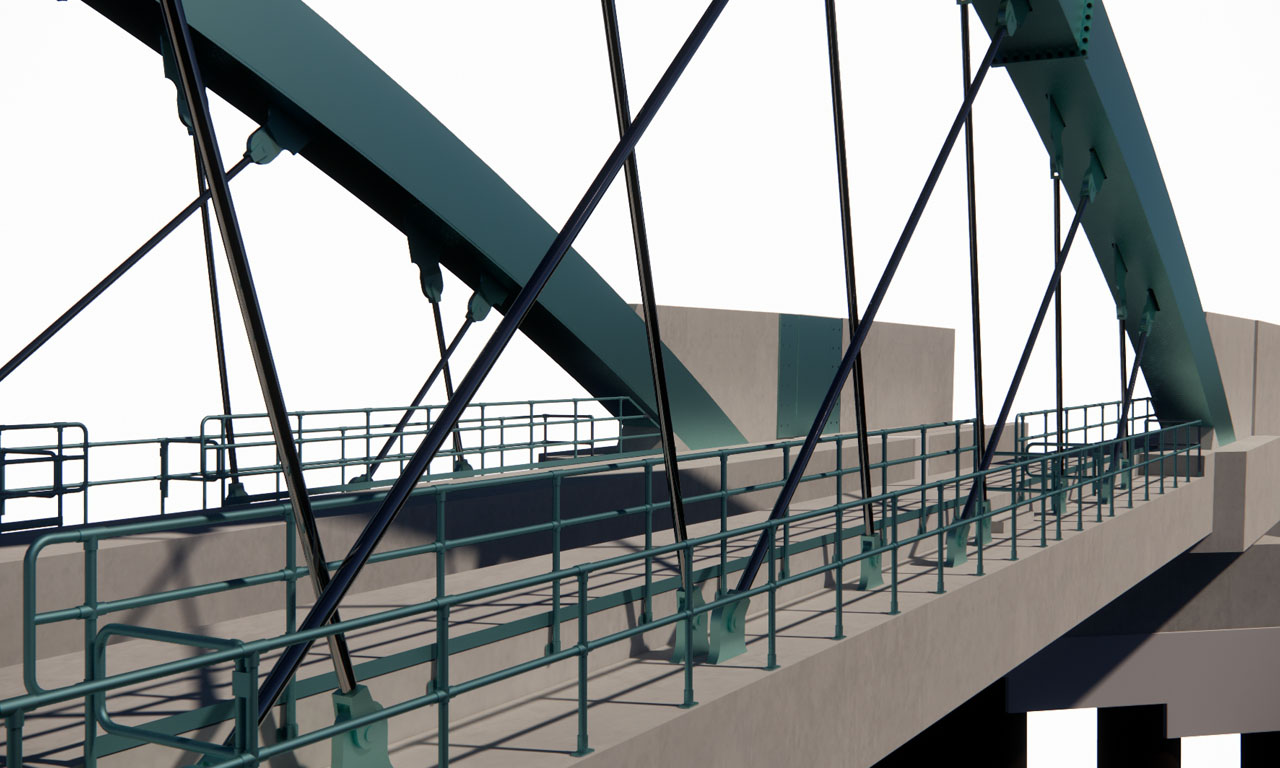
Network arch bridges are part of the family of tied arch bridges known for their long-span and great natural strength. Its special feature is inclined hangers that intersect at least twice. This particular arrangement of hangers results in an extremely rigid and robust structure well suited for long-span road and rail applications.
The network arch bridge is a highly efficient structural form with its main arch members subject predominately to compression with minimal bending, even under asymmetric loading, which means it can span over the entire four-lane carriageway of the Princes Highway without a central pier.
The main arch member consists of prefabricated steel elements whilst the deck acts as a tension tie consisting of post-tensioned concrete. This arrangement may achieve up to 50 per cent less concrete and steel when compared to traditional bridge forms.
On one hand it behaves similar to a truss, in that it is extremely stiff with only small deflections under heavy Australian freight trains. On the other hand, it is also lightweight and therefore very effective at resisting earthquake forces.
This approach with the network arch bridge design and prefabrication minimised the total rail network occupation time to install the bridge structure and related rail infrastructure. This allowed V/Line (the train operator) to continue its regular schedule of passenger rail services with minimal disruption during the construction period.
Great outcomes can be realised for a project when a team is willing to think differently and reimagine engineering, sourcing bespoke solutions to multiple challenges.
The result is a structure for the future due to its strength, constructability and maintainability, while addressing and resolving the site constraints encountered during construction.
Aurecon is working on the Kilmany Highway upgrade project with its roads and bridge engineering design, sustainability, and digital engineering services.
Aurecon is transforming Sydney Harbour, replacing dredging with TBM tunnel engineering to deliver a faster, safer and more sustainable second harbour crossing.
Aurecon's active transport design expertise supports TfNSW to create a seamless, unobtrusive, step-free ramp and cycleway across Sydney Harbour Bridge.