


Stormwater can drive Aotearoa's water reform
Stormwater management reflects the full complexity of water reform. From the UK's experience, five lessons Aotearoa's water sector cannot afford to overlook.


Change your location to view content tailored for you.
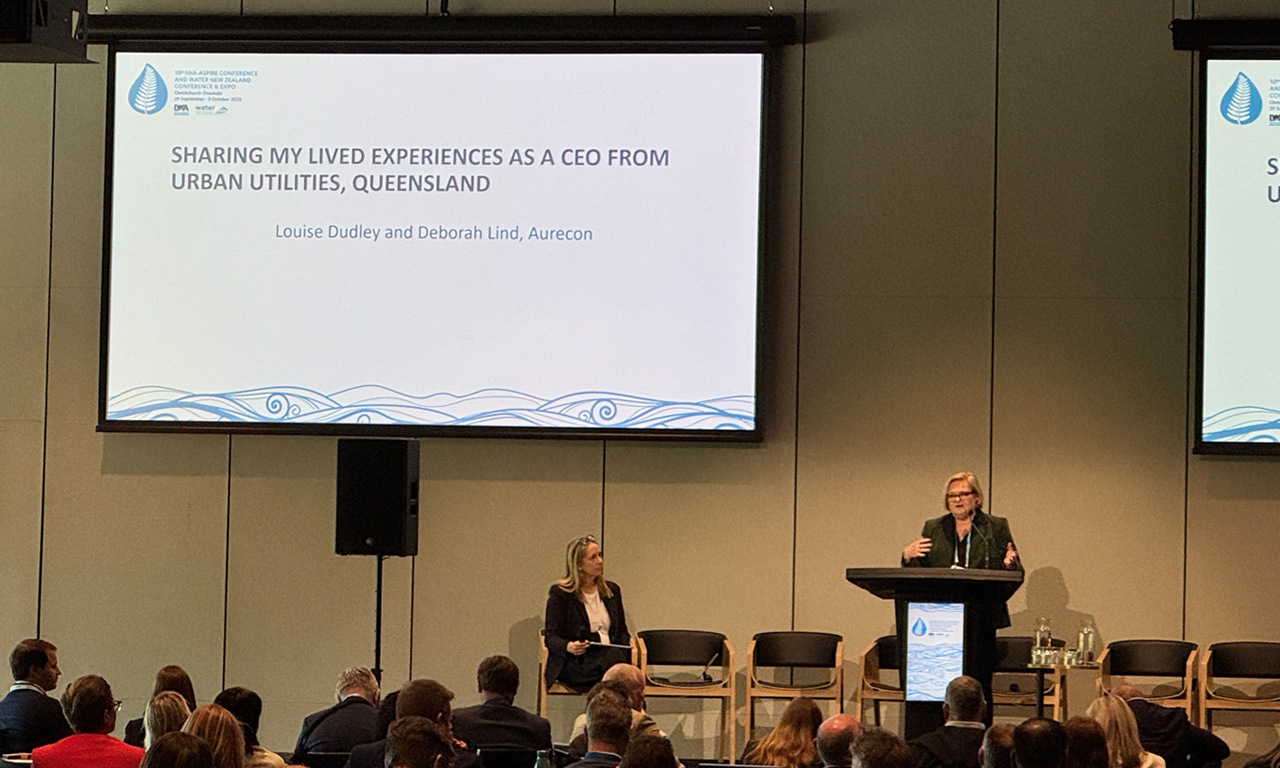
Dr Deborah Lind, Water Industry Leader at Aurecon, speaks to her recent conversation with former CEO of South East Queensland's Urban Utilities water operator, Louise Dudley, who is now a strategic advisor with Aurecon. From water pricing to water management systems, these lessons from Australia can guide water utilities through New Zealand's transition to 'Local Water Done Well'.
When Louise Dudley and I sat down for our pre-Water New Zealand Conference 'Local Water Done Well' session about her water reform experiences as CEO of Urban Utilities, I knew we'd get insightful questions from the audience. What I didn't anticipate was just how revealing those questions might be about where New Zealand's water sector reform is right now, and what's keeping water industry leaders up at night as we navigate our transition to 'Local Water Done Well'.
After our initial introduction, we opened up for questions from the floor, which came thick and fast. The audience was keen to hear from Louise about water utility leadership and the beginning days of establishing a new water entity.
People wanted to know what an ‘early days CEO’ of a water CCO should realistically aim to achieve, given they're typically in the role for a relatively short period. There was interesting tension in these questions – an acknowledgement that a transition CEO has a unique window to make bold calls, while grappling with the reality that you can't transform water services infrastructure on Day One.
Louise's view is that it's important to look at the full picture: where are you heading with water reform, what is your end goal, and set your priorities from there. Don't get too embedded in individual water infrastructure issues at the expense of the greater outcome. Service continuity must be the priority from Day One, along with ensuring good incident management support for water utilities in the event of an emergency.
What struck me was how many questions focused on people and culture in water utilities. These newly combined water organisations will face the challenge of bringing together different workplace cultures, different ways of operating water services, and often different employment terms and conditions. There were pointed questions about whether there would even be roles for everyone in the new water entities, and whether to stick with council shared services or build independent water utility teams.
From Louise's water reform experience, it's the people that make water entities work. Communicating what is happening, how changes are being managed in water services delivery, providing clarity where you can, and being clear when you can't, is essential. This means investing in building the culture of these new water utilities. We're fortunate to work in a water sector with strong commitment to customers and communities and a strong sense of purpose. This purpose is what will carry new water entities through and where you can focus culture development.


The water asset management questions revealed something interesting too. People are anxious about what water infrastructure they're inheriting – the gaps in water asset information, the challenges of transferring water assets, and how you juggle existing water service levels, growth demands, and crisis response all at once.
Louise's experience with the Brisbane floods while still getting Urban Utilities established resonated strongly with our audience. Again, water service continuity was key: getting the best view of your water assets and their condition, understanding the risks to water service delivery, thinking about scenarios, and ensuring you have good incident management and crisis management capability in place for water utilities. This also includes having media, communication, and stakeholder management expertise available to support water operations.
The elephant in the room: water pricing and public perception. Multiple questions circled around Allconnex Water, the South East Queensland water entity that didn't survive and disbanded after community pushback over water pricing. People wanted to know what went wrong with water pricing reform and what Urban Utilities did differently.
From Louise's water reform perspective, there are a couple of things we can learn. Firstly, in most cases with new water entities, customers will be getting a separate water bill for the first time. Naturally this will lead to questions about water service cost, value, and service they can expect, given their water cost had been previously ‘hidden’ in rates payments. The water pricing impact in South East Queensland was significant due to increased drought infrastructure, falling water consumption, removal of subsidies, and increasing cost of capital for water infrastructure.
The lesson for New Zealand water reform: it's absolutely vital to work with water customers on the transition to separate bills, communicate clearly and often about the water pricing changes and what these mean for them. This must be a key work stream in your water entity establishment programme.
Our audience was curious about building water sector relationships effectively. How do you maintain productive partnerships with councils when you're now a separate water entity but still deeply interconnected through urban planning, water infrastructure, and growth?
While all the focus may be on the changes to individual water entities, it's crucial to remember that shareholding councils and water stakeholders are also undergoing these same water reform changes. The teams in these councils also need clear and frequent communication about water services. Louise recommends using both formal governance groups and informal networks to build trust, address water infrastructure concerns promptly, and give genuine input into key water management decisions.
Louise noted that the connection between water entities in South East Queensland and councils was identified early and is governed by specific water legislation. SEQ water entities are required to develop a Netserv Plan outlining each water distributor-retailer's 20-year strategy for delivering water services to support growth, ensure reliable water service, and integrate land-use and water infrastructure planning.
However, this wasn't required from Day One as councils continued as the planning authority for water infrastructure for the first three years. The establishment and communication of this water services plan is at the foundation of the relationship between council and the new water entity.
The questions I found most valuable were those asking Louise to distill her hardest water reform lessons for our New Zealand context. What were the two toughest water sector transition areas? What unexpected benefits emerged from water utility amalgamation?
Louise reflected that the two most key things she wishes they were able to do earlier in water reform were moving to contemporary IT systems from legacy water management systems and implementing water pricing reform, as they inherited over 140 different water tariffs. As well as being the toughest nuts to crack in water reform, these gave most benefit to water consumers and the best outcomes for the water entity.
"Good water management systems and fair water pricing will make a huge difference to long-term success of water utilities."
As we discussed at another point in the water conference: don't overbuild water infrastructure, start with what matters most. Good water management systems and fair water pricing will make a huge difference to long-term success of water utilities. The new water entities in SEQ did drive benefits through consistent water service standards, greater integration between land-use planning and water utilities infrastructure, and stronger community engagement on water matters.
Thinking back on this water reform session, I was struck by how thoughtfully our water sector is approaching a huge challenge. Water industry leaders are eager to get started and looking to know where and how to start water entity transformation. They're keen to take the best of international water reform practice and advice on the most efficient and effective water utility model which will deliver what communities need. That's exactly the mindset we need as we write our water reform story.
This article was first published in Water NZ’s Water Journal, November edition on 16 November, 2025.

Principal, Water – New Zealand

Strategic Advisor – Australia
Stormwater management reflects the full complexity of water reform. From the UK's experience, five lessons Aotearoa's water sector cannot afford to overlook.
The economic case for integrated asset and investment management in New Zealand and how well-governed infrastructure delivers lasting cross-sector value.
As climate risks intensify, New Zealand must adopt nation-wide resilience planning that connects infrastructure, leverages data, and empowers communities.