
Delivering energy infrastructure needs people, capability, and cohesion
Australia's energy transition requires more than technical plans. Discover four ways to build the people, culture and capability to deliver infrastructure at scale.



Change your location to view content tailored for you.
Changing consumer behaviour and movement patterns at retail centres or large entertainment venues and stadiums is nothing new, it’s always happened. In the past, however, decisions were predominantly based on which retail centre offered the products that a consumer needed, and which venue was hosting the show or sport they wanted to see.
With bricks-and-mortar destinations now having to compete with digital experiences and streaming services, consumer expectations have undergone seismic changes over the past few years. For instance, Shopify predicts that the global e-commerce market is expected to reach US 5.55 trillion in 2022 and broadcasting rights have never been more important for sporting organisations.
Consumer expectations are now far beyond solely fair pricing and service. Proactive service and personalised interactions are expected, together with connected, seamless experiences across multiple touchpoints, from choosing a venue, travelling to and from it, and the experience they have on-site.
This is becoming even more pertinent as Australia prepares for major events involving multiple locations and venues, such as the Commonwealth Games in Victoria in 2026, which will introduce a multi-city model with events in Geelong, Bendigo, Ballarat and Gippsland. The Olympic and Paralympic Games in Brisbane in 2032 will also incorporate multiple venues and travel throughout the southeast Queensland region and beyond.
These changing expectations have significant consequences for stadia and retail centre asset operators, needing to entice consumers to in-person experiences. Traffic and transport design to, and at, these venues, plays a significant role in a consumer’s overall experience and their likelihood of returning. Traffic and transport planning has never been more important.
Why? You’re most likely able to recall instances of traffic congestion, a lack of parking, or an over-crowded transport journey to and from a venue and how that made you feel. A consumer’s experience accumulates from the moment they leave home to the time they return, and everything in between. Asset operators need door-to-door experiences to be memorable, positive, safe, sustainable and repeatable.
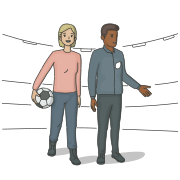
Traffic and transport design for venues can contribute to door-to-door experiences that are safe, easy, positive and memorable, by following Aurecon’s 5E consumer journey mapping methodology.

How the consumer is attracted to and informed about the venue
How the consumer begins dealing with the venue
The experience at the venue
What the consumer leaves with the venue

How the consumer feels encouraged to return
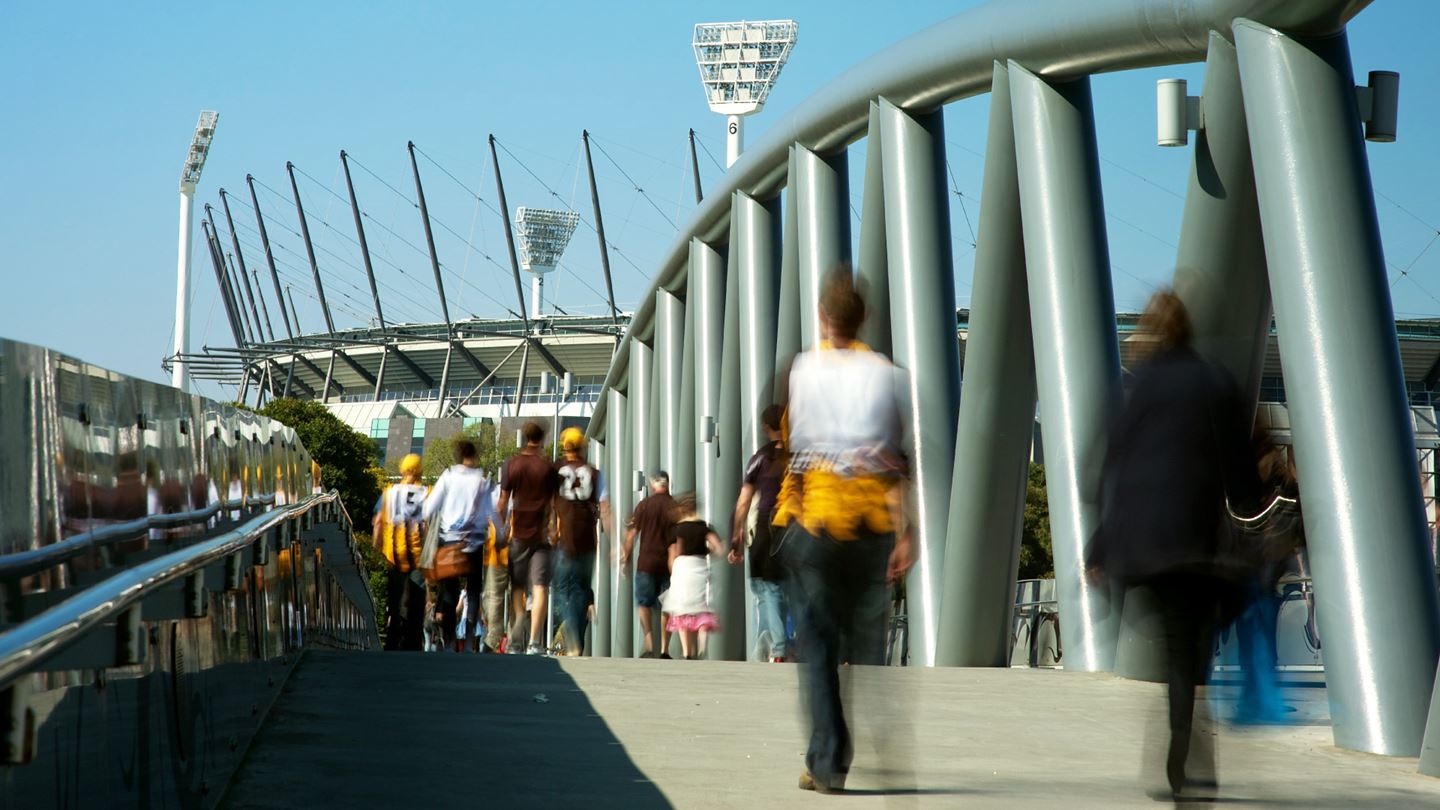
In most Australian cities, retail activity is a major component of both weekday and weekend travel, whereas stadia visits are most likely at the weekend. A current limitation of this travel is that the mass convergence of thousands of spectators to stadia precincts, and their dispersal after the game, can generate heavy traffic flows, and parking and congestion problems in surrounding streets.
Likewise, peak hours at shopping centres increase the volume of vehicles, which can lead to impatient motorists who may disregard general road etiquette, creating safety risks and reducing the critical experiences that retail and stadium operators want to maximise.
Looking ahead, there are other challenges that asset operators will face: changes to car parking with autonomous transport, emergent micro-mobility transport technology, increased ride-sharing and public transport options, and personalised mapping services.
The 5E’s consumer journey mapping methodology converts these challenges into opportunities to undertake effective and efficient precinct traffic and transport planning, implementation and continual improvement.
It’s important to note that not all these phases are under the control of a stadium operator or retail asset owner. Thus, collaboration with other parties, such as local and state governments, public transport operators, adjacent venues and emergency services, is important to influence a successful series of transport connection solutions.
Incorporating flexibility and adaptability in design requires particular thought, experience and eminence in the project design process. To be able to adapt the design in real-time needs a reliable supply of data as well as the willingness and ability to make changes where it is demanded by the data.
In the past, planners used historical information, physical observation, feedback and car counting to determine movement patterns. Now, real-time information is constantly streaming from a range of sources and understanding this data in the context of road and transport connections is not only important, but also challenging.
The benefit of ample data is that digital platforms can undertake a range of scenario planning options to model a consumer’s end-to-end journey based on today’s movement patterns, while also making provision for anticipated future movement patterns.
This is particularly relevant when exploring the interconnections between different modes of transport, such as accommodating autonomous vehicles and increased micro-mobility movements, to develop a robust layout of routes.
Being able to mine and share data to improve this interface is a huge opportunity. Another key aspect of having ample data is knowing how to communicate it to help consumers. Data needs to be clearly conveyed and provided in real-time so that consumers can use the information to make smart decisions and to keep improving their experience throughout the 5E stages.
Key data can also be shared with public transport agencies to collectively pivot the function of public transport and infrastructure to adapt to a precinct’s changing nature and that of its surrounds. For example, the use of data may be able to direct emergency service vehicles through traffic and guide other patrons away from emergencies in real-time.
Conventional approaches to transport and traffic planning are being challenged to broaden the remit to appraising the precinct performance of stadia or retail centres. There is a need to consider the whole precinct’s land uses through the lens of accessibility, flexibility, safety and amenity. We need to model and design for the consumer experience and ensure it matches expectations.
We need to design transport infrastructure to be able to be adapted over time as experiences, or expectations, change.
Such examples are changes according to seasonality, such as Christmas shopping (at retail) or a sporting finals series (at stadia), in turn, changing demand. These complex and evolving interactions can often be considered too late in a precinct’s development. Asset operators need multiple plans and contingencies to adapt in real time.
Bespoke transport and land use scenarios developed for individual precincts will identify constraints, as well as opportunities, to serve both consumers and asset operators.
As an example, venues are starting to plan for the accommodation of short-term holding areas for autonomous vehicles. These areas don’t necessarily need to be immediately adjacent to a stadium or retail centre but will probably need to be within a short transit for rapid arrival on call.
This opens the opportunity to reduce on-site parking in favour of other revenue or leisure experiences, consequently enabling the expansion of precincts around venues, while smart digital solutions could ensure rapid summoning of autonomous vehicles for a swift and easy departure.
From a traffic and transport planning and design perspective, applying a precinct lens is designing for the activation of the surrounding precinct to attract patrons to bars, eateries and other experiences that extend a person’s interest and avoids surges in congestion (traffic or pedestrian). The graphic below details the complex and evolving interactions of traffic and transport infrastructure with stadia and retail precincts.
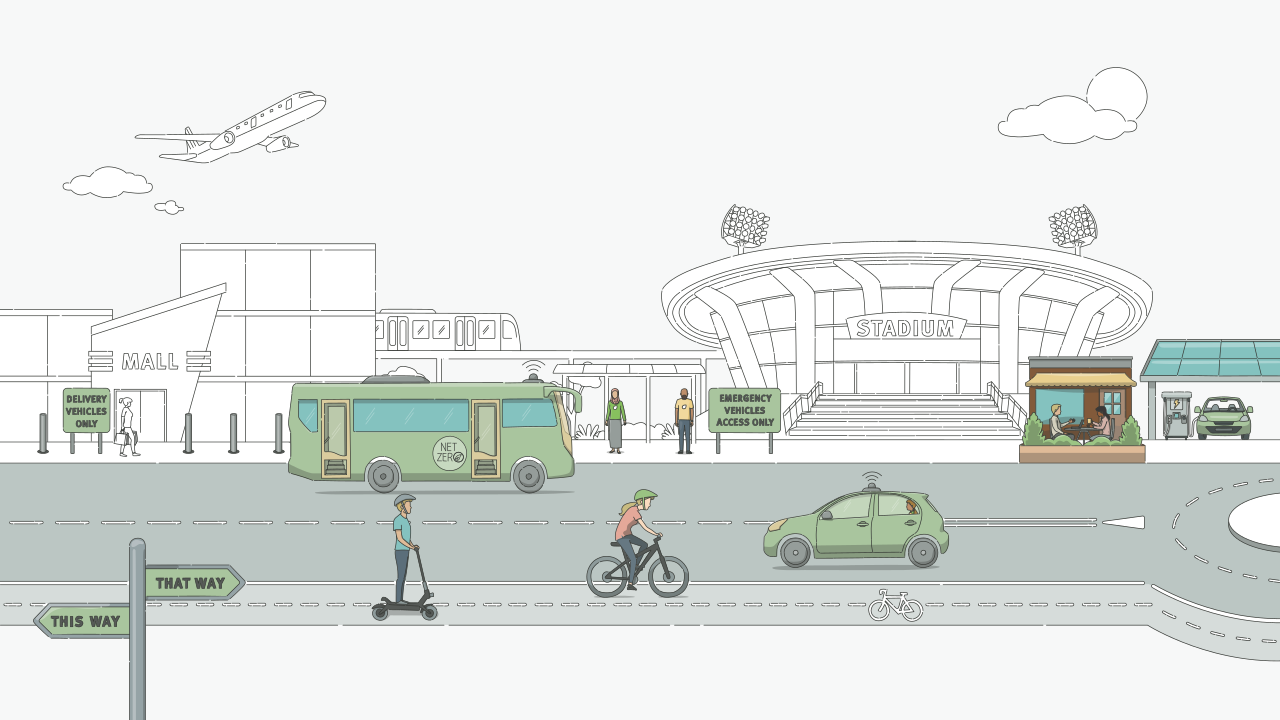

Passenger pick up and drop off
Measures to manage the modes of taxis, ride-share vehicles, buses and general passenger vehicles

Car parking and associated access
Assessment needs and movement patterns of the car park, and the options for 'park and ride'

Wayfinding and signage
Measures within the boundaries of the site, but that also connect to the broader precinct

Emergency vehicle access
Access at all times for emergency vehicles or public egress

Delivery vehicles
Out of public sight access that doesn’t interfere with public access

Arterial roads access management
Clear road networks surrounding the venue or facility

Integration with public, active and micro-mobility transport
'Park and ride options', minimising congestion, timetable planning, synchronisation

Safety
Get people as close as possible, safely, while still providing visual and public amenity

Security
Bigger facilities equal bigger crowds equals more security aspects to ensure the safety of all patrons and attendees

Social distancing and space interaction
Vaccine passport, health check or conversely just design for social distancing and space interaction

Data and information
Information share with customers, delivery drop-offs and community

Precinct activation
Engaging activations around the venue, and connecting with the venue
Figure 2: Complex and evolving interactions of traffic and transport infrastructure with stadia and retail precincts. Hover over the icons to learn more.
Clear road networks surrounding the venue or facility
Information share with customers, delivery drop-offs and community
Out of public sight access that doesn’t interfere with public access
Vaccine passport, health check or conversely just design for social distancing and space interaction
Access at all times for emergency vehicles or public egress
'Park and ride options', minimising congestion, timetable planning, synchronisation
Assessment needs and movement patterns of the car park, and the options for 'park and ride'
Measures to manage the modes of taxis, ride-share vehicles, buses and general passenger vehicles
Engaging activations around the venue, and connecting with the venue
Get people as close as possible, safely, while still providing visual and public amenity
Bigger facilities equal bigger crowds equals more security aspects to ensure the safety of all patrons and attendees
Measures within the boundaries of the site, but that also connect to the broader precinct
Traffic and transport around and within a venue’s precinct is tremendously complex in terms of functionality. Diverse operations and activities occur concurrently, making public amenity and safety paramount, but also challenging to design and manage.
As a result, safety and security should be critical considerations at the earliest stages of traffic and transport planning design, following an approach that ensures flexibility to allow for different future security circumstances. This includes the ability to integrate security and access control with a smart building system, change entry and exit points, and share cross-platform data for a fast response to incidents or to prevent unauthorised entry.
Incorporating safety in transportation planning helps identify, analyse, and develop solutions to real, potential or perceived hazards, now and into the future. It also prioritises the needs of consumers wanting places and experiences that cater for all different modes of mobility and types of memories.
Looking forward, human-centred and experience-based traffic and transport planning is one element that will entice consumers back to precincts with the assurance of a positive experience from door-to-door.
It’s worth noting that some precincts and associated infrastructure are considered to be the final venue, rather than a standalone retail venue or stadium, which is why the data on user expectations and uses is important in understanding, and adapting for, different consumer’s journeys and experiences.
Keeping networks that are integrated and factored into road and transport connections will enhance the ‘had to be there’ experience that can’t be replicated at home. This may come from an interaction with thousands of like-minded sports fans or spending time happily with a group of friends and families at a retail venue. Efficient and easy access is a key ingredient in the overall experience.
Understanding transport movements and patterns and risk factors for venues will enable provision to be made for flexible traffic and transport planning for the safe and secure movement of consumers for many years to come. We simply must get it right.

Discipline Leader, Technical Advisory, WA & NT – Australia

Principal, Buildings Structures – VIC & SA, Australia
Australia's energy transition requires more than technical plans. Discover four ways to build the people, culture and capability to deliver infrastructure at scale.
Aurecon’s ecology and biodiversity expert shares how to achieve timely project approvals, what regulators want, and how to navigate regulatory changes.
Aurecon shares insights on how renewable project delivery models are evolving to better manage risk and deliver long-term value through project partnerships.