How will Asia connect billions through resilient transport systems?
Asia’s transport networks must evolve to deliver sustainable, connected mobility. Learn how Aurecon is shaping Asia with innovative infrastructure solutions.


Change your location to view content tailored for you.
With more than half of the world’s population living in urban areas and increasingly dependent on artificial light, light pollution has become a growing global environmental concern. Its negative impact on economies, human health, wildlife and the night sky is drawing the attention of governments and policymakers.
Farida Zohair, Lighting Designer at Aurecon shares more about what light pollution is, its implications, and how the public, governments and lighting designers can play an active role in lighting our shared spaces and make a positive impact on the community.
Light pollution, which refers to the inappropriate or excessive use of artificial light, is one of the most pervasive environmental disruptions. More than 80 per cent of the world’s population experience light-polluted night skies[1]. The Milky Way’s luminous glow is also not apparent to more than a third of humanity.
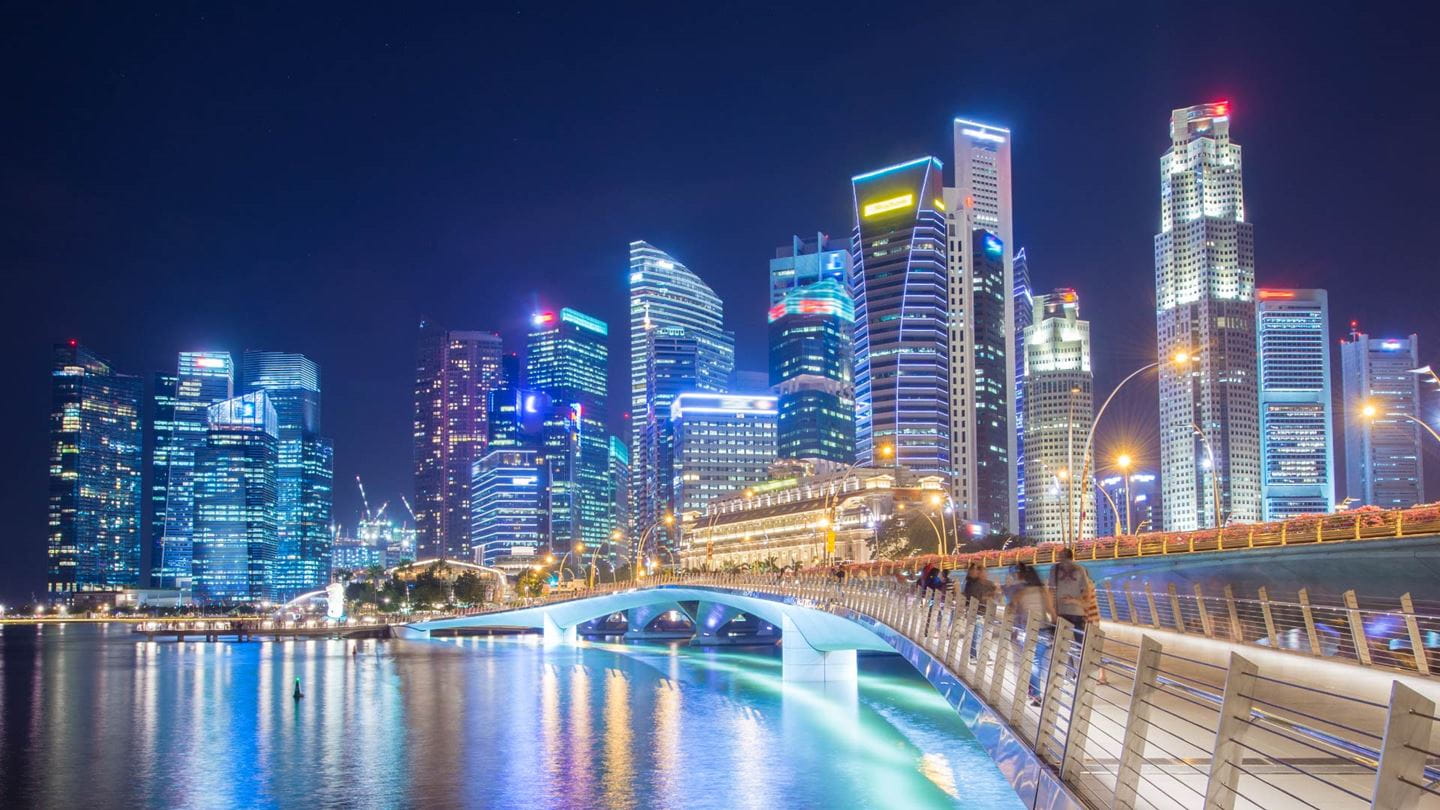
In 2016, Singapore was named the country with the worst light pollution globally at a level of 100 per cent by the Light Pollution Science and Technology Institute. Some of the biggest sources of light pollution within the country include container terminals and the Central Business District.
It was also observed that many areas in the city were brightly lit late into the evenings even when there were no visible pedestrians in sight. Light fixtures used along Orchard Road and Clarke Quay, two busy shopping and dining districts, were unshielded, thus causing discomfort glare – where light sources have a higher luminance that the eyes can adapt to, and light trespass. This begs the question –
Are Singaporeans and to a larger extent, city dwellers aware that excess electric light generates heat and contributes to climate change?
In several in-house surveys conducted about the awareness of light pollution in Singapore, at least two thirds of the 100 respondents (a mix of the public and individuals from the lighting industry), were aware of light pollution in the country. Over 45 per cent felt Singapore had more lights than necessary and at least 91 per cent believed the excessive use of electric lighting had negative effects on the behaviour of animals.
At least 77 per cent of industry professionals such as designers, manufacturers and educators felt that glare caused by electric lights spilling into their windows affected their quality of sleep and almost 82 per cent were receptive to using a modelling software to eliminate light pollution during the design stage of projects.
Figure 1 shows a survey of different sites highlighting the pervasiveness of light pollution in Singapore. All images were taken on the same night and there were no visible pedestrians or visitors during this time period. This research study was conducted during Covid period.


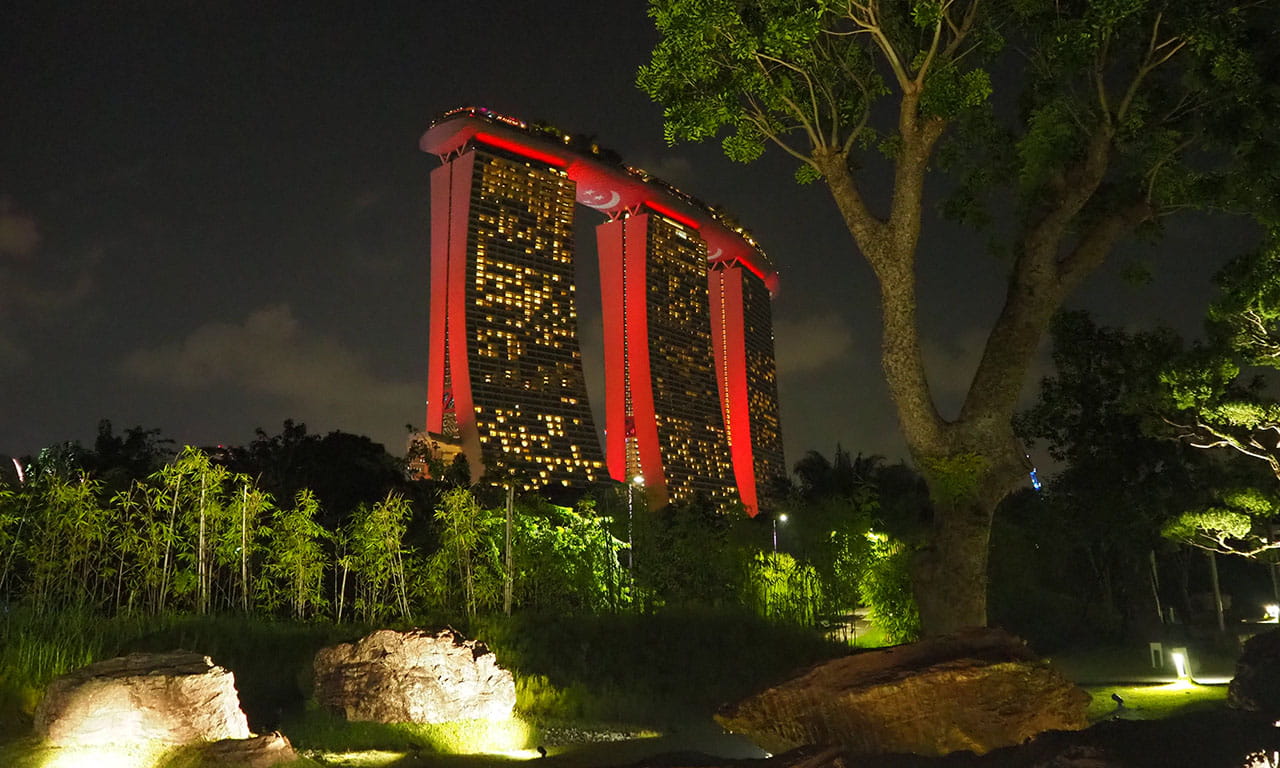
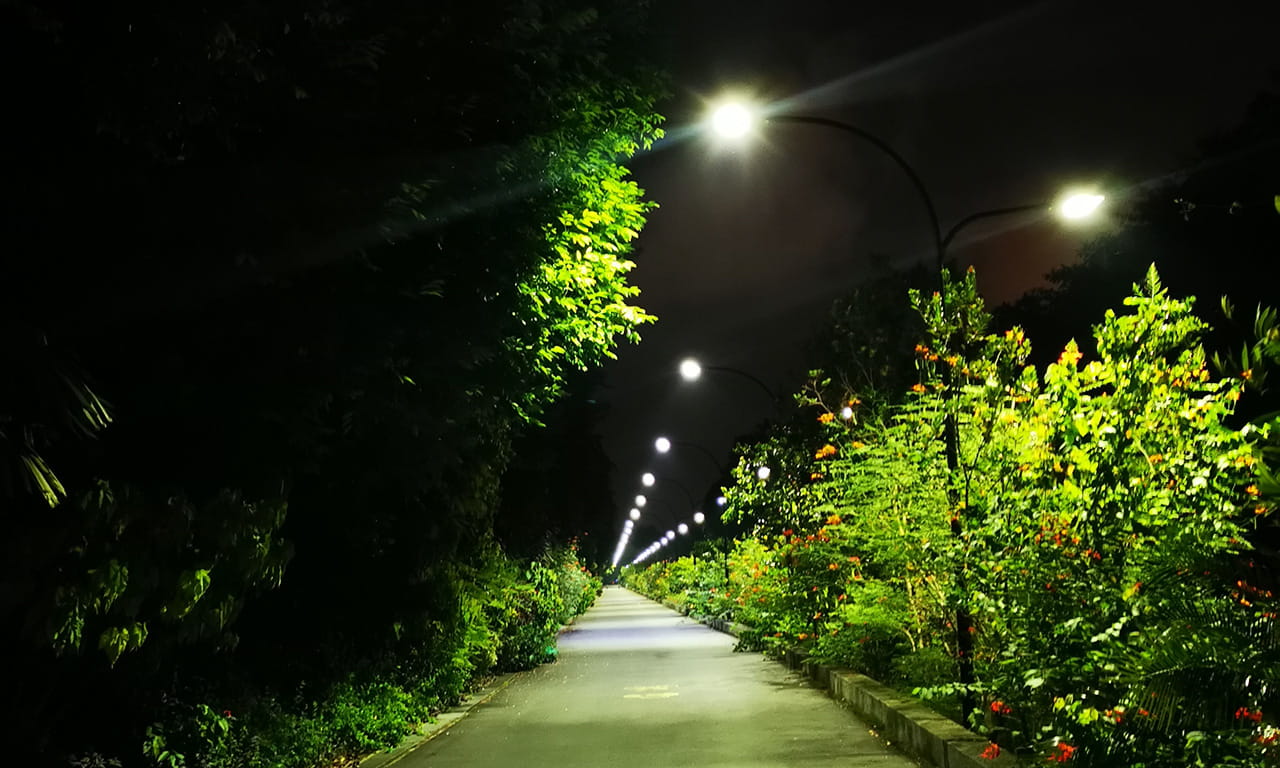
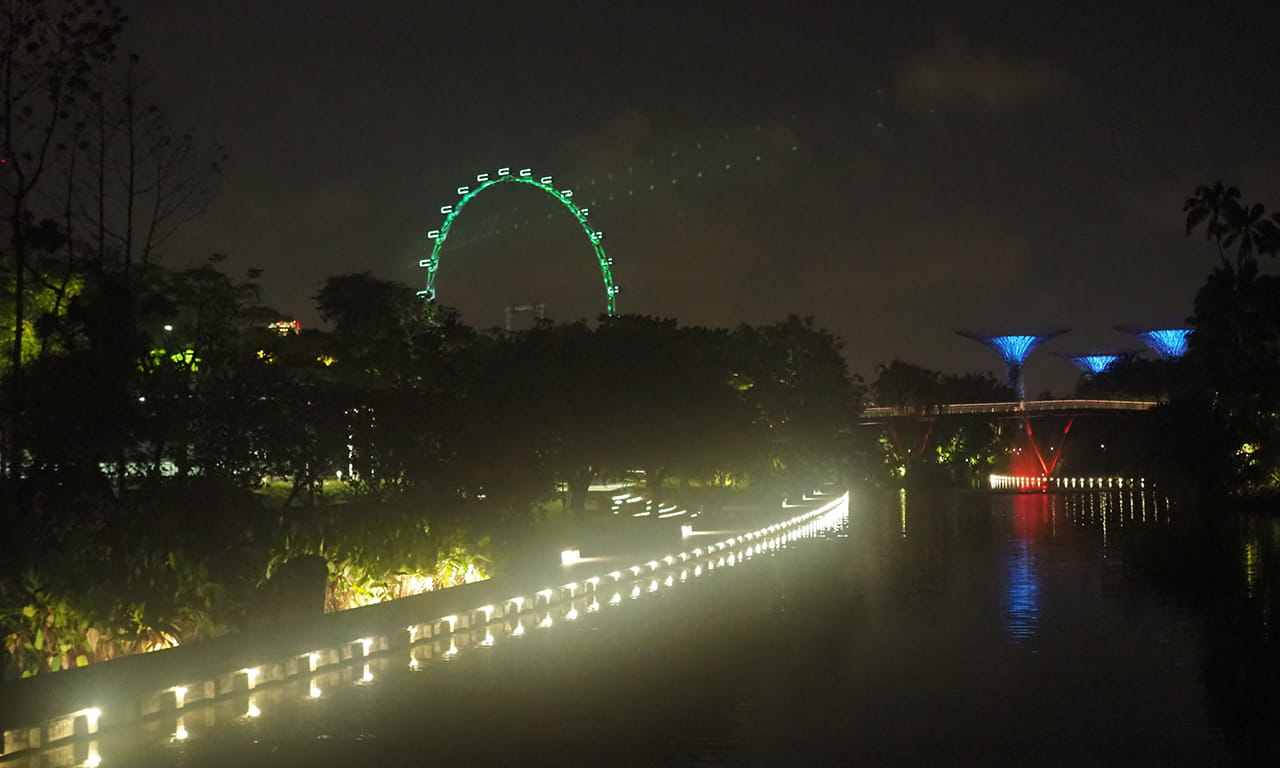
Light pollution manifests itself in the following forms:
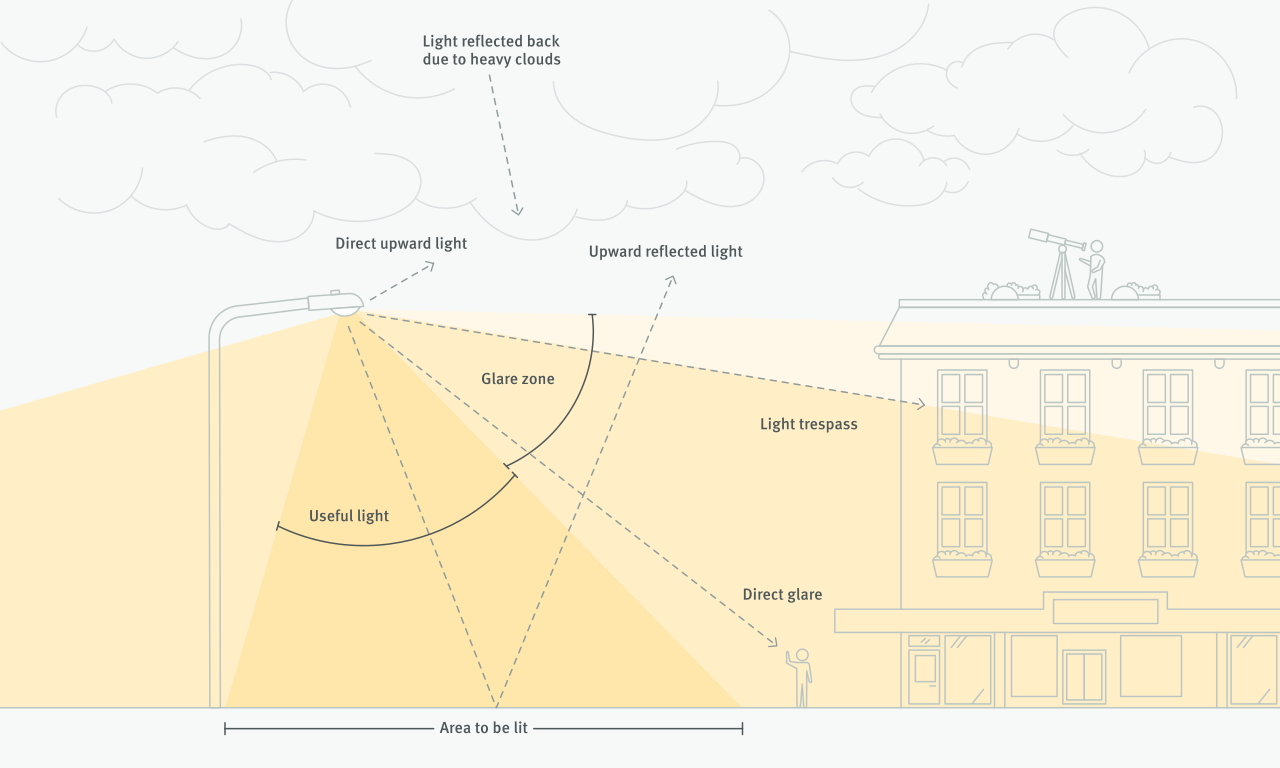
Light trespass, also known as spill lighting, occurs when a light fixture casts illumination beyond its intended area of influence, and commonly refers to uncontrolled lighting affecting residences and wildlife habitations. This is common in Singapore and Hong Kong due to numerous streetlights and light fixtures in commercial and residential areas.
Commonly associated with unshielded light fittings, there are two types of glare: disability glare and discomfort glare. The difference between both types of glare is that the former can be dangerous causing the loss of contrast and visual acuity, which can lead to temporary blinding effects. For instance, disability glare can be a temporary loss of vision by approaching headlights from a vehicle when driving on a highway. Discomfort glare, on the other hand, creates an uncomfortable environment but does not necessarily impede vision or the ability to perform a task. An example of this can be overly bright streetlamps along the street.
Skyglow occurs from both natural and human-made sources. Visible in cities around the world, human-made skyglow is largely caused by poorly shielded or controlled light that is dispersed upward into the atmosphere. In cities like Sydney, Singapore and New York, the night sky is almost invisible to the naked eye. Skyglow is closely related to light clutter, which refers to bright, confusing, and excessive groups of light sources in an area causing over-illumination that reduces the ability to view the night sky.
All living organisms adhere to a circadian rhythm, a system that governs our sleep-wake cycles. For humans, our melatonin levels rise 10-fold in the evenings to promote sleep. Studies have shown that exposure to light during the night can cause sleep deprivation, fatigue, headaches, stress, and other health-related issues. Similarly, plants and animals also rely on the Earth’s cycle of light and dark to govern their behaviours such as reproduction, nourishment, sleep, and protection from predators.
The excessive use of electric light at night has negative and, in some cases, deadly effects on animals.
City lights have affected birds that migrate and hunt in the moonlight, causing them to wander off course and into cities. Every year, millions of birds die as they collide into illuminated towers or mistakenly migrate either too early or too late, missing ideal climate conditions.
In a 2016 study by scientists in the United Kingdom, four species of trees were observed. It was found that on average, electric light caused trees to bud more than seven days earlier[2] as compared to other trees in their naturally occurring counterparts. This study bridges the relationship between the effects of excessive light and the timing when trees produce buds, thereby suggesting that light pollution is possibly causing spring to come sooner than it should. As a result, the trees’ earlier production of buds will have a knock-on effect on the animals and insects whose lifecycles are synchronised with the trees.
With increased artificial light, additional excess heat is also being generated, which further contributes to climate change[2].
Given the severity and prevalence of light pollution, what can the public, governments and industry professionals do to reverse this trend? Fortunately, the solution is relatively easy.
At the individual level, one can adopt the following actions:On a global scale, cities have started to adopt legislation to control outdoor light. Canada introduced bird-friendly lighting (and construction) laws in the mid-1990s. Large urban cities such as Toronto, Washington D.C. and New York actively participate in lights out campaigns during peak migration seasons.
Countries like Spain and the Netherlands have also begun experimenting with motion-activated streetlights. As part of the Singapore Green Plan, authorities are reviewing the transformation of its current lighting assets, allowing the use of only authority-approved fixtures, and have set in place industry guidelines. Beyond legislation and policymaking, public education through workshops and lectures are also great avenues to build awareness within the community.
Here are some steps architects, designers, lighting designers and asset owners should take to reduce light pollution as they plan for lighting solutions on their projects:
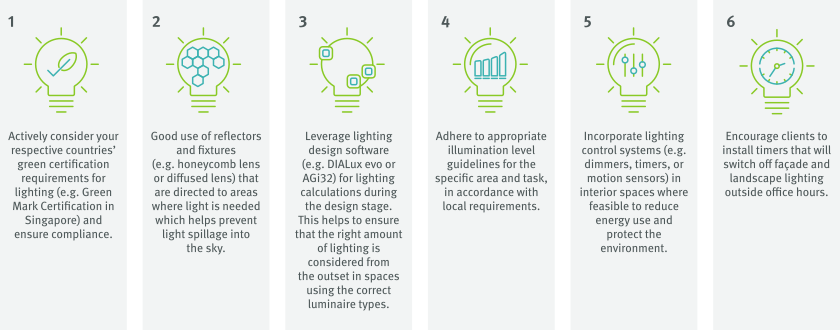
Humans and animals have a longstanding connection with the night sky. The solution to light pollution does not necessarily mean a dim future. From the outset, qualified lighting practitioners should be engaged to undertake all aspects of lighting design. Collective efforts to decrease the excessive use of electric lights, review existing lighting assets and leverage software to create holistic built environment designs with sustainable lighting solutions are key steps in the right direction.
[1] Falchi, F., Cinzano, P., Duriscoe, D., Kyba, C. C.M., Elvidge, C.D., Baugh, K., Portnov, B. A., Rybnikova, N.A., & Furgoni, R. (2016). The new world atlas of artificial night sky brightness. Science Advances, 2(6).
[2] Zachos, E. (2016). Too Much Light at Night Causes Spring to Come Early. National Geographic, (6).
Contributing author & reviewer: Farida Zohair
Asia’s transport networks must evolve to deliver sustainable, connected mobility. Learn how Aurecon is shaping Asia with innovative infrastructure solutions.
Numerical modelling enables coastal cities such as Singapore to develop targeted mitigation strategies for sustainable, climate-resilient coastal infrastructure.
Exploring how floating solar technology offers Southeast Asia a viable solution for meeting renewable energy targets despite land constraints.