




Courtney Lock: Hi, I’m Courtney Lock and welcome to this episode of Aurecon’s Engineering Reimagined podcast. What does it take to lead when the world is changing faster than your experience can keep up?
On this episode of Engineering Reimagined, we’re talking leadership in an age of relentless change with someone who has spent decades at the sharp end of transformation.
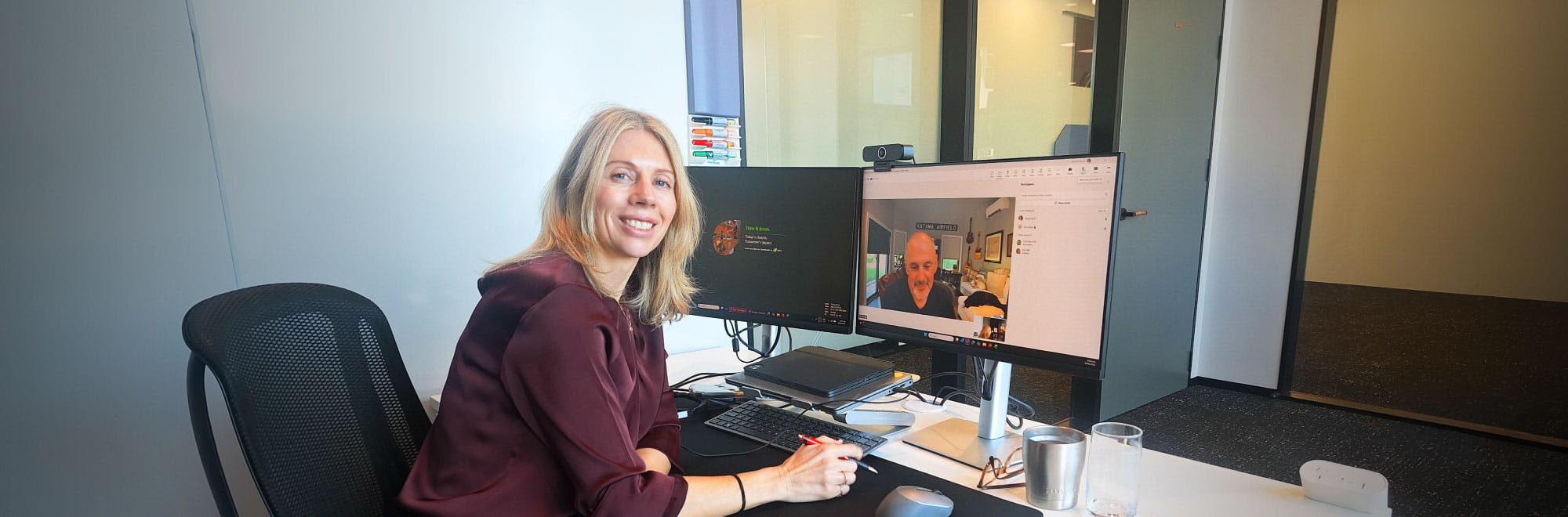
Aurecon’s Chief Executive for New Zealand Tracey Ryan speaks to experienced business leader and executive coach Ron Boire, who’s led some of the world’s biggest brands including Barnes & Noble and Sears Canada. Today, Ron works with CEOs and senior leaders across industries to navigate change, build high-performing teams and rethink what leadership really means.
From his 51% rule – assuming you might be wrong – to why vulnerability and trust can be a leader’s greatest strengths, Ron challenges some deeply held ideas about power, performance and success.
He also shares what it means to lead “at the edge” – staying close to clients and customers, technology and the people doing the work.
Let’s get into it.
+++++
Tracey Ryan: Kia ora, I'm really pleased to be joined this morning. Well, this morning my time in Aotearoa by Ron Boire, who's in New York, and New York day behind us and in the afternoon. Welcome, Ron.
Ron Boire: Oh, it's great to be here, Tracey. I'm really excited to have this conversation with you.
Tracey Ryan: You’ve had an incredible career. You’ve held a lot of very senior positions, like the CEO of Barnes and Noble, and brands like Toys R Us and Best Buy and Sony. And now you're running your own executive consultant business, but from your perspective and from your leadership experience, what do you think are the most significant forces reshaping businesses right now? And which do you that leaders are still underestimating because we hear a lot of noise and we all read a lot of stuff. What do you think we should be really honing in on?
Ron Boire: The obvious one is artificial intelligence, automation, big data, everything that's happening there. It's frequently shocking to me that the lack of awareness that a lot of leaders have around the topic. I would say in virtually every conversation I have with leaders today. There's a conversation about AI, how's it going to affect my business? How's it going to affect our industry and what do I do about it? And there's also this lack of understanding. I teach at Columbia Business School with Rita McGrath and her legendary program there. And I teach there four or five times a year and the class we taught in March. I asked the class at one point, I said, who in the classes heard of OpenClaw? One hand went up. There's 35 leaders from around the world. And at that time, OpenClaw was, the first agentic AI software to kind of hit the market.
But here you got 35 leaders and one out of 35 understands what the technology is and the implications of it, which is a technology you can set off on a task and it can read your emails. I have one that reads my emails and says, what did I not follow up on yesterday? And it gives me this whole critical list of all the things I didn't do and suggest things that I should do. That leads to, what do I do about it? The thing to do about it is get closer and closer to the edge, get closer to the issue, get closer to the people, get closer to the front line. The leaders, the CEOs that are getting close to the edge that are going out and being in the market and being where the value is being added and the leaders that are getting to the edges and understanding the customers and understanding the technology, I think are the leaders are going to be successful and the ones that are curious. You want to understand what's really happening in the world of tech and geopolitically and are open to learning are going to be the ones that win and the ones that don't will be the one that lose. I think that's what we're seeing.
Tracey Ryan: How do you see that role of senior leaders and CEs changing? What do you see now in terms of the leadership attributes and qualities that are needed, but also how do people lean into those complexities around that?
Ron Boire: Number one is going to be this thing around curiosity and really trying to understand what's changing and really trying create environments that are going to empower their people to embrace change and to try new ways of doing things. I mean all of us, Tracy, you got to where you got to because you're right more than you're wrong. Right? And all of leaders are like that. When you develop throughout your career, you prove yourself, prove yourself, prove yourself. And what happens is the further you get away from the action, the less you actually know and the less you actually can intuit what's going on. So you have to spend a lot more time assuming that you don't have the information and asking the questions. I call it the 51% rule. In a conversation, a leader has to assume they're 51% wrong and like really be trying to pull out of the other person. Like what, what do they know that I don't know? Where am I wrong? And listen, it's difficult because again, people don't get to be CEOs or business leaders by being wrong. So you're in a meeting and someone's talking, and in your head, you go like, I know the answer. Why do they keep talking? I understand what the problem is. I know the answer, but what if you don't ask the right question?
Tracey Ryan: A lot of your experience has been in that retail businesses which live or die you know by the understanding of their customers. And for us, I suppose, it's the same thing, you know we work with our clients. What lessons did you get from the customer facing industries do you think that organisations serving government, which infrastructure owners or large enterprises could better apply to understand and anticipate those client needs?
Ron Boire: One of the great things about retail is you can't hide from the customer. The customer votes every single day and every hour of the day. And in my retail experience, it sounds kind of bizarre to people that are in the service businesses, but if you're in retail, on your iPhone or back in the early days on your BlackBerry, once an hour you get a number. And that number told you how much sales you had in the last hour. And then it would show you, well, last year on this day, at noon, we were at X and today we're at Y. So you know whether you're winning in real time. For an advisory firm, paying attention to not just that you won or lost a deal, but why you won or lost a deal, the real why, like what really happened in those interactions in those deals and how you retain a customer and truly deeply understanding that customer and getting super close to them is critically important. Figuring out what are the quick feedback loops that you can get from your customer, I think is really important. Now I do bespoke consulting and I get instant feedback from my customers all the time and I'm constantly looking for those little cues and like, am I going in the right direction? Did that add value? Great companies are aligned to spot client behaviour and shifts in clients and react to them. And the other thing I would say is giving your frontline people the autonomy to adjust in real time. If you go into a great retail store and you say, I've got a problem, they don't go, hold on a second, let me call the CEO. They solve the problem, right? They fix the problem. They have a certain amount of autonomy to take care of the problem and pushing autonomy as close as you can to the customer and to the value is an important lesson from retail.
Tracey Ryan: There's a lot happening in the world, a lot of complexities and changes and AI. What distinguishes organisations that can successfully adapt from those that struggle or fail to a certain point. What do you think are some of the attributes and things that people need to really think about or what holds businesses back?
Ron Boire: I think about being honest about the reality you're in and a lot of it is about creating enough psychological safety, I call it the truth. So here's the truth, Tracy, like you go out, you do your job. Here’s what you're allowed to do. Here's what you’re not allowed to. Here's how I feel about that performance. But I think that a lot of organisations under stress, I’ve seen this over and over again, organisations under stress, all of a sudden it becomes legal and finance running the company instead of the business people who are in the company. It becomes Dr No, instead of Mr Yes. I say to the people I work with all the time, and you can go into the bathroom, close the door, you don't lie to yourself, your dog or your doctor. So first, here's the truth. Here's like what I really think and believe. And then treat people with the caring and the empowerment that you would want to be treated with. Like if you're running a business, you want to be allowed to run that business, right? If somebody's running a department, they want to be allowed run that department and they want to be allowed win and to lose and to make mistakes and get feedback. And not have to worry about, can I feed my family? I've gone into a lot of really tough transformational situations. And one of the first things I've always done is make sure that everybody that works for me, A, knows these rules. Like, I'm just going to be really honest to you. And if I'm criticising an action you took or a decision, I'm considering that action, not you, right? Like this thing happened, it didn't work, what did we learn from it?
Tracey Ryan: What do leaders need to think about to retain high performing people, you know engaged, but also that attraction. What do you think that leaders need to be doing differently in that space? Because talent expectation has shifted dramatically.
Ron Boire: I think there's an old expression that people join companies and leave leaders. So on the outside, I'm looking in at this company and this company looks like a great company and I get in and I'm working for a jerk.
Tracey Ryan: So the fundamentals of that hasn't changed?
Ron Boire: No, I think if anything, it’s been amplified. Leaders that give their team agency, they give them the truth. They let them see the purpose of the company, the vision for the company and truly be part of it and they become more powerful today.
Tracey Ryan: You've worked around the world. You've worked with some massive organisations. You've got to know New Zealand quite well and with some of the work that you've done with Business New Zealand. How should leaders balance to kind of stay globally connected, but also there's that kind of local relevance we're probably seeing that shift of global organisations, and how do they work well in local context?
Ron Boire: It's consistent principles and standards, flexibility, and how they're expressed locally, right? So if you think about how Apple makes a product, runs their business, but then how they go to market in Australia or New Zealand, it's different than how they go to the market in France. How you do business in Singapore or Hong Kong is going to be different than how you do business and Sydney or Auckland. The foundation of what are your principles and your standards can't change. The standards around transparency and accountability and autonomy and agency are probably the same in every market. They have to be the same. We're kind of going through this de-globalisation phase. It's all about localising now. New Zealand, Australia, that whole region has such incredible resources in terms of just the culture of those countries, but also the talent within them and the passion that those people have for their country. Australians love their country. New Zealanders love their country. And because of that, there's a lot for a global company to leverage. Leveraging that local passion for their growth, that's a superpower.
Tracey Ryan: You talk a lot about people leading with purpose, their why, and it's not just a business why, it's their true inner story why. What capabilities or personal attributes are you helping senior leaders develop now that you think weren't as critical 10 years ago? What do you think now some of the coaching work you're doing with some of these senior leaders to come up to the forefront not only now, but the leaders into the future.
Ron Boire: I think the gap between external success and internal clarity is a big one. I'll use myself as a great example. I did a lot of transformations and I like to say some of them magic and some of them tragic. I got so wrapped up in the external, like what are the numbers? And what do people say? And how is this business growing? Is it being successful? That I lost track of the things that really mattered. I frequently tell people the best thing that ever happened to me was COVID. Because COVID made me stop and it made me go. What are you doing? Like, why are you doing this? I went to a globally renowned business school and not one time did anyone ever talk to me about taking care of myself, like getting myself healthy, physically, mentally, emotionally healthy so that my team could be healthy so my company could be healthy. And when I looked back on my career and said, listen, when was I really just killing it? When was it just amazing? And it was always the case that I was healthy, especially emotionally healthy. Like I knew what I was doing and why I was doing it. My family was in a good shape, my team was in a good shape and we just killed it. And when I wasn't right, no matter what you do, it didn't work and because you become toxic. So getting yourself healthy and surrounding yourself with people that you can truly trust to like help you execute and truly trust to be part of a team. The other thing is that it's never been more clear to me that the isolation at the top of any business unit is a real problem and what creates that isolation is of the obvious power the person who tops most powerful and therefore most dangerous.
Tracey Ryan: They're lonely roles, Ron, right?
Ron Boire: Yeah. It is an extremely lonely job to be the CEO of a company or to run a company or to even running a department. I had a boss tell me early in my career, when I was a young vice president. He said, you know Ron, you know what your employees talk about at night? I go, how would I know that? Like, that's a ridiculous question. He goes, no, it's a serious question. What do you think they talk about? I go, I don't know, and he said, you. They talk about you, they talk about this is what he said and this is what he did and this what it means. And he goes they're never going to come back to you and say, this is when I'm afraid of, and I don't know. And every day, the leader's got to make the decision to be vulnerable, to say, I don't know. The most powerful words I've ever heard from anybody I’ve ever worked with is, I don't know.
Tracey Ryan: Do you think leaders today are vulnerable enough?
Ron Boire: No, no. I think when you get to that level, you are at almost any level, right? As you're coming up the company, you want to be right, right. So we're descendants of predators, right, you're alive because your ancestors didn't get eaten, right so you're inherently competitive. So being vulnerable and being willing to say like, I don't know, I'm not sure. It's not something leaders do well, but in your team, when you say to your team like, listen, I don't really know, let's brainstorm this. You know what happens? Endorphins in their brains get released. They start to think, wow, I’m valuable. I might know something the boss doesn't know. And of course they do, because you know what, they're one step closer to the customer or the problem or the solution than you are. So if they don't know more than you, there's something wrong. Don't forget, here's the conflict. The reason you’re in the job is that you've been right more than you’ve been wrong. Therefore, your default is to believe you're right all the time. That's a mistake. You have to aggressively practise this 51% rule. What if I'm wrong? And the answer, if you think about it logically, if you think, about it systemically, and you say, I'm in this room, I'm one level up and there's all these other people in the room. They are actually one step closer to the customer than me. It's actually not possible that I know more than them about this customer. And then if you say to them, you guys know more than me, help me, I'll help you, you help me. I think that's the winning scenario. For me personally, it always has been. Years ago, when I was at Best Buy, one of the people that I hired to join me at Best Buy was a guy named Mike Vitelli. He came from Sony, so I went from Sony to Best Buy. So mega brand to mega brand, it was really a cool move to help them with a transformation they were going through. And when I was at Sony, I worked for Mike Vitelli. He was my boss. He was the president of the consumer group and I worked for him. And when I went to Best Buy, he worked for me.
Tracey Ryan: Wow.
Ron Boire: And one day I was talking to Brad Anderson, who's the legendary CEO of Best Buy. And Brad said to me, he goes, you and Mike have this no look game. He goes, you pass the ball and he's always there. He passes the ball. You're always there and you never have to like, I don't see the big conversation. He said, what is that? I said, it's trust.
Tracey Ryan: Trust. Yeah.
Ron Boire: And you know where trust comes from? Trust comes from caring. It's the only place it's ever come from. You will never trust somebody that doesn't care for you. And no one that you don't care for will ever trust you. And that comes from being open. That comes from being authentic. That's power. When you have that, you are a powerful leader. When you trust people and they can feel it and you care for them and they feel it, they'll kill for you. When I was at Brookstone, to this day one of my favourite compensation programs that I ever put in place, is that the entire management team in the first year that I took over basically took a haircut on their bonus and then we gave the bonus to the whole company. So we set up a program where if the company made their number, every single person in the company, secretaries, warehouse workers, everyone would make a bonus.
Tracey Ryan: So everyone was aligning into the goal?
Ron Boire: So the entire organisation aligned on this one goal. The goal was actually the number, but the goal was not the number. The goal was to save the company. The year before I joined the company, they lost $125 million. It was a small company. They lost $125 million. The next year, we made $25 million. We made $150 million turnaround. And we made that because every person in the company knew that if they did their job well, they were going to save the company and they were going to get rewarded, not just the people in the corner office, not just people on the top floor, everybody. Every forklift operator, every customer service rep, every person in the company, and that's what happened. Then other things happened. So we went out to our customer care centre and we find out that the person running the call centre is not supporting their team. You know how I found out? I looked at their chairs. Their chairs were all worn out. I'm like, what is this? Why is this person sitting in this chair? The foam was like messed up on the arms and stuff and they're like oh well we can't afford it. I'm like how can you ask someone to sit in this chair for eight hours with duct tape on the arm.
Tracey Ryan: And would they sit in it themselves?
Ron Boire: Would you do that? The other thing I just remembered is this same person had created, they had a floor of customer service agents. These are the people on the front lines taking care of your customers. She had created an elevated stand where she could look down on them. It was horrendous. So we got them all new chairs and she got a different job, somewhere else. And we put a leader in there that cared about the people, and those are the kind of things that make a difference.
Tracey Ryan: If we reflect back the last six years, there has been that global period of continuing change and upheaval which has been tiring for everybody, right, not just leaders but for people, for families, right, for life in in general and one of the things we've done here at Aurecon, we decided to focus on that strategic optimism. And so optimism as a strategic choice to equip our people with tools, that resilience to navigate complexities. And so we have been here working with a neuropsychologist to work with our leadership teams. What advice would you have to help leaders maintain that momentum and engagement when people are feeling that change fatigue. We talk about high-performing teams. How do truly deliver high-performance but maintain this momentum and engagement when everyone is feeling tired?
Ron Boire: It's easy to look at optimism and say, oh, well, you're just trying to be a cheerleader, but optimism is not naiveté. It's a discipline. If you go way back 2,000 years, the Stoics, Marcus Aurelius, others, talked about, you can't control the events, but you can control what you think about the events. You can control how you manage the events. To me, that's what strategic optimism is. It's a 2,000-year-old idea. This is nothing new. This is, control your mind. Focus your mind on the things you can control. And put away the things that you cannot control.
Tracey Ryan: Why do we do it so badly then to a certain point?
Ron Boire: You live in a reality that is right behind your eyeballs. I live in reality that's right behind my eyeballs. We're both having a conversation right now and we have two completely different realities. And we create these realities in our mind. And have you ever heard someone say, I think she thinks. Oh, I think she thinks that I'm bad. I think she thinks that I'm good. I think. You just made that up, but people do it all the time. And part of it is part of the human defence mechanism. Like I said earlier, like we're descendants from predators. You have to be able to imagine a future, right. And we're really good at imagining the negative. If we were constantly inappropriately optimistic, like naïve, I'm going to go wandering in the Serengeti because it's a beautiful sunny day. Well, those people don't exist anymore. They were eaten. But the person who said, hey, probably not a good idea to do that, you create these risk mechanisms and that can destroy the positivity that can come out of the discipline of understanding that I can control what I can control and I can't control what I can't control, right? But we do that very naturally because we're constantly trying to imagine the risk in the world. So when Marcus Aurelius said the good life is something cultivated through practice and habit, not mood. That's what practising optimism means. Through practice and habit, not mood, I can decide how to live my life.
Tracey Ryan: What do you think are the critical elements there for leaders to really think about of that definition of success, for what drove you really to change?
Ron Boire: I think early on, success was always defined by scale with me and a lot of people, it's defined by scale, like how big is your job and how much revenue is your company doing? How much profit are you going to make? What do people say about you in the newspaper? I remember the first time I was in the New York Times, I was so excited. Like I called my mom and like, Hey, I was in the New York Times. My mom was Irish. So she said, why, what'd you do wrong?
Tracey Ryan: She probably thought you were in jail or something.
Ron Boire: I started to really shift towards how do I have an impact on, on people? I mean having a real positive impact on people and one of my principles today is to leave every conversation and every interaction better than I found it.
Tracey Ryan: Would you think Ron, you were at your happiest?
Ron Boire: I'm extremely happy right now. This is probably the happiest I've ever been in decades because I do work that matters for people who care.
Tracey Ryan: I suppose if you were coaching yourself, what advice do you constantly give yourself? Is there anything that you wish you'd known?
Ron Boire: When I look back at my career, it is the thing I get into debates the most with teams that I work with and whether it's boards, CEOs, leaders in general is, where I made the biggest mistakes is when I've been the least human and those are where my biggest regrets are. And I would say that convincing executives that self-care is the beginning of caring for their team, their company. So getting yourself right, understanding your purpose, understanding why you're doing what you're doing, what you doing and how you're doing it, purpose, vision, principles. And then having the confidence to be transparent with your team about those things is absolutely critical. I’ll tell you a quick story. I was with a leader last fall and we're having lunch and he said to me, he goes, you look great. Like, what are you doing? And I went through my whole program, what I do and how I try to take care of myself and therefore I can take care of my family. And I said, you know, there's a couple of things that I do that are really important. Number one is I own my mornings, right? So I don't let the world capture me before I get my day started, because the only part of the day I can truly control is my morning. And number two, every night, I take a little card out, I write the three things that I have to do tomorrow and only three things. Because you only have really three things that you have to do. He looked at me, he goes, Ron, I got way more than three things to do. And I said, I have a secret for you. You're not that important.
Tracey Ryan: I tell my husband I'm really important, Ron, but he believes that too, he believes that I'm not that important.
Ron Boire: He just tells you he believes. The problem that CEOs have is they think they have the answer to everything and they think that their most important person and they're not. Their job is to enable the most important person. And that's the person solving the problem. And if you don't take care of yourself and you don't empower yourself, you can't take care of them. So a few months later, I met with this guy again and I said, you look fantastic. What have you done? And he goes, well, I did your plan because I get up in the morning and I own my morning and I go to the gym and you were right. There's really only three things that I have to do in any given day. So this is about controlling your mind back to optimism, controlling what you can control. So, optimism is not a fantasy, it's about controlling what you can control.
Tracey Ryan: I, for the first time, did not look at my phone this morning and I probably was the happiest mood I was on the basis of getting up, getting out of bed and I didn't look at my phone until eight minutes past nine. I haven't done that for, I would say, a very long period of time.
Ron Boire: Congratulations on that. I'll leave you with one last thought. We talked a lot about leadership and CEOs and I spoke to somebody recently, I just did a podcast with them, Carl. Here's a phrase, CEO of self. We're all leaders and we're all first, the CEO of yourself. No matter what job you're in, you have the job of managing yourself and that's your first job. And if you do that well, then everything else is easy.
Tracey Ryan: I like that actually, CEO of self. Hey look, I'm going to let you go. A big thank you to Ron. You’re always very generous with your time and I certainly enjoyed this conversation. Thanks again.
Ron Boire: Thank you, Tracey. It was my pleasure.
Courtney Lock: That was Ron Boire and there’s certainly a lot to take away from that conversation. Ron’s message is clear: great leadership isn’t about having all the answers but about creating the conditions for other people to do their best work.
If you enjoyed this episode, hit subscribe on Apple or Spotify, and follow Aurecon on your favourite social media platform to stay up to date and join the conversation.
Until next time, thanks for listening.
Why the best leaders stay curious in a world of constant change
What does it take to lead when the world is changing faster than your experience can keep up?
In this episode of Engineering Reimagined, Aurecon’s Chief Executive, New Zealand, Tracey Ryan, speaks with Ron Boire, an experienced business leader, executive coach and former CEO, about what it takes to lead through constant disruption while keeping people at the centre.
Ron argues that leaders need to get closer to the action, closer to their clients and customers, their technology and the people doing the work. He also shares his "51% rule", the idea that leaders should assume they're 51% wrong, and explains why curiosity, vulnerability and trust are becoming more important than having all the answers.
Ron also reflects on how his own definition of success has changed throughout his career and why in recent years, self-care has become his top priority.
Additional resources
Disclaimer
The views and opinions expressed in this podcast are those of the individual speakers and do not necessarily reflect the views of the host, the organisation, or any affiliated entities.