Brisbane 2032: Creating lasting impact through transformative infrastructure
Aurecon shares insights on how the 2032 Brisbane Games can deliver legacy infrastructure and lasting economic, environmental and community value.



Change your location to view content tailored for you.
Explore how a benchmarking project compares the sustainability practices and industry policies in Australia, China, Hong Kong, Japan, Singapore, and South Korea, providing the real estate industry with an insight into how these countries are technically pushing sustainable development in a truly transparent nature.
Amidst the challenges of climate change and the goals of decarbonisation, and achieving net zero goals, the real estate and logistics sectors' role is pivotal. Recognising this, establishing rigorous quantitative performance requirements becomes critical. This sets the stage for 'Market Leading Logistics Asset Specification Study', a strategic exploration of the sustainable performance targets and design solutions for commercial logistics assets.
Undertaken by Aurecon Singapore in 2023, and supported by our client partner APG Asset Management Asia, the study defined performance metrics and design specifications for leading sustainable logistics assets in five of the largest Asia Pacific (APAC) real estate markets: Singapore, Australia, South Korea, Japan, and China. These specifications helped set APGs expectations for future logistics asset performance and design, to ensure sustainability and resiliency.
A comprehensive analysis covering twelve vital aspects of building sustainability, including: whole building energy consumption, energy monitoring, building envelope thermal performance, lighting, heating and cooling, renewable energy, Electric Vehicle (EV) facilities, operational carbon, water consumption, water recycling and reuse, operational waste, and construction waste.
Six key steps were taken to formulate this performance specification:
The Building Code Comparative Study (Step 1) has unveiled invaluable insights into the sustainable commercial warehouse investment landscape, which are elaborated in this article.
The study examined mandatory regulatory requirements in 12 building performance areas. Although 2/3 of these areas have requirements adopted by most countries, notable gaps were identified in two specific areas: carbon emissions and Electric Vehicles (EV) (Figure 1).


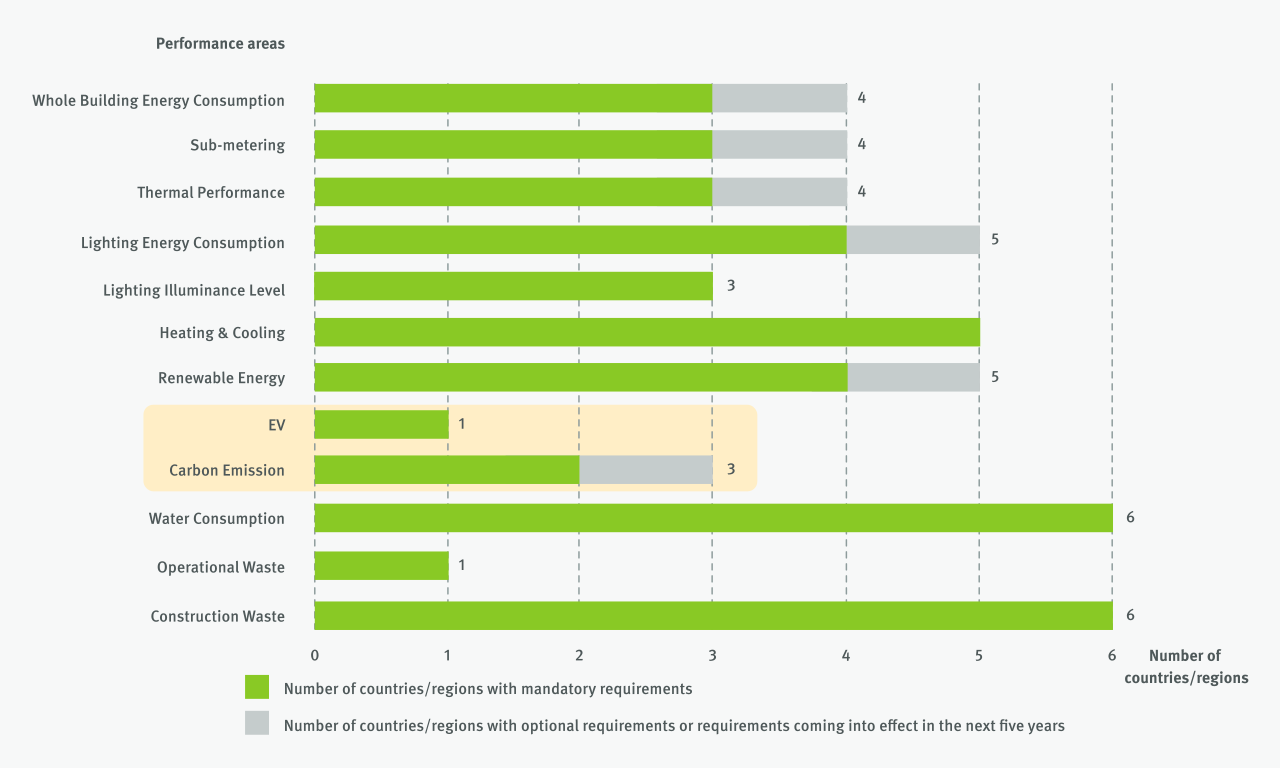
For carbon emission, only China and South Korea have mandatory requirements, while Singapore's requirements are optional. None of these establish an annual emission target. China mandates life cycle carbon emission calculation and reporting, while South Korea requires buildings to provide a GHG information system. Singapore advises adopting one of two embodied carbon emission reduction measures. Although some of these countries mandate quantitative annual operational electricity consumption limits, which can be used to estimate operational carbon emissions, non-operational carbon could constitute up to 50 per cent of a building’s life cycle emissions[1]. With 39 per cent of global energy-related carbon emissions from buildings[2], the lack of mandatory quantitative emission targets in the region could significantly impede these countries, as well as sustainable real estate asset investors and owners, in achieving net-zero targets.
Australia is the only country with mandatory requirements for EV infrastructure provision. It specifies the minimum electrical distribution boards for each car park storey, including capacity and design specifications. The absence of mandatory provisions poses a challenge to investors, given the rapid adoption of EVs, leading to costly and complex building infrastructure upgrades.
Singapore and Korea lead in standard coverage and requirement stringency, followed by Australia, China, Japan, and Hong Kong (Figure 2).
Singapore excels with the most comprehensive coverage (11/12 areas) and sets the strictest standards in two areas: lighting illuminance level and water consumption. South Korea covers requirements in 10 areas, imposing the strictest regulations in construction waste and ranking second in three areas: illuminance level, carbon emission, and water consumption.
Australia covers requirements in nine areas, particularly excelling in sub-metering and renewable energy, and stands as the sole country with requirements for EV.
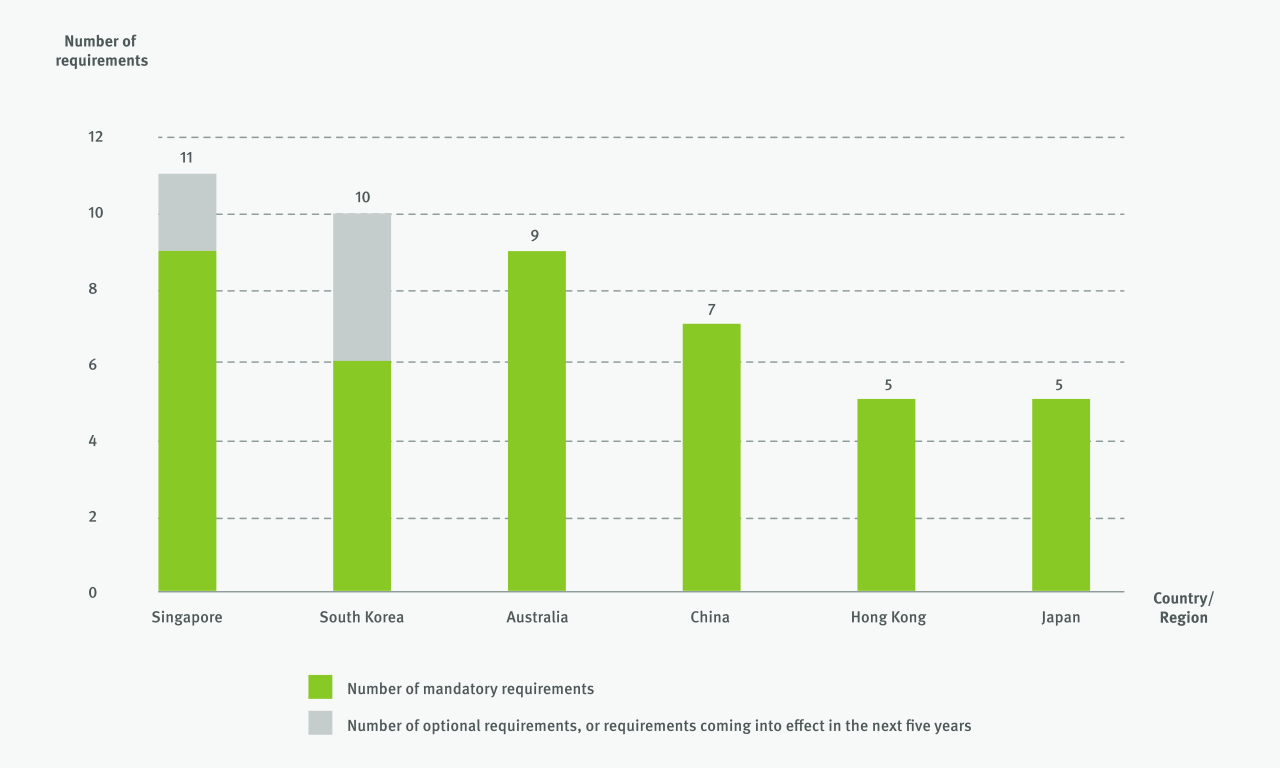
It's noteworthy that China surpasses Japan and Hong Kong. China covers requirements in seven areas with the strictest standards in lighting power consumption. It also boasts rigorous requirements in renewable energy, carbon emission, and construction waste.
Mature markets like Japan and Hong Kong lag behind. Hong Kong has requirements in five areas, lacking two crucial metrics – whole building energy consumption and thermal performance. Its current energy requirements focus solely on individual systems, like lighting, heating, and cooling. The absence of a mandatory overall metric may result in higher energy consumption, exposing investors to elevated operational costs (to mitigate) potential regulatory risks. Although there are currently no regulations, the regulatory landscape can evolve rapidly[3].
Singapore, South Korea, and Australia are likely to be favoured sustainable commercial warehouse markets with comprehensive and stringent performance requirements. Caution should be exercised when entering Hong Kong. Investors should consider proactively adopting energy-efficient technologies and practices.
However, it should be noted that while Singapore and South Korea have the highest number of regulations, not all these requirements are the most stringent. Although Japan only imposes mandatory requirements for five aspects, some of these are comprehensive (for detailed explanations, please refer to the full report).
Lack of regionally comparable metrics will expose global portfolio holders to risk.
It is crucial to underscore that achieving comparability in each performance area remains challenging. In numerous areas, prevailing standards are predominantly qualitative. For instance, in renewable energy, Singapore and South Korea use the percentage of electricity from renewable sources as a common metric, but with different calculation methods.
Singapore considers this percentage in relation to the entire building’s energy consumption, while South Korea assesses individual system adoption rates, like the percentage of renewable energy used by lighting. Other countries lack standardised requirements for comparable aspects. Australia mandates solar PV provisions, China requires feasibility studies for renewable energy, and Japan mandates architects to explain the effects of renewable facilities.
In three areas – heating, cooling, and thermal performance – comparisons should be conducted with great caution. The requirements are location-specific and vary based on equipment specifications or building characteristics. For example, regarding the thermal performance of walls, Australia's requirements differ by climatic zone and the building's window-to-wall ratio; China's requirements differ by climatic zone, the availability of air-conditioned heating provision, and Building Body Index.
Investors managing global portfolios face increased costs and reduced competitiveness when lacking comparable metrics. Investors might invest in properties that appear sustainable based on local standards but could not meet regional criteria. Those who invest in sustainability may find it challenging to differentiate if there's no standard framework for comparison. A comparable metric system allows for benchmarking against industry best practices and identifying areas for enhancement. This resulted in improved resource and capital investment allocation, ultimately optimising investor returns.
As we conclude this insightful exploration into the sustainability landscape of the Asia Pacific warehouse market, we invite you to delve deeper into the comprehensive technical report, “Market Leading Logistics Asset Specification, Building Code Comparative Study” conducted by Aurecon Singapore in collaboration with APG which offers a strategic roadmap for investors in the realm of large sustainable commercial logistics assets. The study unveils crucial insights into sustainable industry policies in key APAC markets for regional investment decisions.
For access to the full report or if you wish to speak with one of our experts, connect with Aurecon below.
[1] KPMG, 2023, Embodied Carbon: The Missing Half of GHG Emission, accessed December 2023.
[2] World Green Builing Council, September 2019. Bringing embodied carbon upgrade, accessed December 2023.
[3] Comments on the likely change of the regulatory landscape of Hong Kong could be found in the full report.
Contributing authors & reviewers: Halim Abdul Razak, Yamona Segar, Jingyao Wang and Yamini Manickavasagam.
About APG: As the largest pension provider in the Netherlands APG looks after the pensions of 4.8 million participants. APG provides executive consultancy, asset management, pension administration, pension communication and employer services. We work for pension funds and employers in the sectors of education, government, construction, cleaning, housing associations, sheltered employment organisations, medical specialists, and architects. APG manages approximately €569 billion (December 2023) in pension assets. With approximately 3,000 employees we work from Heerlen, Amsterdam, Brussels, New York, Hong Kong and Singapore.
Visit the APG website for more information.

Senior Consultant, Advisory – Singapore

Market Director, Built Environment – Southeast Asia
Aurecon shares insights on how the 2032 Brisbane Games can deliver legacy infrastructure and lasting economic, environmental and community value.
How engineering and construction projects are evolving to champion biodiversity, through early planning, advanced technologies, and ecosystem stewardship.
AI solutions offer huge benefits for businesses, but knowing where to invest in AI matters. Aurecon's digital experts discuss where AI can make the most impact.