Why Townsville needs roads designed for real life
Road safety isn’t just a slogan, it’s a responsibility, for safer outcomes, we have to design and engineer for the way North Queensland actually lives, works, and moves.


Change your location to view content tailored for you.
For most of my childhood, I lived among the sugar cane fields, and many weekends were spent on the Bruce Highway. Then as a teenager, the highway became the backdrop to countless trips to nippers and surf lifesaving carnivals. My brother was a triathlete, and on Christmas Day, he would ride his bike from Brisbane to Bribie Island via Dayboro and the D’Aguilar Highway. He would always beat us there, even though we were driving. That’s how unpredictable and congested the Bruce could be. What should have been just over an hour’s drive could easily stretch to three or more.
I also vividly recall the fatigue-inducing monotony of the Bruce past the pine plantations, a route often travelled as a young engineer working on the Caloundra Road upgrade and the Kawana Way Link Road. These memories have stuck with me for almost two decades.
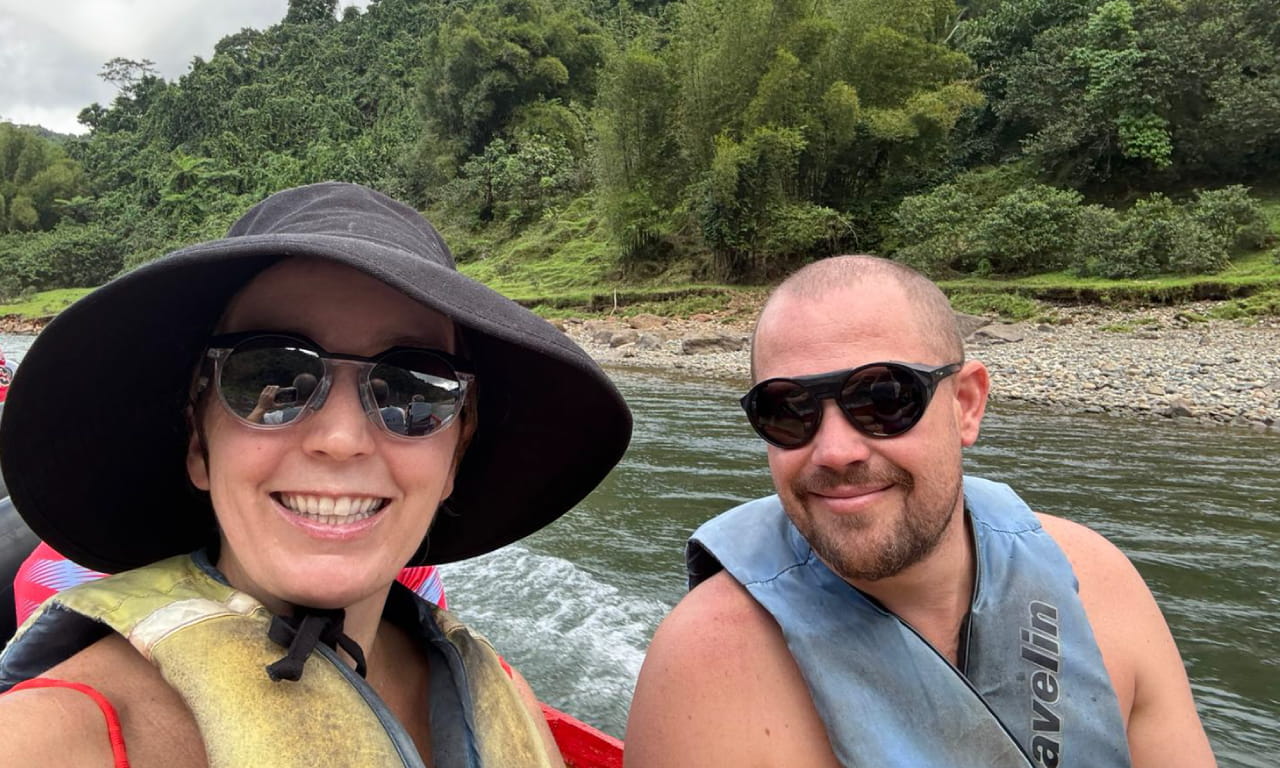
Jane Waldburger and her partner enjoying kayaking.
They’re the lens through which I view road safety and resilience, not as abstract design challenges, but as lived experiences. They remind me that every family holiday, commute or freight delivery depends on roads that work.
That lesson became especially clear in 2011 and 2013, when Queensland was hit by devastating flooding and weather events. I worked in Gladstone responding to the National Disaster Relief and Recovery Arrangements’ work reconnecting communities. Flooding and landslips cut towns off, many couldn’t even access food. Our team was on the ground, providing assessments and expediting designs so funding could be arranged, and reconstruction could move quickly and safely. In those moments, roads weren’t just infrastructure, they were lifelines.
Gladstone itself embodies the complexity of Queensland’s road network. It’s an industrial hub, home to RG Tanna and Wiggins Island Coal Export Terminal, Curtis Island’s LNG facilities, and two, soon to be three alumina refineries. The port hums with freight and heavy vehicles. At the same time, it’s a gateway to the Great Barrier Reef, with tourists travelling through to experience one of the world’s natural wonders. Designing for such a diverse mix of road users, from B-doubles to backpackers, demands a careful balance of safety, reliability, and resilience.
Quality roads equal safer roads, and local knowledge is the key to getting it right.
The upgrades we’re seeing today, and those soon to become a reality, have been a long time in the making, and they will make a real difference – as we’ve seen with recent projects. The completion of the Gympie Bypass in 2024 cut 30 minutes off the journey north. The long-awaited Calliope Crossroads upgrade (which replaced the notorious intersection between the Bruce and Dawson Highways), has dramatically improved safety and reduced travel times. Even the road surface between Gladstone and Rockhampton is noticeably better now than just a year ago.
These examples are steps in the right direction, yet the work is far from done. Long, straight stretches north and south of Gladstone bring their own risks: monotony, fatigue, and wildlife hazards. That’s why design features like anti-fatigue trivia signs, curve widening, audio tactile line marking and wide centre lines matter so much. They may inconvenience drivers during construction, but the payoff is safer journeys and connected communities. It’s freight and workers heading to port. It’s families reaching the reef.
For me, driving the Bruce has always been personal. From those slow Christmas day crawls to the urgent flood response projects, my experiences have shaped how I design. They’ve shown me that quality roads equal safer roads, and that local knowledge is the key to getting it right.
Road safety isn’t just a slogan, it’s a responsibility, for safer outcomes, we have to design and engineer for the way North Queensland actually lives, works, and moves.
With over 30 years of lived experience in Far North Queensland, Andrew Wright brings unique local insight to every Bruce Highway project he helps design.
In North Queensland, the Bruce Highway is a lifeline and local knowledge is what makes it safer, stronger, and more reliable for every journey.
From lived experience behind the wheel to designing upgrades on the ground, local expertise is driving safer, more resilient outcomes along the Bruce Highway.

Principal, Roads – NSW & ACT, Australia