

Making choices for de-risking renewable project delivery
Aurecon shares insights on how renewable project delivery models are evolving to better manage risk and deliver long-term value through project partnerships.


Change your location to view content tailored for you.
As per- and polyfluoroalkyl substances (PFAS) in the environment continue to raise heightened global concerns over potential health risks, Australia’s National Health and Medical Research Council (NHMRC) are expected to release final guidance on PFAS for the Australian Drinking Water Guidelines (ADWG) this month, following public consultation.
PFAS are a group of over 4,700 chemicals often called “forever chemicals”, and used in products including firefighting foams, food packaging, cosmetics, medical devices, and industrial applications due to their stability.
The health risk posed by PFAS is notably higher for communities near military bases, firefighting grounds or industrial sites with historical PFAS use. Exposure through consumer products and dietary lifestyle is the most common exposure pathway for communities not exposed to PFAS contaminated waters.'
The draft ADWG updates propose new thresholds for specific PFAS compounds in drinking water, lowering existing limits to minimise health risks. For example, the acceptable limit for Perfluorooctanoic acid (PFOA) is set to decrease from 560 ng/L to 200 ng/L (nanograms per litre, a unit used to measure extremely small concentrations of substances in water).
A new limit is introduced for Perfluorobutanesulfonic acid ((PFBS), Perfluorooctanesulfonic acid (PFOS), and Perfluorohexane sulfonic acid (PFHxS) which are being regulated individually. These adjustments align Australia more closely with global standards yet implementing them may require considerable technical upgrades and monitoring enhancements.
The proposed NHMRC drinking water guidelines are summarised in the table below:
| Compound | Current ADWG Threshold | Proposed ADWG Threshold |
|---|---|---|
| PFOA | 560 ng/L | 200 ng/L |
| Sum of PFOS and PFHxS | 70 ng/L | Individual thresholds proposed |
| PFOS | No individual ADWG threshold | 4 ng/L |
| PFHxS | No individual ADWG threshold | 30 ng/L |
| PFBS | No threshold | 1,000 ng/L |
Table 1. Outlines NHMRC's draft updates to the Australian Drinking Water Guidelines (ADWG), released October 2024.
With international momentum building around PFAS regulation, countries are divided between regulating PFAS individually or as a class. Australia, like the U.S. and some European countries, opts for individual regulation, while Canada and the European Union use a class-based approach, capping total PFAS concentration rather than setting individual thresholds. By updating the ADWG, Australia moves toward stricter global norms while balancing public health and environmental protection.
The debate on PFAS regulation methods continues, with differing approaches across regions. For instance, the U.S. recently established some of the world’s strictest PFAS limits, setting both PFOS and PFOA at 4 ng/L with a long-term goal of zero. However, measuring at such low thresholds remains challenging due to detection limitations, a concern for many water utilities. Conversely, Australia’s approach, based on health-based guidelines, aims to consider long-term exposure without pushing limits beyond feasible detection.
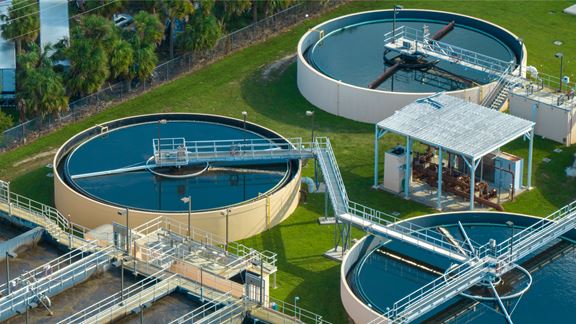
The proposed ADWG updates will likely have multiple implications for water quality management, affecting utilities of all sizes. The ubiquity of PFAS – found in almost everything from rainfall and remote Himalayan ice to human blood – makes it difficult for drinking water managers to manage contamination they did not cause and for which they are not responsible.
While responsible for providing safe water, utilities may face lengthy and complex processes to recover costs from the industries responsible for PFAS contamination. Meanwhile, they are still required to plan for and fund efforts to comply with the lower proposed PFAS drinking water thresholds.

Water treatment plants may require augmentation to meet the new PFAS thresholds, imposing significant costs on utilities, which could be passed on to consumers.

More frequent PFAS monitoring would lead to higher operational costs for water utilities.

The inclusion of PFBS in the guidelines presents uncertainties, as this compound has not been consistently monitored in Australian water supplies.
Utilities may need to prepare adaptive management strategies for further regulatory changes, potentially expanding to cover more PFAS or an entire class.

Exceeding the current or proposed PFAS limits could damage the reputation of water utilities, particularly in areas already impacted by contamination.
There are unique challenges related to monitoring and regulating PFAS in drinking water for both large and small water utilities. Some of the potential challenges relate to external technical factors and internal capability factors and include the following:
Australia’s water sector has an opportunity to set an example in responsible PFAS management, balancing regulatory compliance with sustainable and cost-effective practices. By working with expert partners, water utilities can navigate the path towards safer drinking water with resilience and innovation.
[1] NHMRC's consultation hub, Oct 2024, Australian Drinking Water Guidelines - Public Consultation on Draft Guidance for Per- and Polyfluoroalkyl Substances (PFAS), accessed April 2025.
This article was originally published by Inside Water in April 2025.

Associate, Environment & Planning – Australia

Technical Director, Water Utilities

Senior Engineer, Water Utilities
Aurecon shares insights on how renewable project delivery models are evolving to better manage risk and deliver long-term value through project partnerships.
Aurecon draws insights from Committee for Sydney’s Jeremy Gill on how we grow Auckland's tech economy through placed-based, connected innovation precincts.
Water sector planning must modernise to address climate and other issues, shifting to system-wide, digital, and collaborative approaches for resilience and sustainability.