
Strategic Asset Management: New Zealand's missing link
The economic case for integrated asset and investment management in New Zealand and how well-governed infrastructure delivers lasting cross-sector value.



Change your location to view content tailored for you.
Active transport – cycling, walking and micro mobility – is experiencing an unprecedented surge in popularity in Australia and New Zealand brought on by the COVID-19 pandemic. Parks are full of people walking and cycling, while bicycle shops report significant boosts in sales with bikes rolling out of the door daily. E-bikes and e-scooters are also making it easier for a more diverse range of people to travel by active transport.
Why the uptake? Walking and cycling has become an enjoyable daily ritual for people, and they’re focused on more individualised modes of travel due to safety and hygiene concerns about public transport. As physical distancing is mandated by most governments, public transport travel has steeply reduced with transport peaks flattening on major metropolitan arterial routes all over the world. Moreover, people might come to see that perhaps there’s a different way of travelling.
Just how much has it changed? Bicycle Network counts show the number of people on bikes has increased by more than 300 per cent[1] on some paths. A survey conducted in April of more than 1,000 people revealed that most respondents (39 per cent) said they are riding a bike outdoors[2] to get their daily exercise. This is in strong contrast to the very slow uptake of active travel over the past 20 years in Australia.
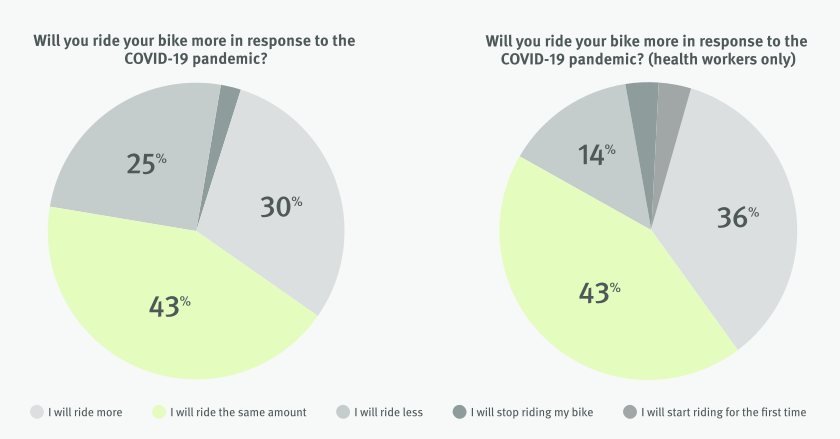
Figure 1. Results from Bicycle Network’s 'Moving around in the time of COVID-19' survey. Source. Bicycle Network.
Concerns about COVID-19 spreading on public transport could mean many people seek alternative ways to travel to work. People using public transport may face uncertainty if they cannot board due to lower capacity requirements. However, if every public transport user transitioned into their single-occupant vehicle, traffic would be worse than ever before, and this has serious impacts on productivity, the speed of economic recovery and carbon emissions.
On the positive side, people walking and cycling through their local areas is bringing enjoyment, safety and daily exercise, to the streets and the UN eyes walking and cycling as drivers of post-COVID-19 ‘green recovery’[3].
This is the time to seize the moment and shift gears with more consideration for active transport. How can we capitalise on this moment and transform the temporary recreational behavioural change witnessed during the COVID-19 pandemic into a lasting shift towards healthier, safer and more sustainable transport choices for commuting?
The approaches covered in this paper are a combination of physical mobility solutions to encourage active transport, maximising the potential uptake for commuting by combining physical measures with human behaviour and organisational measures.
Developed for the Australian and New Zealand context, this paper builds on Aurecon’s earlier work, 'Can cycling be the equal transport mode to cars', which started the conversation on approaches to enhance the uptake of active transport options for commuters. We can’t turn into Copenhagen or Amsterdam overnight, but our cities can draw many lessons from countries like the Netherlands, where more than half of all transport trips are made by bike[4].
It is worth noting that these cities were similar to Australian cities in the 1970s and it took a concerted effort to drive the high ridership. This is no coincidence, or a result of ‘walking and cycling being part of their DNA’; it is a result of their integrated approach, an approach that Aurecon defines under the categories of ‘infrastructure’, ‘human behaviour’ and ‘organisational’.

Safe & connected network
Integrated transport
End-of-trip facilities

Education
Communication
Road safety

Strategy & policy
Funding
Accountability
Infrastructure is important, as the lack of safe and connected cycling networks is one of the primary reasons Australians don’t choose cycling as their preferred commuting choice. The City of Melbourne’s Transport Strategy states that many people who want to start riding or want to ride more often would do so if bicycle lanes were physically protected from cars[5]. While widening of footpaths and the construction of shared paths and cycleways is an obvious first step (and not as expensive as building roads), they can still be time consuming, and do cost money.
The NSW government announced that councils can apply for grants of up to A$100,000 for temporary projects like bike lanes or widening footpaths, and up to A$1 million for medium-term pilot projects. In Sydney, more than 10 kilometres of pop-up bike lanes will be installed in the coming weeks as part of the plan to ease COVID-19 restrictions.
Many international cities are thinking along the same lines, with ambitious projects being considered or implemented to increase the ease and appeal of active transport. Berlin set up temporary bike lanes and Paris banned cars from the famous shopping street of Rue de Rivoli, near the Louvre Museum, to favour pedestrians and cyclists instead.
Traditionally car-oriented Italian cities, Milan and Rome, are considering temporary and permanent cycle routes by reallocating space from cars to cycling and walking, and the slow streets programs in San Francisco and Vancouver are being expanded in response to COVID-19.
Cities are taking advantage of this lockdown to usher in some environmentally-friendly mobility changes, aiming to shift people’s forms of transit to work and school. Worldwide, there seems to be a large appetite to combine active transport measures with public domain upgrades (tactical urbanism)[6], making streets more pleasant for people, and achieving results in a short timeframe, at relatively low costs and potentially scalable when successful.
The defining factor in the success of these projects is making active transport inviting, safe and convenient. A 2019 report by Aurecon revealed insights into Australians’ preferences for moving people as cities grow. After surveying more than 1,300 people, the most important overall consideration when it came to which mode of transport to use was convenience. The report suggests that if you build inviting, safe and convenient footpaths and bikeways for people, they’re more likely to use them and increase future uptake.
Depending on the individual city and its strategic objectives, there are a range of infrastructure solutions at the disposal of government organisations to encourage active transport as a preferred mode:


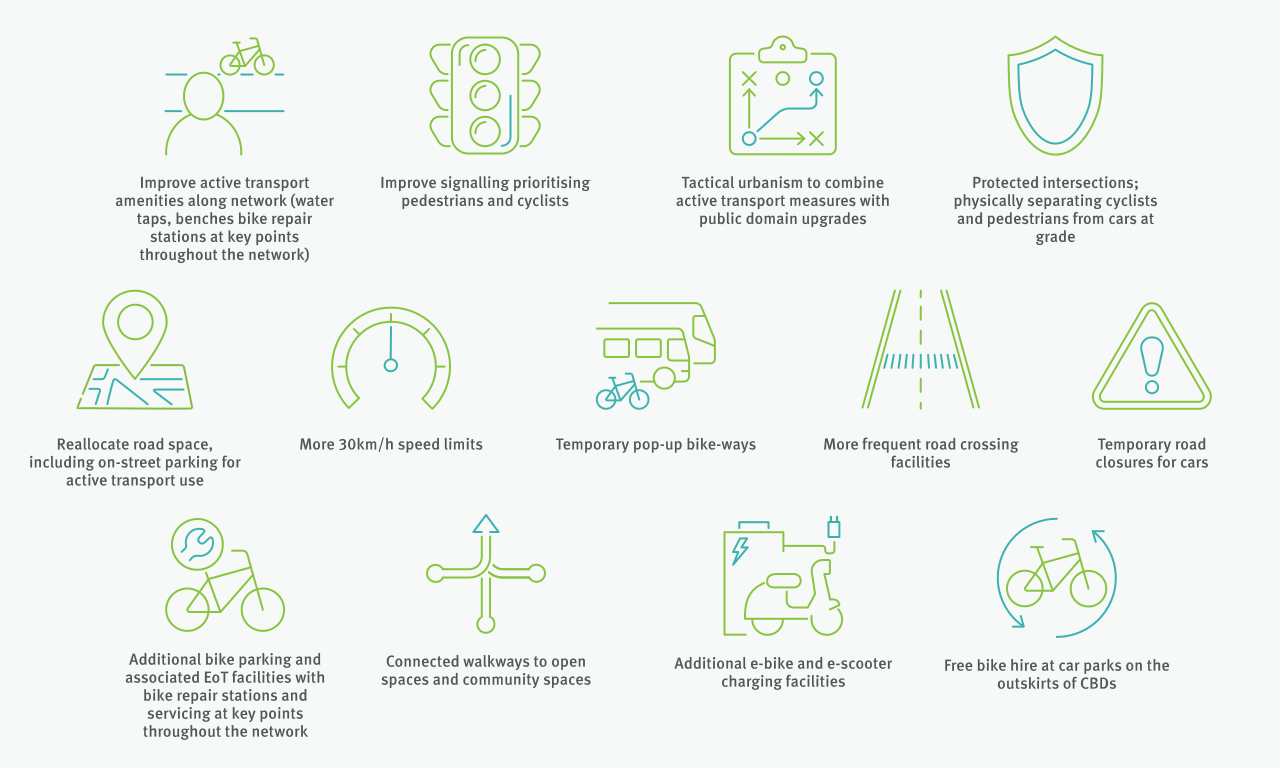
The challenge that cities now have is how they capture the enthusiasm of recreational walkers and cyclists to become avid active commuters. Bicycle Queensland reports that bike-riding may save commuters up to A$1,500 each month if they ditched their cars[7]. Is this how we encourage long-term commuting by cycle?
As we transition out of COVID-19, there are long-term educational opportunities as well, such as including a pedestrian and cycling awareness module in the driver’s licence qualification, and offering cycling courses and campaigns at schools. The City of Sydney is partnering with The Heart Foundation[8] to promote active travel to school for a healthy heart. The incentive is derived from a Heart Foundation report that suggests streets with walking and cycling opportunities can decrease the incidence of heart disease, obesity and diabetes, contributing to the wellness benefits of active transport.
Behaviour change can take a long time; however, during times of disruption, there are immediate actions that can be undertaken, including:
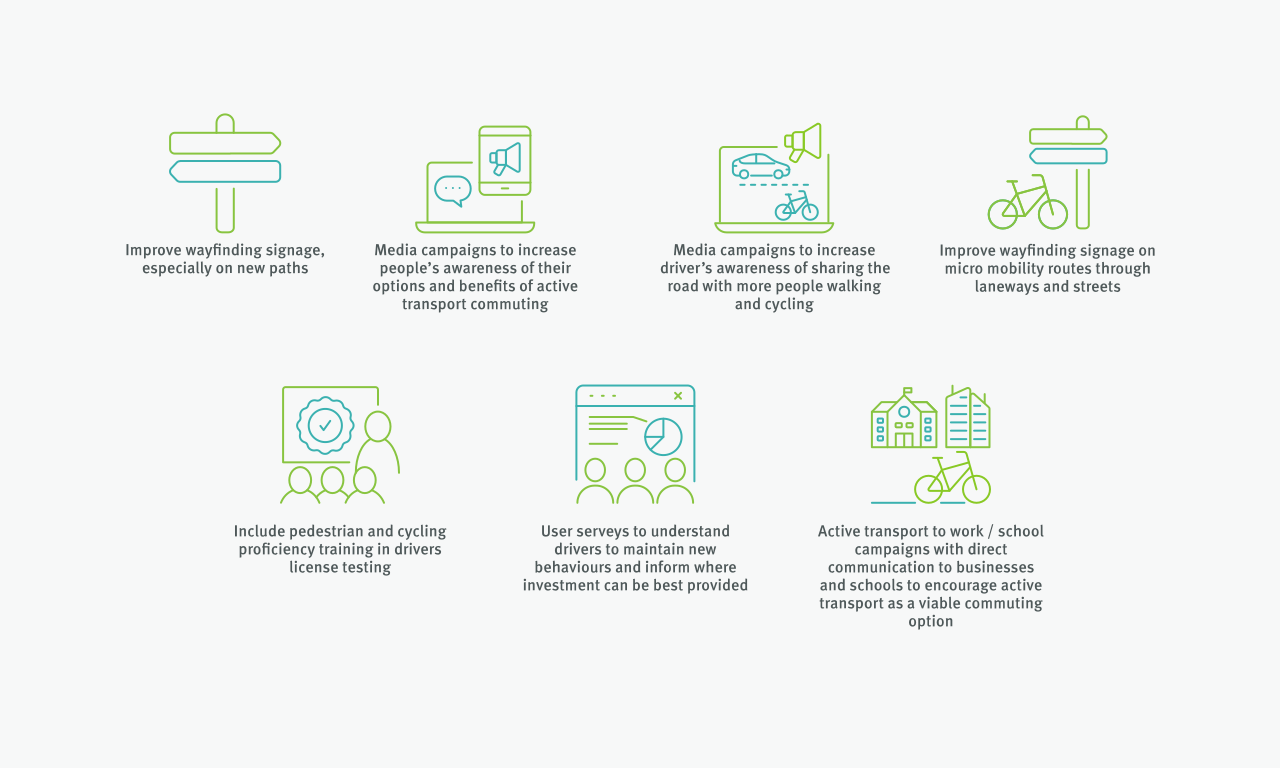
The selection of the most appropriate measures depends on the specific needs of potential users and their current (perceived) barriers to active transport. It is therefore also imperative to understand the attraction to active transport modes.
It takes governments, planners, engineers, communities, businesses, schools and individual people to work collaboratively to create a more pleasant environment for active transport and make it easier for people to choose these forms of transport.
In Brisbane, a joint committee has been established between the state government and Brisbane City Council to target ‘missing links’ in the city's transport networks[9]. Could this include engagement with building owners and major employers around end of trip facilities?
Organisational aspects refer to the resources, funding, and planning and decision-making structures. For example, Infrastructure Australia’s Infrastructure Priority List currently includes more than 150 projects of which only two cover active transport, and these are in the lowest priority category. Should the assessment framework of infrastructure projects be revised?
This aspect is about establishing alliances, working together on shared goals, for example alliances between transport authorities and health authorities (positive health impacts of active transport), businesses and schools (improved access and health benefits for workers and children). These alliances should also work together on overcoming common barriers, for example the provision and cleanliness of end-of-trip facilities, sufficient bicycle parking and share vehicles.
Authorities in France are subsidising bike repairs and electric bike purchases[10], and in the UK, bike-to-work schemes have seen a 200 per cent increase[11] in bicycle orders from people working in emergency services. Possible organisational changes are:
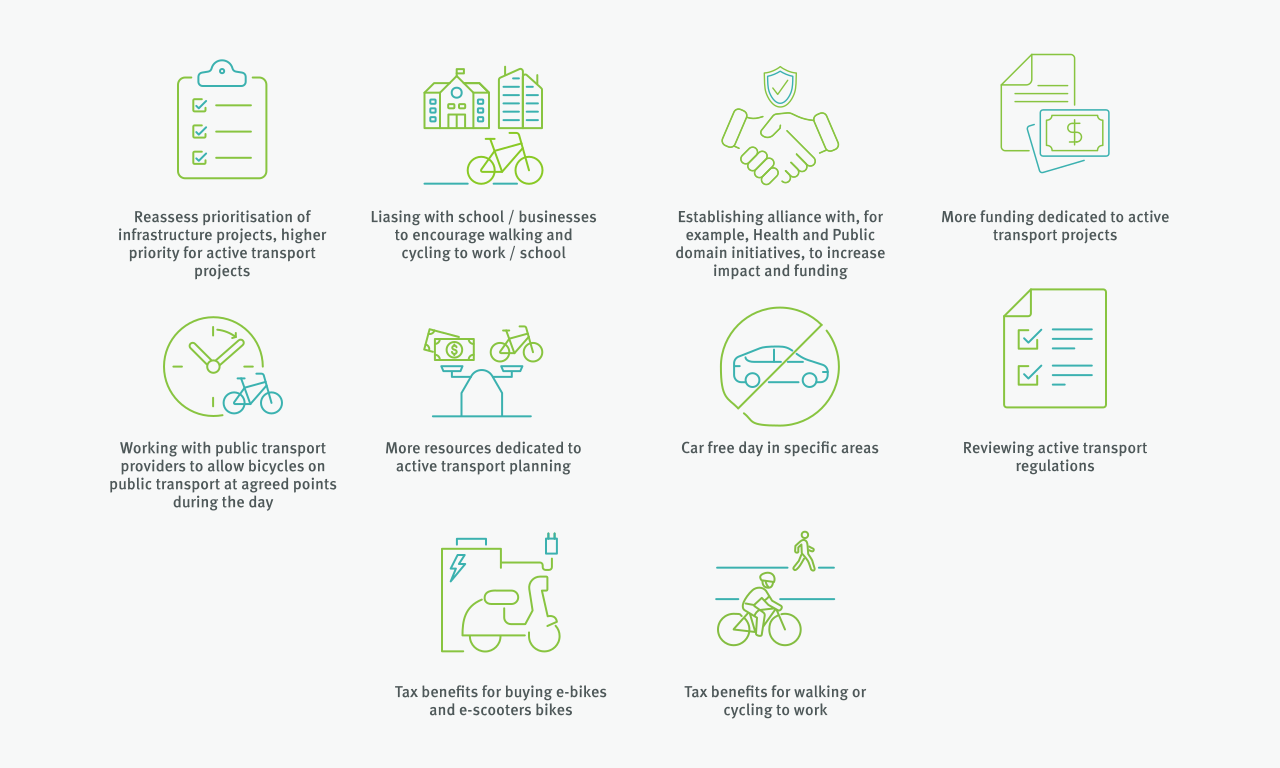
The COVID-19 pandemic has had a profound impact across the world. But it has also presented opportunities to explore radical changes to behaviours and habits, which can have long-term positive effects. Proactive planning and decision making are needed to make active transport safe, efficient and convenient options for people commuting to work and school.
There are a variety of solutions available across the abovementioned categories of ‘infrastructure’, ‘human behaviour’ and ‘organisational’. The solutions could be trialled on a temporary, and scalable basis, depending on measured success. More permanent options usually require more planning time and funding.
The most appropriate combination of options will differ according to the characteristics, priorities and resources of each individual city.
[1] Bicycle Network, 11 May 2020, 'Opinion: Build a path out of the crisis'.
[2] Bicycle Network, 06 April 2020, 'Australians keen to ride out coronavirus'.
[3] Department of Global Communications, 22 May 2020, 'UN eyes bicycles as driver of post-COVID-19 ‘green recovery’', United Nations.
[4] Mark Sutton, 26 October 2017, 'Netherlands further builds on cycling’s modal share, hitting 51% in Utrecht', Cycling Industry News.
[5] City of Melbourne, 'Transport Strategy 2030'.
[6] Daly, J., Dovery, K. and Stevens, Q., 05 May 2020, 'We can’t let coronavirus kill our cities. Here’s how we can save urban life', The Conversation.
[7] Shannon Molloy, 10 April 2019, 'How Australian households can save $1500 a month – ditch the car and get on a bike', News.com.au.
[8] City of Sydney, 13 April 2022, 'Cycling Strategy and Action Plan 2018-2023'.
[9] Lucy Stone, 26 May 2020, 'Joint state and council committee to tackle 'missing links' in active transport', Brisbane Times.
[10] Kate Connolly, 18 May 2020, ''Cleaner and greener': Covid-19 prompts world's cities to free public space of cars', The Guardian.
[11] Roger Harrabin, 07 May 2020, 'Coronavirus: Boom time for bikes as virus changes lifestyles', BBC News.
Contributing authors & reviewer: Alex van Gent, Bright Pryde, Mark La Galia and Iris Brkic.

Discipline Leader, Technical Advisory, WA & NT – Australia

Associate, Integrated Transport & Mobility – QLD, Australia

Transport Leader – VIC & SA, Australia

Principal, Transport – New Zealand
The economic case for integrated asset and investment management in New Zealand and how well-governed infrastructure delivers lasting cross-sector value.
Aurecon draws insights from Committee for Sydney’s Jeremy Gill on how we grow Auckland's tech economy through placed-based, connected innovation precincts.
As climate impact events become increasingly prevalent, there is a sharpening focus on resilience investment for Australia's infrastructure across every sector.