The challenges in water stressed locations demand a new approach
The challenge of developing much needed manufacturing facilities economically and sustainably in some of the most water stressed locations of the world therefore demands a new approach.
That the enormity of this problem is beyond the resources or responsibility of any one organisation fuels the risk of complacency. It is essential to guard against this.
A robust approach would typically consider moral, social, commercial and economic domains in assessing any manufacturing facility development. But a balanced scorecard simply does not reflect the gravity of the challenge. The real need is for an unbalanced scorecard; more heavily weighted to water use and water management.
This article provides an introduction to reframing the thinking around combining a philosophical approach to developing manufacturing facilities in water stressed environments, with sophisticated planning and engineering. The discussion focuses on how the application of this combination would contribute to a solution that all global organisations could adopt.
Water is critical
In our connected world, we are more conscious of the interconnected and interdependent nature of all things. We now see more acutely the linkage between cause and effect. For instance, we now recognise that water is central to food security.
Statics from the World Economic Forum show that it takes up to one litre of water to produce one calorie from plant and grains, and up to 10 litres for one calorie of meat. We each therefore eat the equivalent of 3 500–6 000 litres of water daily.
In emerging regions, people are still desperately in need of nutritional food. In Africa, one of the most water stressed countries in the world, predictions are for a further 500 million people in the next 10–15 years. The impact on water systems and agricultural food production is therefore profound.
A number of reports on African climate change trends and projections show that the climate in many African regions has been heating up over the last decade. Predictions are this will continue if climate models for a warming climate are accurate.
As responsible corporate citizens, global businesses do need to take a worldwide view of the water problem.
A global view
There are many drivers to adopt the strategies enunciated for developing in water stressed locations in emerging regions. Reality is that many organisations already own and operate facilities in developed regions where water shortage is not an issue. Nonetheless, even in these locations, the need remains to vigorously pursue water conservation techniques.
Even where water is plentiful, the minimisation of water use creates less impost on infrastructure. Pumping, filtration or treatment systems, unless powered from renewable sources, all displace carbon, and carbon displacement and its consequences are independent of location. Hence, global organisations need to adopt stringent philosophies no matter their location.
Site selection
One of the most basic and effective methods for developing in water stressed locations is rigorous site selection, particularly in developing countries where industrial development guidelines might be immature or non-existent.
When developing a new manufacturing facility in an emerging region an obvious first step is the selection and procurement of a site. Optimum site selection considerations include proximity to transport networks, cost, land remediation, planning approvals, and site services. Typically these are assessed and some form of evaluation matrix established. Oftentimes a simplistic approach of deducing each parameter down to a cost impact, or for more enlightened organisations, a triple bottom line, may be used.
However, the evaluation criteria traditionally accepted in other parts of the world do not reflect the criticality of the issue in emerging water stressed regions. In these regions, proximity to water sources, or the impact of upgrading water infrastructure, need to adopt a top priority. This unique environment requires the gearing of decisions for site selection towards the availability of water in favour of other parameters – such as proximity to transport networks or cost.
Another reframing approach would be the philosophy of locating a facility near other users of energy, water or raw materials, where co-location and co-use could lessen each user’s overall demand. To creatively and selectively seek out partners, who in some instances might even be competitors, and use infrastructure resources as efficiently as possible, may be counter-intuitive in a commercial sense; still, it could be a better way forward. Synchronising load profile and work patterns to optimise benefits from differing hours of operation, or differing cycles over time, could make sense, similarly, the notion of one manufacturer using another’s waste as an input utility.
Ensuring continuous peak optimisation takes detailed and sophisticated modelling as well as advanced operational and controls systems.
It is also important to recognise that business and development are dynamic. Over time there is the creation of more development and manufacturing facilities. As that occurs, constantly looking for symbiotic partners is the approach to take. Indeed, taking the audacious step to invite partners to join in the use of resources and benefit from specific waste heat, waste energy or waste water streams should be a creative and responsible philosophy adopted.
Predictive water balance modelling
Predictive water modelling enables the inputting of detailed meteorological data into a water modelling programme that can predict rainfall patterns over the short term. As opposed to reliance on average historical rainfall data, predictive rainfall modelling allows the implementation of more efficient operational water management regimes; such as decreasing onsite storage levels in anticipation of certain weather events to minimise overflow and run off, thereby taking a more granular and scientific approach to near–time site water management. Remote mine sites have extensively deployed these techniques in managing water resources. They can be easily adapted into water management for manufacturing facilities in water stressed environments.
Process optimisation
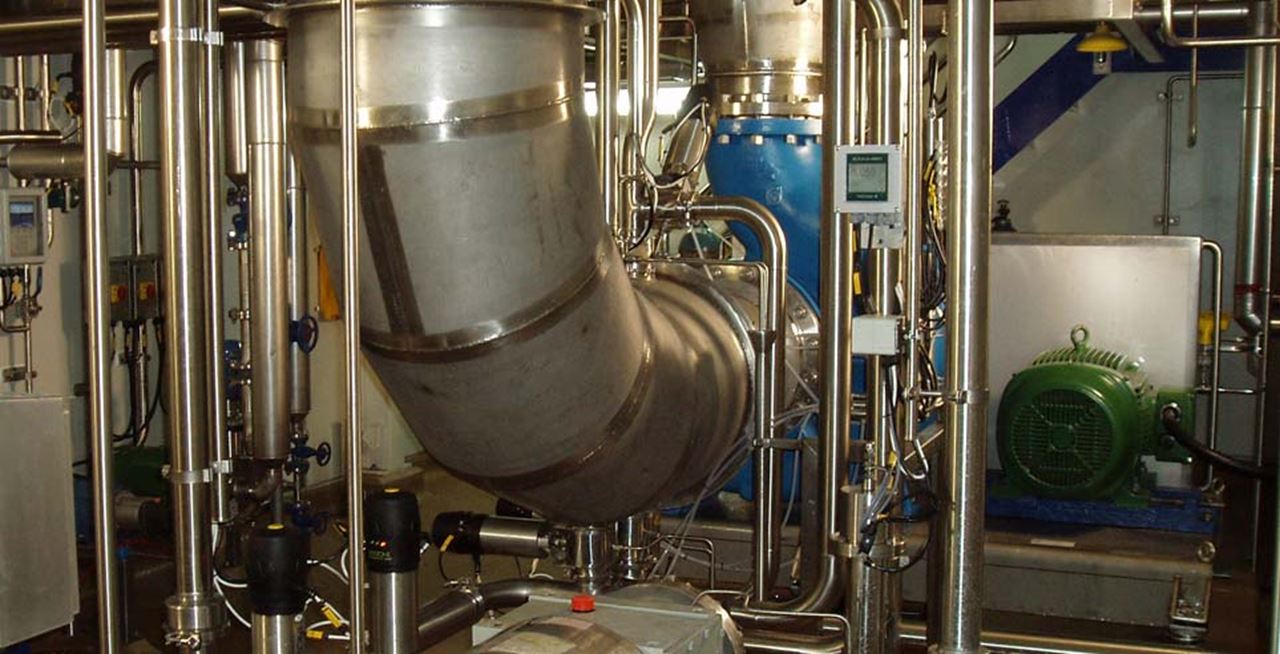
To operate sustainably in water stressed environments, manufacturers must rethink their process design choices to extend beyond the implementation of best practice designs
There is a need for a critical review of the overall operation of each facility, with a focus on both water efficiency as well as other utilities that may affect water usage.
For example, in certain applications, the use of superheated steam for drying results in a lower grade steam, which can be reused for other low pressure steam demands in the factory. Overall this uses less steam, requires less water and simultaneously improves energy efficiency.
Many such cases already exist or are feasible if industries leverage technology between them. Intra-industry benchmarking is essential to achieve best practice. But, inter-industry information sharing is essential for developing innovative solutions.
History has shown repeatedly that necessity is the mother of invention.
Process optimisation too should go beyond just optimising production and minimising use of utilities. Cooperation between manufacturing personnel as well as suppliers and customers provides opportunity for water management at a supply chain level.
Questions for manufacturers to consider range from, is it viable to substitute more water efficient raw materials for current raw materials to what does the client actually do with the product, like is there a need for a powdered dry product if the first thing the client does is dissolve it for further processing?
Technology advances
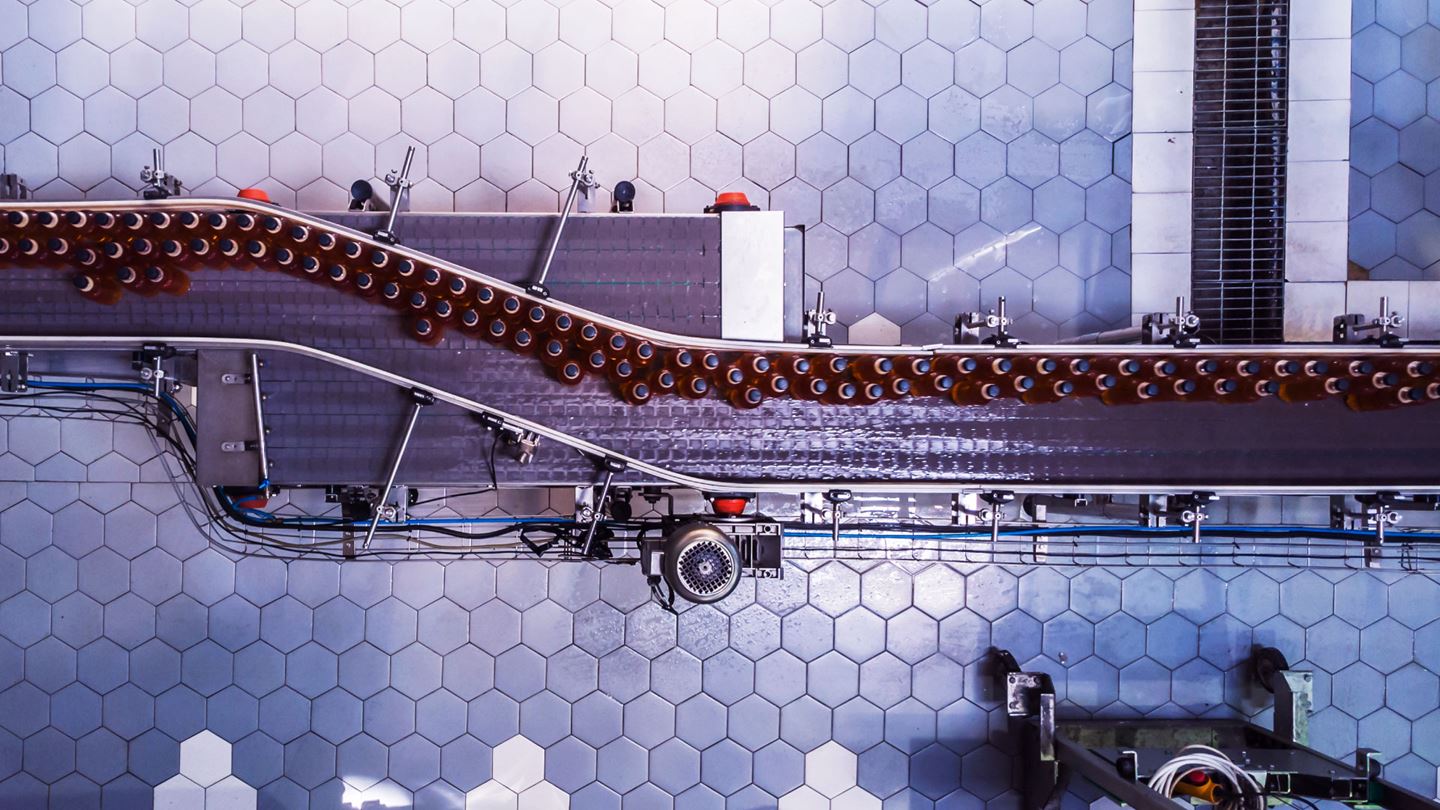
Technology is also contributing to the solution. A case in point is the beverage industry, where more efficient bottle washers and pasteurizers, which consume less water, are replacing the current heavy users.
Additionally, it is conceivable to cut back heavy water usage during clean-in-place (CIP) processes by designing the processes to accommodate electrochemical activation (ECA) of water, instead of the traditional five per cent caustic that is followed by a water flush. ECA for CIP processes has demonstrated up to 60 per cent reduced water consumption.
Other areas of advancement include new membrane technology in water treatment that is now available at more economic levels, which displaces the use of chemicals. Whilst still at demonstration level, forward osmosis techniques are now challenging reverse osmosis techniques. This has potential to further enhance the availability of water treatment process due to its lower energy consumption requirement. Similarly, UV light is replacing treatment with chlorine in disinfection processes.
New technologies are continually evolving, many of which are worth exploring further. Water management requires a holistic approach. Looking at water as a precious asset through all the stages – from site assessment, moving upstream into the supply chain and the raw material stage, through production to distribution and recycling of waste water or perhaps reuse and donation of that waste to a complimentary business.