
Strategic Asset Management: New Zealand's missing link
The economic case for integrated asset and investment management in New Zealand and how well-governed infrastructure delivers lasting cross-sector value.


Change your location to view content tailored for you.
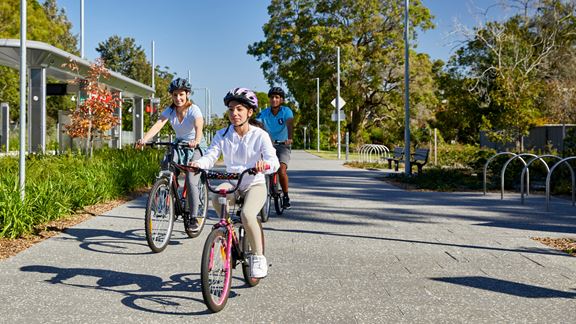
Cycling is an activity that can mean many things to so many people. From recreation to main mode of transport, from fitness to fun. Connected networks in a city make cycling more accessible for people of all ages and abilities and can ease traffic congestion with more cars removed from roads. In an ever-urbanising world, the social benefits of increased cycling are becoming widely acknowledged.
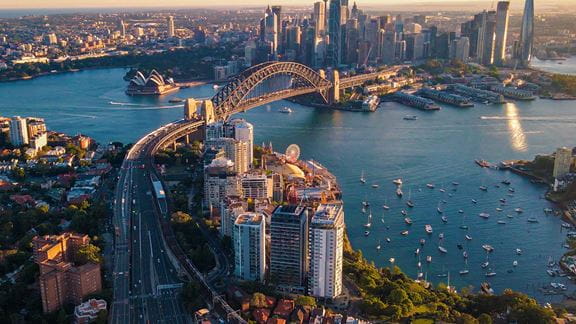
Local authorities and regional governments around the world are starting to introduce policies that support and encourage the widespread use of bicycles. In New South Wales, the City of Sydney is forging ahead with its plan to connect most of the inner-city's bike network by 2030[1]. With around one million people living within a 30-minute bike ride to the inner area, the city wants more people to give riding a go and feel safe and supported to do so.
So, how do we continue to enable and promote cycling cities and what are the critical success factors to a fully smart city ecosystem that includes cycling? We can draw many lessons from countries like the Netherlands, where half of all transport trips are made by bike. This is no coincidence or result of ‘cycling being part of their DNA’, it is a result of their integrated approach, acting on the categories of ‘hardware’, ‘software’ and ‘orgware’.

Safe & connected network
Integrated transport
End-of-trip facilities

Education
Communication
Road safety

Strategy & policy
Funding
Accountability
Cycleways are vital to keeping streets moving, easing traffic congestion and encouraging more people to ride bikes. But, there are challenges to overcome as cities struggle to integrate new cycleways into already-established transport networks. The great success of cycling in The Netherlands is a reflection of the high-quality infrastructure provided by its ‘Sustainable Safety’ approach to road design.
Becoming a world-class cycling city requires extensive urban planning and investment in significant cycling infrastructure. As cities look to smart solutions to improve their communities, there are achievable and incremental actions cities can take today to build a cycling culture that will support a smart city ecosystem. Making cycling as comfortable, and preferably even more comfortable, than driving a car can be the behavioural nudge for a city to start the transition.
If we look at a global city like London, it has moved beyond simply painting blue cycle lanes on busy roads to creating fully segregated cycle superhighways. Today, nearly as many trips are made each day in London by cycle as they are by passengers on light rail and overground trains added together.[2]
There are also commercial benefits to cycling with research from Transport for London showing that people walking, cycling and using public transport spend more than motorists in local shops and there are areas in London where a whole cycle culture has evolved around cycle corridors.[3]
In a way, when providing safe and connected cycling infrastructure, cycling could be a mode of mass transport and should be treated as such. Many small steps, however, can also lead to big changes. In the city of Vancouver, improved ‘bikeability’ of its local streets has been achieved with a range of smaller scale measures, making their streets more pleasant for residents.
At Utrecht Central station, the world’s largest underground bicycle parking garage just opened, with a stunning facility for 12 500 high-quality bicycle parking places at Netherland’s largest public transport hub. In its search for scarce space, Amsterdam provided end-of-trip bicycle parking facilities for the city’s cycling commuters on boats beside Amsterdam Central Station.
As designers of bicycle networks and facilities we need to ask – would we use the cycleway and bicycle parking that we are designing? Would we let our children cycle on this pathway? We must want to design bicycle infrastructure that gives people enjoyment, comfort and safety.
Physical infrastructure isn’t the only consideration, however. Adapting cities to cope with increased and safer cycling requires thoughtful planning around local community needs. For this reason, community-wide liaison is vital. Taking the time to hear from all stakeholders can mitigate issues whilst at the same time build up support for cycling.
If the physical infrastructure of transport networks evolves to reflect a more integrated bicycle network, how do we also encourage more people to choose cycling over car use? Bicycle Queensland recently reported that cycling may save commuters up to $1500 each month if they ditched their cars.[4]
In the Netherlands, many years of supportive policy making has led to widespread confidence in, and the adoption of, cycling[5]. Children in primary school are provided with bicycle education from an early age. Their technical skills of cycling are important, but so is the road safety awareness. Their education contributes to the country’s focus on cycling for urban mobility for people of all ages and abilities, as well as an appreciation of the road-sharing required between cars and bicycles.
Indeed, according to Dr Rachel Aldred, Reader in Transport at the University of Westminster, research shows that Dutch women are 80 times more likely to cycle than their British counterparts.
In Australia, the recently released NSW Government’s Bike Plan[6] includes initiatives that are aimed at encouraging more and safer riding. It was developed with feedback from the community, including children. The views of our children are important as they will be the future adults utilising the infrastructure we design for now.
As part of the Bike Plan’s community engagement process, children said they wanted more, and better, bicycle pathways. Can you imagine a future urban environment where children can cycle throughout their residential areas, not just in the local park?
It takes planners, governments, engineers, communities, organisations and individual people to work collaboratively to design and create a more pleasant cycling transport environment. We need to treat cycling as an equal transport mode to cars and public transport. This can be achieved with education, funding, strategic vision and creativity. So, what are the next steps?
Understandably, a leap forward to a smart city ecosystem will take time, however cities, businesses and individuals have already started on this journey. Some cities, such as Melbourne, are looking at long-term strategies to give priority to cyclists and walkers before cars, in their CBD. There’s a lot of innovation in cities that’s already worth celebrating.
Cities all over the world are implementing behavioural nudges to increase ridership. In Copenhagen, the city has introduced the bike footrest. Simple, inexpensive railings have been installed so that cyclists have a place to lean while waiting for the traffic light to change.
[1] City of Sydney, July 2022, 'Sustainable Sydney 2030–2050: Continuing the Vision'.
[2] Cyclehoop, 14 September 2016, 'Pedal through the Hump by Cycling to Work Today'.
[3] Reid, C. 16 November 2018, 'People Walking And Cycling Spend More In London’s Shops Than Motorists', Forbes.
[4] Molloy, S. 10 April 2019, 'How Australian households can save $1500 a month – ditch the car and get on a bike', news.com.au
[5] Bicycle Dutch, 19 April 2010, 'Bicycle Training in the Netherlands'.
[6] Transport for NSW. 28 June 2023, 'Get NSW Active'.
[7] City of Melbourne. February 2019, 'Participate Melbourne: Draft Transport Strategy 2030'.
Contributing authors & reviewers: Alex van Gent

Transport Leader – VIC & SA, Australia

Principal, Transport – New Zealand
The economic case for integrated asset and investment management in New Zealand and how well-governed infrastructure delivers lasting cross-sector value.
Aurecon draws insights from Committee for Sydney’s Jeremy Gill on how we grow Auckland's tech economy through placed-based, connected innovation precincts.
As climate impact events become increasingly prevalent, there is a sharpening focus on resilience investment for Australia's infrastructure across every sector.