Western Harbour Tunnel, Sydney, NSW, Australia
Aurecon is transforming Sydney Harbour, replacing dredging with TBM tunnel engineering to deliver a faster, safer and more sustainable second harbour crossing.



Change your location to view content tailored for you.
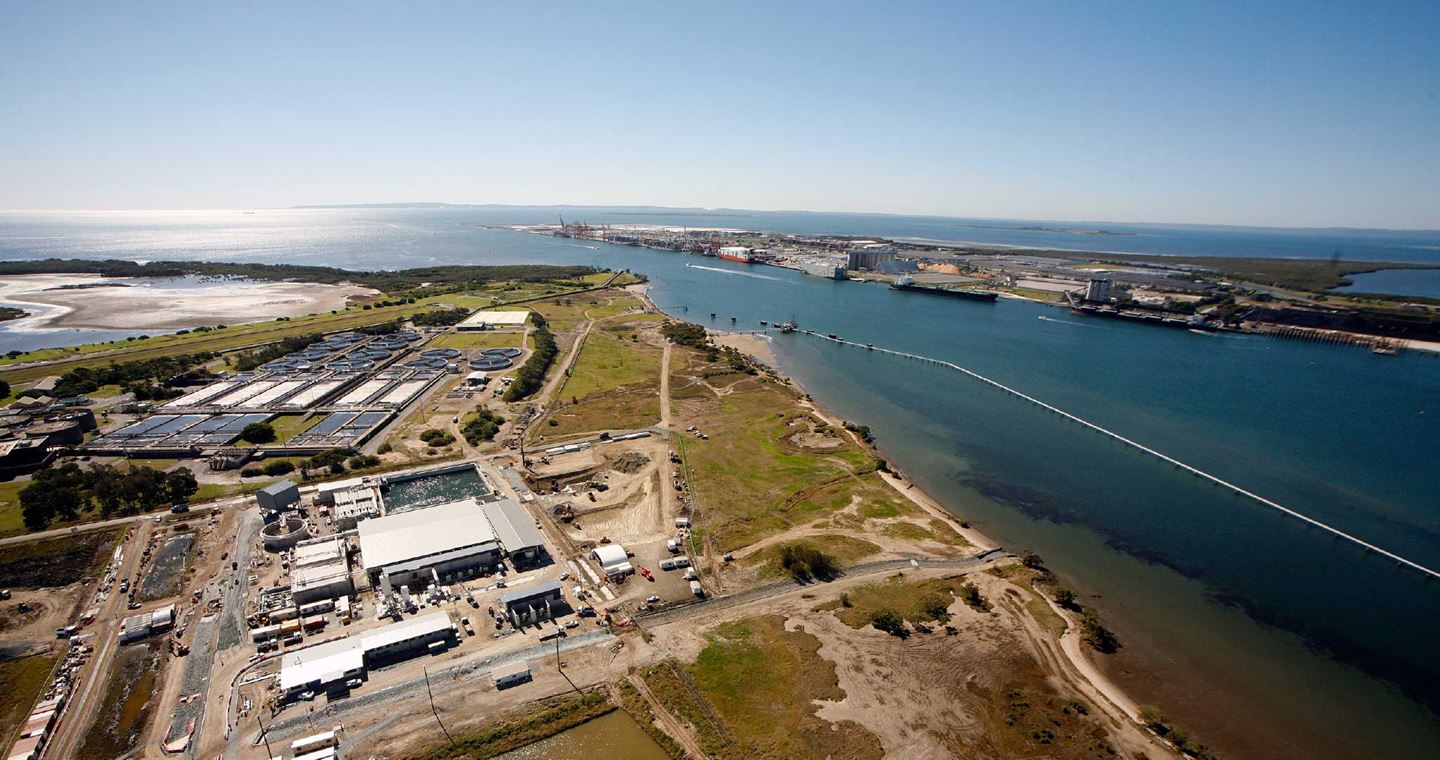
As part of the Luggage Point Alliance, Aurecon as sub-alliance partner, provided design services for the 70 ML/d Luggage Point Advanced Water Treatment Plant (AWTP).
AWTP formed part of the Western Corridor Recycled Water Project (WCRW) which involved the design and construction of new pipelines from six wastewater treatment plants located in Brisbane and Ipswich. The scheme was designed to transfer water that would otherwise be discharged into the Brisbane River from these existing six treatment plants, to three new advanced water treatment plants prior to the purified recycled water being transferred, via 200 km of new pipeline, to power stations.
The scheme has the facility send purified recycled water to water supply reservoirs in the event of low water storage levels in these reservoirs. In these circumstances, the water would be further treated at existing water treatment plants resulting in a seven-stage barrier approach before water reaches end users.
Aurecon provided engineering design, design management, construction support, commissioning support and operator training to the Luggage Point Alliance. Expertise provided included civil, geotechnical, hydraulic, structural, electrical, building services, and instrumentation and controls design covering the full scope of the project from the raw water intake structure and pumping station to the treated water tank.
Aurecon also undertook plume dispersion modelling and detailed design of the reverse osmosis concentrate (ROC) marine outfall.


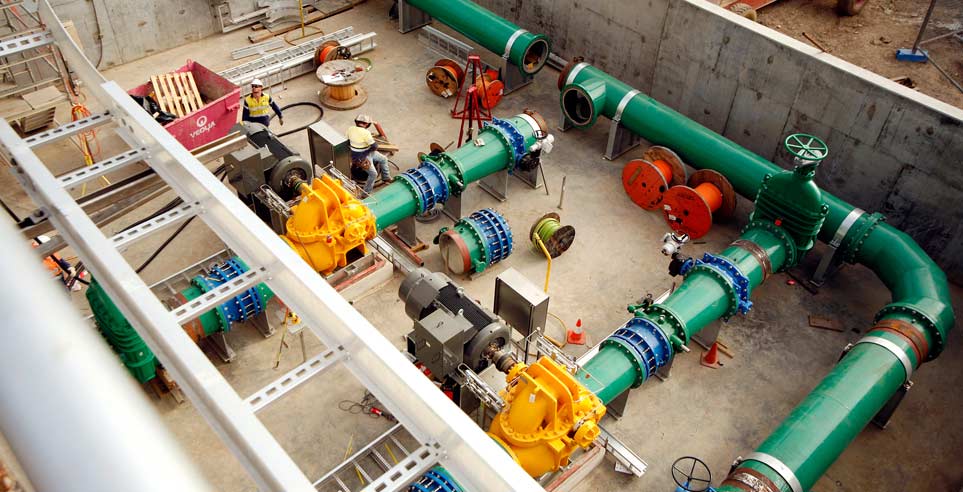
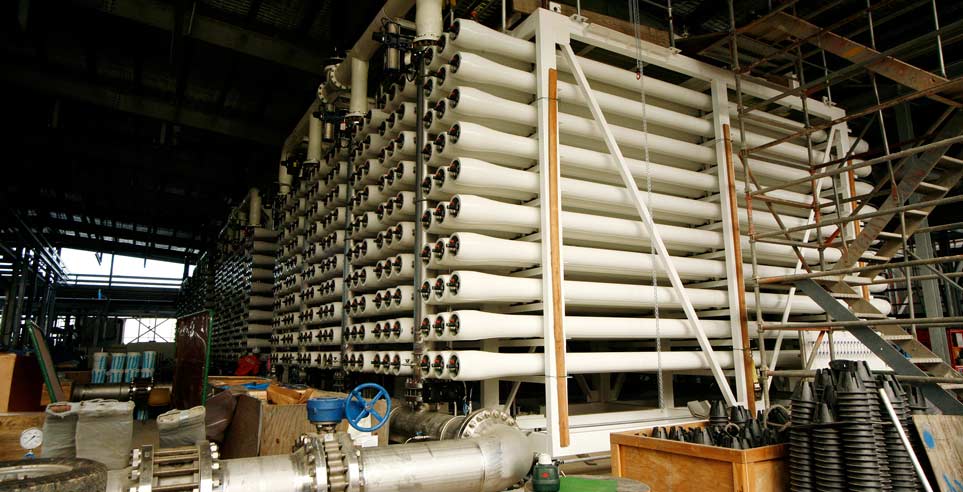
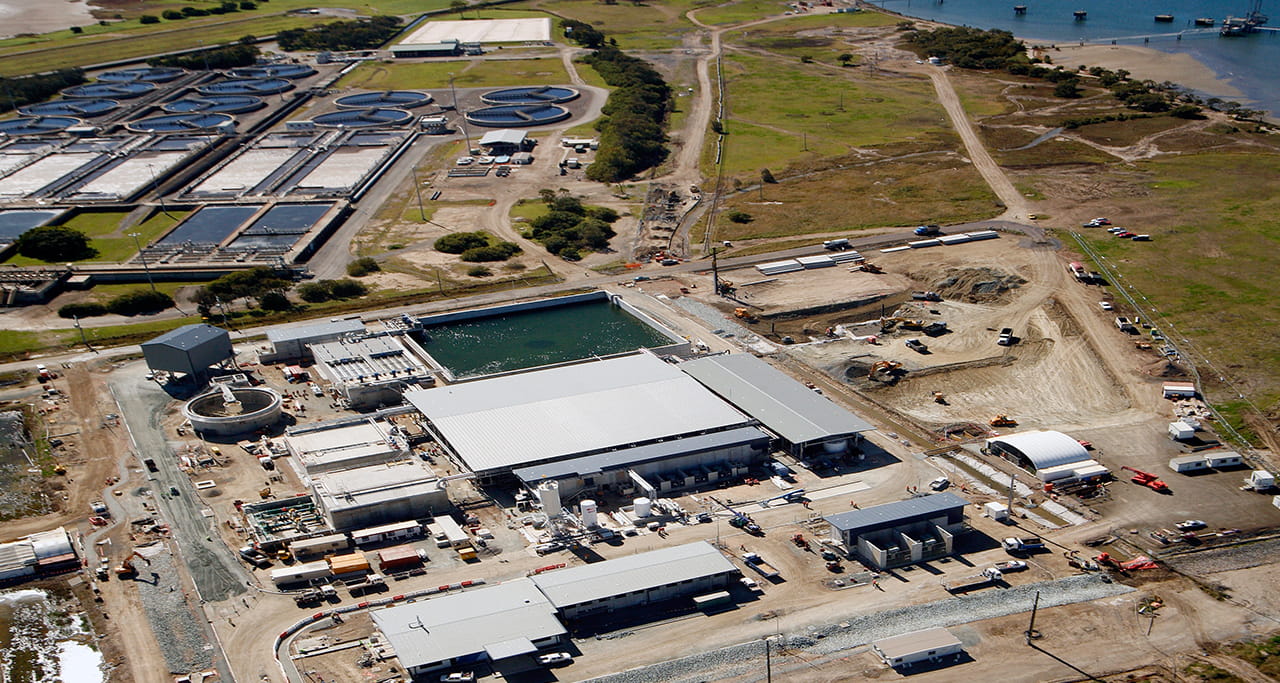
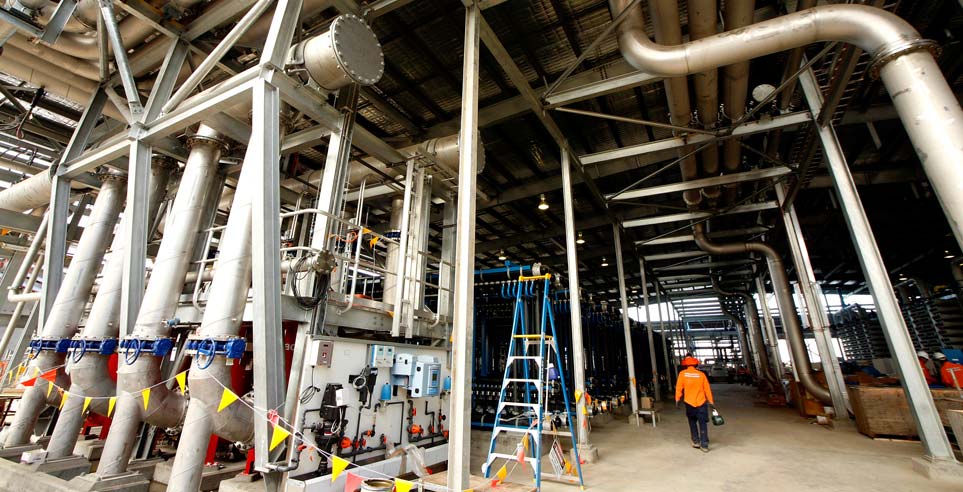
To meet the client’s desired outcomes and condensed timeframe, Aurecon negotiated several design challenges. The intake structure was designed to maintain continuous operation of the existing WWTP and to enable complete capture of effluent during low flow periods.
The design of the main plant included an extensive concrete pile grid consisting of over 40 linear km of piling, and a large volume of fill to overcoming problems associated with acid sulphate soils prone to significant settlement. Innovative telescoping couplings were designed to accommodate future differential settlement between above ground and in-ground pipework.
The project has won the following awards:
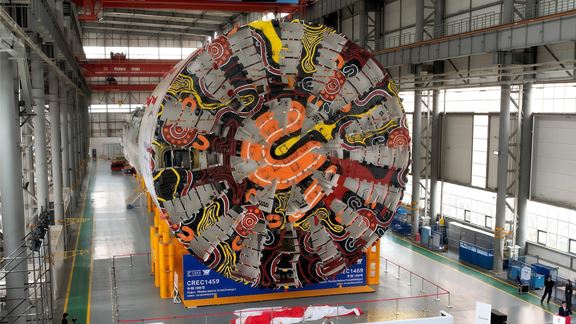
Aurecon is transforming Sydney Harbour, replacing dredging with TBM tunnel engineering to deliver a faster, safer and more sustainable second harbour crossing.
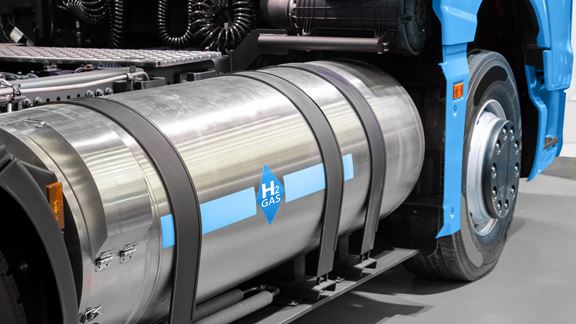
Aurecon's study guided Goulburn Valley Water to identify pathways to a renewable hydrogen ecosystem and support a clean energy transition in regional Victoria.
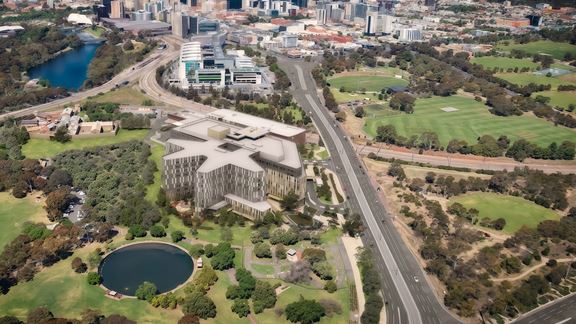
Aurecon leads building services engineering for the New WCH to deliver a 100% all-electric tertiary hospital for South Australian women and children.