Western Harbour Tunnel, Sydney, NSW, Australia
Aurecon is transforming Sydney Harbour, replacing dredging with TBM tunnel engineering to deliver a faster, safer and more sustainable second harbour crossing.


Change your location to view content tailored for you.
Wastewater treatment plants protect public health and help the environment by treating water and reusing gases and biosolids from the treatment process.
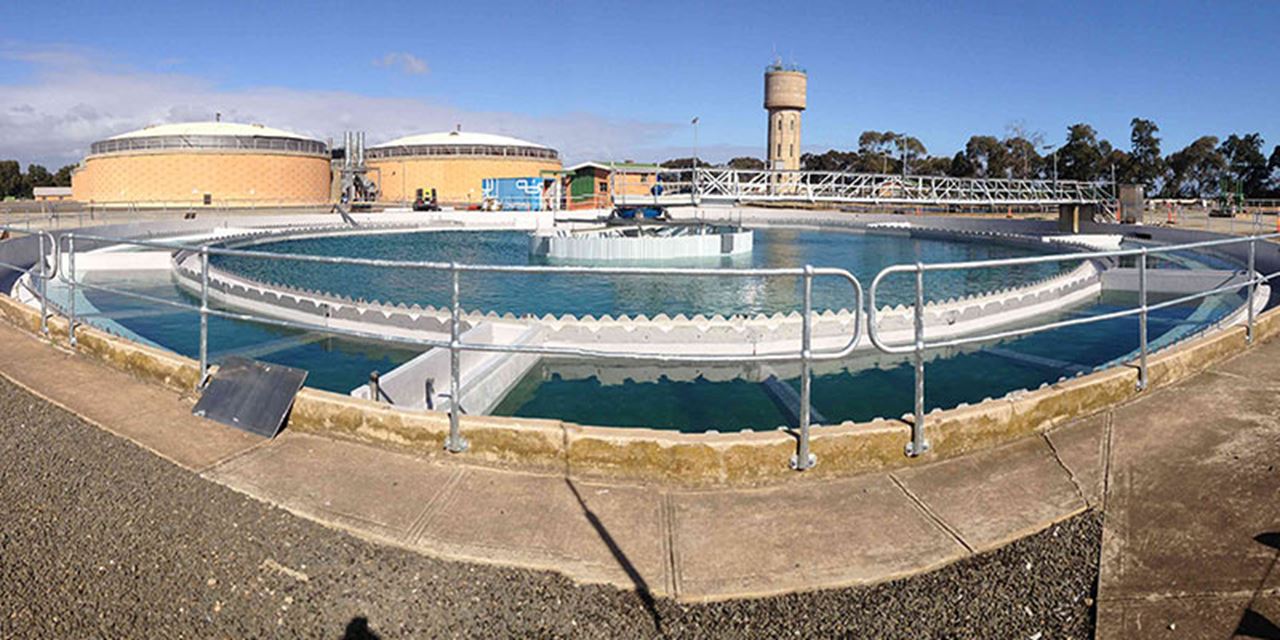
Adelaide’s Bolivar Wastewater Treatment Plant was originally built in 1966 and was starting to show signs of decay and declining performance. Engaged as SA Water’s engineering partner, Aurecon investigated options for upgrading the plant’s clarifiers to increase capacity, improve effluent quality and provide better operational stability and control.
Following a full-scale trial on one clarifier to test the new design and confirm key design parameters, all eight clarifiers were upgraded. This has increased the plant’s secondary treatment capacity by at least six per cent. Tighter control of the sludge blanket depth has improved performance reliability and provided additional buffer storage for the plant, making life easier for the operator.
Completed in 2020, effluent quality has improved dramatically. In the first year after the upgrade, the effluent solids passed downstream in the treatment process decreased by more than 50 per cent.
This project represents a paradigm shift of how ageing infrastructure is perceived and used, with significant positive implications for the Australian water sector, and others.
The sophisticated design process employed a variety of approaches and techniques with the aim of challenging assumptions to maximise the capacity and life of the existing assets.
The critical aim of the project was to determine whether new technology could be successfully applied to extend the life, capacity and performance of the ageing clarifiers.
Importantly, we needed to demonstrate the effectiveness of our design to work in clarifiers with a shallow sidewall depth (3.1 metres), to be confident this was a prudent capital investment. This was achieved through full-scale testing of one clarifier and directly comparing its performance to an existing unit under the same loading conditions. The trial demonstrated a six per cent increase in capacity and a 27 per cent reduction in effluent solids, and importantly, much better operational control of the process.


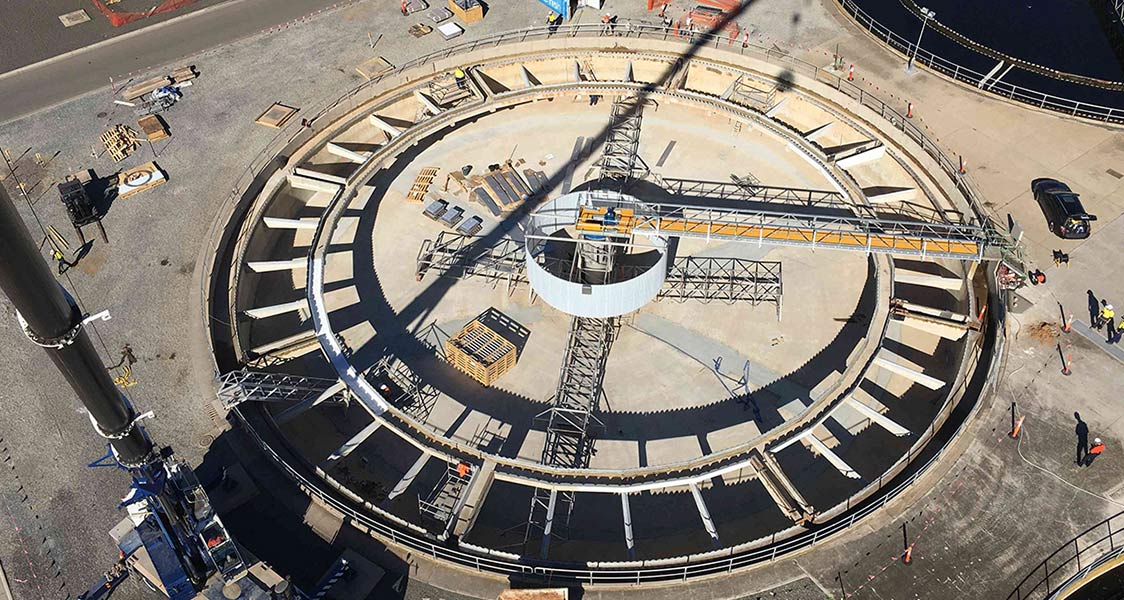

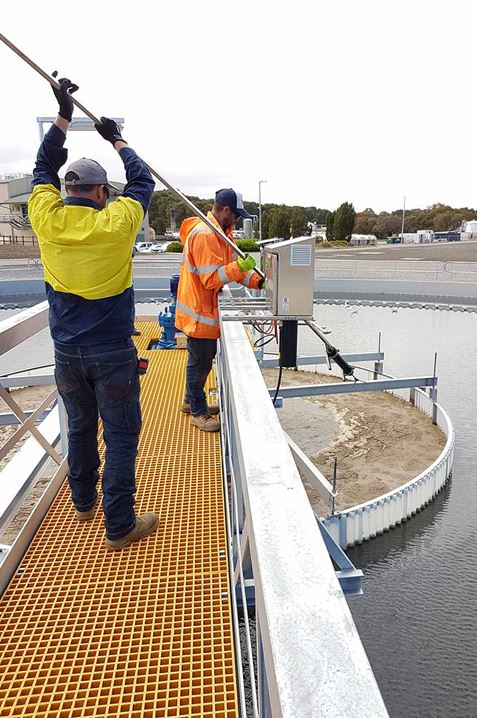
The other seven clarifiers were then upgraded with a centre well, scraper bridge and scraper arms, side-wall baffles and outlet weir arrangement. Sludge from the perimeter can now be transferred to the centre hopper for removal in approximately one hour, compared to more than four hours with the previous components.
The environmental benefit is a lower volume of effluent solids is passed downstream, reducing the risk of rendering the effluent unusable for recycling, or negatively impacting ocean marine life through the sewer outfall.
To optimise and prove the design, Aurecon used digital engineering – multi-phase computational fluid dynamics (CFD) modelling – to determine the optimal dimensions for the centre well and base plate replacement and the side-wall baffles and weir arrangement. The modelling assessed different energy dissipation designs, centre well diameters and opening heights, and critical design parameters.
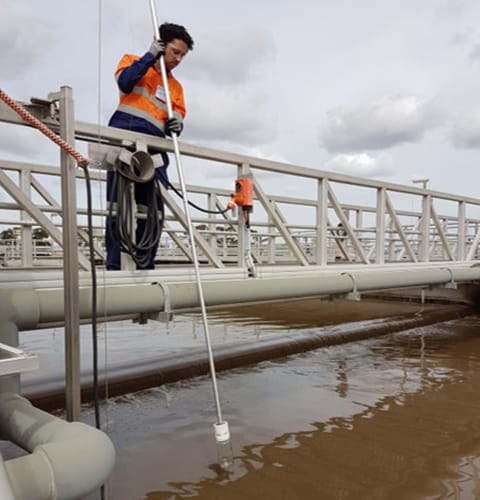
Extensive online instrumentation on the trial unit and a parallel control unit provided full flow and mass balance for comparison. The trial demonstrated that the new design performed significantly better than the existing infrastructure, successfully operating at almost 100 per cent of the maximum theoretical settling capacity.
This project between Aurecon and SA Water exemplifies the very best of modern engineering and construction techniques, which has enabled the effective rehabilitation and re-purposing of ageing infrastructure.
The project has won the following award:
Aurecon is transforming Sydney Harbour, replacing dredging with TBM tunnel engineering to deliver a faster, safer and more sustainable second harbour crossing.
Aurecon's study guided Goulburn Valley Water to identify pathways to a renewable hydrogen ecosystem and support a clean energy transition in regional Victoria.
Aurecon helps future-proof local education and careers with state-of-the-art education facility for Mount Gambier using 100% locally sourced engineered timber.