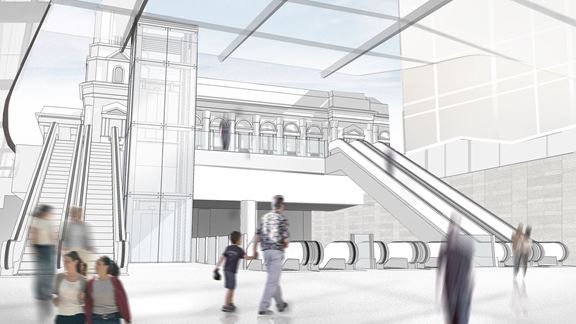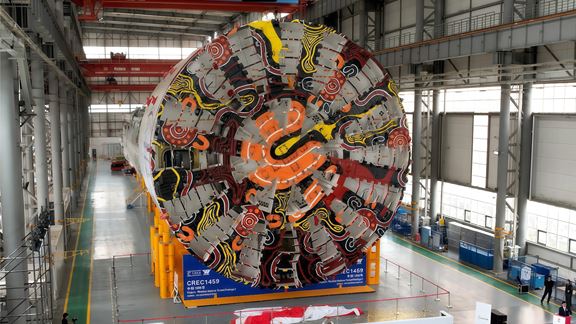
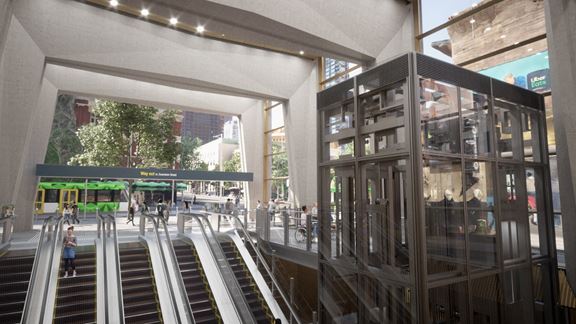
Melbourne Metro Concept Design, Victoria, Australia
Aurecon, in a joint venture, was appointed to the role of Technical Advisor for the development of concept designs for Melbourne Metro.


Change your location to view content tailored for you.
The Melbourne Metro Rail Tunnel will untangle the City Loop and means more trains, more often. It will make travel easier with more frequent trains carrying more people to destinations across Melbourne. Some of Melbourne’s busiest metropolitan train lines – Sunbury, Cranbourne and Pakenham – will run exclusively through the new tunnel.
By taking these lines out of the City Loop, other lines will be able to run more services. As a result, room will be created on the network to enable over half a million additional passengers per week across Melbourne's train network to use the rail system during the peak periods.
Aurecon, in partnership with Jacobs and Mott MacDonald (AJM Joint Venture), were appointed as the technical, planning and engagement advisors for Rail Projects Victoria, formerly known as the Melbourne Metro Rail Authority.
The Metro Tunnel is the first step towards ‘turn up and go’ train services that are exemplified in some of the world’s great cities such as London, New York, Hong Kong and Singapore. Featuring enhanced safety and international-style platform screen doors at stations, the project will reshape travel demand, allowing for future extensions to the tram and rail network as Melbourne grows.
In addition, three of the five new stations along the Metro Tunnel corridor will bring heavy rail to areas not yet connected to the rail network, at Arden, Parkville and Domain. Connectivity to these areas will be enhanced with a combined catchment of over 200,000 jobs, student enrolments and residents; while taking 18,000 vehicles off congested roads as people make the switch to public and active transport.
The project includes:
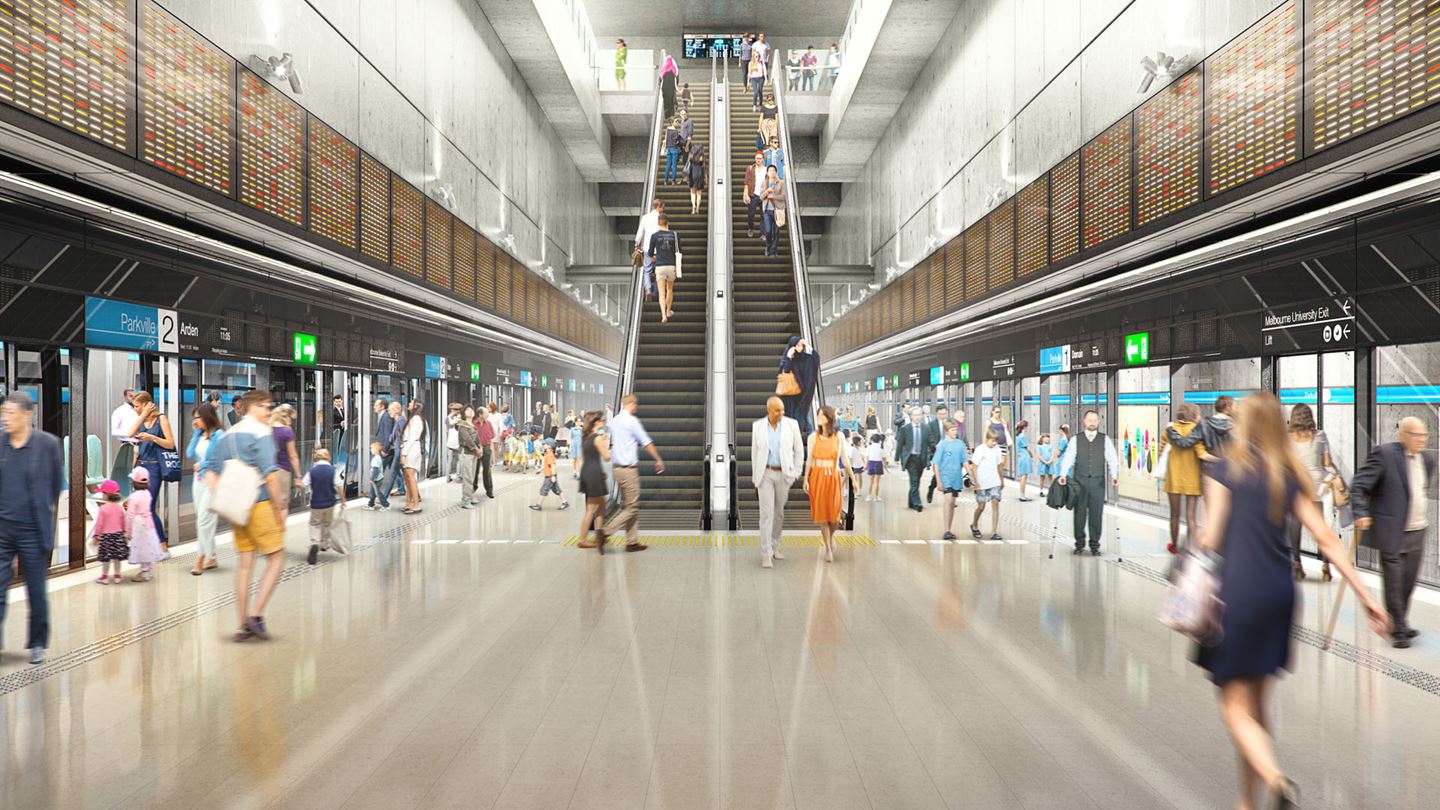
Video. Rail Projects Victoria shares the indicative route for Melbourne Metro Tunnel | Video thumbnail. Parkville Station – platform concept design.
The AJM Joint Venture built on significant planning work completed in the lead up to this city-shaping project through options assessment and technical investigations. The joint venture provided specialist technical, planning and engagement advisory services across the project development and environment effects statement (EES) lifecycle, including design optimisation and EES preparation.
Based on a thorough understanding of the project's status and delivery goals, the joint venture team coordinated a risk based approach prioritising high impact elements for each of the project stages.
During the reference design and procurement phase of the project, the AJM Joint Venture were acutely aware of how complicated such a large-scale rail infrastructure project would be to design and plan for.
During the peak design periods, up to 150 design and construction staff were working on this multidisciplinary project, providing technical advice to the Melbourne Underground Rail Loop Authority. Aurecon, as part of the Principal Consultancy, was engaged to manage and develop the design and documentation for the project and perform the role of onsite engineer during construction.
To address the incredible scope of the project, the AJM Joint Venture implemented three innovative digital engineering tools to drive greater collaboration and quality outputs from the team:
The Aurecon, custom-built, GeoDocs platform (now re built Aurecon Tucana) was selected for the project by the AJM Joint Venture to help manage the significant number of documents required for such a large scale infrastructure project.
GeoDocs is an internet-based collaboration platform that enables project documentation to move seamlessly and efficiently through the four stages of the information management life cycle. This was critical for the complexity and scale of Metro Tunnel.
Planning to build the Metro Tunnel in a dense urban environment meant considering vibrations, noise and other interferences underneath buildings, equipment and people – referred to as sensitive receivers. Sensitive receivers were defined as residential dwellings, commercial premises, culturally significant and heritage-listed buildings, and electromagnetic-sensitive medical equipment. This involved using the SoundAdvice tool to update assessments as changes to construction methods were explored.
In addition, Metro Maps was the AJM Joint Venture’s Geographic Information System (GIS) used to map over 800 buildings along the Metro Tunnel alignment. The Metro Maps Building Register provided access to more than 10 000 documents relating to sensitive receivers along the planned route. By combining Metro Maps with GeoDocs, engineering teams could record and share the details/requirements for each sensitive receiver and use the information to plan construction mitigations.
A significant challenge that the AJM Joint Venture faced was detecting any potential clashes between existing utilities and the future tunnel and building infrastructure.
Federating a combined 3D model took specialists from four different companies to manage multiple vertical and horizontal coordinate systems, different measurement units, and different software platforms. Ultimately, this tool federated all design and existing conditions geometry into a single coherent model.
This workflow, which followed BS 1192 guidelines for information collaboration and coordination, allowed the project team to coordinate updated 3D models quickly and unambiguously throughout the project.
The three digital pillars created at the beginning of the Metro Tunnel project will deliver quality, value and improved commercial outcomes throughout the detailed design and construction stages.
"We’re building the turn-up-and-go train network Melbourne needs – where trains come so often you can throw away the timetable."
Premier of Victoria, The Hon. Daniel Andrews MP
The AJM Joint Venture has worked on some of the most complex transport projects in Australia and internationally, including London’s Crossrail and Auckland’s City Rail Link, as well as Melbourne’s Southern Cross Station Redevelopment and Sydney’s North West Rail Link.
The Metro Tunnel opened 30 November 2025. It is expected to create capacity for 500,000 additional passengers each week and provide better access to hospitals, universities and employment hubs.
This project has won the following award:
Aurecon, in a joint venture, was appointed to the role of Technical Advisor for the development of concept designs for Melbourne Metro.
The Victorian Department of Transport (DOT), Australia appointed Aurecon to the role of technical advisors (TA) for the development of concept designs for the Melbourne Metro rail tunnel.
Aurecon is transforming Sydney Harbour, replacing dredging with TBM tunnel engineering to deliver a faster, safer and more sustainable second harbour crossing.