EPWA Power System Security and Reliability (PSSR) Standards Review, Western Australia
Aurecon provides technical analysis EPWA's Power System Security and Reliability Standards Review, supporting Western Australia’s energy transformation.


Change your location to view content tailored for you.
Malaysia’s GCU Consultants Sdn Bhd, a member of the Aurecon Group, was appointed to plan, design and supervise the soil investigations, ground treatments, retaining walls and the track embankment including track bed for the electrified train track foundations for two separate projects both ending in the the Padang province.
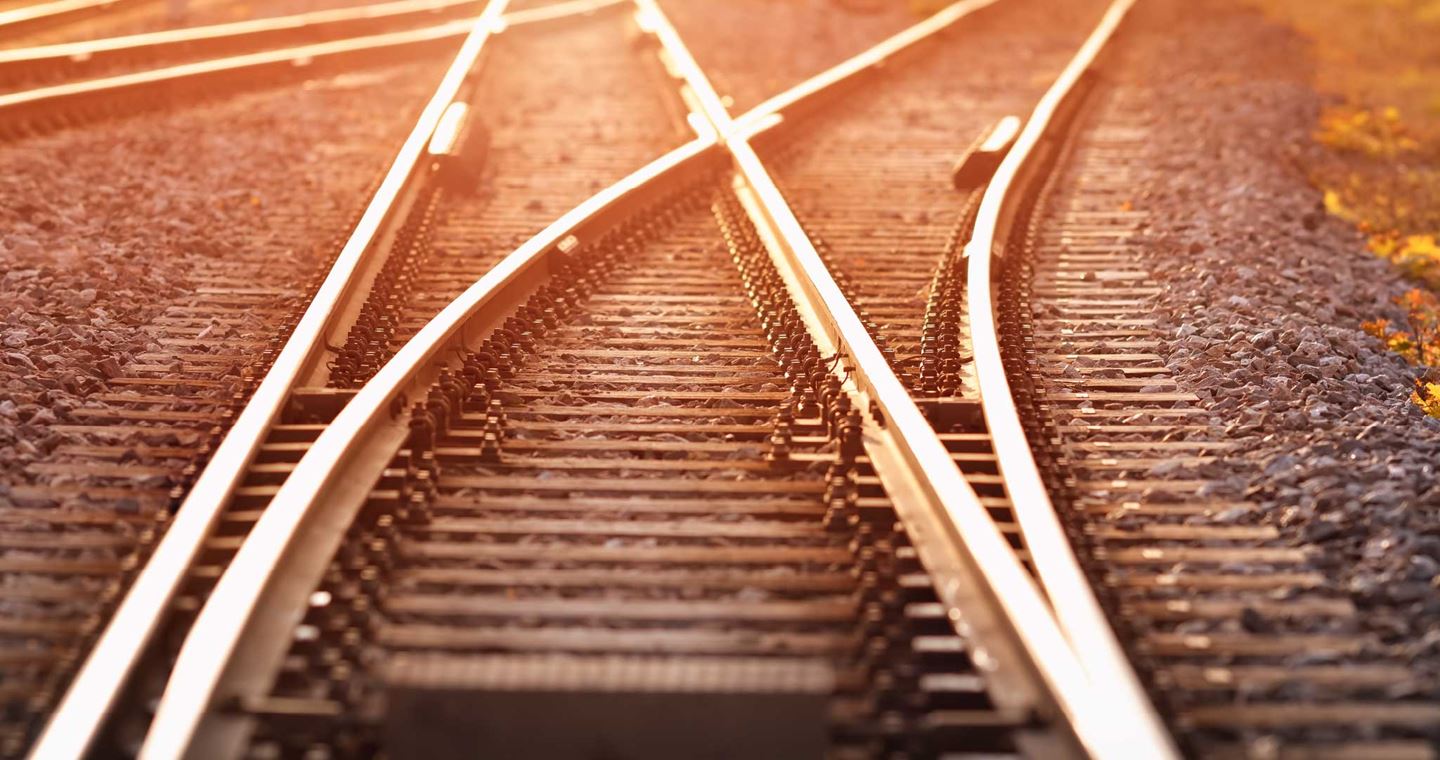
The Electrified Double Track Project (EDTP), which serves over 320 kilometres from Ipoh to Padang Besar in Malaysia, enables interstate travel via electrified trains in half the time as compared to lower speed diesel trains. The project has created a positive impact on the economy; it has boosted tourism and facilitated an increase in logistical services and business-related travel.
The construction of the Ipoh to Padang Besar tracks was completed in 2014. It was a part of the government’s plan to improve overall rail standards within the country and to create a network of rail infrastructure that will allow its people to travel safely, comfortably, and faster at an affordable price.
GCU was appointed by MMC – Gamuda Joint Venture Sdn Bhd (MGJV) to plan, design and supervise detailed soil investigations, ground treatment schemes, retaining walls and railway track embankment including the track bed for two packages namely:
Spanning across a 66-kilometre stretch which sits on the Kedah rail line, the works included constructing the embankment for the electrified train till sub-ballast level, pile foundation for some of the road bridges and the construction of permanent retaining walls.
As the works were carried out within proximity of the existing operational line, GCU conducted the necessary condition assessments and planned a systematic schedule of works. This is to ensure the ground vibrations would not affect the operational line and to also prioritise the safety of those on site. GCU also checked all the temporary shoring works proposed by the Contractors to ensure safe working condition besides the adjacent live track.


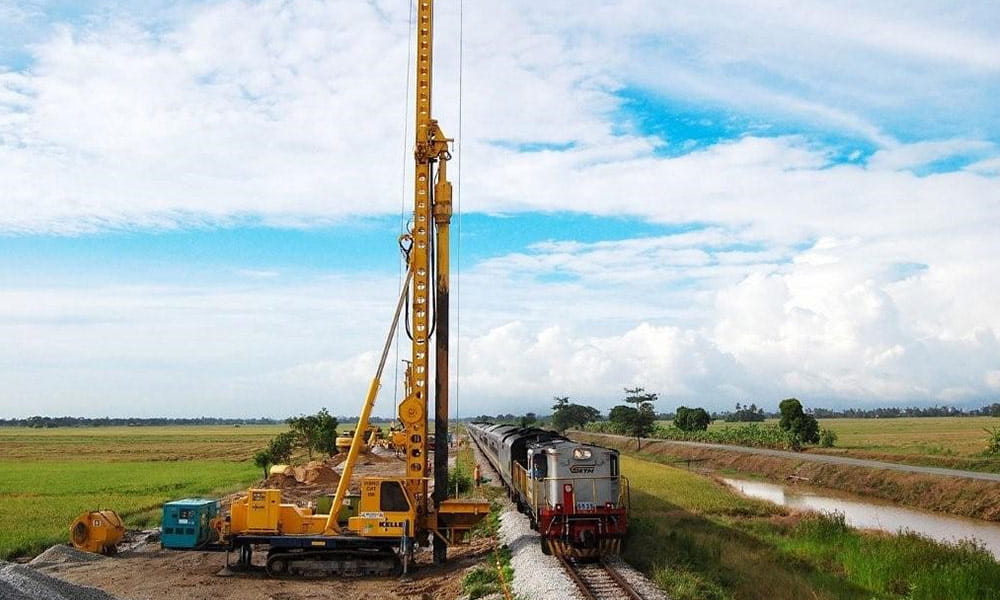
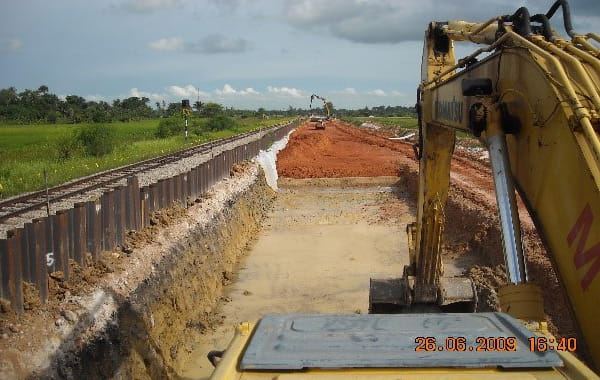
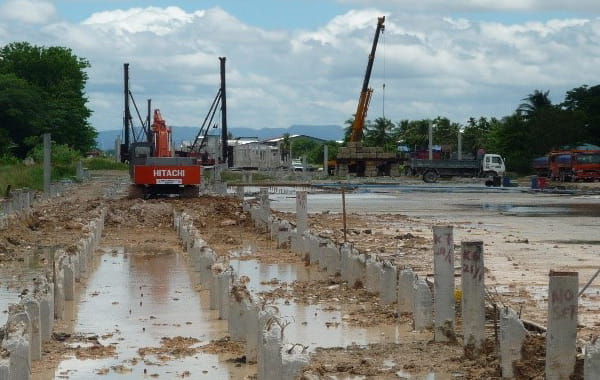
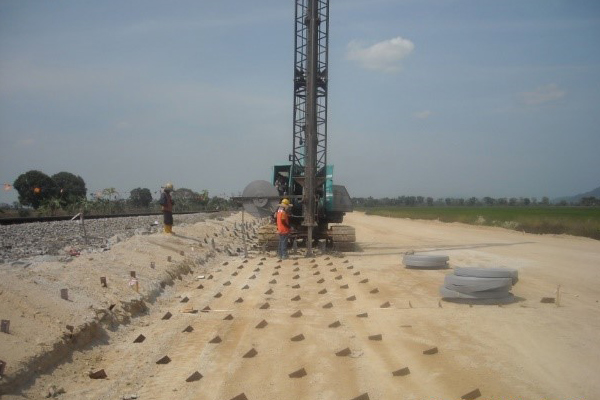
Based on the detailed soil analyses and geological studies, zones of geotechnical models were developed to identify the degree of ground treatment works required at different areas.
From Arau to Padang Besar, reasonably good soil conditions allowed for less invasive ground treatments and construction of the rail formation. However, between Alor Setar to Arau, unconsolidated soft to very soft marine clay deposits up to 15 m thickness were present below ground level. This posed challenges to the team due to the ground being highly compressible with low shear strength properties.
Under such condition, removal and replacement works and prefabricated vertical drains with surcharge preloading were carried out at shallow embankments and areas with weak subgrade soils. This reinforced the underlying ground and strengthened its ability to withstand the dynamic stress from the travelling trains over time.
For areas with higher embankment heights, stone columns with surcharge preloading and piled embankments treatments were implemented.
For the proposed design of the permanent retaining wall alongside the railway tracks, the team adopted multiple approaches to suit various ground conditions and the design includes cantilever reinforced concrete (RC) walls, contiguous bored piles walls and soil nailed walls.
Throughout the design and construction phases, GCU provided on-site design and technical support to MMC – Gamuda. The team also produced the drawings and specifications for all proposed geotechnical works and supervised the construction of all proposed ground related works including rail embankment, up until the sub-ballast formation level.
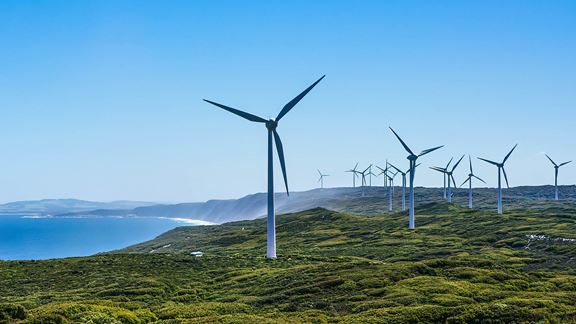
Aurecon provides technical analysis EPWA's Power System Security and Reliability Standards Review, supporting Western Australia’s energy transformation.
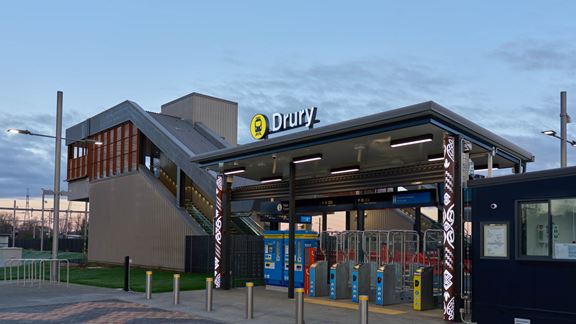
Aurecon is delivering human-centred modular design to three new rail stations with integrated transport options for Auckland's southern growth area.
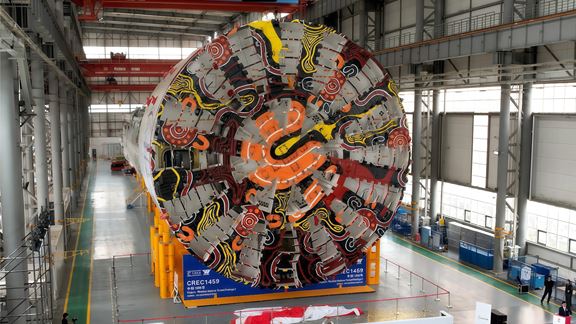
Aurecon is transforming Sydney Harbour, replacing dredging with TBM tunnel engineering to deliver a faster, safer and more sustainable second harbour crossing.