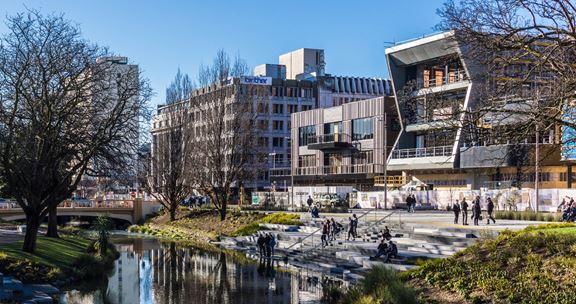
Christchurch Earthquake Recovery, New Zealand
Aurecon used digital visualisation technology to engage communities in the design process for key Christchurch rebuild projects following 2011 earthquakes.



Change your location to view content tailored for you.
After a 6.3 magnitude earthquake struck Christchurch in 2011, most of the city’s infrastructure and buildings sustained damage and were subsequently demolished. A key objective of the recovery effort was to establish Christchurch as an ‘accessible city’.
The Canterbury Earthquake Recovery Authority (CERA) recognised the importance of a new, highly efficient public transport hub in revitalising the city and commissioned Aurecon, in partnership with Architectus, to design and document the new Christchurch Bus Interchange.
Aurecon’s design objective for the new interchange was to put people first, focusing on an integrated transport and land use solution.
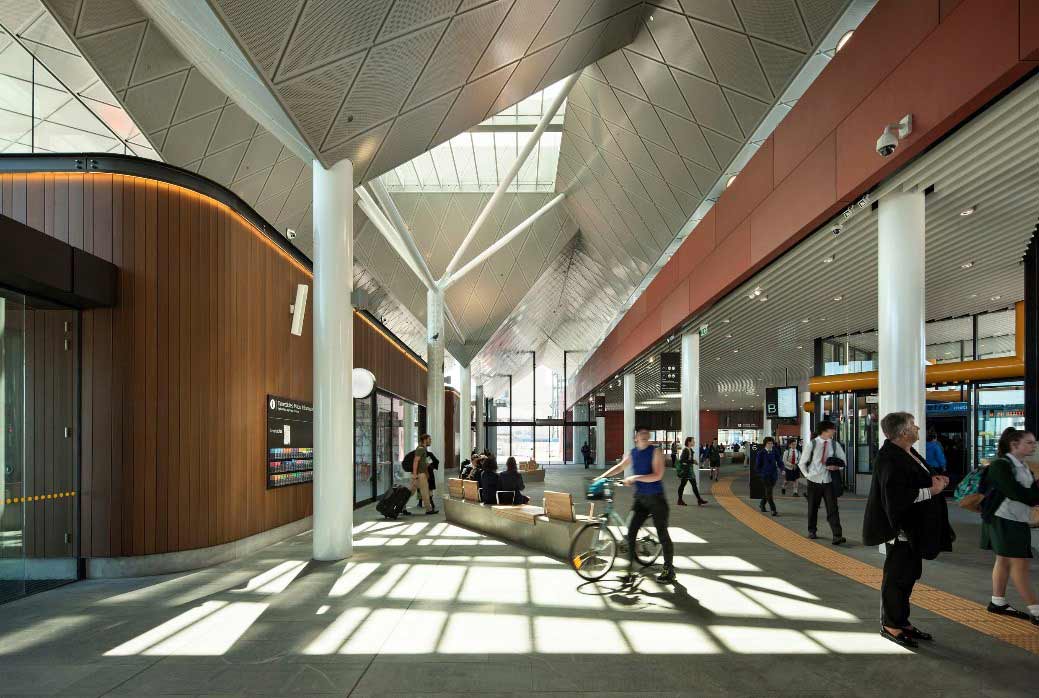
The result was a flexible, multi-tiered mode interchange hub that enables access to buses, intercity coaches, taxis and a central cycle parking pace. The new interchange has also transformed the overall transit experience with its airport-style lounge and high level of amenity.
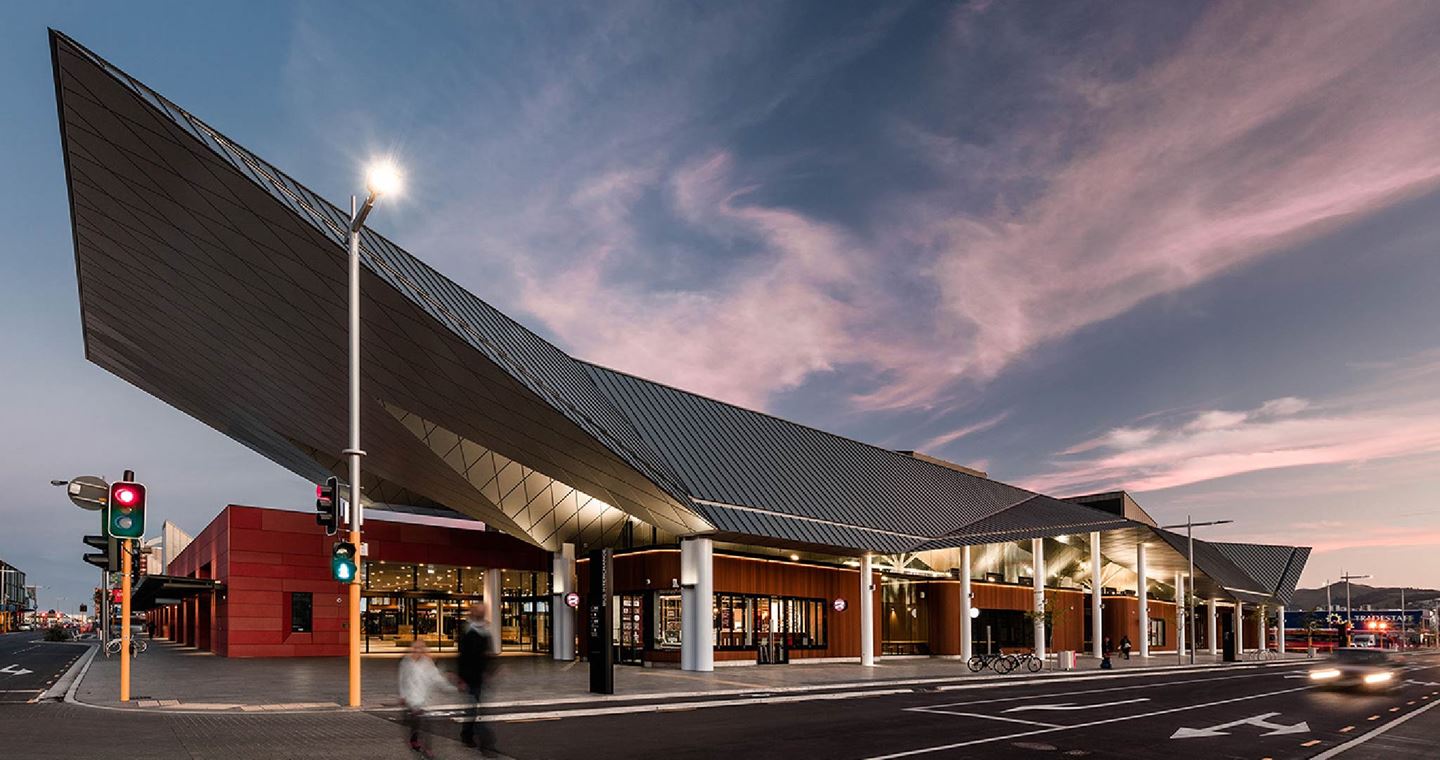
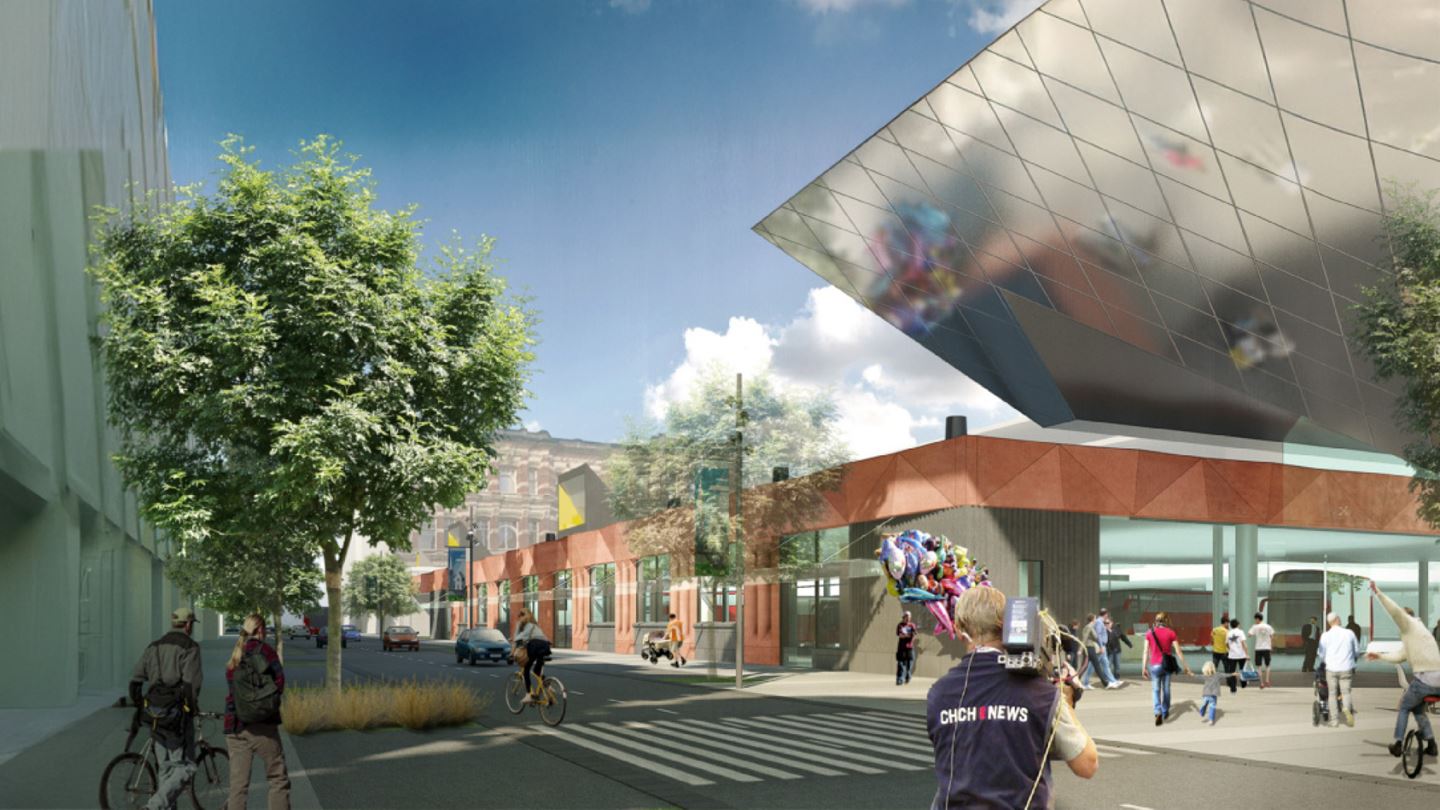
The new interchange is an ‘L-shaped’ concourse which has been constructed as two seismically separated buildings and designed for optimal pedestrian permeability.
The hub’s double-height vaulted roof allows light to penetrate the space whilst large timber pods under the main steel roof provide an overwhelming impression of space and amenity upon entry.
Inside, passengers enjoy an airport-style lounge facility with easy access to retail and cafes around the perimeter, whilst outside a public open space is shaded by a towering cantilever roof structure.
The customer experience is also enhanced by a naturally ventilated environment which exploits geothermal energy drawn from an aquafer 70 meters below ground; future-proofed to become an energy node on the CBD energy scheme.


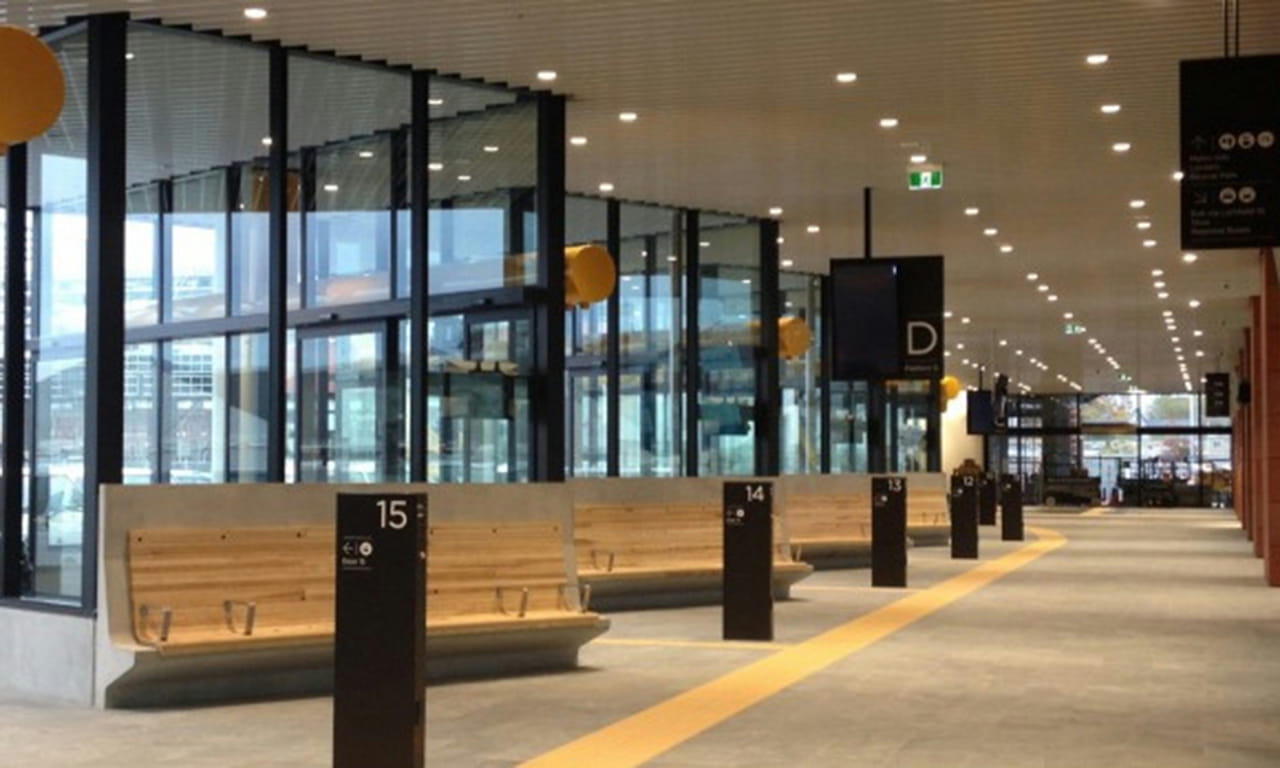
First delivered in the United Kingdom, the Christchurch Bus Interchange involved one of the first applications of backing buses in New Zealand. This has resulted in a highly-efficient transit experience, allowing for up to 96 bus movements per hour between 16 buses.
However, due to the relatively tight constraints of the circular bus interchange site, drivers must use reverse driving methods out of each busy bay so the required number of bus services can be accommodated. To help Christchurch bus drivers get up to speed on the city's new bus interchange, Aurecon developed a virtual reality training simulator.
"The circular layout and reversing bus movements created uncertainty among the drivers before it opened. We had to find a way to address these concerns."
Paul McNoe, Chief Executive, Red Bus
Paul McNoe, Chief Executive of Red Bus, says that the circular layout and reversing bus movements created uncertainty among the drivers before it opened.
“They were understandably nervous about how the new interchange reversing bus bays would operate within the circular design. We had to find a way to address these concerns before the interchange opened, and to train new drivers before they drove through the interchange for the first time,” says McNoe.
“That is where Aurecon stepped in with the virtual reality simulator.”
Christchurch Red Bus drivers used Aurecon’s training simulator, which included a virtual reality headset, steering wheel and pedals, to familiarise themselves with the new bus interchange.
“This was one of the first applications of virtual reality technology in the engineering industry (at the time). By wearing a virtual reality headset, wherever drivers moved their head, the headset provided them with a full peripheral view as if they were actually within the interchange,” says Simon Yorke, Aurecon Lead Consultant, Innovation.
“Bus drivers were trained subconsciously into understanding where the conflicts were with cyclists or passengers upon entry and exit,” says Yorke.
“They were familarised with the bus exchange’s digital screens, the bus bay technology and how far into the bus bay they must go to align with the doors. The simulation reflected the exact layout of the new bus interchange and nearby streets. It presented potential hazards to avoid, including other vehicles while reversing.”
This advanced technology method of training allowed drivers to learn and become comfortable with the new Aurecon-designed interchange, playing a pivotal role in reducing risk and improving safety once it opened.
Ease of use played a large part in why the virtual reality training was a success. It was immersive, making the user feel as if they were really there. This ensured that Red Bus drivers were prepared for the actual interchange. They knew its layout and the environment was familiar when they commenced driving as they had practised in the virtual reality simulation.
The novelty factor of the simulation also helped gain the interest of staff and encouraged them to utilise the tool. Drivers had the opportunity to train in a risk-free environment where they were given the freedom to explore without consequence.
Aurecon’s expertise in public transport infrastructure design, virtual reality, spatial and geometrical planning, as well as extensive consultation with key stakeholders, resulted in an exemplar project delivery.
The interchange delivers an integrated transport and urban design solution which acts as a welcoming gateway into the heart of the city, as well as supporting a growing public transport network.
The project has won the following award:
Aurecon used digital visualisation technology to engage communities in the design process for key Christchurch rebuild projects following 2011 earthquakes.
Aurecon helped develop the Grand Central in New Zealand, a highly resilient and premium mixed-use development as part of the Christchurch rebuild.
Aurecon designed Parakiore (Taiwhanga Rēhia), Christchurch's world-class sports and aquatic centre, using innovative and sustainable engineering solutions.