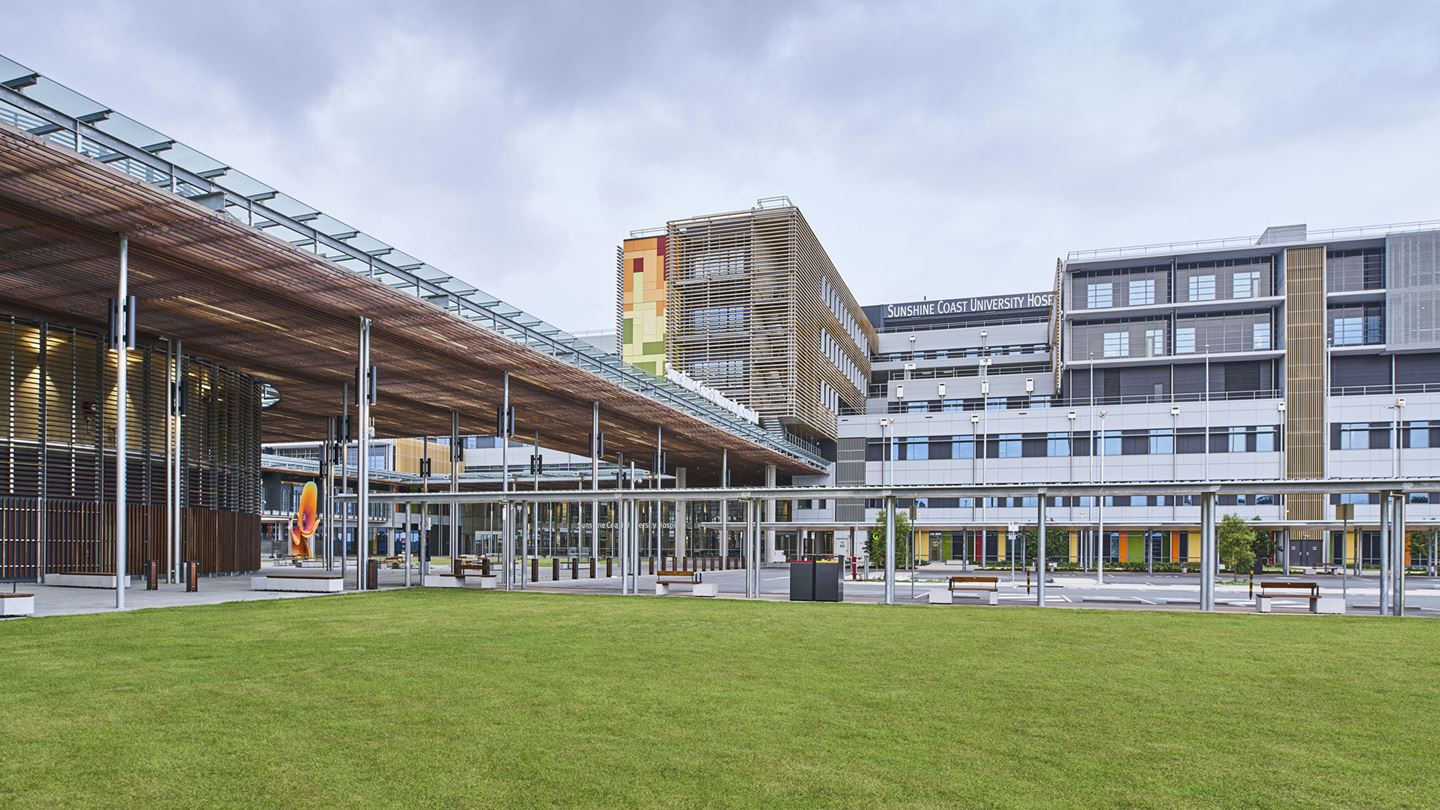
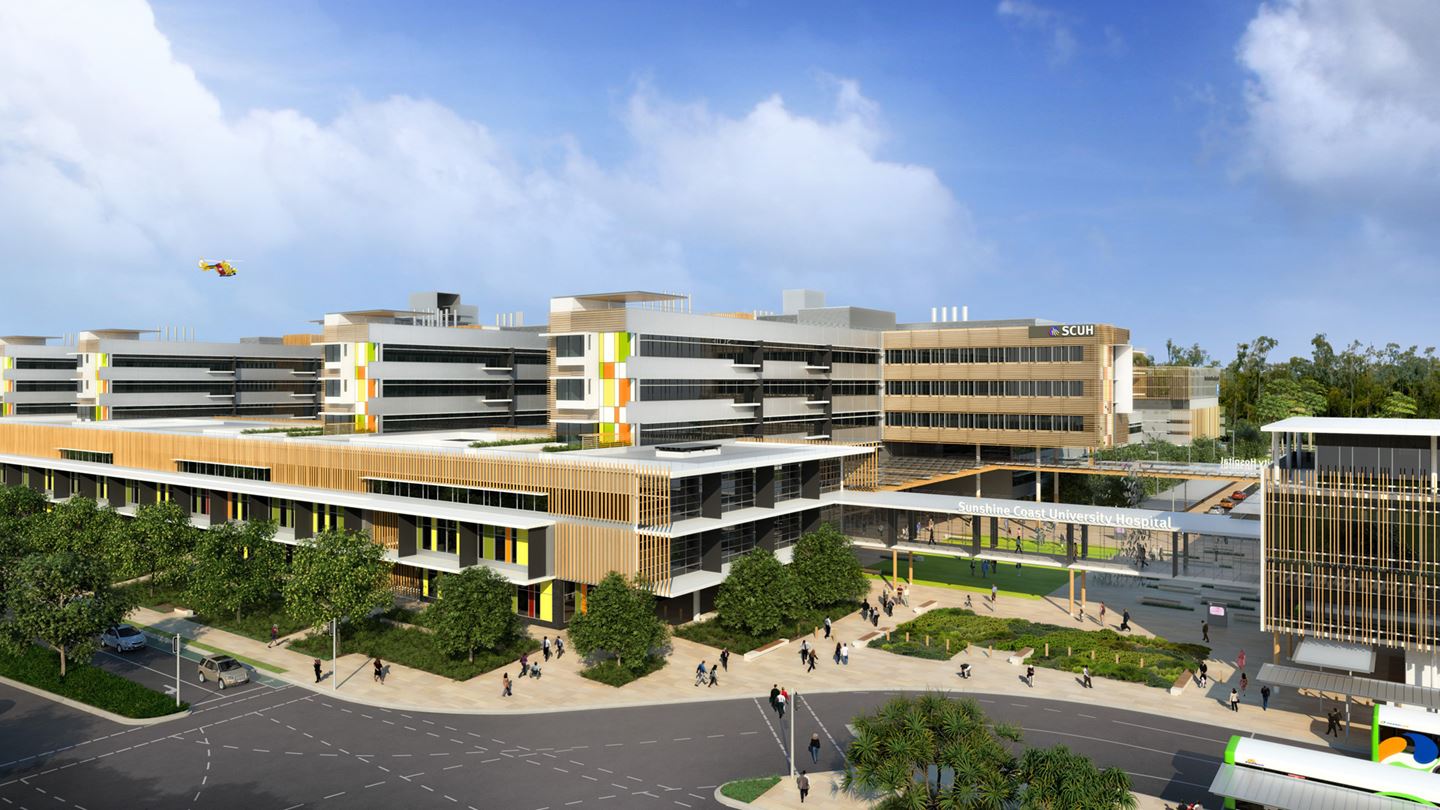
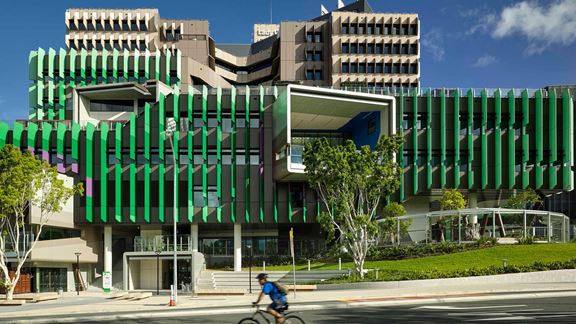
Renowned for its coastal setting and natural beauty, Queensland’s Sunshine Coast has the perfect qualities to be a healing environment for a hospital. With unprecedented growth and changing demographics in the broader region, the Sunshine Coast University Hospital was brought to life by the Queensland Government as part of a Public Private Partnership contract with Exemplar Health, a consortium of Lendlease, Siemens and Capella Capital, with Aurecon and Spotless.
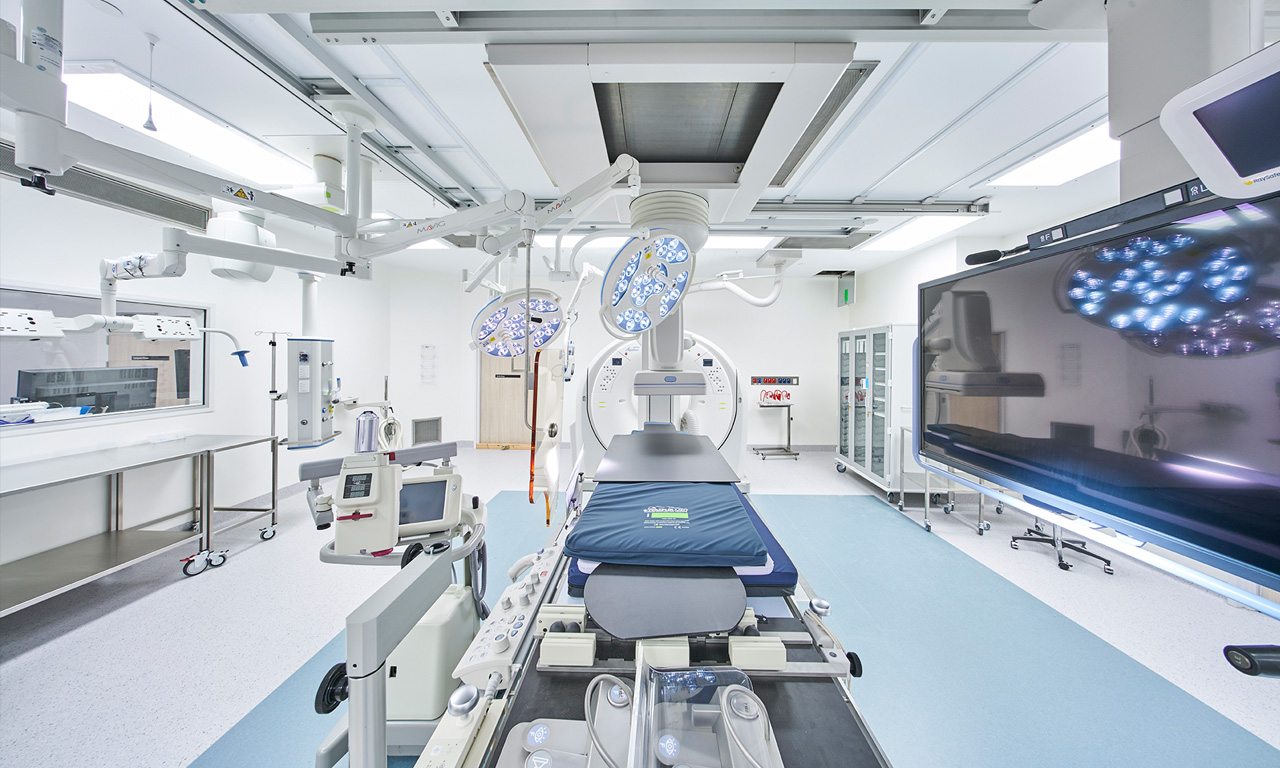
Opened to the public in April 2017, the complex features a state-of-the-art health facility and teaching hospital comprised originally of 450 beds which increased to 738 beds in 2021, but with more room to expand further.
The 164,000 m2 main hospital building forms the centre of the new hospital, and is split over six functional levels, plus rooftop plant rooms and a helipad.
Aurecon provided building services including civil, structural and mechanical/electrical/plumbing (MEP) engineering, and environmentally sustainable design (ESD). From successfully being awarded the project, through to detail design and documentation, and finally a full-time site-based role during construction, the hospital represents more than five years of hard work, dedication and passion from the Aurecon team.
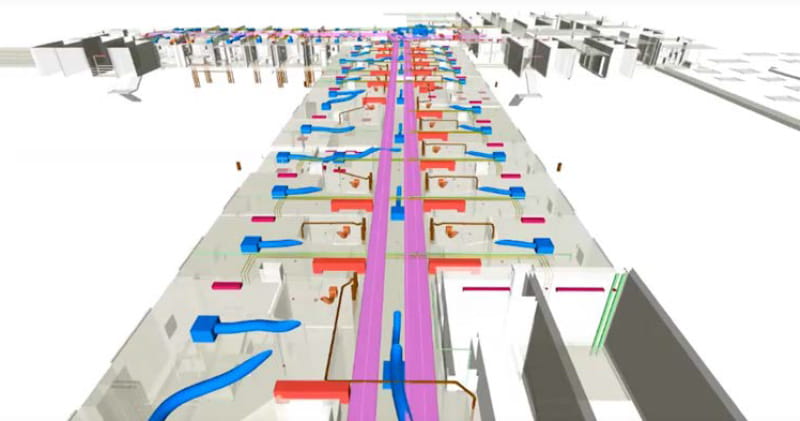
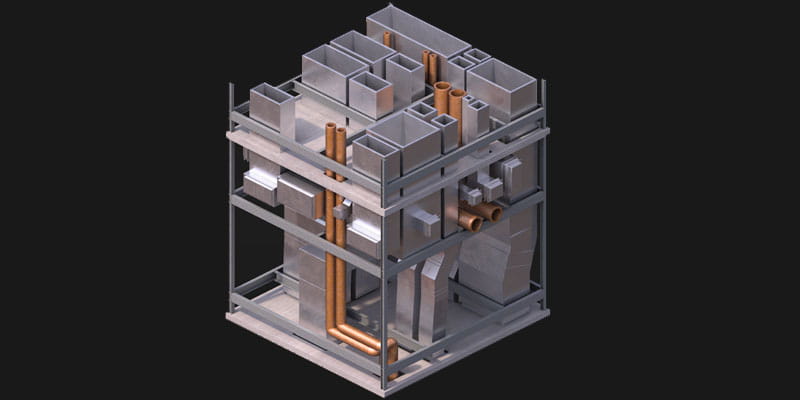
Across the project, Aurecon, in partnership with our client Lendlease, employed digital technologies to drive a lean thinking approach, push project management efficiencies, utilise building information modelling (BIM) and deploy 3D design modelling to allow off-site fabrication of some services areas.
Enhancing health, well-being and healing
Aurecon was mindful of delivering an engineering design that would create a healthcare facility that connects with, and enhances, the local community through its accessibility and role as a place of healing in a natural setting.
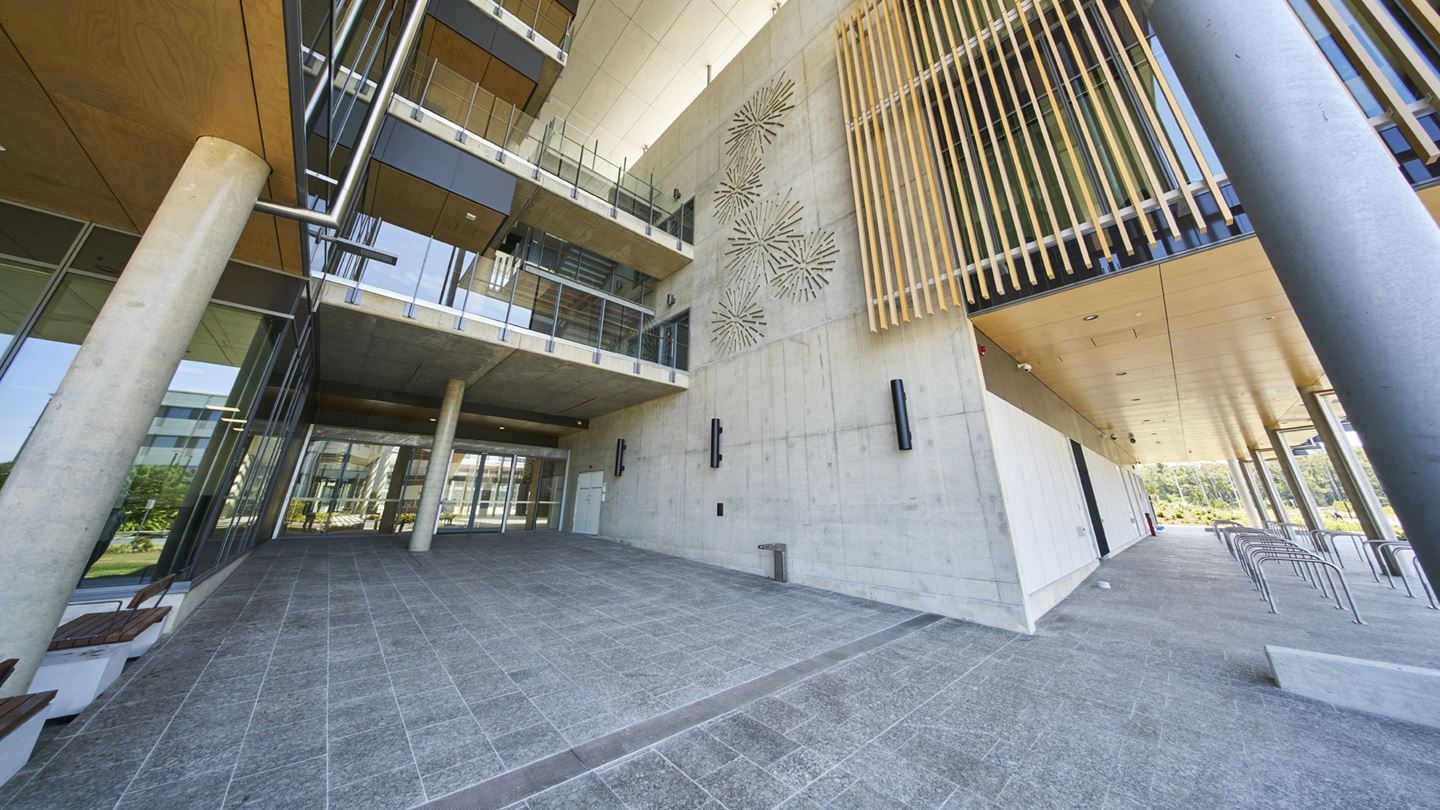
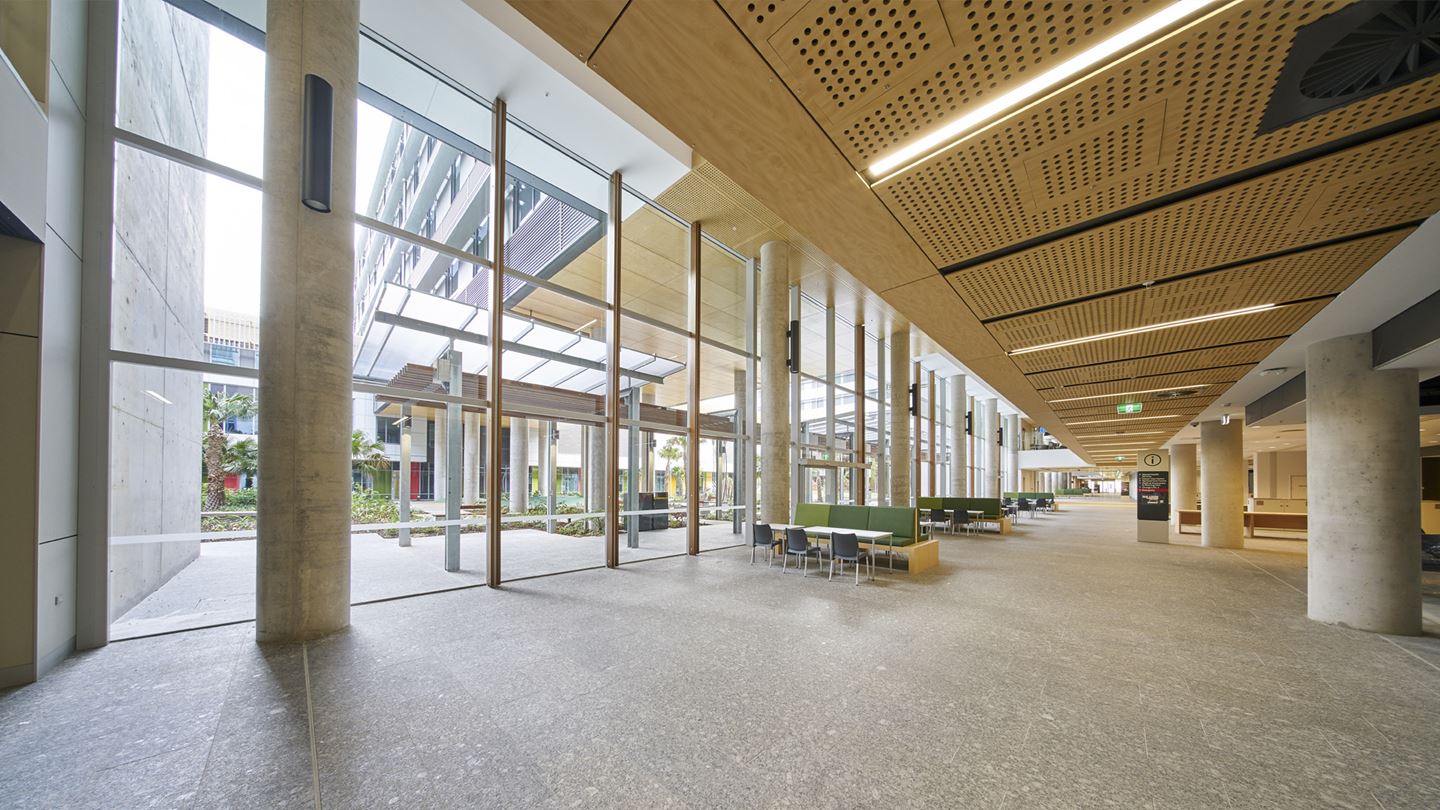
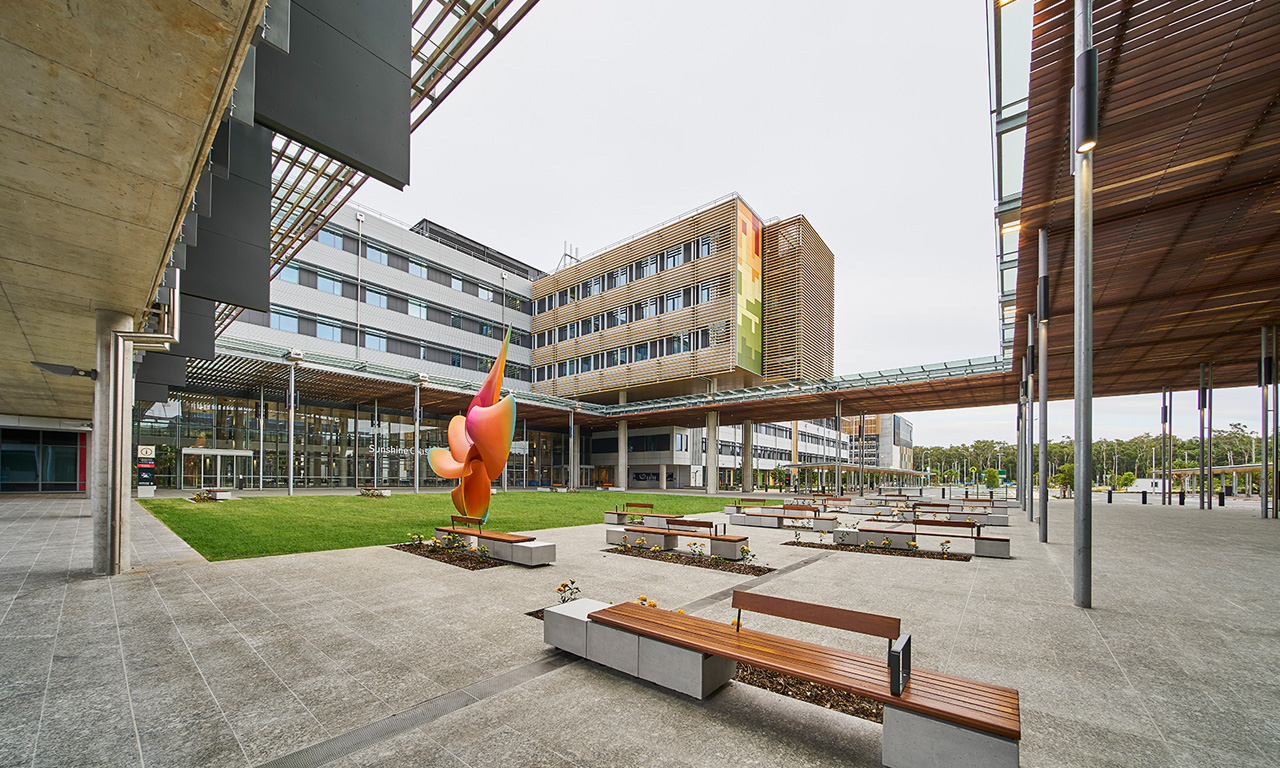
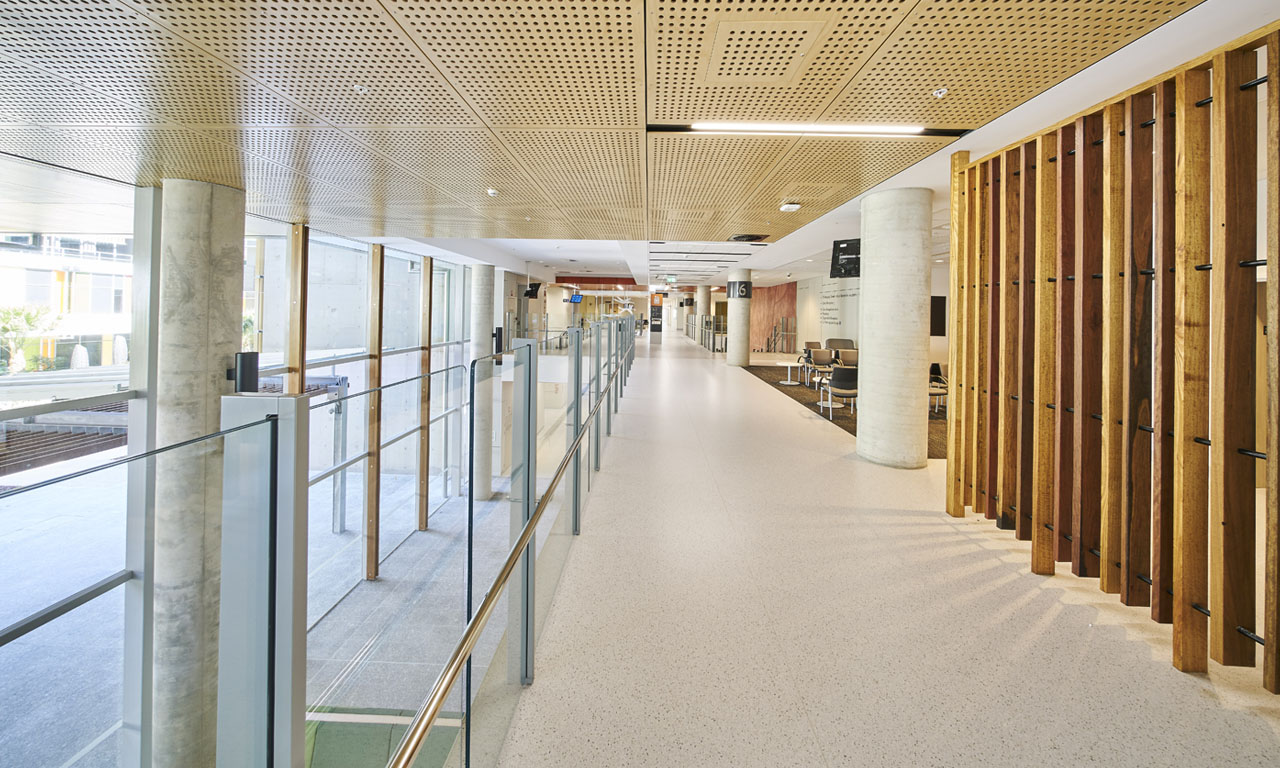
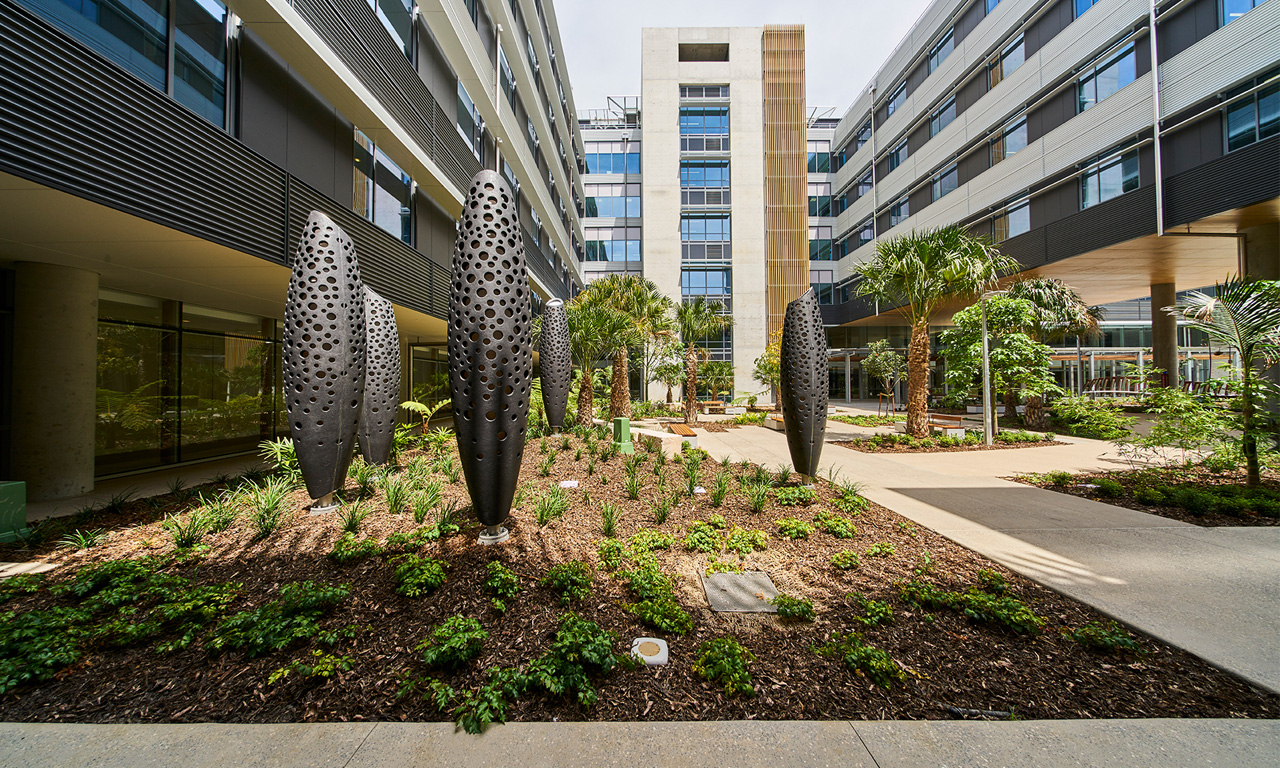
Physical and mental health and well-being is enhanced by seamlessly linking the indoor spaces with the outdoors. The design interweaves clinical spaces with open, landscaped courtyards, offering an abundance of spaces for respite, reflection, regeneration and inspiration to staff, medical students, patients and the public.
It has real human-centric design solutions that realise the architectural intent and provide spaces to ensure that modern medical services are provided for the local community.